
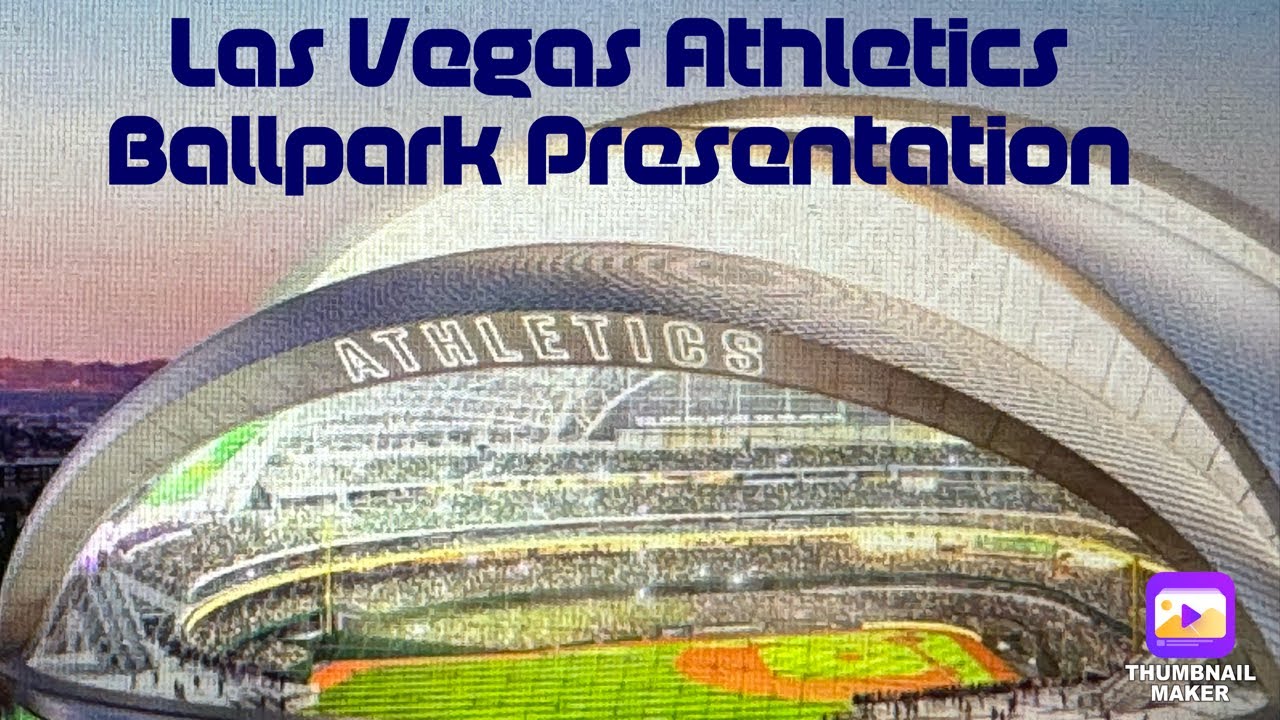
Las Vegas Oakland Athletics Ballpark Design Presentation: Sandy Dean At Las Vegas Stadium Authority
Um, welcome to the A’s, Sandy. Welcome. Good to see you. Thank you. It’s nice to be here. Um, we’ve had a lot of meetings where we’ve gone through some long documents. I think today’s going to be a little more fun. And um, a few things. One, thanks for recognizing Mark Main. We’re we’re we’re just super pleased that he’s agreed to join us. we have a lot to do on our project and he’s going to really be a great addition and um we appreciate him taking on the lead. Um I can say also uh um I’m still going to remain involved and you guys will still see me. So uh we have enough work for all of us probably. Um I thanks for getting the oversight committee uh formed and seated. We really appreciate that and we’re looking forward to engaging on that uh right away. Um, a couple of updates that the team has, uh, it’s been a little while since we’ve been together in person and, uh, we’ve extended our manager. We’ve signed a couple of players. We have some other news coming. So, um, there’s a lot of positive things going on with the A’s. They’re in spring training in Arizona right now, and the mood of the team is, I think, very positive. Um uh I want to mention that um we’re going to begin our pri priority access campaign for tickets starting on Saturday at 9:00 on uh on the internet. You if you go to athletics.com/ve uh people can sign up. There is uh the ability for Clark County residents to have a priority access position for tickets and that’ll start on Saturday. Um, with that, uh, I’m really excited to have the chance to introduce two of our architects. Um, Frankie Sharp and Emily Luchar. And, um, Frankie is the director of sports for the Bark Engles group. Barka Engles group is our lead designer. And, uh, Emily is the director of interiors with H&TB. H&TB of course was uh very involved with Allegent and um they’re going to serve as our architect of record and also um our sports hospitality designer and they’re each going to talk a little about what’s going on here. You’re going to see a bunch of slides today. You’re only hearing from Frankie and Emily, but um uh I just want to say there there’s more than a hundred design professionals that have been working on what you’re going to see today. All that process began in earnest really right after um SB1 was passed in June of 2023 and we did a design competition and then um brought H&TB and and Bera Engles group together and and um the work you’re going to see today represents many thousands of hours of labor from a large team all of whom have been devoted to trying to come up with something that’s going to be truly spectacular for Las Vegas. Um, thanks. Uh, I’ll just say finally, thanks for having us and for all of the engagement and support over our journey here together in the last 18 or more months. So, with that, I think Frankie is going to start. Thank you. Welcome. Good afternoon. Thanks for Good afternoon. Uh just want to start by saying thank you to to all of you as well. Echo Sandy’s comments for having us. Incredibly excited to share what we’ve been working on uh with all of you today. I do also want to say quickly, I think tomorrow is when the website goes live, not Saturday. So if you go on there for your priority access, you would be late and we want everybody to have access to this beautiful venue. So uh just going to start by clarifying that. But I’m going to dive in quickly to the to the concept of the building, describe what our thought process was architecturally, uh certainly for the bowl and and the sports side of this, and then I’ll let Emily, who’s my colleague, uh dive into some of the interior spaces and give you guys really the first look, um on on how this is coming together from an experiential standpoint. So, if I just click through these slides, uh maybe click through these slides. Thank you. Uh, so I think anytime that you’re starting a process for design in Las Vegas, it’s important to just understand the context of what you’re designing in. It’s the entertainment capital of the world. Certainly the the the site that we have on the Las Vegas strip um is important for everyone to just appreciate, potentially grab views of, have people experience as they’re coming to the ballpark and spending an afternoon uh on the site. So that was really one of the first things that we took into account. Of course, you also couldn’t uh forget the climate of Las Vegas, we’re we’re talking about a summer sport is the primary occupant. Um so really want to make sure that fan comfort, player comfort, staff comfort, anyone who’s in the ballpark, um is is really comfortable and has a first class experience. Um and then lastly, it’s it’s really what the fans are going to experience. Uh you know, we we want to keep people in the ballpark. We want them to come back. We want this to be a unique experience that when you come to this incredible city with all these incredible opportunities, you say, “I have to go see um that ballpark because of of what the opportunities are for fans.” So, getting into the actual architectural design, uh this was a sketch that looked a little rougher when we first started it. Uh but we were on a Zoom call with with Emily and her colleagues and um somebody sketched this uh this section of the building which is not in any way uh kind of revolutionary. This is a pretty common uh architectural motif where you’re protecting direct sunlight and giving indirect sunlight and views out uh to the north. We just thought it made a lot of sense because of the site and all of all of the strip being uh kind of towards the north. a lot of the iconic landmarks. Um, we had an opportunity to look north while still being very protective from the elements. We also uh were very inspired by the pennant which is I think synonymous in baseball with success. Um certainly uh had a lot of pennants around the office as we were going through the design process. So you can see how that started to work its way into the design. Um there was also a piece of art that uh that we also uh really took some inspiration from mostly because this this painting uh if you can call it that was really about the the kind of cuts in the canvas and creating something with that moment as opposed to putting something on the canvas itself. So what those openings do um for the overall piece. So turn that into a circle. uh you start to see the the penants come back and and you really get that kind of form um and iconic uh landmark we think for the city um that you see in some of these images. Uh so this is an updated uh rendering from Las Vegas Boulevard. Uh this is a section of the building as it stands right now. And what I hope is clear is that section uh sketch that we worked out right at the beginning of the design is still very much intact in the the current design of the building. So very protective. Uh all the seats and and field will be protected from the sun um but still very much allowing views out to the north. So this is a zoom in of that roof. It’s a it’s actually a system of metal panels. Um it looks it looks very decorative. The the reason for that is that four panels kind of stack up on one corner so you have one connection point. It’s it’s a very rational system. Um but we certainly like like the effect uh that it gives architecturally as well. And then this is the other half of that diagram showing uh some views out of the CLA stories. those three smaller blue arrows at the top and then one large uh very um big opening right above the main concourse on the uh north side of the building looking out towards the strip. This is a zoom in of uh of just how that detail kind of works out around the cable net window uh the glass window. You can see the the ETF Eclair story in the top and then the metal roof system over to the sides. Um we just think it highlights how all these different systems come together to to create something spectacular. Then when you zoom out a little bit, that window that you’re looking at um is a double curved surface. So the reason that we can make such a very thin structure is that they’re cables that are pulled in two different directions. You know, one’s curving in plan, one’s curving in section. Uh so just it it creates a really stiff um structurally sound uh wall that doesn’t require a lot of big bulky structure. So so when you’re sitting in the bowl, you’ll see out uh towards the the strip um to the northwest. This view is is actually kind of sitting somewhere close to the Las Vegas uh boulevard and Tropicana A corner. So we’re kind of looking back southeast from the northwest corner of the site. This is this is like our main entrance. let’s call it, into the building. We have another entrance on the south side as well. Um, but this one certainly feels like the grand entrance coming through the cable net. And uh, and Emily can talk more about that in a second. This is a view from home plate. Um, down in the lower bowl looking out, you can see uh, New York, New York there in the MGM recognizable uh, through the window. And this is uh just slightly down the first baseline, but in in concert mode. Um how the bulk could transform to to host a variety of different events. Uh but of course still really harnessing the strip, letting people know where they are, what the place is um and and attaching this this uh piece of architecture to its setting and the surroundings. And then this is a a view from Trop uh Tropicana looking back at the ballpark. It’s probably also a good time to mention that um we did these renderings without anything else on site. Maybe that’s that’s obvious. Uh there’s a lot of ongoing work for site improvements. Um we’re just uh not not showing those today as those continue to develop, but um you know that that is something that’s that’s worth pointing out right now. So it’s overall section of the building uh at the top at the apex it’s about 290 ft above the field uh which is also ground level uh you know site level um that uh is is based on just some research that we had done on playing fly balls playability for the building uh based on best practices in Major League Baseball. Um and then I’ll zoom into a section to just talk more about what how the bowl has come together. Uh it’s a split lower bowl and a split upper bowl. So what what that means is that traditionally in in ballparks and I have some comparisons in a section in a second. Uh the lower bowl is maybe 30 to 40 rows. What we’ve done is split that in two and and separate it. So here you see suites behind home plate, but as you work your way down the lines and out into the outfield, those become general admission spaces. Um, so closer than anywhere else in baseball, you’ll be able to walk uh around the concourse, you know, uh get your amenities, go to your your food and beverage stations, the restrooms, etc. Um, and still be connected to the action the whole time. And that’s that’s true for the lower concourse, the main concourse, and the upper concourse as well. And we have some images that highlight that. Um, just for comparison though, so so everybody’s aware of how this has come together, in red, uh, you see Finway Park. Um, and you see what I’m describing about that that lower bowl being uh, you know, exceedingly large in in some of the older ballparks, but we did feel a lot of inspiration to how tight it is, how intimate it is, how close those upper decks get, and um, even the the kind of top seats in the building just feel really close to the action. Same with Wrigley in blue in this section. Uh, this is is a newer example. So, in yellow you see Truis Park in Atlanta. Um, what we’re just trying to call out here is is that it’s it’s incredibly steep. We’re pulling those frontiers close to the action. Um, you see how the front rows get closer. Everything is is just a a more intimate and um and uh we think a better fan experience. And then finally, just the the most recent example of uh of Globe Life. Um, you know, they also have a very steep upper tier, but ours is is just uh a little bit a little bit closer to the action. And then some local examples, not necessarily baseball, T-Mobile. Um, and so you can see our our kind of main concourse uh lower ball. If you were to split theirs into two, that’s that’s how ours kind of arrived at at the current section. And then also uh across the street is is Allegiance Stadium, which is is a much larger building. It’s an NFL stadium. Um but again, it just highlights how we’ve really tried to focus on pulling everything in as much as possible. And so with that, I’m going to turn it over to Emily who can now walk you through some of the experiences and and hopefully uh describe more about what’s going on inside the building. Yes. Uh so I will just take you level by level starting at the base. So the service level which is traditionally allocated for back of house operations and we have definitely paid attention to that and made sure that it’s highly efficient um along with the team spaces but what we really wanted to do is make sure that we can infuse that patron experience wherever there’s opportunity. Um so when you look at home plate um on either side in that green are the home team and visiting team clubouses and we wanted to make sure that we could connect fans to the players. So you’ll see that there’s a premium opportunity there um where people could literally be next to um the players and even in the outfield. I’m really trying to maximize that toes on the turf um field experience um with social zones there at um in lots of different ways. And so starting at this knowing that this is the new home for the A’s starting with their clubhouse um and that that mention as I had said of making sure that we’re connecting the the fans to the players. um we think about these spaces, these interior environments and really making sure that there’s enhanced food and beverage experiences um that are unlike anything other and making sure that um that experience is memorable for all fans. Um and then even in the out outfield is a you know wide view where you’re actually on the field in the outfield right next to the fence where you can enjoy um that experience and think about um that social aspect there. And then on the lower concourse levels, so this is right below where Frankie was mentioning that um entry point for patrons is that 20 rows back where all fans can actually be um so close to the action. uh and thinking about that in different seating experiences so that you’ve got throughout the ballpark 17 plus different seating environments uh nine different social zones and club areas uh different group seating products that are in the 20 range. Um but really trying to think about how you can socialize, get your food and beverage as well as still be game connected. And then even in the outfield um where the bullpens are, we looked at how we could stack those two bullpens and really surround that with patron experiences. So there’s going to be seats, standing zones, a really social environment again while you’re still connected to the game itself. And as you go up a level on the main concourse, this is again where patrons are entering into the building at that glass um wall on the north as well as on the south. Um I think a key thing to point out is on both concourses we are very conscious of making sure that there’s a 360 circulation so that it’s a seamless entry walk around the ballpark experience each of the food and beverage zones. Um, another thing is as Frankie was mentioning with the seating bowl of breaking that seating bowl, it allows that whenever you’re in the concourse, you always have a view back to the field so you never leave that game connected environment which I think is so key to just uh making sure that you’re always in that lively experience as well as still getting the amenities um restrooms, food, etc. um throughout the game. And so when you look, this would be right past that glass that glass wall on the south or on the north um north. But um you’re right at the main entry. And one of the key things here is pointing out that as a fan, you can actually see the entire seating bowl. You can see every level. And so it really orients you if you’re a first time coming to the ballpark. Um it kind of drops that guard of nervousness of where you’re going. Um, that was a really key intentional thing that we thought about in terms of how people circulate and make sure that that’s a seamless and really positive experience. So, this would be, you know, if you were to look left, you can actually see those escalators. Those escalators take you to each of the levels above main concourse. Again, just making that really an intuitive way to experience the ballpark and get around as a fan. This is at the south entry. um similar where you enter in, you can see that there’s escalators taking you up to the upper concourse. Um but also you can see off to the left that’s a view. You’re actually connected right to the rest of the field um where you can, you know, hear the noise of the crowd and actually experience that. And I think what we’re so excited about with this building is because it’s fully enclosed to make sure there’s fan comfort that actually allows you freedom to do non-traditional things that you might see in a ballpark because you don’t have to deal with the indooroutdoor environment. I think a key thing too as we looked at each of these phases was really maximizing the daylight so you still felt like you were outside even though you’re inside. Um so this is a view um at that south. So, right after you came in from that entry, there’s actually this social zone um where you can get food and beverage. It’s terrace seating um where people can stand, hang out. You’ve got variety of different seats throughout there with food and beverage amenities all while you’re connected right to the game off to the right there. And then when we think about the main concourse with the food and beverage and restrooms, we spent a lot of time thinking about making sure that those flow really well. It’s going to be a lot of fans. You want to make sure that that seamless um food and beverage as we work through that. We’ll make sure that we’ve provided a framework that can take on the newest technology for food and beverage transactions as well as um any partnerships. when we think about different types of food and beverage um offerings throughout there. I think too as we were working through both the exterior interior together with the building was making sure that these food and beverage zones actually are deep enough where you can be out of the fray of circulation where people can still socialize, take a moment to grab food and beverage and still again as you see in that view you’re actually still connected to the game itself. So you’re never disconnected from that um ballpark experience. And then going up a level at the terrace level. Um similarly this is you know I think an opportunity where when you think of the outfield um it is the unique area where you can really be have a lot of fun with different seating experiences. um we wanted to make sure that we casted a wide net of ensuring that there’s something for everyone and that you could have a different experience every time you come to the ballpark. So off to the left you can see those seats around the bullpens. Um right in the center you can see that um food and beverage space that’s right on the field where you’re standing right at the field wall. And then up at the upper con or at the main concourse, you can see that glass wall and people right as they came in at the north are standing right at that entry and able to just look out before they go to their seat. And then going up to the upper concourse though, you can see the the um it makes a U shape. The circulation really makes it a connected um 360 environment. So again, there’s never a dead end for any patron. It just makes it an easy way to get in and around the ballpark. Um and similarly, those experiences at that upper concourse one, as Frankie had shown on those sections, it’s not far from um the field. Uh you’re super close and the food and beverage amenities are very similar. So have those atrium market like like experiences that still allow for um a seamless experience for those fans. And particularly a super fun spot is this off on the right field is this social gathering zone where you can get this great view out into Las Vegas as well as still have a great view um to the field and the ballpark itself. Um and then that upper deck where there’s this standing social zone you could imagine. So this is looking back at home plate and all of those seating tiers. um and how each of that is all connected back to the field. Um it’s just a really great shot and glimpse of just seeing how um exciting and vibrant uh this ballpark’s going to be. And then just another view back at home plate looking back out and seeing all the variety of seating in the outfield. And then I’m just going to run through some of the renderings you saw at the beginning, but definitely if you guys have any questions, I know I ran through that quickly and um as Sandy had mentioned, it’s been a year and a half in the works of um really working through all the details, ensuring that um everything works well and that we’ve really considered all fan types, locals, and visitors alike. Yeah, just wanted to say thanks again. Uh that’s it for us, but um happy to answer any questions or uh we can turn it over to whoever’s next. Yeah, great. Thank you for being here. It was great. Um questions from the board. Looks awesome. Yeah, it is really great. Um one quick question. Do do you have a seat count yet? Um or still working? Uh yeah, I should have said that. 30,000 seats um with 3,000 standing room positions in a lot of those social spaces that you saw. So 30,000 33,000 total capacity. Yeah. Terrific. Great. Thank you very much. Thanks for your work. We look forward to seeing that actually take place. Thank you, [Applause] Mr. Finger. Agenda item eight. Mr. chair. The pace of development um predicts April earth movement, June foundational work on the project. Our fiscal year, as I mentioned earlier, ends June 30th. Um I referenced the football revenue stream earlier, told you there’d be a baseball revenue stream that showed up later. And there’s a I’ll remind you from earlier presentations, there’s a sports entertainment improvement district that that’s created on the footprint of this project. it captures taxes and fees generated by it and that money is used for the public contribution um to the ballpark. So with all of that said, we start to get taxable activity through the placement of insurance policies, through the introduction of construction materials and the associated sales tax. So agenda item 8 asks you to augment the fiscal year 2025 budget. When we started this fiscal year, we weren’t ready for the pace and didn’t have a budget ready for this. Um and it just allows for the collection of revenue should they be introduced in this fiscal year and the potential expenditure towards the project. You will see this manifest more meaningfully this being the project and the budget in the fiscal year 2026 budget that I bring to you in May. This is a action item and staff recommends approval. There are no questions. I’d entertain a motion to approve. All right. Motion to approve and a second. So,
Las Vegas Athletics. Las Vegas news. Las Vegas Oakland Athletics Ballpark Design Presentation ahead of groundbreaking ceremony by Sandy Dean At Las Vegas Stadium Authority Meeting of March 6, 2025. See the new A’s Ballpark plans everyone is talking about, and it’s exciting architecture by Bjarke Ingels Group (BIG) in collaboration with HNTB.
A Zennie62 Oakland News Now YouTube vlog
SUBSCRIBE TO ZENNIE62 YOUTUBE HERE: https://www.youtube.com/channel/UCqtc118chzxCUJExjeWbeEA?sub_confirmation=1
Join Zennie62 YouTube channel https://www.youtube.com/channel/UCqtc118chzxCUJExjeWbeEA/join
2 comments
Bye! Bounce!
The ballpark looks good. ⚾️ im sure they will add effects during home runs and scores like the Dodgers do