
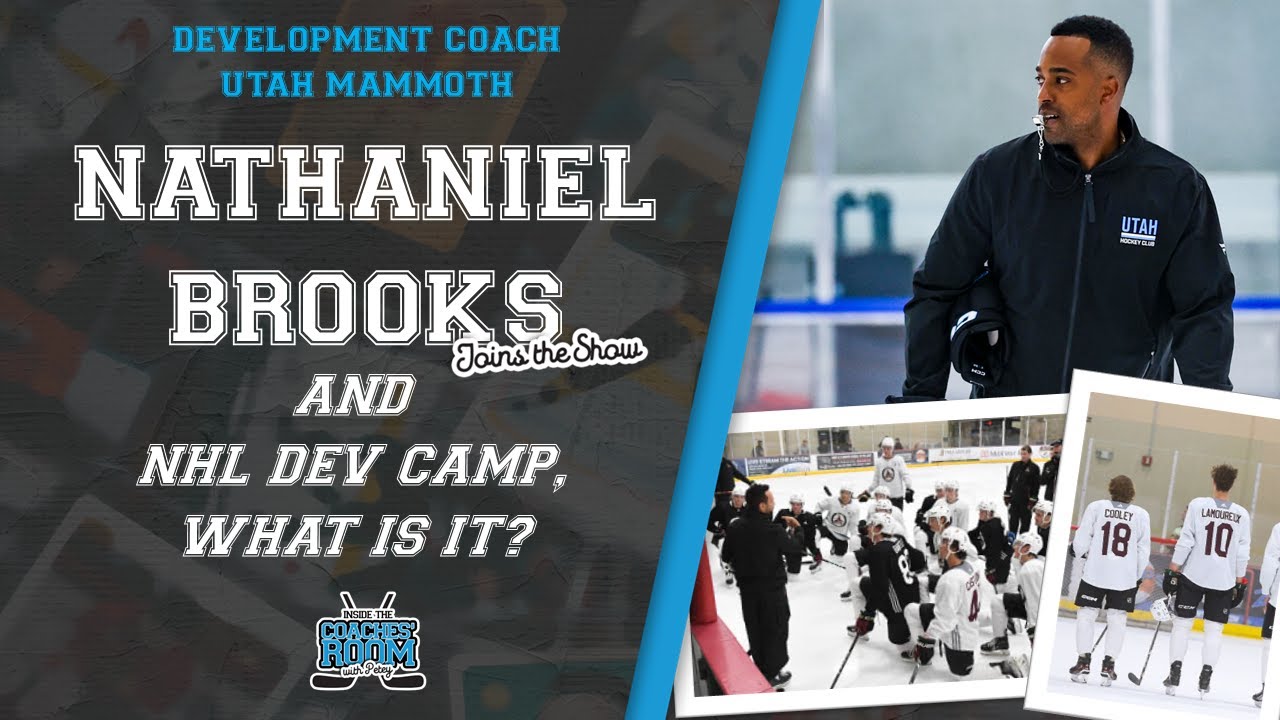
Utah Mammoth Development Coach Nathaniel Brooks AND NHL Development Camps, What Really Happens?
[Music] [Applause] well welcome back inside the coaches room i’m Petey and now that the Stanley Cup has been awarded to the Florida Panthers for back-to- back wins of of the NHL title it’s time to look at what’s ahead for the summer and this Friday is the draft and then right after the draft is development camp and before you know it’s rookie camp training camp and right back at it honestly I don’t know how the Florida Panthers have done this they’ve been in the Stanley Cup finals three consecutive seasons man they just do not get a break so on today’s show we’re going to talk just a little bit about what this looks like from the coach’s perspective at this time of year and as you get ready for the draft what does it look like to be a coach in the National Hockey League or inside the coaches room and then we’re going to have a little interview with someone who takes center stage this time of year and we’re going to talk to the development coach of the Utah Mammoth Nathaniel Brooks and we’re going to get to him in a in a little bit but it’s funny when I first started out as a video coach um in Arizona way back in in the late 90s this time of year was different and when the season wrapped up it wrapped up like you were done and and people walked away from it and I think I I think everybody from the players to the coaches to the trainers to the medical guys everybody got away and and they shut down the ice in Arizona and everybody kind of went their own way and and now they did get their summer programs and and yes guys were working out but it didn’t start right away like they took time off they healed their body they went on vacation they enjoyed life and their family and did things outside of the arena and the organization and outside of hockey and surely the staff did the same like we might have the coaching staff might have been on the phone once or twice during the summer but you really honestly didn’t reconvene until just a few weeks before training camp and I know that the medical guys and the trainers had to come back earlier because they have to get all the the the you know the testing set up and all the the stuff for medicals and they have to get all the equipment set up and all that so they had to come back earlier but but I recall being like the it was like that first training camp day meeting where everybody has to come back for a meeting by the GM and the coach was kind of like the first day back at school and everybody was hey good to see you how was your summer dude it ain’t like that anymore this is a different animal when this season ends when the hockey season ends guys take a couple weeks off and that’s it and they they’ll have fun they’ll go on their vacation but then it’s time to start training and and start preparing for the following season and I’m not sure what changed that i I don’t know if it was if it was the money or the competition or or that this guy’s doing it so I better do it or or if it’s a mixture of all of the above that that caused it to change because it didn’t used to be like that and and I think part of it too is when you got back to those training camps back in the late 90s early 2000s it was different they were long long like you were playing 10 exhibition games you were there two three weeks like they were long and you didn’t play an exhibition game for the first seven days and you were just you were skating twice a day and you literally used training camp to get back into shape like if guys had kind of gotten a little getting out of shape and they hadn’t been skating as much and they’re definitely not working out as much and you use that first week of training camp to get back to what you wanted to be for playing weight it’s not like that now in the NHL now when you get to that first day of training camp buddy you better hit the ground running and you better be in shape there is no time to catch up and it’s it’s you’re on your program all summer you’ve got your own strength guy or you’ve got the team strength guy you’ve got your own nutritionist you’ve got your own skating coach you got your own um you’ve got your own video coach like everybody’s got their own little world and you have to be competing against the guy next to you because you want to keep the job so things changed a and I think what you saw I is how important it was to maintain your shape and keep going so what happened is there’s no breaks and I don’t mean just for the players because the players do start up two weeks after traditionally is when they’re going to start two weeks after the season’s over they’re going to start up their program they’re going to start working out not necessarily on the ice but it’s more of a a conditioning and off ice program and weight training and so forth but the ice will come later in the summer and you’ve seen it in the Minneapolis area you see the beauty league where you see all of those NHL players who live and train in that area get the opportunity to be on the ice in a competitive environment and and continue to stay um in shape by being on the ice and I I think you surprisingly here in Arizona you still see a large number of NHL players come back to Arizona in the summer it’s 110 115 and you still see guys coming back here so you get those pockets you surely have that in the Toronto area and I think you get it in all of the major metro uh areas vancouver has something similar where you get guys coming back and over the summertime and you get those pockets of guys that are working on training together but what it does to your staff is they’re working now and so when equipment guys used to close up shop take their inventory and lock the door to the showroom that doesn’t happen anymore the the staffs have grown from one two equipment managers now to three and four someone’s always on site because somebody always needs something and someone’s always walking through the the practice rink it used to be a big deal that you couldn’t go to the practice rink you couldn’t do anything in the summer like you had to have your hands off in the summer i don’t know when that changed but it changed and and it’s it’s it’s a matter of these guys are doing stuff all year so that means your staff does so now the equipment guys take turns okay you get a week off and then I’ll be at the rink for a week and and you rotate so it’s constantly someone at the ring and it never ends and the medical guys clearly if there’s any players injured after what you used to do used to hand them off to somebody in their local area you’d hand them off to their local doctor or somebody else you’d pass that injury along but we’re talking that’s that’s 30 years ago well it’s not like that now you’re with the team you’re with the team doctors you’re with the team trainers you want to watch your rehab process you want to be a part of that development back to becoming the player that you’ve always been so those guys are working nearly year round now and there just isn’t the break and you talk about the general managers we know their job never ends because it’s going from getting the team you have on the ice during the regular season and as soon as that ends now you got to start thinking about the draft and getting ready for the development guys in the American League and and all across the globe and then getting ready for another training camp so we know their jobs never end for the coaches this is a little different and it’s different because right now as we’re speaking now the cup just gets awarded and it’s late June most teams have been off for two months two months and and what that process looks like for a coaching staff is when you’re done you’re done and you’ll you’ll do your exit meetings after your team loses out and you’re done you’ll do your exit meetings guys go their own ways and you’ll start making some some preparations of what the summer is going to look like and this is about the time you start to ramp up again is right around the draft where you start having your coaches meetings and you’ve watched the playoffs you’re encouraging coaches in you know your assistant coaches your power play coaches penalty kill coaches are all watching video and they’re all watching the Stanley Cup finals and playoffs and and seeing what teams are using to get as far as they get and what what is good what is bad and what can we use on our system and everybody will get back this week of the draft and usually because it’s a non-entralized draft this year so it might be a little different but you but you get those coaching staffs back together and and you discuss okay that worked for Florida edmonton did this really well this is something I saw in the Dallas series you know what la did this really cool thing on the power play and you pull from everybody you pull from all of these different teams and you get different ideas of what everybody’s doing right and wrong and what can it be work for your club and then you start showing video to each other i’m telling you this is how teams get to their new coaching system now will they change major systems probably not like if if you’re a 113 you’re coming back in the fall as a 113 but you might pick up something you might pick up a way that defensive zone coverage and you’re handing off a player as they get up in the zone or on a forch check i noticed the team’s F3 or the third forward into the zone going this direction seem to really help the Florida Panthers so this is a time to learn and and find out what you might be able to do to make your team better because everybody right now is trying to make their team better and every team right now in June thinks they are going to be better and thinks they are going to compete and maybe this is the year we make the playoffs we weren’t in last year but we’re going everybody Everybody’s thinking that except the Florida Panthers and the Emmonton Oilers right now i I hope they’re sleeping i can’t imagine the gauntlet and the war that those two teams have been through and then turn around and go “Okay we have the draft in a week.” I I just I can’t even imagine what that mental state must be like for the people in those staffs because for the coaching staff the draft really and people might not want to hear this the draft really doesn’t matter i mean it’ll matter a year from now two years from unless you’re getting Conor McDavid Conor Mc Badard Austin Matthews the guys aren’t going to play like the two three four picks maybe but the rest of the draft they’re not playing next year so the coaching staff of the NHL right now isn’t that concerned with the draft they don’t know the players they don’t have time to watch them they only see what they see on TV or read read on the internet they don’t know the players they don’t see them i don’t have time to to worry about a kid that right now is 17 years old that’s not going to play for his team not just tomorrow but it could be years so so the involvement of the NHL head coaches in the draft is minimal and and they sit around the draft tables and a lot of them will be down at the tables no idea no idea they’ll they’ll get asked questions and and their biggest purpose for being there is when those trades arise and someone calls your table and said “Hey I want player X for your pick.” And then you need the coach there to go “What do you think of player X can he fit into our system can he do and that’s where you the the real input of the head coach comes into is when you’re talking on a bigger scale because I was at a draft once and as a video guy we’re literally we’re we’re part of the audience like we literally don’t have anything to do other than facilitate the coaches for our coaches meetings but I was there when when a general manager called the coach and said “Well what do you think about this player over that player as the as the pick started to come up?” And and it just was a matter of the coach goes “I don’t know i don’t know the players i’ve never seen those players.” So as your team gets ready to pick for the draft and you’re getting the drafts coming coming Friday keep in mind the head coaching staff has very little very little to do with the actual draft this is the time for the general manager and the scouts to shine and help create the team for the future but I wanted to talk about the next step the draft is over it’s something that didn’t happen back in the again back in in the early 2000s you didn’t see what happened next what happens next from the draft and almost immediately from the draft is you have a development camp and all of these players these top picks the the top one two three round guys they bring their equipment to the draft when it’s centralized draft and now they’re going to be in LA and all the players will be there so I’m assuming the players will also bring all their equipment and all their sticks and they’ll have it all there because that afternoon or the following morning they’re getting on a plane depending on the ownership group you might be getting on a private plane depending on other ownership groups you’re not welcome to Oakland and and and then you’re going to start your development camp and and and it’s a whirlwind if your team drafts five players all five of those guys are invited to go to development camp not everybody goes like the NCAA kids aren’t going to go to your most often some of those kids won’t go although the majority of them go now they won’t go to rookie camp because that’s going to coincide with their their university studies so that doesn’t always happen you got players from around the globe that sometimes logistically can’t get there but most of the kids that just get drafted on Friday and Saturday are going to be in development camp by Monday that means you’re you’re you don’t you’ve got your bag packed you don’t know if you’re going to Arizona well you’re not going to Arizona sorry but but 120 degrees in Arizona or or if you’re going somewhere else with a more moderate climate and you’re going in the 70 degrees somewhere you don’t know you have no idea where you’re going um so so it’s just interesting to see the development of what the development camp has become because there were there are so many different schools of thoughts and you’ve started to see it from some of the teams the development camp has become just what it says it’s development camp you’re bringing your seven draft picks and you might bring in your draft picks from last year and that’s it and the Chicago Blackhawks experimented with this and they didn’t go on the ice and they just brought their kids in and you introduce them to everybody and here’s what I think and like anybody cares what I think but what I think is the purpose of development camp is to get these kids prepared that are playing in junior playing in college haven’t been exposed to this kind of environment before you get them there so that they are ready for training camp in September you introduce them to the equipment guy you you introduce them to the medical guy the nutritionist all of the coaches the facility you give them tours of the facility so then they walk in that first day in September they know where to go and and that ability to be comfortable in their environment goes a long way to sub to being ready to play in September because I it’s funny that most teams do bring them and put them on the ice and we we did something back here in Arizona we did two a days we did two a days on the ice in June well it was actually the middle of July and for those of you who have been in Arizona in the middle of July it’s warm and by warm I mean it’s hot it’s 115 degrees outside and you’ve got kids trying to skate inside it was a mess and it’s funny i could by the time I left Arizona I could recite the general manager’s speech from development camp well make sure you stay hydrated it’s very hot here you’re not used to it drink water even when you don’t feel thirsty like it’s the first thing you say to kids coming into Arizona so again it’s it’s about they put those kids on the ice well what kind of a value did you get putting those kids onto the ice at that time of year i really really like the June ice is going to help develop a player in August so we went away from the two days and it became more introductory it is about meeting the people that are going to help you develop so you can go away after this four or five days of camp and you’ve got a toolkit you’ve got a toolbox of things that you can work on on the ice off the ice life skills that will prepare you to be ready in September that’s the purpose of development camp so you will go on the ice but you’re not going the on the ice to get in in shape you’re not running laps and no you’re you’re you’re more with skill coaches development coaches things that will make you better when you go back to your junior team or back to your college team and where you’re going to play and that’s more of what the process of development camp is now it isn’t that hey we’re going to whip you into shape and we’re going to skate laps and then go to the gym and work you hard it’s not it now it’s learning and it’s understanding we’re we’re going to teach you some skills that you can take now when you go back home whether it’s to Toronto area or Michigan area or Minnesota area and you’re going to skate all summer we’re going to give you some tools that you can use to train better to eat better to work out better sleep better all of the things that you need to be because this is your first introduction into being a professional athlete so the development camp has spawned from this this this massive oneweek summer hockey school to hey we’re really trying to develop you as a professional athlete and we’re going to make you well-rounded and they go as far as they might take kids to a grocery store and teach them how to shop for groceries and it might sound so second nature but you’re talking about 17 year olds that have never done that that haven’t been responsible for things like paying bills and and how do you set up an apartment and how do you cook i I was I know in Arizona they had part of it as a cooking class and teach kids how to do those things those things are just as valuable in development camp as it is getting on the ice so that’s what development camp is now development camp is an understanding of what’s going on with that organization meeting the people so you are comfortable in September when it does matter when it does matter that you’re in shape when it does matter that you’re a conditioned athlete that it does matter that you’re ready to try to compete for an NHL roster spot development camp shouldn’t be that about that and most organizations it isn’t it’s about understanding what your organization believes in and giving you a path to develop so you can do the things you need to do to prepare for for the the training camp in September so that’s where we’re at this time of year a and for coaches head coaches in the National Hockey League how involved do they get not just in the drafting process but in development camp very little and you’ll see most of the American League staffs are running the development camp because those are the players and those are the coaching staffs that they’re going to see in most often in their journey to becoming an NHL player and I remember in Arizona we would even bring in guest coaches that that u that we would we would bring in from college campuses that that would help get run kids through the drills so that the scouts and the coaches could watch these things and it wasn’t necessarily you’re rarely going to see a head coach on the National Hockey League on the ice and development camp it’s it’s not about that it’s not about they’re getting their first taste with the coach now the coach will be there and and he’ll be there and he’ll give he’ll he’ll do video talks and and talks on what his philosophies are but that’s not their next step in this development process there’s a lot of hands that are going to get on this athlete and prepare him before he’s ready to sit with the the head coach of the national hockey team in most cases again the first pick overall it’s different so when a coach and staff goes to development camp a lot of it is is is just reinforcement of some of the things they’ve heard about these draft picks but there’s no evaluation there shouldn’t be it’s June it’s early July you can’t evaluate a kid he hasn’t been on the ice some kids haven’t been on the ice for over a month some kids are coming from their their league championships and been on the ice you can’t evaluate this it shouldn’t be about evaluation and the one thing I can say to kids that are going to these camps and players that are going to their development camps there is a lot more eyes on you when you’re away from the rink than they are looking at what you’re doing on the ice and now I’ll say this scouts and managers are different when they’re watching these kids on the ice hey and I’m I’m sorry i’m don’t want to insult any scouts here but they’ll say “Hey do you see that guy turning the corner oh look at that guy’s first two strides.” And buddy it’s July like relax you I’ve heard it we’ve all heard it if you’ve been around those and everybody’s getting excited about the guys that they’re picking but for the coaches it’s about who shows up on time who says things who asks the right questions who’s ready when a drill happens on the ice that they understand it from the board they get in the front of the line because they understood it and they do the drill right that’s what coaches are looking for coaches want to see the guys that are working their hardest in the weight room not who can lift the most or do the most reps it’s who does the exercise right and who does it to his best of his abilities and competes hard it is about competition it’s about how he treats the trainers that goes so far if a guy makes after he’s done getting undressed after practice he throws his gear around leaves the pigsty and has the trainers pick it up it’s going to get noted and I’ve seen guys start off at the bottom of the the the the the ladder because of the way they treated people in camp and it happens so I I I think when you’re talking about what does a coaching staff look for from development camp it’s those things it’s the intangibles it’s is he helping his teammates out in in different ways during this camp is he following the rules is he on time does he portray what we want to have in a professional athlete for our organization the hockey stuff’s going to come you weren’t you weren’t drafted if you can’t play hockey you’ve got that at least in the in the beginning of July and we’ll we’ll run you through the paces when when we have you much later either this year or later in your career so that’s where where all of this development camp leads to and this and this kind of ties into our interview for today with Nathaniel Brooks who’s the development coach for the Utah Mammoth and I think this kind of gives you a taste of what these guys are looking for and how valuable this role is that didn’t exist 25 years ago that has become so important in the way things work in the National Hockey League today so without further ado let’s get to the interview of Nathaniel Brooks welcome back inside the coaches room i’m Pety and again this is a hockey hotbed today in Toronto at the NHL Coaches Association Global Clinic i found an old friend here roaming roaming the hallways and I’d like to welcome in uh one of the best at what he does Nathaniel Brooks the development coach for the Utah Mammoth thanks for taking the time yeah it’s always good to see you always good to see you nathaniel I want to start off with what what’s the advantage for a guy in your role here and what can you get for for your job at at the global coaches clinic i think you know over the years of coming to this clinic the goal of coming never changes right if I can come here pick up two or three things I’m better for it right so coming and meeting different coaches from different levels and getting to sit down with guys from other teams and hear how people are doing things what they’re tweaking what they’re not is why you come here right and also too the hockey world’s so small it’s you know it’s the best world so coming here and seeing faces that you know shaking hands and networking and meeting new people is always awesome did you think when you cuz you attended this clinic long before you were in your current role did you when you came to this clinic did you say was your goal to be in the NHL or did you ever think you’d actually work in the national hockey it was always my goal you know it was always my goal there’s time there was times where you know sometimes you felt like I’m getting close and then times where like ah if it happens it happens right and you know you catch your break if you remember I came in as a guest coach and you know they really liked me and that was my opportunity to get in and you know I’m a fort I’m one of the fortunate ones right because you have to there has to be a little bit of luck in it too being in the right place at the right time which I love i I’ve talked to a lot of video coaches over the last week and that was kind of the resounding message is like how what’s my path how do I get to the National Hockey League and the message was you don’t know like it’s just one work hard meet as many people as you possibly can and just just be in the right place at the right time and what that means is do do your path is going to be different than my path 100% and so your path to get here you started your first year in the actual 2017 I know my first year actually was 2023 oh yeah 22 23 you see I wrote it down i’m going into my third year full-time i wrote 22 23 fourth year sorry yeah so fourth year full-time and you started in Arizona and then moved to Utah how was that transition going from Arizona to Utah it was uh for for me as a guy that lives at home and travels back and forth i don’t have to deal with uprooting and moving everybody but it was a tense time when we found out like everybody else that we were moving to have a job right uh we didn’t hear much right away but then when we learned we were all going over it’s been it’s been awesome so you’re based out of Toronto and so you do most of your work out of here so explain exactly what the role is so you’re not on the ice with the Utah Mammoth every day no what is your job cuz you’re in development you’re getting the guys that are they’re that are 18 19 20 21 getting them ready for the next level so what is it exactly that you do so once we draft a player that’s where our staff comes in um video on ice mentorship helping players deal with what we dealt with every day as players at the junior and college level right working with their coaches building that relationship to make sure that we’re developing our players properly right which I think our organization’s done an amazing job of over the last you know four five years uh and why you’re starting to see the Josh Dones and the Gunther and the Coolies making not seamless transitions but coming in and being a little further ahead than they might have been if they didn’t spend the time with us do you think over time now are you when you walk into a junior locker room or a college locker room are you getting more accepted like I know if you go back a decade I think there is some push back yeah from from those leagues pushing back hey we’re doing things our way stay out of our way he’s our player do you think it’s more accepting now of letting development coaches inside their room i think it’s important the way we step into their room right uh we’ve gotten a lot of acceptance i haven’t had any situation where I wasn’t wanted or there was push back we have to go in with the mindset with the coaches and talk to them and tell them “Hey I’m not going to go in and tell ex player to do this outside of your structure what we’re focusing on is that player’s identity and where we see him project him to be in the NHL.” And however we can like bridge that gap we do but we tell coaches we want him we want you to put him over the boards more so we want to have a good relationship with you so it’s been good that way haven’t had any push back so your your time to shine is coming up like development camp to me it’s right after the draft when you’ve got that first the the first touch of a brand new player just got drafted the week prior and you get to handle that player in development camp what’s that initial meeting like with you and getting that player started off on the right step for the Utah Mets it’s awesome because they’re really excited right just drafted to the NHL now you’re at development camp we just take the time to get to know the guys right and for us as a staff uh you know we have so many prospects and we throughout the year we realize the things that we talk most to the just the general group what are the what are some of the concepts that we talk about the most and that’s how we build out our on ice plan development camp is more bringing them into our mammoth atmosphere um and getting them bought into our culture and hammering down what it means to be a mammoth or a coyote or yeah the mammoth do we like the name I do people ask me all the time I I just said it’s just their name like I I like it’s fine it’s fine it’s their name logo is really cool I like I got to talk to guys about getting a little bit of mammoth Swag i love that yeah we got to get you set up swag i want you said you’re based in Toronto but you do travel around like do you literally travel the globe yes that’s insanity are you going over Europe and seeing the Yep yeah that’s a hard hard job so you just fly fly around the country get your Do you get one-on-one time with these kids when you go out to see them yeah one-on-one time a lot of times uh when you go in coaches will take the opportunity to have us take their other players on the ice as well seriously yeah oh that’s great yeah so I’ve had How’s your willingness to do that knowing he might not be a a property of the mammoth but your willingness to to help out it goes back to the start of our conversation that’s how you get buy in and acceptance from the Yeah cuz you’re helping them now I’m helping you i’ll come and I’ll I’ll help your young guys with whatever they need as well as long as I’m getting the time with our guy to do what we need to do yeah to make that player better because ultimately your job is to get these guys ready to be a professional athlete and play for the Utah Network yes and that’s your job and part of that is having their coaches like you said accept us in and understand what we’re there to do and I’ve had I’ve had one-on-one time i’ve had you know one-on-one time i’ve also had I won’t say what team but I’ve had an entire team on the ice as well in a foreign country so so I I do want to ask about because I talked to Andre Turney earlier today and I and I’m a big believer in Andre Turney and in the way he’s been able to coach this group and improve every single season well I I would assume that that the communication between you and Andre literally it has to exist but but do you try to to to moderate and get these players to be what Andre wants them to be how much does Andre’s system or the way he coaches or or the way he communicates with players influence your job uh I think as you know Bear has his fundamentals that he talks a lot about and for us as a development staff rather than trying to build our players through Bear’s system or anything like that cuz that’s ever changing it’s more about the fundamentals of what he’s looking for and the fundamentals of what he’s looking for are not you know out of this world new concepts right it’s things that they need so it actually makes our job a little easier understanding what that is now we talk about your ability on ice i know that stuff exists your ability to teach players how to get better at the game is your role also teaching these kids because they’re kids they’re 18 they’re 19 they’re 20 do you also help prepare them for life and what’s coming next in in just being a pro away from the arena 100% that is that is when you wait out our year when you like reflect on what it is sometimes that’s more of our job than what we’re actually doing on this do they call you during the year do you get phone calls from guys saying “Hey I’m either struggling with an on ice skill or a tactic or hey I’m really having a hard time with motivation or I’m having a hard time away from rig.” Do you get those calls during the year get them all so just to put it in perspective I talk to our prospects like we divide our prospects up we all work with everybody sure but we have that one-on-one relationship there’s probably not a guy that I go 48 hours without talking to even if it’s even if it’s just like “Hey what’ you think did you watch that game live?” Okay hey I got this meeting with my coach coming up what do you think hey I’m feeling like this hey I’m my agent saying so yeah so you’re part mentor you’re part coach you’re you’re part uh stepdad everything yeah that’s amazing it’s awesome it’s awesome and you get your hands on these players well before Andre and his staff do i mean they’ll see him at training camp but then they’re gone and it’s important for us that when Pottsy or Andre get the guy that they’re not hearing things for the first time yeah and what is next for you so you’ve got the coaches clinic now what’s next on your agenda and what you have to do every single So obviously the draft and development camp is the big one and you know from your time as a video coach and all that stuff how much planning goes into it so that’s the big thing you know not a lot of sleep right now making sure that we’ve got everything ready because we can plan as much as we want then we get there and things change right got to be ready to move in shape i am so impressed with you and watching your career go from where you started in 22 23 to where you are now keep up the great work and I and I think Utah’s on the on the cusp as it were a tusk tusk up they’re right there the team’s improving and I think it’s getting close and it’s going to be exciting to watch that team Nathaniel thanks for the time I really appreciate it man the rest of the way thanks Nathaniel for taking the time and I know again I’m going to apologize I did it at the beginning of this that that some of these interviews at the the NHL coaches association world clinic global clinic were a little hard to hear so I appreciate your patience with this there’s a few more coming out we got some big ones we might have an NHL coach coming up in next week’s episode so make sure you stick around and stay tuned and make sure you subscribe to Inside the Coaches Room so you don’t miss any of this content over the summer because it’s not just about interviews and talking about what happens inside the coaches room it’s going to be video and we’re going to teach hockey and I I tell you what I’m going to tease one that I’m working on right now for inside the coach room inside the bubble and it’s going to be my self-made documentary so don’t expect a high-end you know what ESPN’s 30 for30 it won’t be that i’m going to do my best to show you what life was like inside the Edmonton bubble i lived the Edmonton bubble for 27 days with the Arizona Coyotes and and I know it was a time that a lot of people you know hockeyy’s just getting back into action after being stopped earlier in the spring and this is what the teams went through and this is what life was like inside the bubble in Edmonton and and I don’t think people really when you say the bubble what does it mean what does it really mean to be in a bubble dude it’s a bubble and I’m gonna explain what it looks like i’ve got videos and pictures and we’re going to talk a lot about the bubble and that’s coming up over the summer and one of the reasons I want to make sure you subscribe and be a part of what we’re doing here and I also came across some old video footage i don’t know how much trouble I’m going to come in for this one but I came across some video i was the video coach in 2016 for team North America and that’s McDavid McKinnon Matthews i mean Johnny Hockey was on that team jack Eichel’s on that team uh the list goes on and on connor Hellabuk was between the pipes like this the team of six 2016 I still say and people argue with me if you put that team together today it’s the greatest hockey team to ever exist so but I was a video coach and and I came across just recently I came across we were working on the power play and I I took it on my own personal iPad we were filming the power play so I I might over this summer get to release some neverbeforeseen video of Team North America working on their power play on ice and I will say this Dave Tippet who is an assistant coach of that team said at the time “I don’t know how I’m going to go back and coach the Coyotes after working with this team for a month because that team they they were so skilled they did everything right they did everything fast and everybody was above exceptional at every skill so stay tuned and make sure you subscribe to Inside the Coaches Room so you don’t miss any of that video content and if you’ve seen the content that we that we had on this channel as the playoffs continued make sure you subscribe because it’s it’s the best way to learn more about the game of hockey especially if you don’t understand it understand what’s happening in the Exos understand what you’re watching so that when you watch the game you have things to look for so make sure you subscribe and and leave us a thumbs up i I can’t tell you how much I appreciate this journey that we’ve gone on over the last few months here on Inside the Coach Room it’s been fantastic for me and I can’t wait to see what happens next and I can’t wait to see what happens when the hockey season rolls around again thanks again to Nathaniel Brooks for jumping on and inter for the interview today with inside the coach room and thanks for listening and as always I’m Petey and we’ll see you at the rink [Music]
Former NHL Video Coach, Steve “Petey” Peters goes Inside the Coaches’ Room and goes behind the curtain of the NHL Development Camps. How have they changed over the years? What is the role of the NHL coaching staff? When do the medical and equipment staff get time off (hint, they don’t)
Petey also gets the chance to catch up with the development coach of the Utah Mammoth, Nathaniel Brooks who talks more about how his role develops players both on and off the ice.
Go behind the curtain and learn more from coaches, players and those close to the game of hockey… go Inside the Coaches’ Room.
Subscribe: Inside the Coaches’ Room
http://www.youtube.com/@InsideTheCoachesRoom
Follow Petey on X or Bluesky:
@spetershockey
3 comments
what a cool interview! i had no idea development coaches even exist
I really appreciate getting to know the Mammoth development staff better!
Petey, this was a really good episode. It's really interesting to see a bit of what happens behind the scenes. Although I've been a fan for many decades, this is something new for me about the hockey world. It's cool to hear how much these kids are getting helped along the way.