
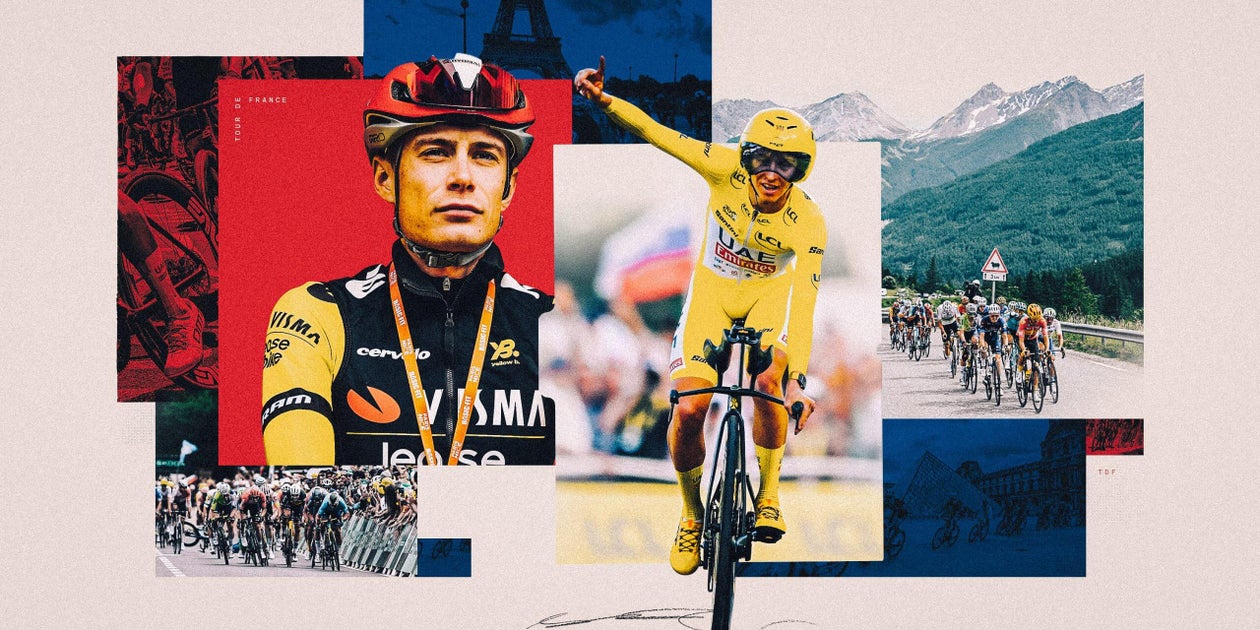
The flagship race of the World Tour cycling calendar is here. The 2025 Tour de France is set up to be spectacular.
In Tadej Pogacar and Jonas Vingegaard, this era’s two greatest riders will do battle in the Alps and Pyrenees. The sprinters’ field is amongst the deepest ever assembled. Stars such as Mathieu van der Poel, Wout van Aert, and Remco Evenepoel will all have their eyes on stage victories.
Add in its reliably remarkable backdrop — the likes of Mont Ventoux, Montmartre, and the Mur de Bretagne in this year’s route — and while every edition of the Tour is special, with its own storylines, this year sees those narratives lie closer to the surface than ever.
Twenty-one stages, 23 days. Enjoy.
Who are the favorites for overall victory?
Make no mistake, this is Pogacar vs Vingegaard. Their rivalry has animated the race’s past four editions, but arguably, this year is set up to be their best meeting of all.
Both are in their prime, at 26 and 28 years old respectively. For the first time since 2022, neither rider has experienced a disruptive pre-race crash in the build-up — both say they are in the best shape of their lives.
And whereas previously Vingegaard’s Visma Lease-a-Bike team have been far stronger than Pogacar’s, UAE Team Emirates have narrowed the gap significantly in recent seasons. Both have strong domestiques: Vingegaard has Giro d’Italia winner Simon Yates and American climber Matteo Jorgenson, a podium contender in his own right, while Pogacar boats Tour de Suisse champion Joao Almeida and Yates’ twin brother Adam.
Elsewhere, Belgium’s Remco Evenepoel made an exciting Tour debut last summer in finishing third. The world’s best time-triallist, he has yet to prove he can hold onto his two rivals on the very hardest climbs, but has already won a Grand Tour at the 2022 Vuelta a Espana.
The Tour de France is the only major stage race missing from Primoz Roglic’s palmares — but the 35-year-old has a turbulent history in the race, missing out on victory during the final time trial of the 2020 edition, before failing to finish his last three starts. Watch out as well for his Red Bull-Bora-Hansgrohe teammate Florian Lipowitz, who podiumed impressively at the Criterium du Dauphine last month, the Tour’s traditional warm-up.
Is this an all-time sprinters line-up?
Yes, of every shape and size. In terms of pure sprint specialists, Lidl-Trek’s Jonathan Milan, Soudal Quick-Step’s Tim Merlier, and Alpecin-Deceuninck’s Jasper Philipsen are the quickest men in the peloton. Philipsen and Milan’s teams are more set up around their sprinters, but Merlier is an exceptional improviser.
This is without even mentioning last year’s green jersey, Eritrean rider Biniam Girmay, who became the first Black rider to ever win the race’s points competition. Girmay is a good enough climber to compete for points on bumpier stages, so he may still be a force in the overall points competition, even if his rivals will be favorites for stage wins.
Then, there is an outstanding class of sprinters and one-day specialists who specialize in more difficult finishes. This group is headlined by Mathieu van der Poel, the Dutch superstar whose form has been shown off more in the Spring Classics than any Grand Tours. The punchy uphill finishes of the first week suit him well, but he will face stiff competition from Visma’s jack-of-all-trades, and Tour specialist, Wout van Aert.
The likes of Kaden Groves, a two-time winner of the Vuelta’s points classification, Israel-Premier Tech’s Jake Stewart, and Jayco AlUla’s Dylan Groenewegen could all also contend for stage wins.
The likelihood of stage one ending in a sprint finish — giving the fast men a rare chance to don the yellow jersey — means the finish in Lille should be one of the most fiercely contested moments of the entire season.
Who are the young stars in contention for the white jersey?
Remarkably, Evenepoel is still eligible for the best young rider award, despite winning the Vuelta three years ago. He will be the favorite, though the relative lack of time-trialling kilometres does not suit him perfectly.
Lipowitz should also be up there, provided he can pursue his own GC ambitions rather than only serve Roglic, while INEOS Grenadiers’ leader Carlos Rodriguez finished fifth overall two years ago.
But keep an eye on Lidl-Trek’s Mattias Skjelmose, who has been in fine form this season — the only man to defeat Pogacar on a climb this season at the Amstel Gold race.
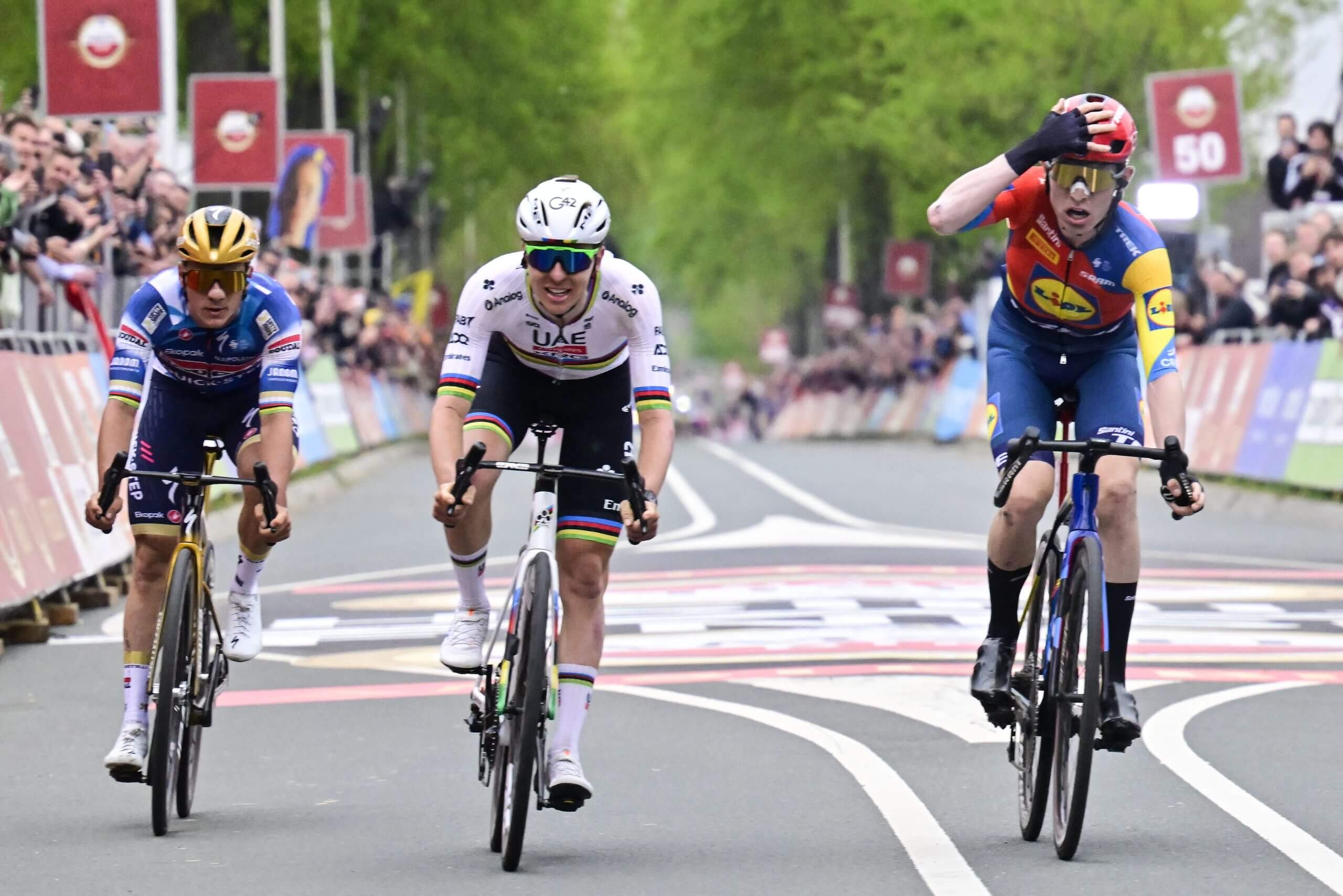
Skjelmose has beaten Pogacar this season — and not many can say that (Dirk Waem/BELGA MAG/AFP via Getty Images)Who is targeting the polka dots?
The polka dot jersey (which celebrates its 50th anniversary this year) is an interesting goal, made up of a small group of climbers who are quick and resilient enough to get into the break almost every day, yet who choose to ignore the possibility of chasing a top 10 on GC.
One rider who was targeting polka dots was last year’s winner Richard Carapaz — but he was ruled out of the race last weekend with a stomach infection.
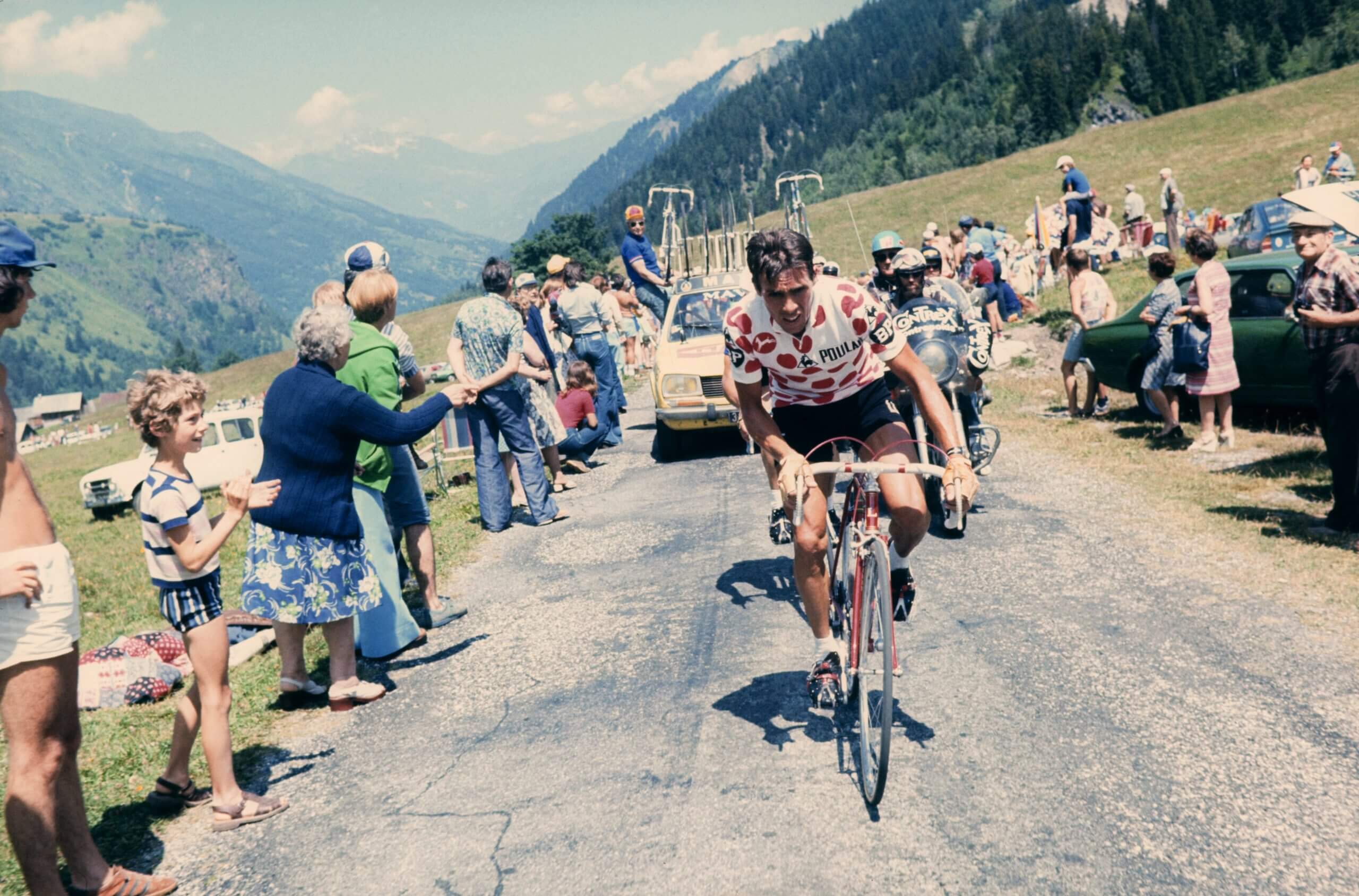
The polka dot jersey was introduced in the mid-1970s to help identify the leader of the mountains classification (AFP via Getty Images)
Carapaz’s absence means French riders such as Lenny Martinez and Kevin Vauquelin are worth considering, while there is a range of lesser GC hopefuls who may have a tilt if they lose time early on — the likes of Skjelmose, Ben O’Connor, and Felix Gall.
There is also the slightly unsatisfying possibility that the competition could be won by the same rider who wins the yellow jersey, especially if they win multiple mountain stages. This was the case when Pogacar won the Tour in 2020 and 2021 and when Vingegaard was victorious in 2023.
Who are the teams taking part?
Though riders win individually, cycling is a team sport: the Tour de France will be made up of 23 teams, each made up of eight riders.
The interesting aspect is that teams enter the race with different goals. Some — such as Pogacar’s UAE Team Emirates and Vingegaard’s Visma Lease-a-Bike — are all in on overall victory, picking squads capable of supporting their leaders in the mountains and controlling the peloton on the flat. Others, such as Alpecin-Deceuninck, for example, are all-in on sprint stage victories. Many choose to split priorities between chasing GC and going for stage wins — Soudal-Quickstep, who boast arguably the race’s fastest sprint in Merlier, and one of its best overall riders in Evenepoel, epitomize this approach.
And then there are the wildcard teams — outside of the 18 WorldTeams, who qualify automatically, the ASO pick five more ProTeams at their discretion. This means that Tom Pidcock’s Q36.5 do not have a place, but home hero Julian Alaphilippe’s Tudor Pro Cycling do. Often, the smaller teams are all about exposure; expect to see their riders in the breakaways, shooting for the moon of a long-distance stage win.
There are also four French teams in the race — Arkea-B&B Hotels, Cofidis, Decathlon-AG2R, and Groupama-FDJ — who will similarly be desperate for attention, especially with all four lacking a genuine GC podium contender.
Explain how the time bonuses work
Grand Tours are won by the rider with the lowest cumulative time, so races have long offered time bonuses to spice up proceedings. This year’s race keeps it pretty simple, with bonuses of 10, six and four seconds for riders finishing first, second and third in a stage. This does not apply on the two time trial days (stage five and stage 13).
Who are the Americans in the race?
Two Americans — Matteo Jorgenson and Sepp Kuss — will aid Vingegaard’s attempt to win the tour. Kuss, 30, is one of the best mountain domestiques in the world, so strong he even won the 2023 Tour of Spain ahead of Vingegaard and then-teammate Primoz Roglic. Jorgenson, meanwhile, will have protected status on the Visma team, and should anything happen to Vingegaard, he is set to become the leader of the Dutch squad. He finished eighth in last year’s Tour and has won the prestigious Paris-Nice race in each of the last two seasons.
Also taking part is Neilson Powless, who rides for EF Education–EasyPost. A strong rider in one-day races (he won the Belgian classic Dwars door Vlaanderen in impressive style earlier this year, beating three Visma riders — including Jorgenson), Powless is likely to hunt stage wins on the hilly days that pepper the first half of the race.
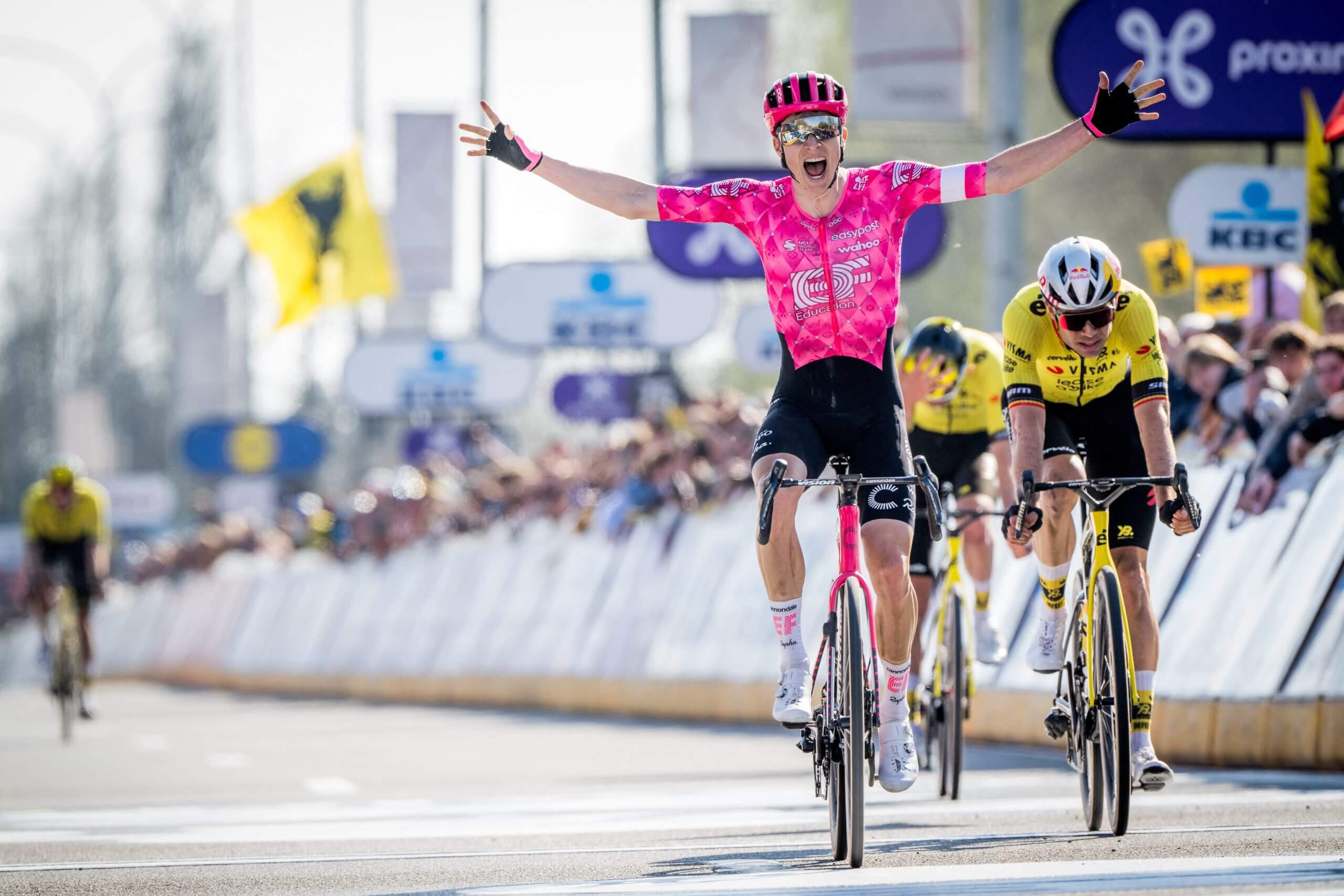
Powless enjoyed the biggest win of his career at Dwars door Vlaanderen earlier this season (Jasper Jacobs/AFP via Getty Images)
Lidl-Trek have named American road race champion Quinn Simmons in their team. Simmons, 24, won a stage at the Tour of Switzerland last month and is one of four riders in the Lidl-Trek squad who qualify for the white jersey competition. He will mainly be tasked with reeling in breakaways so the team’s sprinter, the Italian Jonathan Milan, can compete for stage wins and the green jersey, but may find breakaway opportunities on certain stages.
And finally, the Spanish team Movistar have included the 29-year-old Will Barta in their eight-man roster. Barta has never ridden the Tour de France before, but has completed the Giro D’Italia three times and the Vuelta a Espana twice.
How do I watch the race?
In the United Kingdom, this will be the final race to be broadcast on free-to-air TV by ITV. That also means it is time to say goodbye to the channel’s 7pm highlights — an institution to British cycling fans. Full coverage will also be provided to subscribers to TNT Sports/Discovery+, who will show the Tour exclusively from next season.
In the U.S., NBC and Peacock are in charge of proceedings. Available on a pay-per-month basis, and available to be streamed online, Peacock’s offerings will show all 21 stages live.
📺 How to watch Tour de France 2025 around the world?
⌚️📊🗺 & more on 🔗 https://t.co/PT41jpPyFw #TDF2025 pic.twitter.com/ggwV1oKPXf
— Tour de France™ (@LeTour) July 1, 2025
Describe the route in 10 words
Classic climbs and a traditional loop. Mont Ventoux looms large.
Stage by stage guide:
To go through the route, The Athletic enlisted the help of legendary team manager Patrick Lefevere. The 70-year-old Belgian is the most successful manager in history, with Soudal-Quickstep, the team he has long been affiliated with before stepping down last year, marking 1000 professional victories at the Criterium du Dauphine last month.
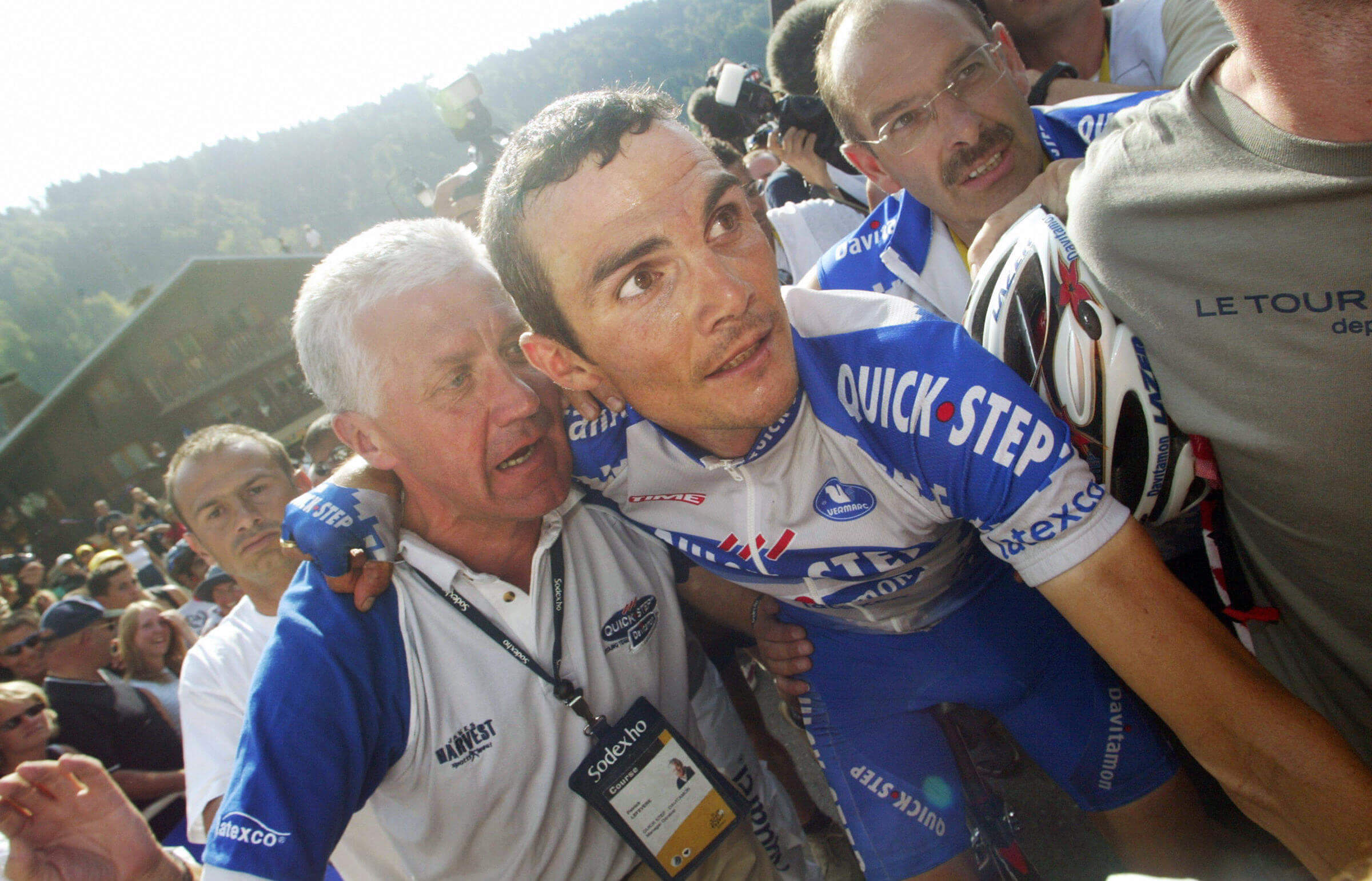
Patrick Lefevere congratulates his winning rider, Richard Virenque, after the conclusion of stage seven at the 2003 Tour (Franck Fife/AFP via Getty Images)Stage 1, Saturday July 5: Lille — Lille, 185km, flat
A straightforward loop from Lille, which should be settled by the pure sprinters. There are five 90 degree corners in the final three kilometres, so positioning will be key.
Lefevere: “It would be a dream for Tim Merlier to win the first stage in Lille (for Soudal Quickstep). If you win, you also take yellow. France is our neighbor, but the finish-line is only 30 minutes away from Belgium.
“Milan and Merlier will be the favorites, but there’s also the opportunity for an outsider, because the situation will be so stressful. At the beginning of the Tour, nobody wants to apply the brakes, not even the GC rider. The most important thing is to stay on your bike, and then have a team who can make space for your sprinter to do what he has to.”
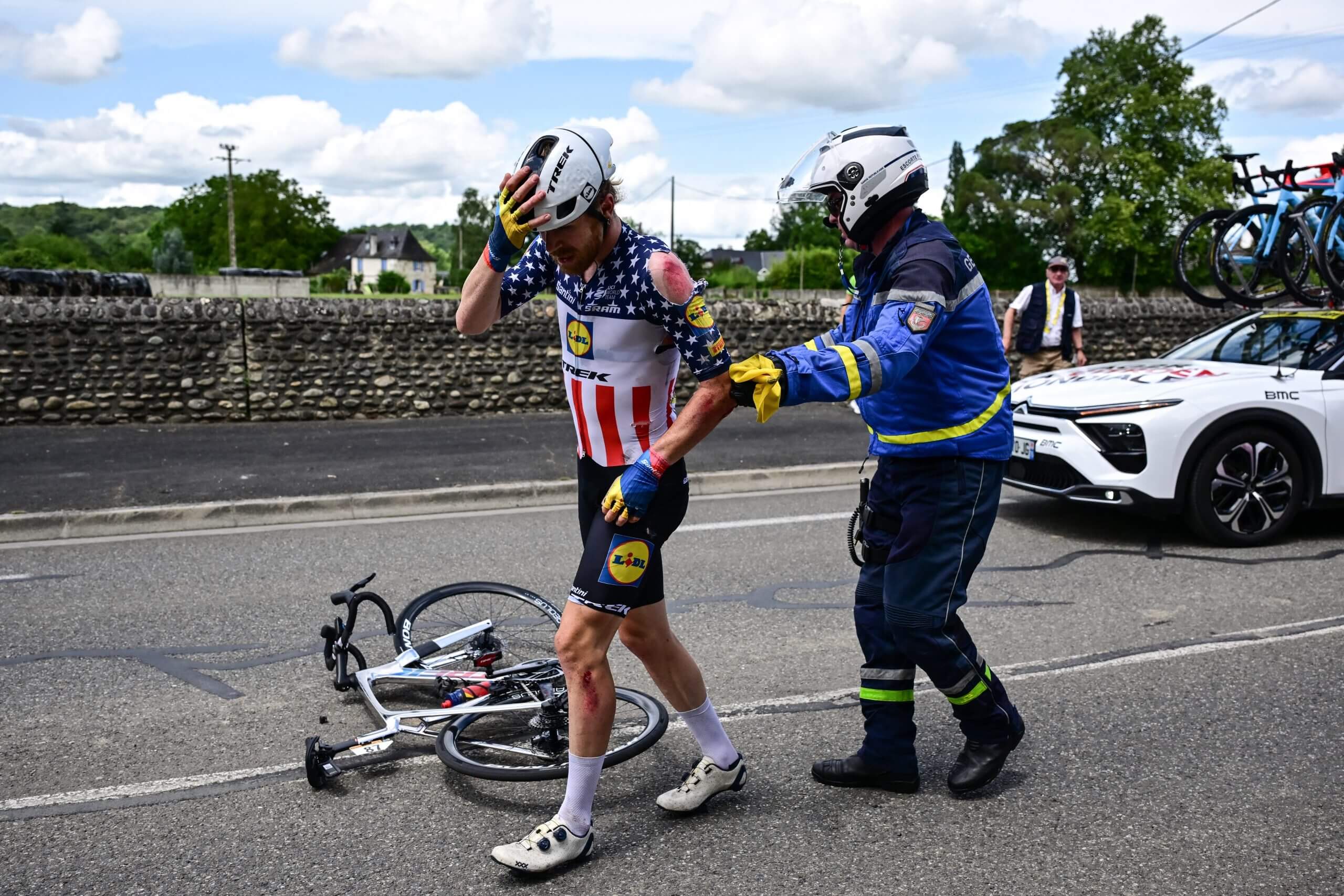
The early stages of the Tour de France can be marred by crashes (Marco Bertorello /AFP)Stage 2, Sunday July 6: Lauwin-Planque — Boulogne-sur-Mer, 212km, hilly
The longest stage of the Tour, it is bumpy enough that victory will be decided between the puncheurs — the uphill finish could be a chance for Van Aert or Van der Poel to take yellow.
Stage 3, Monday July 7: Valenciennes — Dunkerque, 178km, flat
Another stage for the pure sprinters, but where the jeopardy is provided by the possibility of crosswinds. GC teams will need to stay near the front because of this, which will make the closing kilometres extremely stressful.
Lefevere: “We cannot dictate the wind, unfortunately, but I remember one year the course was a little bit boring, and we were in the same hotel as another team. We spoke with them and decided to force the issue. In the end, amid the crosswind, we eliminated 10 guys and Cavendish won the stage. I remember Christian Prudhomme came to our hotel with a bottle of champagne to thank us for our aggression.
“Sometimes you don’t need steep mountains, because a windy stage can sometimes be more spectacular than anything else.”
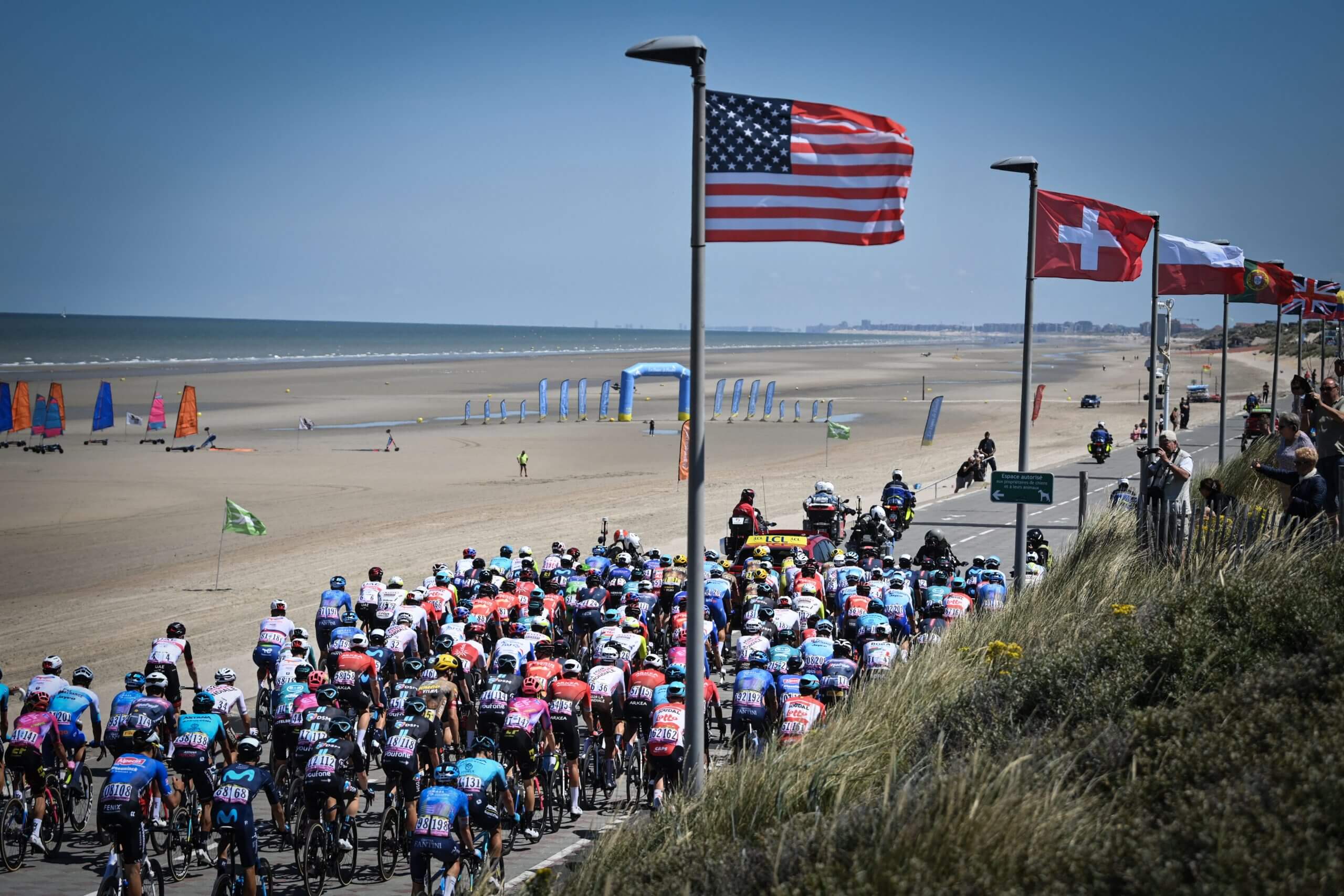
The Tour last visited Dunkerque in 2022 (David Stockman/BELGA MAG/AFP via Getty Images)Stage 4, Tuesday July 8: Amiens — Rouen, 173km, hilly
An awkward stage takes the Tour into Normandy. Another chance for the sprinters, but the likes of Philipsen and Milan may be distanced over some of the short final climbs. Expect a reduced bunch.
Stage 5, Wednesday July 9: Caen — Caen, 33km, individual time trial
This Tour de France lacks time-trialling kilometres — this is the only traditional TT all race. Evenepoel will be the favorite, but INEOS boast Filippo Ganna, a worthy contender for the stage in his own right. This should be the first opportunity to see the GC riders’ condition.
Lefevere: “Remco has hardly lost a TT in the last two years. It’s a big goal of his. His TT in the (Criterium du) Dauphine was quite impressive, where he put 40 seconds on Tadej Pogacar — and remember, he’s Olympic and world champion, so he’ll be very motivated.”
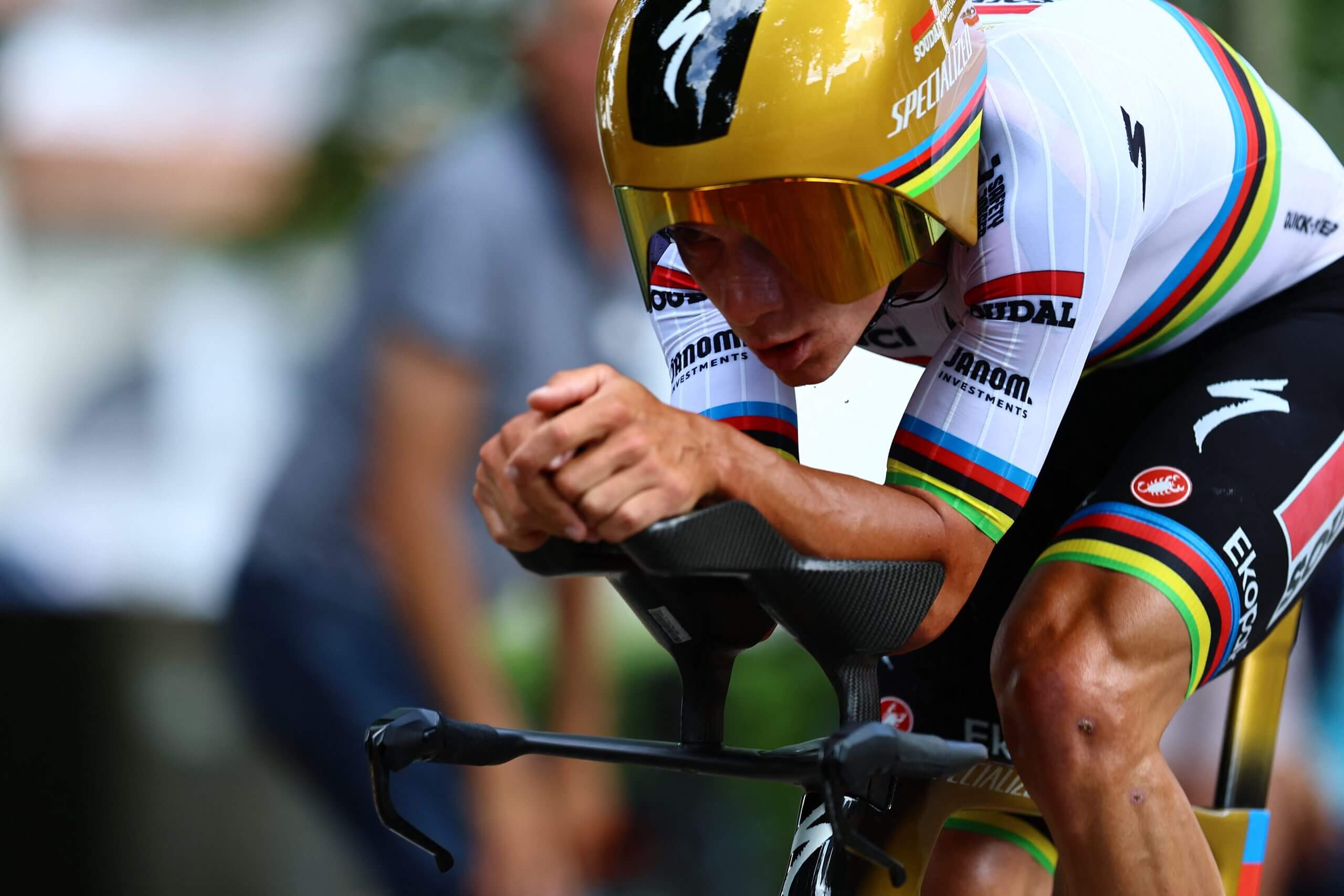
Remco Evenepoel is the reigning world, Olympic and Belgian national time trial champion (David Pintens/BELGA MAG/AFP via Getty Images)Stage 6, Thursday July 10: Bayeux — Vire Normandie, 201km, hilly
The sort of stage that looks innocuous on paper but could be costly for any contender who is not attentive. The roads in Normandy are narrow, twisting and will go up and down all day. There is over 3,500m of elevation in this stage, which is more than some mountain stages contain.
Lefevere: “It’s stages like this where you can sometimes see time gaps between the peloton, or lose a favorite because of crashes or unfortunate circumstances. There’s also the opportunity for attacks. You also couldn’t plan a better stage for Mathieu van der Poel.”
Stage 7, Friday July 11: Saint-Malo — Mur-de-Bretagne, 194km, hilly
The race reaches Brittany, often touted as the heartland of French cycling. The crowds will be big and enthusiastic, with the finish on the two-kilometre Mur-de-Bretagne a popular and spectacular feature of many modern Tours de France.
Lefevere: “This is the first important stage for the GC guys — they will likely attack each other here. Van der Poel and Wout van Aert will also be important here, because the Mur de Bretagne is too hard for the pure sprinters.”
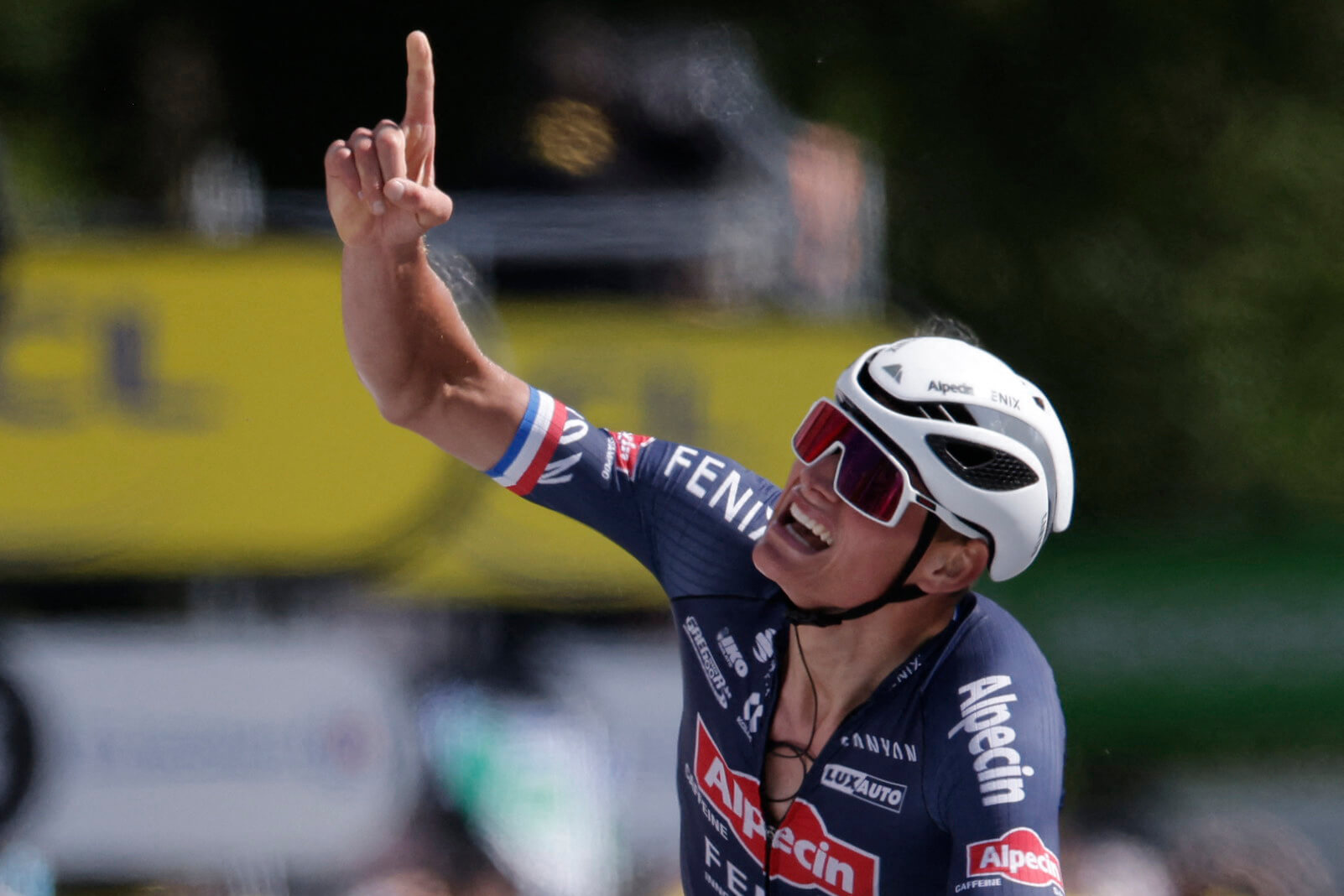
Van der Poel won here in 2021 and will be one of the favorites to do the same in 2025 (Stephane Mahe/AFP via Getty Images)Stage 8, Saturday July 12: Saint-Meen-le-Grand — Laval, 174km, flat
A very flat stage. A breakaway will almost certainly form early on but the sprinters’ teams will make sure they are caught before they see the pretty town of Laval. Expect a battle royale between the race’s fast finishers, although the slightly uphill finish may impact who comes out on top.
Stage 9, Sunday July 13: Chinon — Chateauroux, 170km, flat
Back-to-back flat stages on a weekend might not excite the TV directors but the sprinters will love it. The Chateauroux finish was a favorite of Mark Cavendish’s — three of his record total of 35 Tour de France stage victories came here, including his very first. Such is the retired British rider’s connection with the city, its mayor has (unofficially) renamed it ‘Cavendish City’ for the summer.
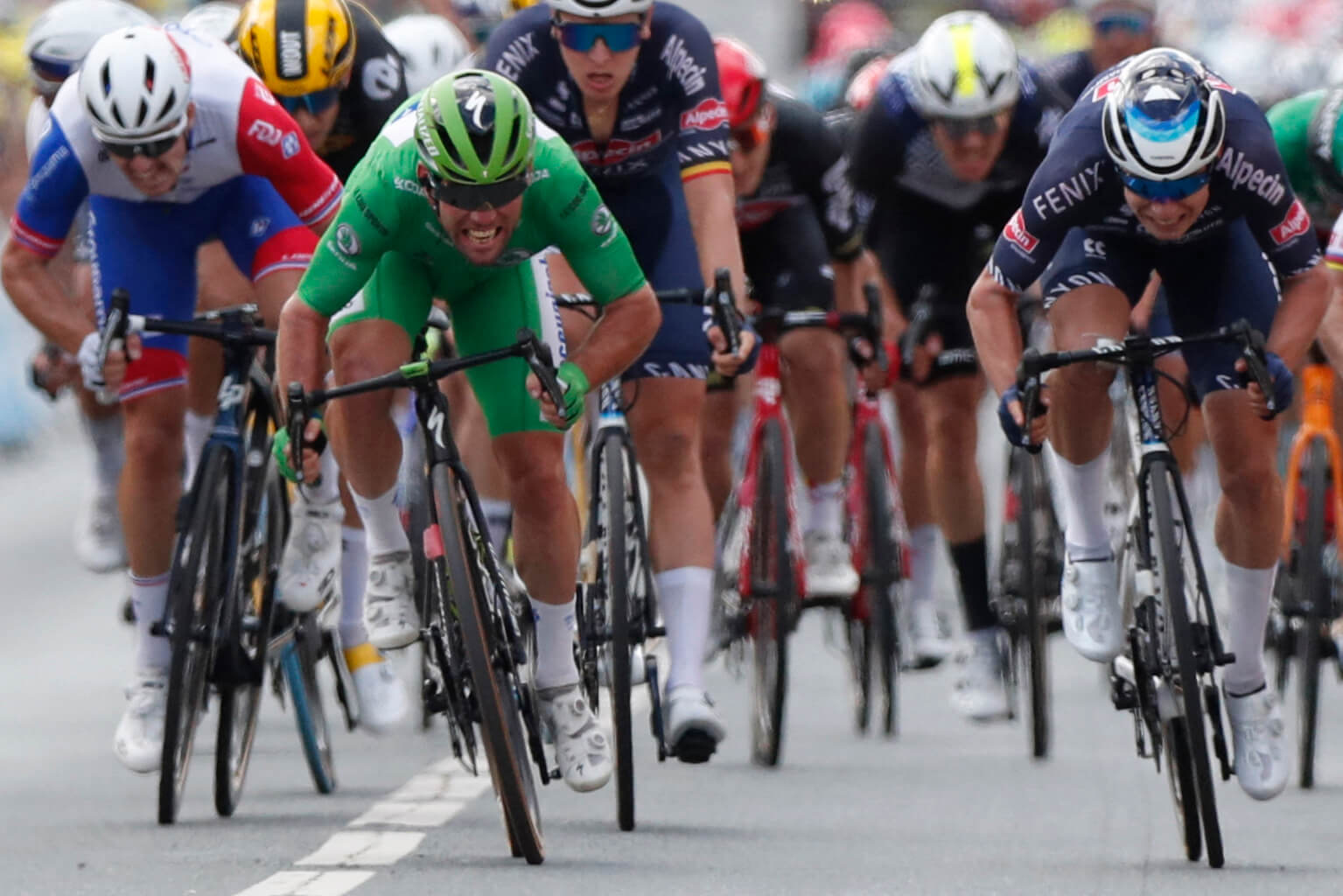
Mark Cavendish won in Chateauroux in 2008, 2011 and here in 2021 (Guillaume Horcajuelo/POOL/AFP via Getty Images)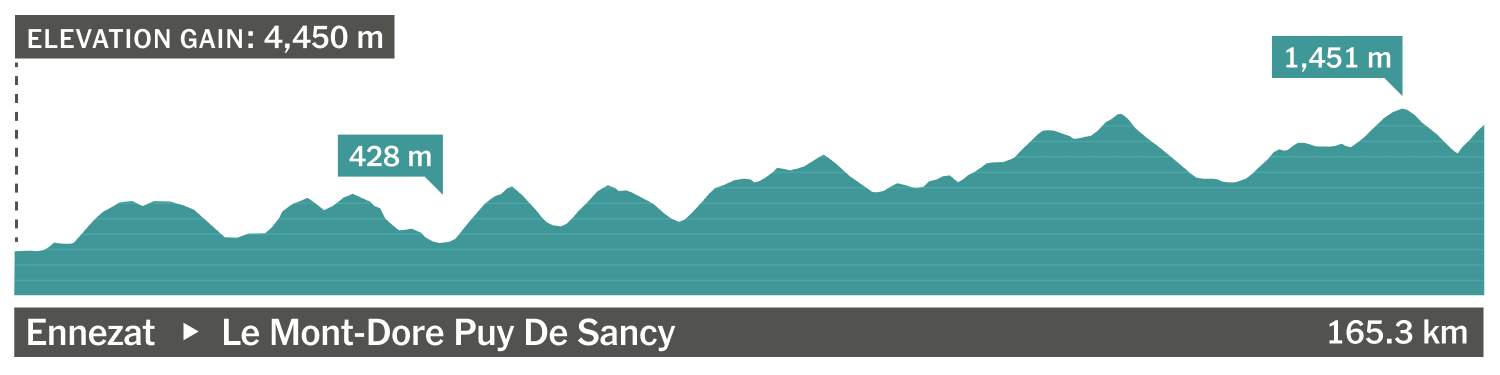
Stage 10, Monday July 14: Ennezat — Le Mont-Dore Puy de Sancy, 164km, mountain
The second Monday of the Tour de France is ordinarily a rest day but this year it falls on July 14, Bastille Day. So, for France’s national holiday, the race organizers have cooked up a monster of a stage through the Massif Central.
Expect it to be baking hot and for multiple storylines to play out across the day. French riders, puncheurs, climbers and the race favorites will all have marked this stage down as potentially pivotal. Worth making time to watch the whole stage, if you can.
Stage 11, Wednesday July 16: Toulouse — Toulouse, 154km, flat
The race resumes after the first race day with a stage that is near the Pyrenees but not quite in them. It’s a flat-ish profile but contains some short-but-steep climbs in the closing kilometres. Some of the sprinters won’t be able to hang on; those that do will fancy their chances of victory.
Stage 12, Thursday July 17: Auch — Hautacam, 181km, mountain
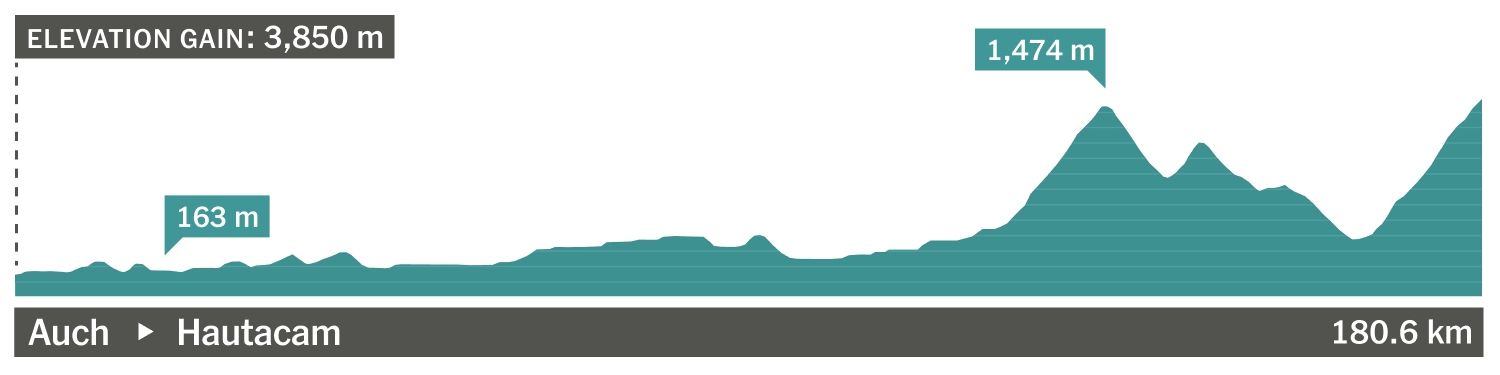
The race reaches the Pyrenees, taking a steady route to the Col du Soulor before sending the riders up Hautacam for the seventh time in the race’s history, a 13.5km climb with an average gradient of 7.8 per cent. Vingegaard put Pogacar to the sword here in 2022 to all but seal his first overall title.
Lefevere: “This is particularly tricky. Why? It is pretty flat before the Hautacam, which means that they’ll approach the mountains at a high pace; I’m expecting a high pace for the whole Tour. But when you get to the base at this speed, not everybody reacts the same, so I think there will be some surprises.”
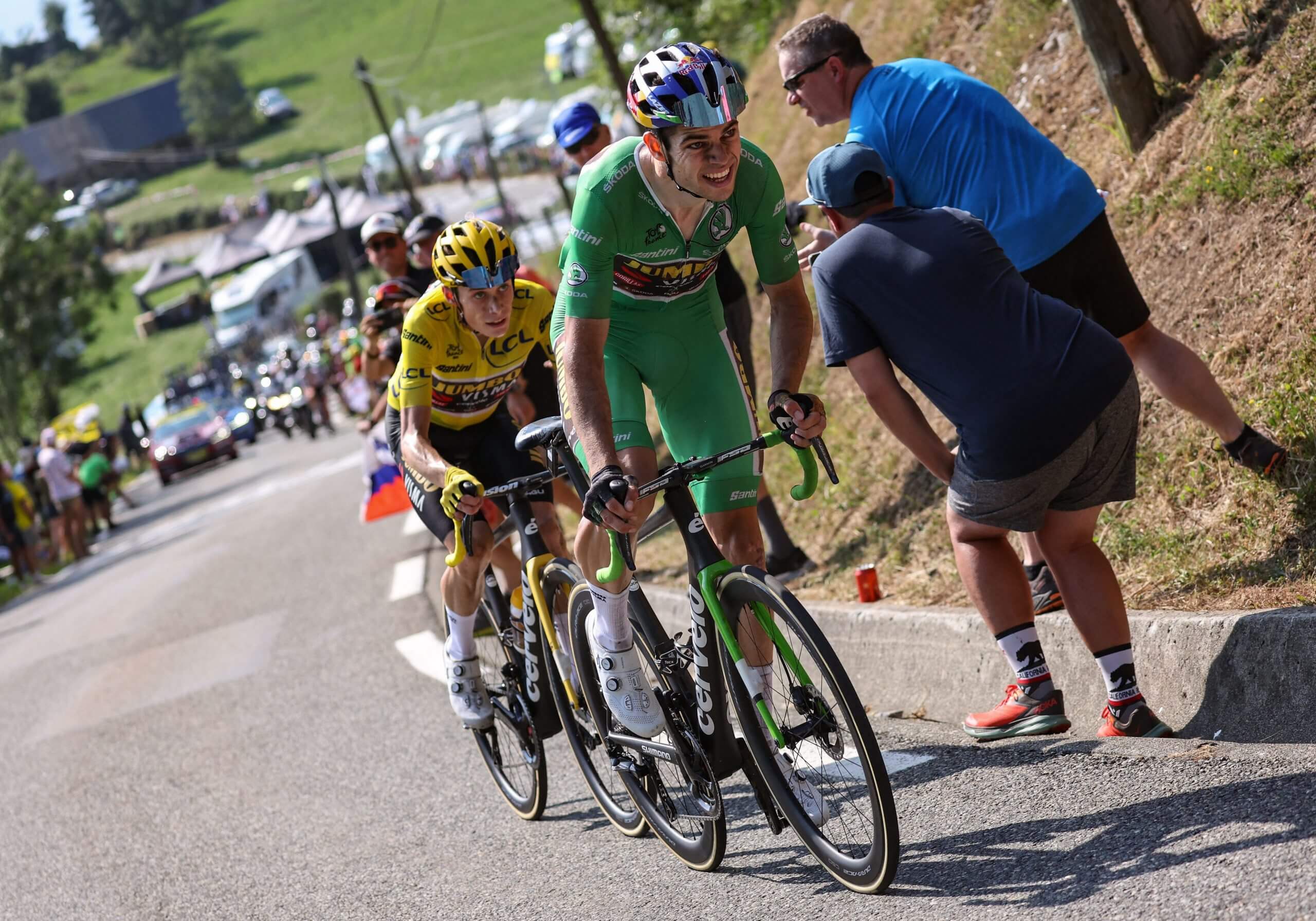
Wout van Aert helped Jonas Vingegaard distance Tadej Pogacar on the Hautacam in 2022 (Thomas Samson/AFP via Getty Images)Stage 13, Friday July 18: Loudenvielle — Peyragudes, 11km, individual time trial
A lesser-spotted mountain time trial. The riders will face a route that is only 11 kilometres long but which takes them up the viciously steep climb to Peyragudes. There’ll be no hiding for the favorites today.
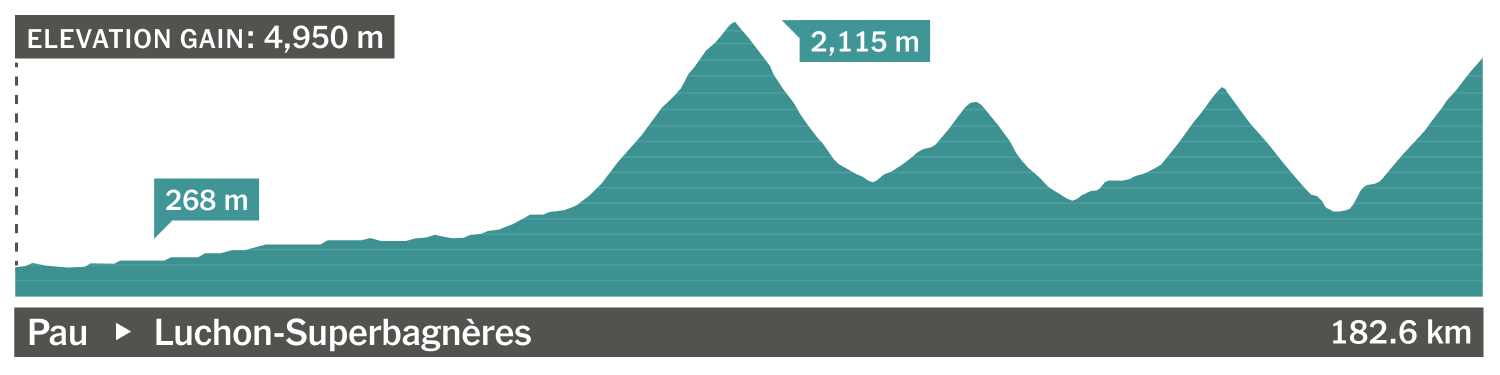
Stage 14, Saturday July 19: Pau — Luchon-Superbagneres, 183km, mountain
The Tour returns to Superbagneres for the first time since 1989 — but with a profile that is very similar to stage 13 in the 1986 Tour, won by America’s Greg LeMond on his way to overall victory. Will this stage be as pivotal in 2025 as it was 39 years ago?
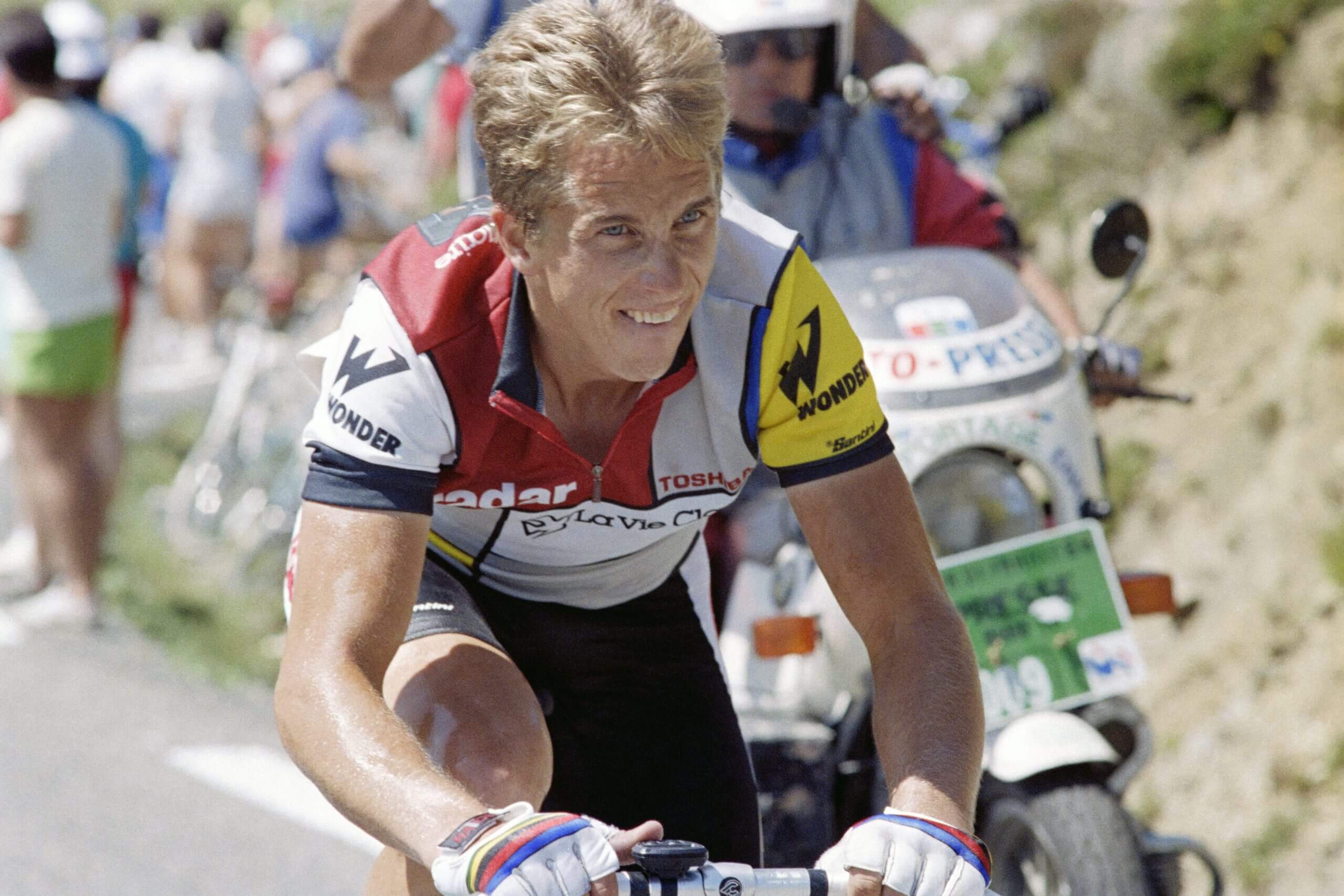
Greg LeMond on his way to victory at Superbagneres in 1986 (AFP via Getty Images)Stage 15, Sunday July 20: Muret — Carcassonne, 169km, hilly
The final stage before the second rest day is hilly enough for breakaway specialists to have marked this as a potential opportunity. The finish in Carcassonne will be hot, and could be windy, too.
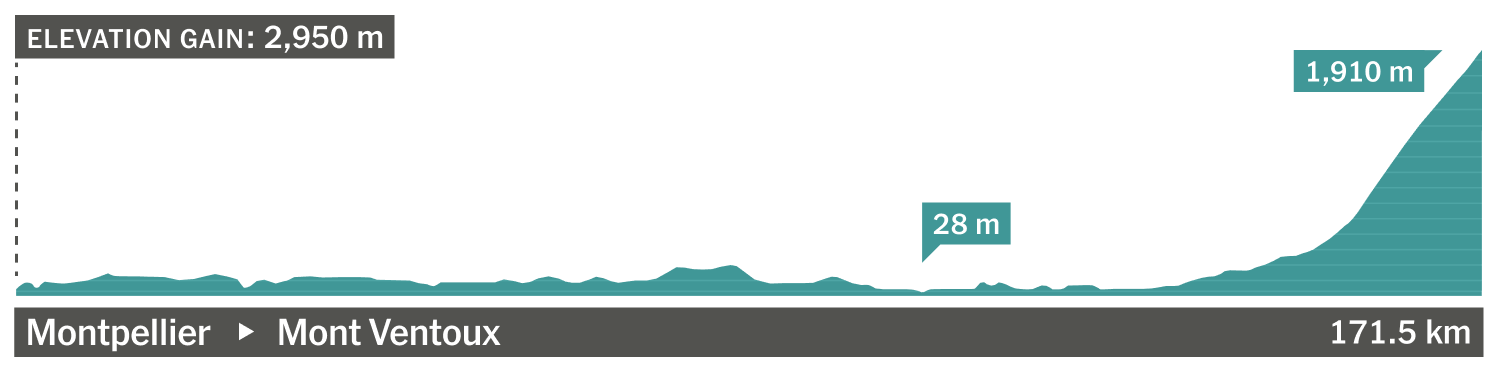 Stage 16, Tuesday July 22: Montpellier — Mont Ventoux, 172km, mountain
The race resumes with a set-piece finish up Mont Ventoux. It’s a flat day for 130km until the riders reach the town of Bedoin and commence what’s generally accepted to be the hardest of the three routes up the ‘Giant of Provence’. Iban Mayo’s record ascent of 55:51 has stood since the 2004 Criterium du Dauphine, but is surely in danger of being toppled on July 22.
Lefevere: “It’s interesting that this comes right after the rest day. Some guys have no problem after it, others struggle a little. And it’s probably going to be 30C, which a lot of riders will not like. So you have to do your nutrition perfectly, but we are all human — some days we stand up in the morning, breakfast doesn’t go well, and you have a bad day.”
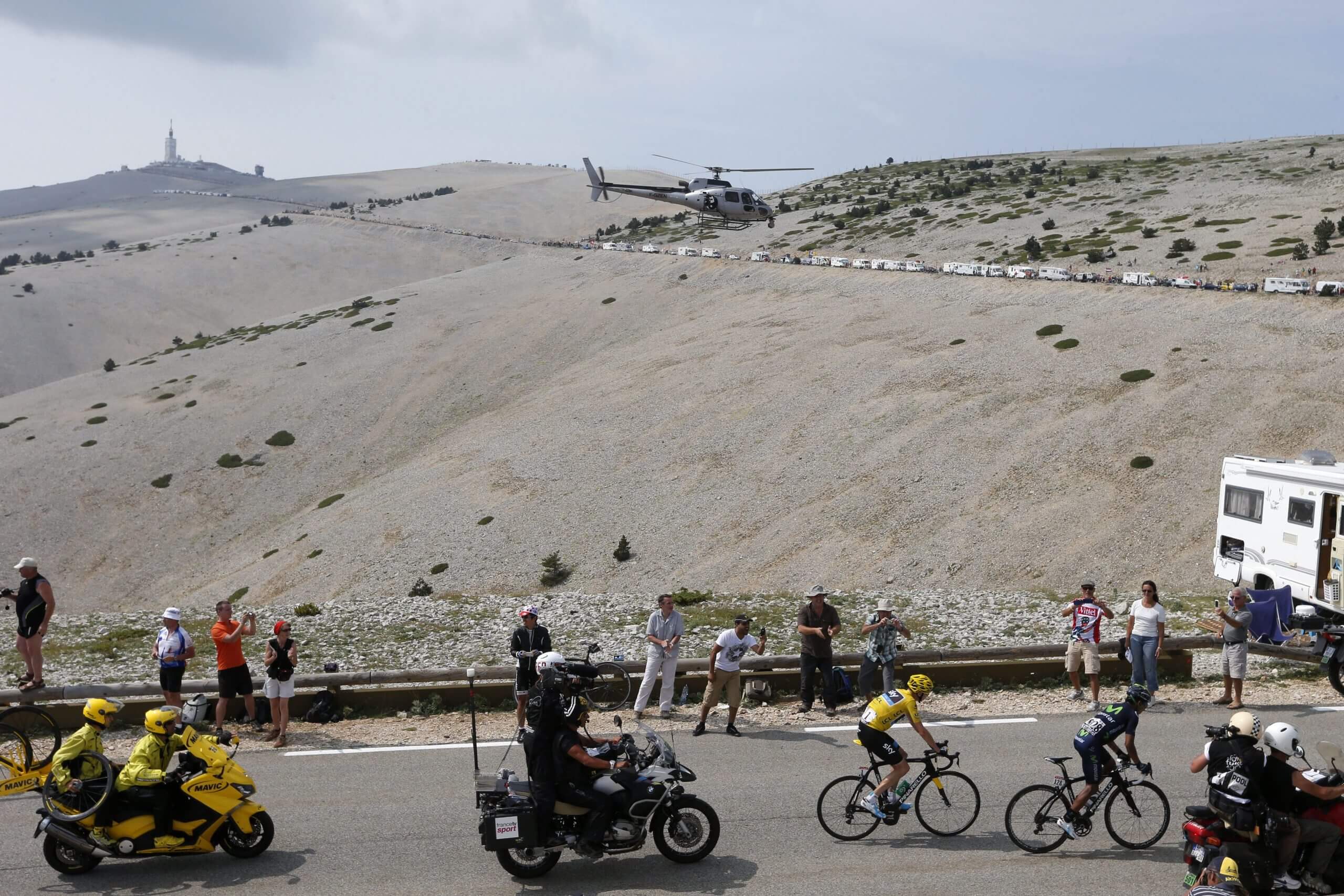
Ventoux, pictured here in 2013, has hosted 10 summit finishes previously (Joel Sagat/AFP via Getty Images)Stage 17, Wednesday July 23: Bollene — Valence, 161km, flat
A rare chance for the sprinters in the second half of the race. Welcome after their struggles up Ventoux 24 hours earlier.
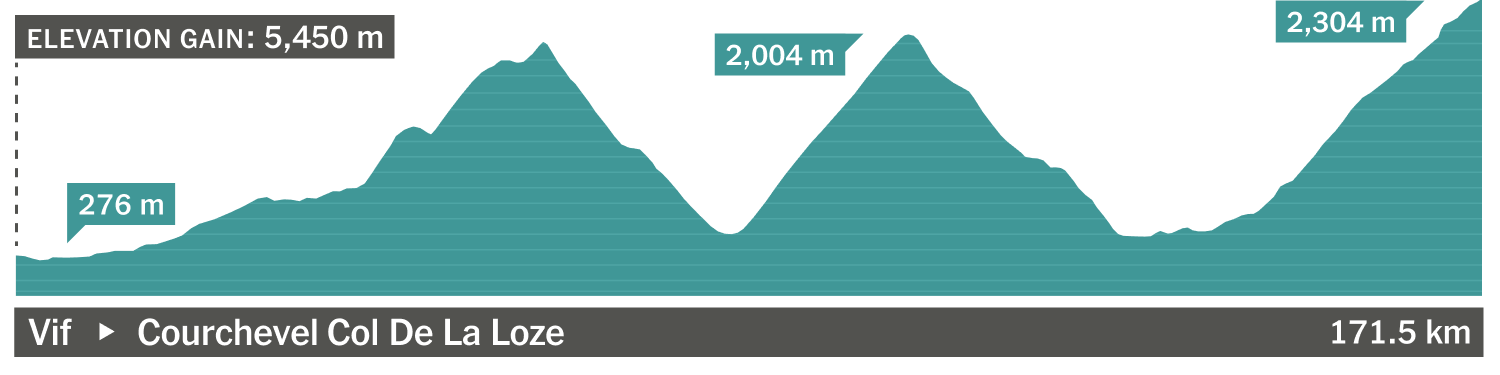 Stage 18, Thursday July 24: Vif — Courchevel Col de la Loze, 171km, mountain
A brute of an Alpine stage, which crosses the Col du Glandon, the Col de la Madeleine and finishes on the Col de la Loze, a modern classic of a climb that is making its third appearance in six editions of the race (albeit climbed from the other side this time). The sort of stage where the yellow jersey can crack himself, or his rivals.
Lefevere: “Obviously Pogacar is a special one, and this, the Col de la Loze, was the only place I’ve really seen him crack. It’s very long, very steep, and we’ll see some riders’ bodies not react as they wish at over 2000m of altitude. Days like today are proof of your condition.”
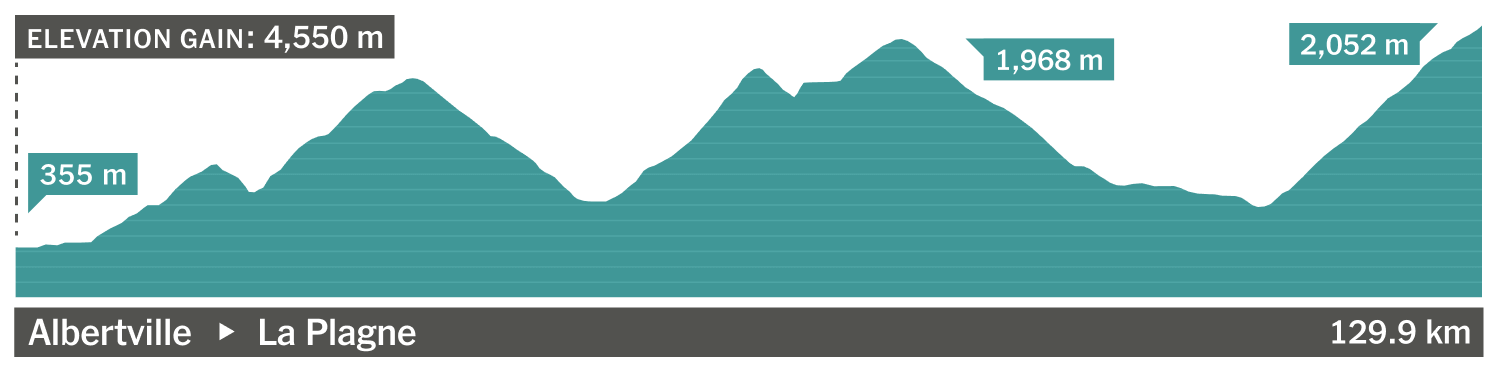 Stage 19, Friday July 25: Albertville — La Plagne, 130km, mountain
Another tough — albeit short — assignment in the mountains, with the Col du Pre a less-well-known but extremely difficult climb midway through the stage, before the 1980s-flavour to the 2025 Tour continues with a finish at La Plagne, a climb used in 1984 and 1987 but which has not featured since 2002.
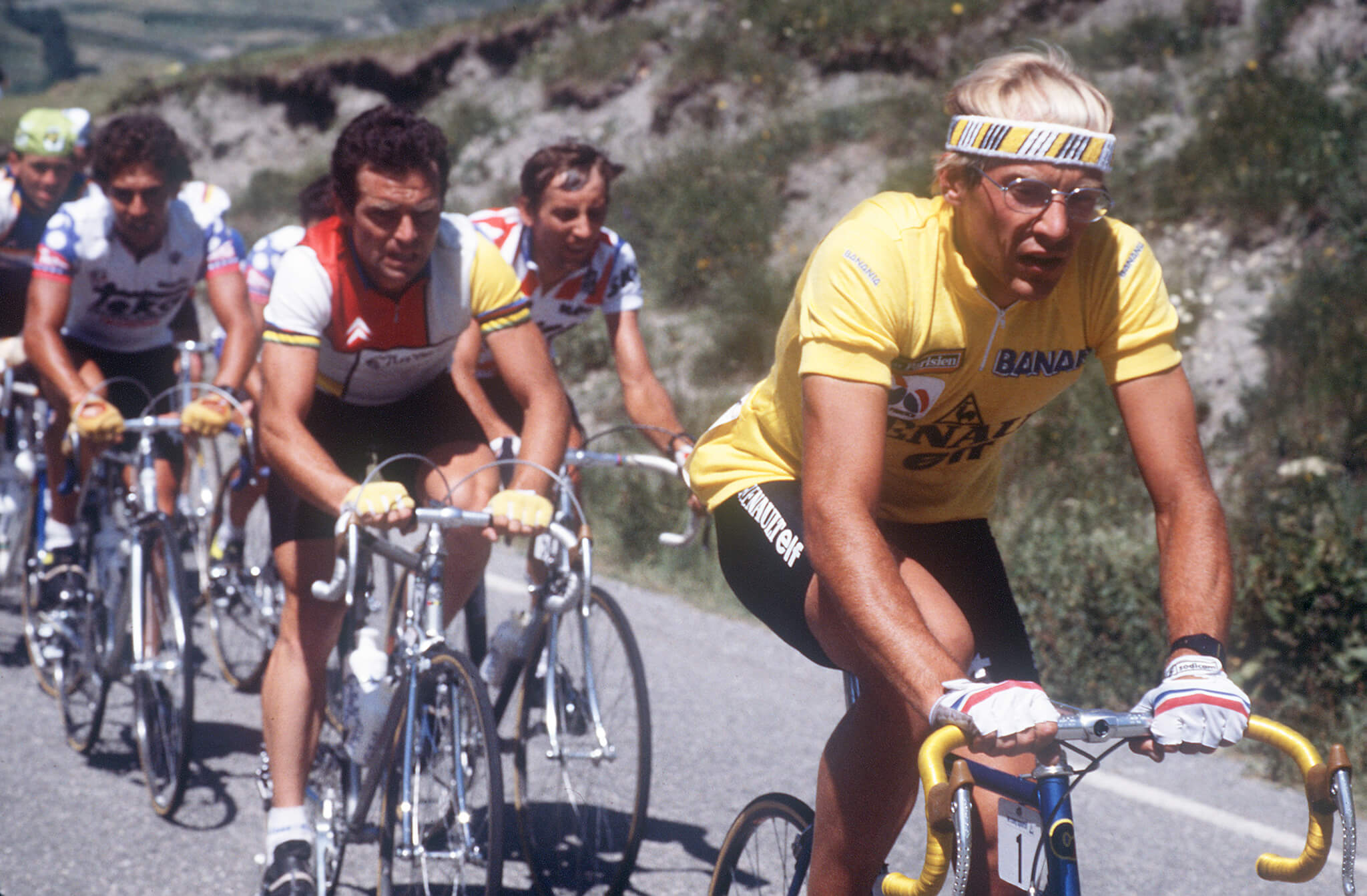
La Plagne first featured at the Tour de France in 1984 (AFP via Getty Images)Stage 20, Saturday July 26: Nantua — Pontarlier, 185km, hilly
The penultimate stage of the race takes in the Jura mountains and although it doesn’t feature anything tougher than a second category climb, the peloton will be tired and — for teams who have not won a stage by this point — a bit desperate. Expect a breakaway in this one, plus some late action in the general classification race too, if we’re lucky.
Stage 21, Sunday July 27: Mantes-la-Ville — Paris, 120km, flat
The final stage of the Tour returns to the French capital after an Olympic-themed gap year in 2024, and the Paris games have influenced the 2025 edition too. Such was the success of the Montmartre climb in the Olympic road races, it has been added (three times) to the traditionally flat final stage of the Tour de France. Historically, the yellow jersey is not fought for on the last day, but with this new route… perhaps it might be. At the very least it may ensure we don’t see a sprint finish.
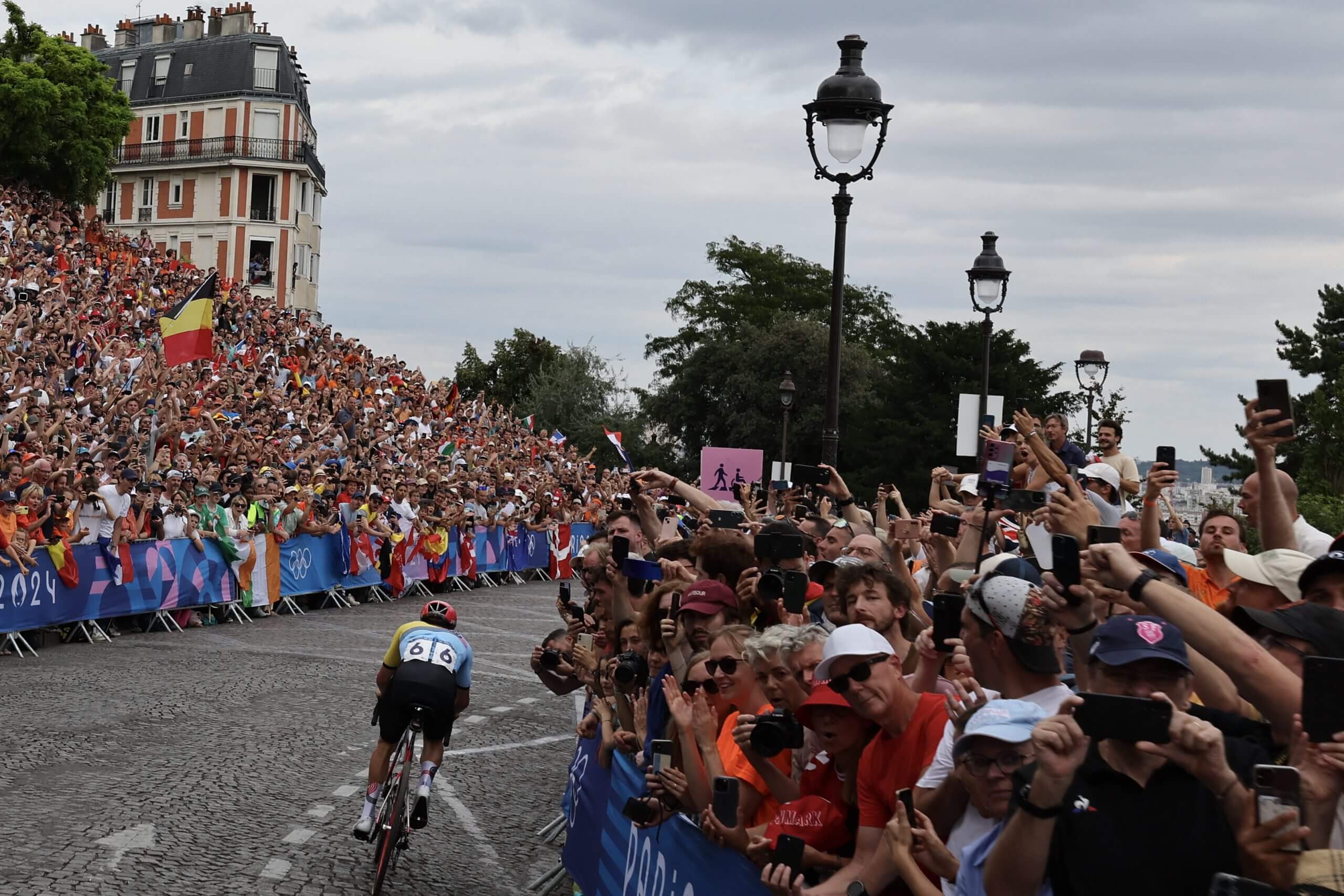
Remco Evenepoel won gold in the Olympic road race in Paris. Can he repeat the trick on stage 21? (Tim De Waele/AFP via Getty Images)
(Illustration: Eamonn Dalton / The Athletic; David Pintens/Belga via AF; Tim de Waele; Dario Belingheri/Getty Images)