
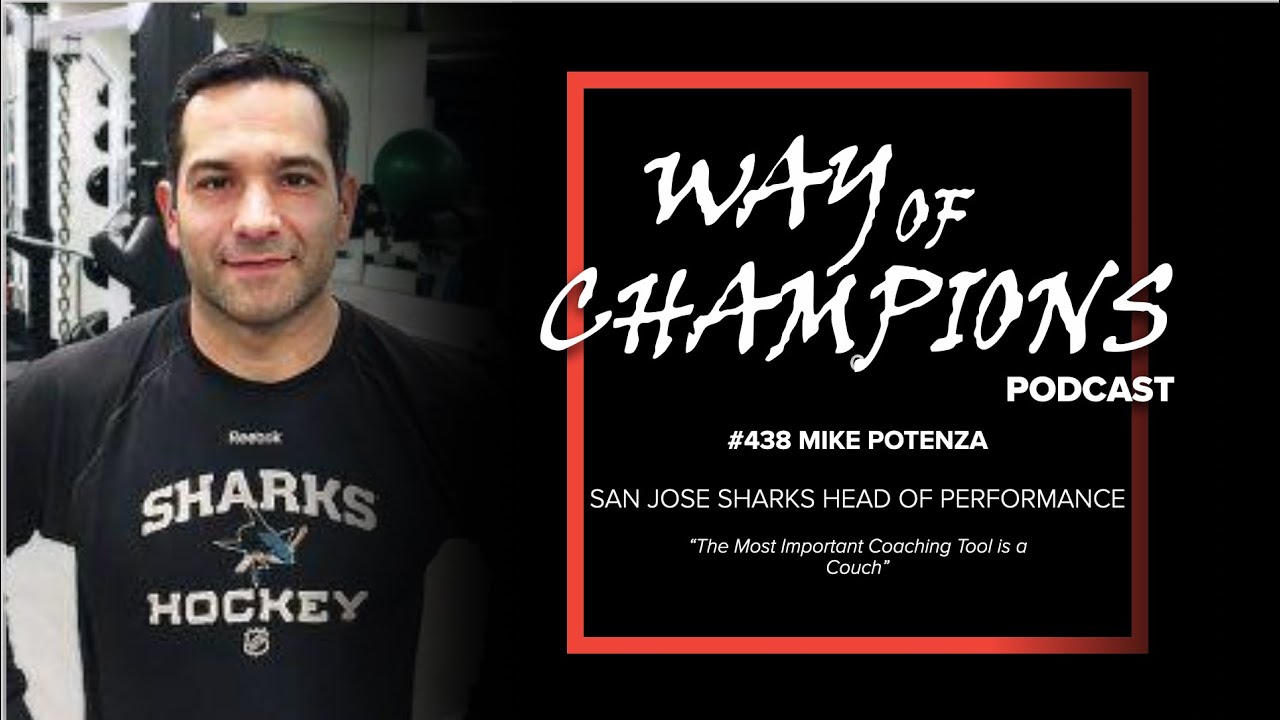
Mike Potenza, San Jose Sharks (NHL) Head of Performance | Best Coach’s Advice
Mike, welcome to the Way of Champions. Uh Jerry and you go way back and it’s a real honor to have you on. Yeah, thank you for having me. I’m excited to be on. I’m honored to be on to be honest with you. And uh you know, I’m I’m looking forward to the conversation. I’m going to do something totally different today and ask Jerry the first question, which is Jerry, why did you say we had to have Mike on the podcast? Did I say that? Yeah. Can I change that? Now’s your chance. Now’s my chance. I uh that’s a great question and uh I’m shocked you asked it because I just assume that you you believe me. Uh but I I um I met Mike not as long as you think I have ago. And uh I I have a good sense about people. Uh, and uh, I immediately knew, I’ll speak to Mike here, when I met you, uh, that you were a person that I could spend some time with and learn from. And, uh, part of it was your experience working with the Sharks for so long. I think it’s 17 years. Uh, you worked with the Warriors, which I am familiar with and have had some consultancy work with. And uh it was partly that and I know that we’ll dive into some of those uh thoughts and issues, but uh it was just who who you were as a person. And uh you to me you represented everything that John and I teach about uh servant leadership, about being genuine, authentic, vulnerable, being able to laugh at yourself, not taking yourself too seriously. And um a recommendation from Ron Adams didn’t hurt. Yeah. You know, because I really we John and I both had Ron Adams on here. And for those who don’t know who Ron is, he’s the assist assist one of the assistant brilliant minds uh that have led the Warriors to several championships, the Golden State Warriors. And uh he spoke so highly of you uh that uh I was wondering why I didn’t meet you earlier. But anyway, that being said, um you know, let me uh let me dive in here and and and John, if you don’t mind, I want to sort of take the first uh step here. You know, Mike, you’ve had this uh be we’ll get to the Sharks, but let’s go back to the Warriors for a minute. Um one of the things that I I I want to ask you is this. You know, Dante, uh Deep Fenzo, were you there when he was there? Yeah. Yep. Right. So this is really this is really important for me to understand. So uh he had uh he was interviewed recently on uh on YouTube and he was asked the question so you know what what about your time with Steph and uh how did that help you become a pro? And uh his answer was was was so revealing about Steph but also shocking in some way. Uh and he said, you know, it had nothing to do with basketball. Nothing. He said, “Being around Steph Curry helped me become a better human being. help me understand that all these great quote unquote stars and these great athletes are just like me, human beings, you know, they go home every night with their family and they have to deal with their kids and and have dinner at home and cook dinner at home and Yeah. And so that’s my kind of lead in to you because what’s what’s interesting to me about you being in the Warrior organization is, you know, you’ve met some amazing athletes that we all admire. But the thing that that that’s really interesting is that these athletes are just like you and I. And and that’s what we all have to remember. And to work with them, we have to work with them connecting our heart with their heart, not our professional head with their professional head. Is that correct in your mind? And and give us some insight into that. Yeah, 100%. And I’ve been fortunate enough to see, you know, some of the best that will ever be seen in the NBA in that, you know, group of Golden State Warriors and coaches as well. and and in the NHL like you know I’ve been fortunate blessed you know even to work with some NHL Hall of Famers that have done have accomplished some amazing things and broken some records that the likes of Gordy how you know held for so long and you know you’re right like they put their pants on just like us every day you know one leg at a time but the difference is they win championships right so not having Mike Patenza as a point guard and expecting you know a lot of brilliant things to come out of that but um But you’re right, they are they are people. They have lives. Um, you know, I think that’s important when you don’t For me as a coach, I I think I I think I do a couple things really good. I think I connect with them well and I appreciate what they’re going through, but I also help them, you know, get to their goals and and connecting with them and understanding what they’re going through or what challenges they have. I I I I almost want to appreciate that, maybe disarm them to know like, okay, this isn’t life and death. this is this is just life, you know, like this is kind of how we have to navigate it together in this crazy professional sports world. Like Dante was amazing to work with. He was he was someone I connected with really quickly um because of our enjoyment for hockey actually, him being from Philly, him being a big Flyers fan and and uh a collegiate uh we played at Villanova and and and us both being Italian. It was kind of, you know, funny stories about growing up Italian and the in the foods and things like that and the and the kind of Guido attitudes that that we had from Providence and Philly, you know, so but he was tremendous. like he was great and that connection piece like it it’s it’s it’s important you know I haven’t been male or female athlete collegiate or pro you know private industry or wherever I’ve worked you know you have to connect and and and Jerry I told you this before like one of my best mentors and teachers told me like they don’t care how much you know until they know how much you care you know and once you develop that like then then you’re teaching basketball hockey rehab then it then it Then it then it grows, you know. Yeah. John, you let me go first and I’m going to continue carrying the ball for a little bit here. Uh so, uh you you said something that I really relate to. Uh the Guido piece. I mean, I I grew up in like a little Italy, too, even though I was Irish, you know. Uh I couldn’t turn down the Sunday afternoon um the dinner dinners that started what 3:00 and ended around 9:00 at night, right? Uh but uh you you kept coming back to this word you got you got to connect with them using the guido piece. Help us understand what that is because there are coaches out there that that can learn from you how you connect. What you know I do my things like like when when I put on the talk with the Sharks last week. Uh I stood near the door and and I greeted every single person that walked in. Every one of them. I connected that way immediately. What do you do? What do you find is real helpful for you to connect with? Not just great athletes, but athletes and people. Yeah. And that’s why we’re together here today. Yeah. I mean, I spent I spent 16 years of my life dedicated to professional hockey from ‘ 06 to 2022 and then my life got turned upside down and I jumped to the Golden State Warriors and went completely to the NBA, completely to one of the most story dynasties in the NBA. And I I I didn’t know the game much. I’m not going to lie, you know, I I knew how to work with athletes. I knew how to connect with them. I knew how to um to to to to discuss with them like what what do you feel like you need in your game? You know, here’s here’s what I can provide from a health and fitness standpoint, um a training standpoint, but what do you feel like you need? Because we can shape this program to to best fit your needs and how you think about the game, you know? And I think I think that really helped me, you know. Um, they saw I come from a long line of, you know, uh, Italian laborers, hard workers, and if if work ethic isn’t in your your vocabulary in my house growing up, then you were in trouble. You know what I mean? So, I mean, I have no problem working. I I think that’s that’s a very important part to to succeeding in in life is putting the work in and putting the time in. And I think the athletes when I went to the Warriors saw that and and and saw that I’m I’m going to get my hands dirty most certainly. And then that led into the connection piece and then asking them what they felt like they need, but also teaching them how to analyze their game. You know, like at this point in your career, you’re a veteran. How do you dissect and look at your game? So now your performance program specifically, it it grows. It it morphs into this. Okay, I’m not doing the same stuff I did in college. I’m not doing the same stuff I did as a rookie. I’m evolving because my game is evolving. My body is evolving. And how can I do things differently? And more and more importantly, how do I keep doing what I love to do, which is basketball, for a long period of time? Because this is going to break down, you know, when this the mind they’re they’re they’re pretty damn sharp. I’ve seen it over time where the body breaks down over the course of many many professional seasons and the the mind is still sharp, you know. So, I’m kind of like a loss. I’m uh I’m kind of their I’m their mechanic and making sure this engine runs a long long time. So, it was it was interesting, Jerry, though, because, you know, connecting with hockey players was different than basketball players. I was a new guy coming in. I was a rookie again, and that’s most certainly how I looked at it. I’m like, I’m I’m a rookie. I’m coming in. I’m getting my hands dirty. I’m doing whatever it takes. I’m blessed with a great position amongst the Warriors as a director of performance. Um but at the same time, I’m not I’m not going to, you know, uh I’m going to be humble and I’m not going to kind of like let it go to my head, you know? So, um and so that’s that’s kind of how it all evolved. and and and then it was it was the guys want I I I got right I got the um the feeling right away like okay who’s this new guy you know like not just coming in and be like hey I’m here like I I I proved my worth and put some work in and then that connection piece clicked that maybe just how the NBA players did it you know with hockey you had to do some of that too um but I got them a lot younger when they were in hockey so it it’s amazing Mike like to think about that because you know just this the way you just described it, you got to be a rookie again 20 years plus into your career, which is really interesting, right? Because you had worked on the college level with ice hockey and then obviously in the NHL and everything. Um, and but what you had learned at that point, which is so important, is that your resume means nothing if people don’t think you’re in it for them. Right. Right. And and that was the the thing. So because you could bring this like look I I haven’t worked in basketball so I’m going to learn from you all as well but my thing is and that question you asked what do you need you know what do you need my help for so that your game gets better. Um what what an incredibly important thing for any coach of any sport to approach with that attitude instead of being you know I’m the sage on the stage and you’re all going to take it from me. Right. Yeah. And we and it was and I stole that. I stole that, John, from working with some some amazing players who each of them had 20 plus year careers in the NHL. You know, the the lowest was 20 and then there were a couple that are 23 24 years in the NHL. And the way that they looked at their game was um was okay, like I’m I’m seeing how the game evolved. I can I can create scoring from these particular areas on the ice. I need to work on this. there’s a physical component that if I do go to those areas I need to be able to be strong or be stable or you know be quick in quick out of these particular areas. So that’s just a concept you know that’s just a fundamental. Now for me in my coaching it wasn’t you know sports specific has to be hockey like you can put that in any sport you want you know you can put that in any life piece if you if you want you know in terms of you know do you need to be healthy to do a specific task amongst you know your your your life and and your daily activities of daily living. So, I took that concept, ran with it, and that’s where like, okay, now I can learn the game. They they know they’re evolving their game, and we’re getting really specific as to what the performance needs are as an athlete ages on there. We we talked there’s a great um and Ron knows him, Jerry, but Vern Gambetta is one of the most Yeah, he’s been on the podcast here. He’s amazing. Yeah, he’s amazing. He’s one of the first per I was 18 years old. I was at Springfield College. I went to my first seminar. It was a long time ago. John, don’t do the math. Like I’m not I’m not I think I took a I think I took took a horse and buggy there actually. So uh but so he was the first person I spoke I heard speak in the strength and conditioning world and the way he put it in terms of the the the coaching and and he talked about training age and chronological age are very different. So when I’m dealing with these veterans or when I’ve dealt with the veterans hockey and basketball or whatever have you, it was always okay. Their training ages are really high. Doing something very simple is they’re not going to get the benefit of it, you know. So it’s been that’s how you know way I I think I evolved my coaching or or remained present in and what the needs are. And by by train and Jerry, I just want to ask like a little followup. By by training age, do you mean sort of the hours that they’ve put into this already? And and has that changed over your career with this push in specialization and more more and more younger? I mean, we see all the NBA guys now with Achilles injuries more than before and stuff like that. And and I read somewhere years ago like they, you know, because a lot of these young basketball players are training so much in things like vertical jump and all this to get the right stats, to get the right scholarship, you know, that they’re by the time, you know, there’s only so many pitches a pitcher can throw. There’s so only so many jumps. And so has training age changed and and what do you see in that and how you’re training your players? That’s a great that’s a great question. Again, from the youth model, it has changed because they’ve started a little bit early, right? Um, but we’ve now specialized for a longer period of time for any particular sport and that creates a specific pattern that the athletes are ingrained into. And like you said, there’s no cross trainining anymore. That would for the Achilles example, you know, de load the Achilles because you’re playing a different sport, right? And give it time to rest and heal from the jumping, the cutting, and all that, like a different sport that would that would allow for that. And now in college because it’s the it’s it’s it’s a complete forgive my French [ __ ] show that instead when I worked in the college college sport um what was it uh 20 2006 prior so I would say 200 um to 2006 in the collegiate sport realm or world like you had an athlete for at least three years you know if they left but so now they can marinate in that particular program at that specific time of their developmental psychophysiologically and and mentally and all that. Now you could get an athlete who’s been to three different colleges in three different years or three different colleges in four years. They’ve four completely different programs. So So what are we really getting, you know? So that’s kind of the the the take the take on that. if you have a and you know I think in the pros like they’ll stick to a a certain program even though they may have a personal strength coach which kind of gives them the stability of that program in the offseason. If they’ve been traded and moved around to different teams they may get a little bit of different flavor you know each stop they go but I I find that the pro athlete has actually held on and retained some of the the big rocks that they feel confident with and doing in their program you know. Yeah. And and that sort of ownership of it, right? Like, okay, I I am trusting you as you’re working with male athletes, so I’m just saying as a man in this thing, as an adult, I’m trusting that you’ve learned some things and that you have been you’ve taken ownership of your development along the way. So that there’s certain things that you think are can helping you. And then maybe what I can do is remove some things that maybe aren’t are hurting you and supplement them with some things that might take you one extra level. Yeah. Up. Um and and that and then that comes around to this idea of trust, right? They have to trust you. And that trust comes from the connection. The trust comes from your resume. I’ve been doing this a long time. Um, but I think like trust is also like about admitting sometimes when I messed that up, like, okay, I didn’t get that right. So, have you had any moments like that? And you don’t have to mention the athlete or anything, but when you’ve been like, you know what, that wasn’t the right thing for you. Yeah, absolutely. I mean, I I don’t shy away from it, John. You know, I I I was raised that if if you messed up, just admit it, you know. I mean, you don’t want to have something that’s you don’t want to do something that’s completely, you know, um, negligent or anything like that, right? Um, and nor have I I I’ve done I haven’t done that that my my internal coaching compass always like protects me from that, but I mess up all the time whether and I I admit it. I admit it. I’ve had to it to general managers. I’ve had to admit it to head coaches. And you know what? Like I just committed to myself. I’m going to wear it. I’m going to I’m going to do it. But here’s I screwed up, but here’s how I’m going to fix it. You know, people admire that. You all three of us admire that in other people. Yeah, we don’t like to screw up. I I don’t like it when I screw up. And I do way too often. And but we admire that in people. So, it almost becomes like, hey, I’m going to screw up so I can just say that I screwed up and then I’m really going to make a deeper connection because people will really appreciate my vulnerability, right? Now, being vulnerable is a tough thing to do cuz it doesn’t feel right, doesn’t feel good, but it’s really a strength. And getting back to John’s original question, I have to tie that in. That’s why I asked uh Guido uh to to join us. I mean, this guy I mean, seriously, uh you know, that’s a Steve Kerr move walking into the locker room, right? I’m sure you’ve you’ve been there to hear that where he would say, you know, yep, that was all on me, guys. Yeah. You know, I I could have prepared you better. And what we have to know as coaches, those of you listening, is that vulnerability is a strength. Period. End of story. And people admire you because of it. So, cop to that. Gain respect. Make the connection and and and be like Mike. Yep. Yeah. Be like Mike. And and John, like the thing, too, like I I am I don’t have all the answers, you know? I tell the athletes straight up, I’m like, “Listen, I’m sorry. I don’t I don’t know. I don’t have an answer to your nutrition question. I don’t have an answer to your rehab question. But I look I I make I I make always make it point to make eye icons and say, “But I will find you the answer. I will find you the right resource to give you the answer that you need, you know.” Um and I’m okay with that. Like and I think I I think they appreciate that, you know. I I’m they know at least I’m not going to [ __ ] them, you know. I I wouldn’t know how to. So, you know, so but that’s important. That’s important to me too get them what they need in terms of the right answer. Well, I think as well with today’s professional athlete who is looking for that edge, right? And and there’s a lot of bad information out there, right? Like you can go down a rabbit hole of the wrong stuff with let’s just use the broad term influencers talking about stuff that is not scientifically backed or whatever. Never mind the fact that, you know, they have to be wary about, you know, drug testing and what’s in this supplement they’re taking or anything like that. So there there’s so much to it. And so to have a trusted resource to say, you know, I’m not quite sure what that is, but I’m going to get you the right answer is is is absolutely critical because um you know, I I you know, I I met a lawyer, we had a lawyer on this podcast who represents a lot of athletes, you know, who in in drug stuff and they’re like, you know, the the percentages, it’s like one drop in an Olympic swimming pool and you’re out of competition for a year and your career might be over if you’re an Olympian. Right. Right. And so, um, yeah. Yeah. Go ahead. Scary business. Scary. It’s that natural supplement nutrition world is is um it’s the wild west, you know. It’s it can You’re right. Anybody can make a product. Anybody can throw throw it out there. You know, it’s it’s the you have to really do your research on as to what’s credible, what’s uh effective, but also what’s third party tested and and following the waterband substances, you know, program, you know. Yeah. Safe. It has to be safe, you know. Yeah. Yeah. Um how have you, you know, in this in this career? I mean, like what’s I’m just always curious because you again to go back to use the uh term rookie. What is the difference between training a basketball player and a hockey player in both in terms of getting them stronger, faster or whatever, but also preventing injuries? Yeah. Um Yeah. Yeah. I in hockey I I was I was you know conditioned and in the environment like that you worked in was you know you had some some some low back issues right and and that’s from that’s from the rotational component that’s from the contact component you know and and the same low back in basketball was compressive forces just massive bodies with long limbs and long um levers just hitting the ground you know whether it be jumping so you have a compressive um issue with the sp sp sp sp sp sp sp sp sp sp sp sp sp sp sp sp sp sp sp sp spine over time right and then you know we didn’t see a lot of adductor problems in basketball hockey you do like you know the the adductor in hockey is like the hamstring for any running athlete you know what I mean you when you hear like the player pulled a hamstring or whether maybe in baseball or football or whatever like you don’t see a lot of that in hockey you see an adductor you know because because the skating stride ankle achilles in in basketball is you know the the scary ones, a kneecl is a scary one. The ACL is pretty much the same. We saw a lot of those because of contact because of being locked up and then forced into rotation and the knee get kind of gets cranked. Um, but in terms of the ankle and Achilles, like in hockey, if you have that type of problem, it’s because a 100 mph slapshot just blew up your ankle and you blocked it and or or now or or you got or it got lacerated, you know, um where you got stepped on with your your blade. So um you know the rehabs the rehabs are are are a little bit different but that’s the kind of thing on the injury side I had to um brush up on and come to learn John in basketball what we were dealing with and you know patellophmoral pain can just stop a basketball player dead in their tracks you know you you kind of get around it a little bit you know what I mean you know you don’t have that much pressure on the knee you know and if you do then there’s something up the chain or around the chain that you can address and it will relieve it fairly quickly, you know. Um, but but I I I I enjoyed that challenge, you know. It got me to to learn different injury patterns and strategies on how to keep, you know, keep those players healthy, you know. Um, it was tricky, don’t get me wrong. like that it was tricky because of the miles those guys had on their bodies and the and you know patella tendinitis or Achilles um tendinitis could could have lingered for a long time with them or it’s been a problem they were dealing with for a long period of time. So me coming in it’s like okay I got to try to help solve this this issue or at least alleviate it a little bit. Is there something about the mentality also of, you know, like the hockey players are like the toughest people, right? You watch the playoffs and it’s like how many teeth did you lose this week and whatever, you know? And so like that mentality of you just play through everything. Um, which is incredible and and amazing and and yet, you know, sometimes you probably got to be the guy who’s like, “We got to shut you down.” Yep. Yes. Very very much. you know, like hockey players will play through a lot, you know. Um, and I I look, I I was I had I worked with a very small subset of one team in the NBA and I was I was lucky. I was blessed. Like these guys were these guys were studs. They they they worked, you know, they took care of their bodies. Knock on wood. We didn’t see a lot of at my time with the Warriors. Didn’t see a lot of injuries. Um, dealt with them. And I think it was more so guys were ready to play, but we wanted to be extra cautious. We wanted to make sure that that injury was resolved completely with no interruptions when they came back into the lineup. You know, that’s kind of what our credo and our our philosophy was. And that was led by our department head, Rick Celbrini, at the time. And um Rick and I are very very friendly and close. um we’ve known each other since 2010 when he helped us rehab some uh hockey players because he was in Vancouver um and working hockey at the time. Um but I stole a lot of things and ideas from the Warriors and and most certainly John one of them was like that return to play for that athlete. It would be me who’s holding them back even though they were ready to play. And that was just to ensure okay like you’ve hit a new level of your um injury healing. Let’s be sure. let’s take another week to be sure that you’re ready to go, you know, and and what’s the worst that can happen? You’re going to miss you may miss a couple games, but at the same time, you know, you’re going to get more training, you’re going to get more resiliency, and you’re going to be able to we’re going to ensure that you’re going to finish the year out without any interruption or setback. You know, I think when you when I put it in that particular light, um, and explain it that way, I’ve gotten we’ve gotten great responses, you know, and again, the athlete knows that I’m I’m worried about you first, you know, because if I wasn’t, get back out there. You’re 60%, get back out there, you know, like right, you’re sort of Jerry, can I ask one more injury question cuz we change the subject because I think this is interesting, right? you are a member of the coaching staff, but you’re also the advocate for the player in this scenario and and their best thing and and they need to trust you that you have their best wishes in mind because they’re also thinking it’s my contract year. I’m a free agent. I you know like I need to play this season or this could be over. And so how much of the role uh you know of the performance director of strength and conditioning especially with the injured athlete um returning to play like you are really also a a psychologist as well like you like when we when we were going to connect with you a couple weeks ago right you were on the ice one-on-one with a player rehabbing an injury. You spend a lot of time doing that sort of thing as well. So, um, you know, coaches, we we are psychologists at the same time. We don’t have the degree, but we can’t just think of ourselves as like the X’s and O’s person. Yeah. No, 100%. And then like when a general manager asks me like, “What equipment do you need in the in the gym?” I say, “A couch, you know, so so I could be a psychologist.” Like, I don’t need a squat rack. I tell you, I don’t tread. I don’t bikes. I need a couch. I need a comfortable couch. But uh you know like I it’s funny John like when I first met Jerry and he said hey like what what are your pain points? what do what do you what are your pain points as a as a coach as a performance coach and you’re and I was like you know Jerry like I there’s two things that strength coaches don’t really do well and and we don’t get a good education on it and and it’s and it’s sports psychology for the injured athlete and how to deal with that and to put ourselves in their shoes of you know I’ve been a resilient I’m a pro alete I’ve never been hurt boom now I got this massive injury you know and they’re they’re hyper aware of like it’s not getting better it’s not getting better it’s not getting better. And once you kind of like a watch pot never boils, you know, if they can if we can get them to not be so hyper aware of it and we just rehab and you just go through the process, it really takes off, you know, but getting there is so hard. And we don’t have I I didn’t have um a curriculum part on that side. I had an intro to sports site. That was it, you know. Um and that was more like mindfulness and meditation. Those things are great, you know. Um, but but it’s really specific when you’re dealing with an athlete coming back from an injury who’s never really had it and their career and their life and their earnings are right could could be gone. You know, the other thing we don’t do really good as business, you know, and like we don’t we’re not really good business people, you know, we’re not the best advocates of oursel for ourselves on contracts sometimes, but most certainly if we’re starting a private performance business, we’re we’re not very good about, you know, how much should we charge and how much insurance should we get for an athlete in in my facility and all that kind of stuff. But it’s getting better. It is getting better. Um, but yeah, the sports psych piece is is is building. I wish I learned more of it. I learned it on the fly and I I really kind of dove into it and looked for ways to to understand it more and talked to some really good sports psychologists um about that particular topic, but I wish it was a a more deeper curriculum in undergrad. That’s for sure. Yeah. I want you to remind me. I have so much going on in my mind right now. I mean, uh I didn’t realize how stimulating this would be for me. Uh well, maybe I did. I have a uh a DVD that uh was made by Championship Productions uh on the psychological aspects of healing athlete athletic injuries and I want to give you a copy of that. Yes. Love it. DVD player. So they will if you I was going to say they might have it in other formats but I the only format I have is DVD. So if it works for you when you come down to Santa Cruz which I’m expecting Yes. I will. You need to remind me and if I think about it, I’ll put it aside and give it to you because that’s why I did that. I did that to help you and others in your shoes to say, “Look, as a sports psychologist, this is what I would recommend. It might or might not work, but if you haven’t looked at this, you might want to give it a shot.” Yeah, absolutely. That sounds like a great resource. Yeah. Yeah. Okay. So, that’s number one. I have three things. Number two, I’ve saved them up, John. Number two, I want I want you if you can to shed light on something what we’re talking about here. What could be more important than discussing the injury that Steph Curry has in this situation going into the the playoffs knowing that without him they can’t win. With him they could win. Mhm. And and most people out there in the world, the comments I get, now I’m a runner and so I know what those injuries can be like uh from running my those muscles. help us understand why he didn’t get back and play that game. And and everyone was like, he might not even come back at all. And and so help us understand that kind of injury at that level and why he uh he didn’t come back and and help help his team, you know, and shed some light on that for us, will you? Yeah. I I’ll start off by saying I don’t have an answer, Jerry, but I have a response. That’s that’s that’s right in my that’s right in my wheelhouse. I stole that from you. Right. You stole that from me. Yeah, because you said that. It sounded familiar. I said uh so I fair enough said I’m going to use this. I’m going to use this. So fair enough. But I but I I have a response because I can’t give you an answer because I wasn’t there, you know, and I don’t want to speculate and and you have so many users and listeners. Um, so, um, here’s how here’s how I I would approach I’ll talk to you about it from if Steph if I was there and I had to make the decision on where Steph is at. First of all, depending upon the severity of the injury, the timeline is going to be, you know, the timeline, you know, and you have to ensure healing and reducing putting him out there and being vulnerable to another injury. So what happens if you know and look mother nature wins all the time. It doesn’t matter you know you have these timelines of healing that yeah like there’s a little bit of you know plus or minus with that window of healing. Every organism is different. Every every you know organism in nature is different. You just you just don’t know how it’s going how the player is going to respond. You know that’s why putting a timeline on it a hard date it’s it’s it doesn’t it’s doesn’t work. You know, I tell our coach and our general manager like, “When’s you going to be ready?” I said, “Well, look, I’ll tell you uh what my mom used to tell me. Dinner’s going to be ready when when the smoke alarms go off.” So, so I know it’s done. I know it’s done, right? It may be a little bit crispy, but you know, and you have to ensure that what if Steph came back just to play game five, right? Not 100%, right? And it’s a it’s a muscle that was that is critical for what he does on the court, right? The only worst injury that he could have had was break his hand, you know? Wow. But his hands are gold. They’re there, but the hamstring’s going to get him to the points in the court where he can shoot the ball, right? So that hamstring like he if you put him out there and he’s not 100%. And you win game five, right? but he’s he he’s out for the series and maybe out for the rest of the playoffs. What did you gain? You won game five, but you lost your you lost you lost uh Steph Curry, you know, whereas if you waited those three more days and there was a window there was a window of if they won that game, there would have been three days before game six, right? That they were banking and hoping on. Yeah, you should. In my planning, I would be like, you know what, the latter picture of losing him just to try to win this game and it would it would be it would wouldn’t be worth it, you know. It wouldn’t be worth it. It’s a tough tough decision. I get it, you know. Yeah. What is why is the hamstring Why is the hamstring muscle make you so vulnerable? And like as a runner, again, I’ve had hamstring poles, running mountains and running down and so forth, and it’s just like it’s so scary because all of a sudden you think you’re healed, but you’re not. Yeah. I mean, well, and that that his injury was was was a it was a new injury, you know. It’s not like I don’t he didn’t come back and re he didn’t have a pre-existing hamstring injury, you know, but but there but again Jerry like they’re the speeds at which these guy the size the speed the tempo the the the pace at which they go like you know you have to be really robust in your whole your in everywhere in your body to to to play a professional season and to practice as as much as you do. Um, and a lot of factors go into, you know, something that happens. The good Jason Tatum, like Achilles, like I never heard of him having an ankle problem in his career as I followed him, you know, in in the as a fan of the NBA, but then in working in the NBA, you know, it’s just I don’t want to say it’s it flukes, but these are just some, you know, occurrences that are difficult to to plan for. And that goes to fatigue and injury. I mean, let’s even go in Steph’s case further. You you bring him back to win game five. And I think your point is great. Like, okay, we win game five. There’s no way we win a championship without him. So, we have to win one game without him to maybe get him back for the rest of the run. But but you know when you have an injured hamstring, when you have fatigue, now you’re way more susceptible to an ACL, to an Achilles injury, all these things. And so it’s like you could have a catastrophic thing that costs him his whole next year. Um, right, by trying to rush him back to win one game. And and what’s sad, right, is like, you know, we have a multi-million dollar athlete in Steph Curry, but we see this on the youth level, right? People trying to come back in 6 months from an ACL or things like that of like, no, you do not need, you know, it’s it’s just it’s just crazy. Uh because people don’t understand the role of fatigue and propriception and and all this sort of stuff. So, it’s like you need physical recovery. Yeah. a little longer than normal. Who cares what your doctor says? Okay, you can you’re cleared after six months. Not really because you got to get clear up here, too, right? Yeah, John. I I I just I went through that this year in my new role. It, you know, we I I’ve taken I’ve taken it upon myself to kind of keep an eye on where the injuries, surgeries, like drastic injuries of our our our prospects cuz as you guys know, in hockey, you can draft and then they can go back to NCAA. they can go back to Canadian Junior, they can go back to European um you European leagues. So, I’ve taken a little bit of a point to to make sure that these guys are cared for really well because even though they’re a high-end prospect, they’re a first round draft pick and they’re going to these teams, the care isn’t that good, you know, cuz all that those teams see is first round draft pick. I’m in, you know, outside of Toronto. I got a really strong junior team. I get 10,000 fans a night. They know that these are the next level of NHLers. This guy just had surgery. You know, San Jose’s telling me he’s going to go right back in the lineup. I need him on the first line. I need him playing 25 minutes a night. It’s like, whoa, whoa, whoa, whoa, whoa. There’s got to be a progression to get this young athlete back. You know, you can’t just throw him in. You know, I’ve I’ve heard it too much. Now, my kids are my my oldest son is 17, my my daughter’s 15, and they’re very much into the high school sports right now and and travel hockey and whatnot. And my youngest, Luca, is 12, and he’s still in that kind of playing, you know, playing sports seasonally, really enjoying it. Um, but I see it at the high school level, too, now that I’m ingrained into my my my kids um sports. And it’s it’s it’s interesting. It’s it’s frustrating on the as the outside looking in. uh to it. But but yeah, like there needs to be a progression, you know, and and I think I think the doctors and the PTs of that world have to um take more hold of it, you know, with the athletic departments, athletic directors, and then high school coaches to say this kid’s not ready, you know. Yeah. and and and again trust. We had a former US soccer performance director on the podcast here a couple year ago or two years ago and he said, you know, a big part of their job in international soccer is, you know, you get the players from the clubs that pay their salary all year and then you you put them into, you know, an intense camp and play two games and send them back. and you know working with those uh performance directors in Germany, in England and whatever to manage the load and any injuries and whatever and and saying like okay we’re going to limit this player’s minutes and what a difficult thing it was because it’s like listen we you know we need to win this international game and qualify for the World Cup and yet at the same time you you know that’s an expensive asset to you that we can’t run into the ground. And so if we say we’re only going to play him for 45, we got to we have to do that. And just how difficult it was to balance that thing. And I’m sure you you send players to national teams as well of like Yeah. You know, it’s it’s not it’s not easy, but you have to have trust in them that they’re not going to mismanage someone that you’ve been trying to get healthy or keep healthy. the the I I meant to say this earlier when we were talking about it, but my hardest conversations with regarding an injured athlete in any organization I’ve worked with is not with the athlete themselves. The athlete when you tell them like, “Hey, I want to extend this timeline.” It’s for their safety. I think I made that point and and they appreciate that. You know, at some point, you know, believe me, I’ve been there in hockey where it’s like the guys looks at me dead in the eye, doesn’t even blink and says, “I’m playing.” and be like, “Okay, put your stick down because you can play. Like, don’t don’t swing it at my face.” You know what I mean? Um, but the hardest conversation I have is with our general manager and our head coach, you know, and telling them what they don’t want to hear, you know, and look, I know what I signed up for. I’m okay with it, you know, because I’m I’m there to protect the athlete, but also think bigger picture for them to say, I know you want the player back. I know he’s important. And yes, like their 70% is better than someone else’s 100%. I I get that. But at the same time, they can’t do the job you want them to do. So if I if and I I’ve explained this to coaches, I’m like, if if if he plays and he’s dog [ __ ] you’re going to come and you’re going to you’re we’re going to meet after and like, yeah, he played terrible. I’m like, yeah, I could have told you that because he’s not ready, you know? So, and again, dinner will be ready when the smoke alarms go off, you know. So, um, but I know I mean that’s part of the job. That’s that’s just, you know, it’s maybe some say I’m on the fence, but it’s like no, that it’s it’s it’s there’s there’s an appropriate prescription for whatever, you know, the the situation is and you got to hold true to that. Yeah. I can think Jerry, you did you have another question you were going to say? I I was I was just going to say like just watching and you don’t even have to comment on this that you know the four nations in the NHL this year during the All-Star break instead of like a low-key pickup hockey game with with some skills competitions all of a sudden we’re brawling against Canada and I thinking every GM and head coach out there is like oh my god just get me my players back. Yes. Yes. Yes. And there was some injuries coming out of that. Yeah, there was. Yeah. Big guys missed a lot of the season after that. Go ahead, J. I’m going to just shift shift gears here for for a bit uh so we don’t run out of time on this one, but you know, Mike, you’re a very thoughtful guy and uh you you’ve had a even if you didn’t even go much further, you’ve had a really stellar career and many years at it, but uh what are some of the things that help other coaches listening out here? because I know they’re wondering, you know, what else could I learn? Like what are some of the things you wish you spent more time on learning early on in your career? And uh sort of in what sense, you know, can we talk about that in relation to the suggestions you have so other coaches can maybe pick up these skills a little earlier, you know? Yeah, that’s a great question and and I I I reflect on that a lot, Jerry. um professionally, you know, as to what I can I’ve I’ve had the chance to mentor a lot um of of young professionals over my time, whether I get them as interns or whether they’re just like seasonal help at rookie development camps, training camps, and and I I do appreciate that. I had I had an amaz I wouldn’t be here if it wasn’t for many people but my my adviser in at Springfield she was the department head for strength and conditioning and taught undergrad grad and then P in the PhD program at in exercise science at Springfield. She was she was amazing and she helped me every step of the way and and um I wanted to be I wanted hopefully be that to some level to a young professional to help guide them, you know, through through this crazy career, you know, that you know, you you got to have some luck and and you really got to love it. The hours aren’t great, the pay isn’t great, you know, but you really truly got to love coaching and and working with athletes and it doesn’t matter. And you know, like my wife always joked with me. She’s like, “What are you going to do if you don’t work in the NHL?” I’m like I’m like I’ll coach somewhere, you know. It doesn’t matter if it’s high school, doesn’t matter if it’s co college like and I loved college, you know. I wasn’t ready. I I was ready to to make the jump to the NHL, but um I didn’t have to, you know, I didn’t it wasn’t defining my career that I had to go work in the NHL, you know. And still to this day, like I would I’ve I’ve made a home here, but at the same time, like I fell in love with just coaching anything. I coach my kids now to a to a higher level with where they’re at. I love I love the group aspect of their friends being involved in a in a training group and giving them the best training situ um training knowledge and program I can. Um but things I I wish I I I I learned um or or could could go back and and kind of teach myself. The sports psych and the business side was most important um was definitely definitely important. Um, I I Jerry, I wish I I I knew how to manage my time better and like take time maybe for for my for my mental side, you know, like my I I if you know me, I burn the candle at both ends and try to find another end to burn. And yeah, sometimes that comes and a lot of times that comes at a cost. It comes at a cost physically. It comes at a cost with your family, you know. So, my time management, my poor time management, my my um my uh maybe it’s ego of of wanting to take on never saying no, wanting to take on more. Sure, I’ll I’ll I’ll be the president of the NHL strength coaches. Sure, I’ll I’ll I’ll train these kids. Sure, I’ll, you know, I’ll I’ll um go to Europe for a or I’ll go I’ll go to the World Junior Selection Camp. Like, sure, I’ll work with the military outside of San Jose. like, you know, I I have a bad bad ability to say no. You know what I mean? And and what something gives. You know, you can’t balance everything in life and and expect it to all be, you know, perfect. Every plate can’t stay up, you know, efficiently. And some of the things that falter is is my my uh pockets of time with the family, you know. I appreciate that more now. I’m better at that now, you know. Yeah. You you’ve learned over time to have certain boundaries. Yes. And what’s really interesting is that we’re all in the helping profession. We’re really really good, all of us, at helping others, but we’re not that good at helping ourselves, right? Like even at my age, uh John is aware of this. Uh you know, I got run down. I got blown out of commission recently because I overdo it. I take on more and more and more. And I want to help. I want to serve. I want to give to people. And everyone listening here, you’re you’re in the same category. Otherwise, you wouldn’t be listening and you’re not a coach. You know, we pour our hearts out. And what you’re telling us is extremely valuable, uh, Mike, which is we have to start coaching ourselves because if our tanks are empty, then how can we give our absolute best to those we’re working with? So better for me to work with for instance an example would be at one time working with 15 16 17 teams throughout the country traveling to all these places. What a what a wonderful amazing idea to come up with. What if you just worked with five teams or four teams? How much more time would you have for yourself, your family, and you wouldn’t get worn out? You wouldn’t get empty. Your tanks wouldn’t empty out and you’d have more energy and you’d be a better version of yourself. I mean, what’s wrong with us? We can’t coach ourselves. And you’re you’re you’re saying that’s one thing that you would have paid more attention to. Yeah. Yeah. And I and I I I found that, you know, I didn’t get I wasn’t going to get a medal for the more stuff I put on my plate and that I could do. But I I it clicked. I don’t know how it clicked. I don’t know. I can’t tell you when it clicked, but all I care about is that it did click in the fact that with all that I was trying to take on and all that I was trying to do and strive for and be ambitious for professionally, I was a diluted version of myself. I felt it in my coaching. I was like, man, I wasn’t that good today. like I wasn’t I wasn’t explaining, you know, like just diluted in everything, you know? I can’t I don’t I don’t want to be a halfass version of Mike Patenza. Yeah. I got to pour everything into it, you know? Yeah. And again, if like John athletes are coming to me for my best, like I got to be at my best, you know what I mean? Knowing knowing that I was going to see you and I don’t know how many people we had there. We had about 110 and many many more watching uh video of it. Uh I’ll be honest with you, that was a Thursday. I didn’t take any clients that week. Yeah. Yeah. On purpose. I just had no I’m booked that week. Yeah. I’m booked with myself. Yeah. You’re right. And so that when I came on Thursday, I didn’t know how much I would have to give, but I knew this whatever I had, I was going to give. And I wanted to have something. And so my message uh was to myself is take care of yourself. Yeah. Don’t go don’t go to San Jose and and be spent, right? You’re cheating the people that are there and you’re cheating yourself. And you know what’s the purpose? So I’m learning at a later age what you have discovered earlier than I have, which is, hey, take care of yourself. Well, I I remember Mike this I I was like that as well. and then travel and everything. And I remember this quote that like like punched me in the gut, which was, you know, at the end of your career, the only people that will remember you worked all that overtime nights and weekends are your kids. Yeah. Yeah. Oh boy. It was just like this giant I put that on my my mirror. Yeah. Like Yeah. And and your spouse obviously as well. So um Oh boy. Uh to follow up, Jerry, sort of what did you um you know, what do you wish you did earlier? What do you do now to stay relevant to to stay at the forefront of your profession? Um not only just in in um the strength and conditioning side of things as new research emerges, but to stay connected to the players. I’m thinking about the use of technology and you know different communication channels that are way different than they were 10 years ago even. Yeah. The tracking of player movement and testing is completely different you know and even that like there are some amazing things out there technologies out there. So, one, you have to vet that they’re actually telling you what they’re telling you. First of all, you know, second, you do have to appreciate, and actually this this second one should be first, is that they’re not lab rats, you know, like, you know, there’s this there’s there’s all this information out there, and if you’re not listening to it or if you don’t, you kind of have this feeling of you’re left behind. But it’s like, listen, I’m not having test putting all these devices on my athletes. one that I don’t know if they’re relevant. Two, the ones that I have vetted and I know are effective, I’ll educate the athlete on. You know, again, I’m their mechanic, so I’m gonna put this information in front of them if they want to utilize it. You know, I’m their investment banker for their body. Yeah. You know, if if you’re going to look at your statements every month, you’re going to meet with your financial adviser. You damn right you are. Especially if you’re making big money. So, let me do it for your body and and you have to own this and and take ownership of this information because it’s important, you know, it’s going to go direct in how you’re playing, you know, and how much energy you have throughout the whole year so that you stay like you become you’re trustworthy with the coach and the GM like, “Yeah, I can put this guy out here at any time. He takes care of himself, you know.” So, that’s kind of my role, their investment banker for their body, their mechanic, whatever. You know, those two analogies are important to me. Um, but there’s so much out there, John. I I don’t want to make them lab rats. I want them I want to give them something that’s effective and that’s that’s relevant to what their job is. Um, yeah, those are and that that can go for, you know, a a lot of different things. And and we I’ve become this the the the filter for all the nutritional BS that can be out there. That’s dangerous. That’s that doesn’t work, you know, and then all the Instagram, you know, uh, social media gurus out there that are saying they got to do this, they got to do this. But like I saw him I’m like there that world is different like from the environment that we are in in the NHL or at the in in the NBA at the time you know so they’re there they’re there we have to find the most effective things that going to help them and and the we had u Ashton Eaton on the podcast who’s you know decathlon champion and he talked about his relationship with his coach in that aspect. He’s like, you know, okay, Decathlon 10 events. You can’t maximize every event. You have to optimize events. And that’s the thing, right? The the social media influencer is maximize this, right? But at what expense, right? So Ashton’s example was, you know, I wanted to get better at the long jump, but my coach was like, if you do that load on your Achilles to bash off that board is, you’re going to get hurt and you’re going to struggle in the running. So, we’re going to optimize your long jump, not make it as good as it could be, but good enough to set a world record to win a gold medal. And and that’s how I think, you know, your role is as well is like, yeah, you can find anything on TV that’s going to make your left pinky stronger, but that’s not really the best thing for your overall ability. No. No. And and you know, there’s so much information now. I mean it the the popularity of and interest in being in the performance sciences is super high you know which is amazing. Like there are there are laboratory devices that I utilize in exercise physiology that are now mainstream and you can you can buy them right now you know for a much cheaper price than what it was to put it in a lab in Springfield College. you know these these are becoming more popular analytical diagnostic type tools um which has shown how much it’s grown and how many universities now have you know undergrad grad and PhD performance related programs um which is exciting you have to continue to learn you you have to be a lifelong learner and want to do that in this profession the the research is evolving so quickly so you have to stay on top of it um you know the uh the other piece that I lean on a lot John I will say is is my network of of coaching friends and and coaches out there that I’ve just been blessed to connect with and stay in touch with and bounce ideas off of. You know, maybe in the past there wasn’t that fraternity of guys. Um, you know, they kind of everybody had their own secrets and they didn’t want to say what they were doing, but I don’t care. I’m an open book. Like, you can do my program in Chicago with the Blackhawks and you’re going to get a different you’re going to get a different response. you know, it’s just, you know, I’m in my little environment, my little laboratory, and this is how we’re putting it together for our guys under our conditions and our situation. But the fraternity that I or network I’ve created with coaches, male and female, that I lean on now to talk about where the industry is going and and what research is out there and and effective tools out there. It’s it’s you have to have that as a young coach, you know, and some of them may be may be made up of coaches that you’re interning with now that you become friendly with or that you become an assistant coach with at a small university as you’re kickstarting your career, but that network I still lean on it to this day. It it’s it’s it only grows and it’s, you know, I’m proud to say, you know, my time at Springfield was 96 to 2000. So, it started back then. Yeah. Jerry, right? We all say there’s way more knowledge out there than here when we go to a talk. Like that’s your network. That’s where you should be testing and pushing and finding advice. 100 100 people times average age of 50. Uh that’s 5,000 years of of wisdom. And uh I don’t quite have 5,000 years of wisdom. You’re Yoda, though. I mean, you’re getting up there. Oh my gosh. I’m halfway there. And you’re 2500. At this age, I’m halfway there. You know, I want to just shift for another minute because I know our time is really running low, but uh you what we haven’t talked about is you’ve you’ve won, correct me if I’m wrong here, two NC a two NCAA championships with men’s and women’s hockey at the University of Wisconsin. And and I’m just wondering all this talk, we haven’t talked about college. Is there a difference between working with the Sharks and working with college? working with pros and working with college and and what might that be and what can we learn from that? Yeah, my I I I will say like I will I would love to go back to college, you know, and work like in the twilight of my career like, you know, I I love that environment. I know it’s changed now, but the the age at which and the effective change you can implement there is is uh is powerful. Yeah, it’s really powerful because you’re you’re creating habits that that young man or woman is going to go and take on to the next level of their life or or or their professional career, you know. Um I I just really enjoyed it and I was raised in that that realm back in the back way back when like the jobs that you were pursuing when you got out of un when you got your degree was a college job. You know, there was not there was a few private performance jobs out there. Um, there were no military performance jobs at the time. Very, very few, not many across the country. Now, it’s, you know, you’re looking at military performance. You’re looking at the private industry that’s exploded with private training facilities and whatnot. And obviously, pro is there, but minor league pro performance, uh, jobs are have have grown as well. You know, they have more resources. G- League, American Hockey League, um the minor leagues in baseball are now employing full-time performance coaches and medical staffs and all that. So, it’s grown it’s grown quite a bit, Jerry. Um I really enjoyed that time again because you knew you had them for sometimes a quadrrenial training cycle or four years, you know, um you know, had team sport, you had individual athletes, you know, it was just a it was just an exciting time and they were they were raw. they for the majority of them listened you know so money wasn’t really a big thing I guess it is now you know but uh but it but it was fun and the camaraderie around the school like it was it was always exciting again blessed to win two national championships I worked with men’s and women’s hockey at the time we won in the same year Wisconsin is absolutely a powerhouse I worked for two amazing coaches that changed my life um that made me look at the game in a certain way that made me look how to deal with athletes a certain way. Mike Eves was the head coach of the Wisconsin hockey team, former NHLer. Um, just an amazing teacher, an amazing teacher, brilliant, um, in innovative, uh, fun. He was one of the best coaches that had the balance like Steve between fire, I call it fire and ice, you know. Um, kick in the pants when you need it, but great educator when you needed that, too. Um, Mark Johnson was the women’s coach. He’s still there. He’s won he’s won six out of the last nine national championships and or six out of the last 10 in women’s hockey in college. He was a former NHLer. His dad Bob Johnson was the most legend one of the most legendary coaches in the NHL and in college hockey. So I I was I Jerry I I keep using the word but capital B blessed you know. It was it was awesome you know and I had wrestling and softball and I had two amazing coaches there too at the time. So, but I think uh your point is I’m very proud of that that opportunity. Yeah, I’m glad we we brought it up because uh you know, it shows another part of you and and your teaching and and your passion and I and I see you light up when we’re talking about that. I mean, really in your eyes, your your crows your crow’s feet get deeper. You know, it looks really holy Christmas, right? But uh in this morning before the podcast, I I love the idea of and and I know John would agree with this that when you you know working with pro athletes myself uh and working with a lot of collegiate athletes and not as much youth athletes and John can speak to this is what an amazing influence and how fortunate and blessed are we to work with the younger athletes and the impact we can have in how we make a difference in their overall life. Forget about sports because you know my whole thing with way of champions and my my model and you saw this in the talk I gave to that group is it’s not about leadership per se in sports. It’s about leadership in life. It’s about sharing love and connection and caring in life. And oh my god, these young kids and they are young emotionally, spiritually in many ways. Uh what an opportunity for you to uh to order that couch and have them sit down with you and and and be able to really really trans be a very transformative rather than a transactional coach with that co couch. And that’s become that to me in my mind right now that that’s the symbol of the work that you’re doing. Yeah, for sure. Awesome. Well, Mike, thank you so much for being on the way of champions. Any final thought or h final word for our coaches and parents and athletes listening in today? Yeah. No, I again, thank you for having me. I I enjoyed it. I I wish we can keep going and and hopefully we all get the chance to have a a coffee uh together at some point when we’re all in the same city. I know I know I’ll see Jerry in Santa Cruz which not basically down the street for us but um I appreciate the opportunity to share with the young coaches that are out there or coaches that are out there and you know again you got to continue to learn and you always have to put put the work in but don’t compromise you know your energy and yourself and um you know the again the athlete doesn’t care how much you know until until you they know how much you care you know and you got to be vulnerable And uh you don’t have to be you most certainly can’t be the biggest ego in the room and and and uh you have to stay humble for with them when you’re working with them. So I appreciate I appreciate you guys giving me a chance to to say that and share a little bit about my time um in Well, it’s so important uh for our listeners to hear your message and uh you made a huge difference today. Thank you. I appreciate you both. You could stay home. You don’t have to go to the sharks today. You can No, I got to I got to go. I got to go in today. Boundaries. Boundaries. I know. I know. Thanks so much, Mike. Thanks for being on the way champions. Thank you again. Thank you, Mike. Jerry, that was awesome. Uh, it was it was fun. It was It was a lot of fun. I uh you know, obviously uh I met Mike. I don’t know him that long, but it shows you what deep connection can do and how well you can get get to know each other. He feels like I’m a brother. like I he’s known me forever and I feel the same way and yet we only know each other for two months. Yeah. Isn’t that astounding? And but anyway, his whole uh his whole approach uh was emblematic of what we teach with Way of Champions, which is connection, caring, love, empowerment, uh and you know, vulnerability and authenticity. And will we meet someone who’s more authentic? Yeah. Uh I mean really I was really blown away by that. Yeah. No, it was it was amazing. And someone who has this long career across different sports and um that ability to jump this sort of, you know, he called himself a rookie. We could call that the white belt mentality of just showing up saying, “I’m not done. I have something to learn. I’m curious. I’m excited. And I want to make you better.” That’s who you want to be coached by. whether it’s getting you faster and stronger or you know helping your team win games and and that’s why I think he was just such an an amazing amazing guest right and and and taking that approach and being you know I asked the question about how do you connect well he connects by being himself and and and the lesson for all of us is if we’re if we’re we’re authentic and genuine people are going to learn and they’re going to become better versions of themselves and we’re going to motivate them from internally from inside themselves because of that respect they have for us. And I can’t say this enough is that all we have to do is be who we are. Be the genuine authentic people we are which is what he is. Yeah. And then that last piece I love you know what piece of equipment you need a couch. I mean that’s really precious like I need a couch cuz we’ve how many times have we talked and have the best coaches in the world shared on this podcast that it’s the one-on-one meeting. It’s the individual connection and conversations. That’s where coaching happens. That’s the where the magic happens. And uh you know, I just I need a couch. I need to get into these guys heads and and help them understand me and help understand them and then I can help them. Yeah, I love that analogy to the couch. Being a psychologist myself or having worked in psychology for many years, uh, you know, that could be a title of a really good book that we want to do, John. You know, the the couch effect, you know, coaching the couch coaching with the couch. Coaching coaching on the couch. Coaching on the couch. I mean, here we go. Well, thank you everyone uh for listening. Thanks again to Mike Patenza from the San Jose Sharks. And um just uh you know this is a great great great example of influence and how when you you do your job and you’re a real professional and you connect with people your influence is a positive one in every interaction and and it’s never neutral and it’s never neutral. So, thank you. Thank you. Thank you to Mike and the Sharks and to you, Jerry, for another wonderful episode. And we’ll see everyone next week. Thank you, John. I loved it.
Mike Potenza is the Head of Performance for the San Jose Sharks of the NHL, where he oversees the strength & conditioning and nutrition staffs and serves as a liaison to the Sharks medical training staff to ensure a streamlined collaboration between the two departments, focusing on the Sharks player’s health, training, fitness, and rehabilitation programs.
Potenza began his career as the strength and conditioning coach for the University of Wisconsin Men and Women hockey teams, both who captured the 2006 NCAA National Championship. Potenza also had responsibilities with the wrestling and softball programs at Wisconsin.
Between 2006-2022, Potenza served as the Sharks strength and conditioning coach. He was directly responsible for the team’s overall strength and conditioning programs, which included the physical testing and evaluation at training camp, creation of individualized workout programs, and assistance in the rehabilitation programs for all injured players. Through his time in San Jose, Potenza worked directly with several notable and legendary veteran players, including Patrick Marleau, Joe Thornton, Logan Couture, Joe Pavelski, Brent Burns, Erik Karlsson and Marc-Edouard Vlasic.
Following 16 seasons working with the Sharks organization, Potenza joined the Golden State Warriors in 2022 as their director of performance. In that role, he was responsible for the player’s training schedules, management of performance testing, implementation of player specific training programs, and served as a liaison to the coaching staff to maximize the efficiency of performance and management for team workout schedules, until rejoining the Sharks in June of 2024.
Highlights of our chat include:
Connecting by asking players “what do you need to help your game?”
The most important piece of coaching equipment is a couch
Skills he wished he learned earlier in his career
Not making your players “lab rats”
The qualities of the great coaches he has worked with throughout his career
__________
Check out our website for more sports coaching motivation & tips:
https://changingthegameproject.com/
https://wayofchampions.com/
Tune in for new sports coaching episodes here:
__________
Follow/Connect:
Instagram: https://www.instagram.com/ctgprojectHQ/
X: https://x.com/ctgprojectHQ/
__________
LIKE. SHARE. SUBSCRIBE.
Give this video a thumbs up if you enjoyed watching 👍
#sports #podcast #coaching
Thanks for watching the video [insert video title here]