
The Winning Streak The Pirates Still Regret
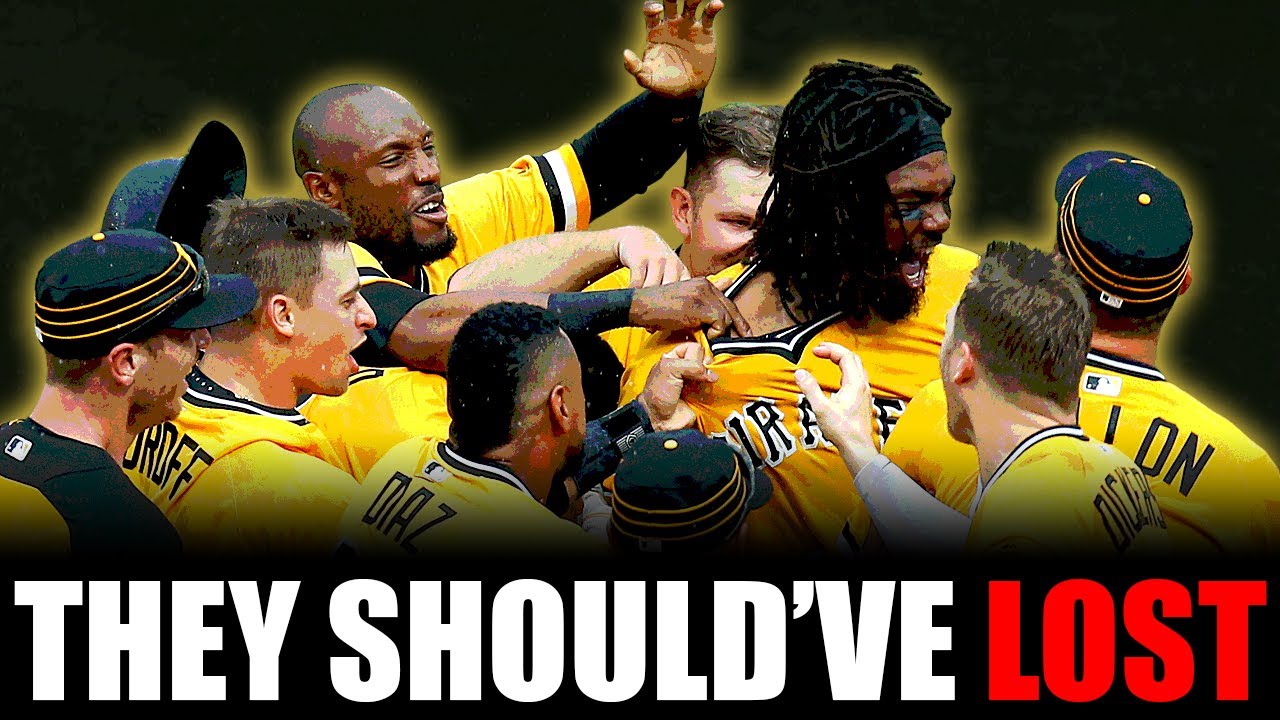
Top of the eighth, tied game, bases loaded, two outs. The most consequential atbat of this Brewers Pirates game so far. And Brett Phillips delivered. Confidence and driven toward right center field. And Brett Phillips is going to clear the bases. While not as illustrious as his World Series walk-off single two years later, a basis clearing late inning go-ahead triple is nothing to scoff at. Well, unless you’re the mid July 2018 Pittsburgh Pirates. Look at that roll to right side that sneaks through. That gets the Pirates a run. Pirates trail by two. Gets a gigantic double play. And now it’s up to Freeze with two outs to find a way to get Bell home. Launch toward right center field. Pretty well hit off the wall. Tie game. David Freeze into third with a pinch hit. Game tying triple. A three-run comeback capped off by what was definitely the most noteworthy opposite field two out two strike a game tying triple of David Freez’s career. However, in this impromptu battle of 21st century World Series clutch hitters, Brett Phillips came out on top as he gave the Brewers the lead in the top of the 10th. Phillips had won the battle, but unlike 2020, he hadn’t won the game. Wine drive towards center over the head of Kane. This might win it. What are being waved home? He’s going to be safe. The ball gets away. They’ve won five against the Brewers. Unbelievable. Under a scenic downpour, Josh Bell delivered not only the eighth Pirates win in nine games, but the first fivegame sweep in MLB since 2006. Still, with a record under 500 at the All-Star break, this rarity was set to be nothing more than a footnote in yet another disappointing Pirate season. Until it wasn’t. In reality, this walk-off win was the peak of an 11game winning streak just weeks ahead of one of the most consequential trades in team history. But first, we need to understand the context behind the motivations that led to this infamous trade. The standing room only crowd trying to get under Johnny Quato’s skin and they might be. That ball’s hit well in left center field and that ball is gone. Two nothing Pittsburgh. That right there is the roar of a crowd who’d been long deprived of postseason baseball for two decades. the culmination of a multi-year project constructed by general manager Neil Huntington. A project built upon a foundation of new age analytics. This expertise was not only used to emphasize certain strategies such as infield shifts and inducing ground balls, but also to supplement their homegrown core with overlooked players such as Russell Martin, Francisco Lariano, and AJ Bernett. While the 2013 team ultimately lost in the NLDS with an offensive core led by 2013 MVP Andrew McCutchen, a top tier pitching staff, inability to uncover undervalued talent, and a number one farm system heading into 2014, the sky was the limit for the Pirates. Near the wall and it is gone. Walk it off. Raise the jolly Roger Josh Harrison. However, following a promising 2013, they lost in consecutive wildcard games to the Giants and Cubs, respectively. Now, as the stat rankings prove, the Pirates certainly weren’t a bad team during this period. If anything, the roots of the Pirates struggles were actually self-inflicted. Take a look at this. This is a graph displaying the endofear payroll rankings of every 2015 playoff team. 70% of these teams held above average payrolls. Only the Mets, Pirates, and Astros could say otherwise. But as the Mets and Astros increased their payroll through the rest of the 2010s, the Pirates wasted the playoff window their competitive analytical advantages afforded them in order to fuel a roster carousel instead of splurging on established talent. Worst of all, this ultimately led to the trades of two stars ahead of the 2018 season, Garrick Cole and Andrew McCutchen. costcutting moves team owner Bob Nutting attempted to sell as a directional shift towards a stronger future. However, this narrative wasn’t alleviating an angry fan base. And with playoff odds of only 8.8% on opening day, it was shaping up to be another uneventful season. But then the Pirates began to win and they kept winning until they were nine games over 500 after game 43 of the season. This may not sound that impressive, but this was actually the first time since 1991 where the Pirates began a season this well. Still, a measly 43game stretch to begin a season isn’t enough to determine a team’s outlook. as 48 games later, following a brutal 16 and 32 stretch, the Pirates record was much more aligned with preseason predictions as they were following the familiar path back into baseball purgatory until they began winning again. And they kept on winning until they accumulated 11 victories in a row, transforming their second half outlook. An inexplicable run where the Pirates ranked the best in team WRC plus and team erra. A span where Cory Dickerson, Gregory Palanco, and Starling Marte each hit at least five home runs. A baffling yet absolutely dominant 11game stretch. But this wasn’t seen by the front office as solely a random streak, rather an opportunity or lifeline. So, how would they capitalize? Well, as they sought a starting pitcher with years of control, they were connected with longtime staple of mid2010’s trade rumors, Chris Archer. While not an ace, per se, he was one of only six pitchers between 2013 and 2017 to produce a 110 ERA plus and record 1,000 strikeouts. The combination of consistent production and a team-friendly multi-year contract made him a coveted target by many teams. But those who checked in found out fairly quickly that the Rays would have to be overwhelmed to consider a deal. Desperate to retain the eyes of a growingly restless fan base, GM Neil Huntington made a deal the Rays couldn’t refuse. The Pirates acquired Chris Archer for former top 10 prospect but struggling pitcher Tyler Glasnau, once consensus top 10 prospect outfielder Austin Meadows, and a player to be named later, who turned out to be 19-year-old pitching prospect Shane Bos. Knowing the methodical risk averse deadline strategies of the mid2010s were a major contributor to the closing of that playoff window, but also seeking to avoid star rental players who’d leave at season’s end. The Pirates chose to acquire a long-term player in Archer. An outcome that both excited and infuriated Pirates fans given their reluctance in the initial playoff window. But with two months left in the season and only three games to make up in the wildard race, the Pirates had the opportunity to alleviate their past missteps. A high drive deep right field. This one’s going to fly. That one is hit hard to right center and the Pineapple has launched one out of here against the team they walked off in dramatic fashion a month prior. The Pirates headline trade acquisition clinched a series loss in the midst of a dramatic tumble down the wildcard standings, ultimately falling out of the playoff race a month later. Perhaps a no better microcosm for Archer’s disappointing tenure in Pittsburgh. a tenure characterized by regression and injuries, ultimately leading to his release after the 2020 season, one year following the firing of Neil Huntington. A once promising team initially built under the systematic integration of Saber Metrics, it was the failure to utilize these unique advantages to their fullest potential in terms of roster construction that limited their postseason capabilities. And once they finally deviated from this riskaverse mindset, it was too late. The rest of the league had caught up to their methods and regression had taken over. Range coming off a victory last night, 6 to1. Tobal’s all set to go to work. On April 1st, 2025, Shane Bos, the player to be named later of the Archer trade, faced off against the Pirates for the first time ever. How did Bos perform? He threw six shutout innings and 10 strikeouts. A great outing for the former top 10 prospect. However, his big league career has been bumpy to say the least. From Tommy John surgery in late 2022 to a promising 2024 stint and now an underwhelming 2025. Still, at just 26 years old, he’s got time to live up to his once elite prospect pedigree. Now, someone who did live up to their prospect pedigree was Tyler Glasnau. Following a downright awful big league tenure in Pittsburgh, Glasnau broke out in 2019, later criticizing the Pirates for operating behind the times. But unfortunately, injuries have been a major theme in his career as he surpassed 120 innings only twice. Still, when on the mound, he’s one of the league’s nastiest pitchers, which was enough for the Dodgers to take a gamble on him, acquiring him ahead of the 2024 season and immediately signing him to a 5-year, $136 million extension. In this trade, the Rays acquired prospect Ryan Pepio, who has since turned into a solid mid-rotation starter. However, this is far from the only trade left in this story. We’ve got one more player to mention. Outfielder Austin Meadows. Like Glasnau, Meadows underwent a breakout 2019 season, except he actually played nearly the full year. In fact, he’s one of only 12 outfielders since 2000 to produce 30 home runs, a 140 OPS+ and 4B war at the age of 24 or younger. After a 2020 season mostly spent on the IIL, Meadows returned in 2021 with some solid above average production. Then to the shock of many, Meadows was traded to the Tigers ahead of the 2023 season for infielder Esoch Paredes, a former top 100 prospect who hadn’t quite acclimated to the big leagues. Unfortunately, Meadows only played 42 games across two seasons with the Tigers due to both physical and mental health struggles, notably his battles with anxiety. Following the 2023 season, he was non-tendered by the Tigers and has stepped away from baseball ever since. As for Parades, not surprisingly because it’s the Rays, he underwent a breakout season in 2022, transforming into a legitimate offensive threat. Then 2 and 1/2 years later in mid 2024, because it’s the Rays, he was traded to the Cubs for a package headlined by power-hitting utility man Christopher Morurell. A few months later, Paredes was on the move once again. This time in a package for superstar outfielder Kyle Tucker. A trade that’s been the definition of a win-win deal. Overall, this is quite the intriguing trade tree, especially for one that stems from an 11game winning streak back in 2018. Although sadly, 7 years later, even following another rebuild under a new front office regime, the Pirates have maintained their risk averse, cheap ways of conducting business. We have a generational talent in Paul schemes, and we’ve somehow had a worse off season than last year. No serious Pirates fan is expecting us to spend like the Dodgers, Mets, or Yankees. But is it too much to ask to add a serious bat to supplement the rotation? Well, when Bob Nutting is team owner, I guess it is. The Pirates and their fan base regret the outcome of their 11game winning streak 7 years ago. But the roots of this regret stem from the actions, or should I say inaction, of Bob Nutting. And until that changes, you’ll continue to hear chance like this.
Creator: @SportStorm23
X- https://twitter.com/SportStorm23
Additional Music by Yuzzy and Karl Casey @WhiteBatAudio
______________________________________
SRS MERCH – https://www.starkravingsports.com/
SRS X – https://twitter.com/starkravesports
SRS INSTAGRAM – https://www.instagram.com/starkravingsports
SRS TIKTOK – https://www.tiktok.com/@starkravingsports
FOR BUSINESS INQUIRIES – contact@tablerock.com
40 comments
No joke, two/3 years ago i had Josh Bell being the home run leader by seasons end. Yeah. lol
Paul skenes first name is Paul
Wow that deal totally backfired on the Pirates.
How do you counter NOED atp🤦♂️🤦♂️smh
I was at that game in Pittsburgh from the last clip you played, absolutely terrible game by the pirates
OKC! OKC! OKC!
David Freese set the rangers back 12 years and set the pirates back 12 years as well
Those Pirates kits were absolutely god awful.
They deserve it all just for those.
This period was the last time the Pirates were actually good
LOL, I don't think Urinatingtree wants to talk about this moment 😅
0:52 TYLER SALADINO SIGHTING
Every winning streak is disastrous as long as old Nuttbag owns the team.
Crazy how empty the ballpark is..
The Pirates aren’t bad because they’re cheap. If Nutting let Huntington and Cherington spend big, they’d still be losing. They’d just be the NL version of the Angels. They need a good front office like the Rays have but Nutting and his teams presidents can’t figure out the right GMs to hire to pull that off.
Hehehe, Nutting. Hehehehe
I would like to think the 13 thru 15 pirates would of done better things if only the Cardinals weren't in our division those years
Nl central team goes on 11 game winning streak after very recent postseason lose? Sounds like the 2025 brewers
I hate bob nutting
No joke, the Archer trade as soon as it broke out, my mind was screaming massive overpay, Glasnow and Meadows can get some other great pitcher, like Greinke(ofc Nut clown won't pay for that), like bro, you are trying to outsmart the Rays? The team you were setting your model after?
History is still repeating itself, Skenes and Jones may look great right now, they would be traded and whoever the Bucs got back will be not as great, not to mention now most of their farm system is cracking to top 100 and not panning out
6:36 chris archer is one of my many favorite players
Nutting is a scum bag
It's a shame the Pirates suck so much. Their caster is unbelievably good.
Bob, please cash out already and let someone else be the caretaker.
Sincerely,
MLB Fans
For most of my existence, the Pirates has been bad… completely and utterly useless, and it's depressing to know that they are now under .500 all-time for the first time in over a century! How do you do that!?
I went to like four out of these 11 games and even though it's screwed us up for the long-term, I will never forget the winning streak
Meadows wasn’t there very long, Glasnow is a Dodger and Baz has been hurt most of the time since the trade. It wasn’t exactly great for either team in the long run.
david freese now has 2 bottom of the 9th clutch triples
11:11 I understand cherry picked stats but this is actually ridiculous
david freese, clutch triple king
A winning streak during decades of the team being dog shit isn’t remotely interesting
Ugh Brett Phillips. Terrible Orioles.
That 10-15 minute period when we got notification that we got Archer and before the return was announced was a very bright spot in an otherwise bleak period for the post 13-15 Pirates. It was really funny seeing the excitement turn to almost dread once the full trade was announced
I can’t even comprehend how a legacy organization like the Pirates can be such a dogshit one. It’s a crime against the sport itself.
13:03 spend like the yankees? their owner wants a salary cap they poor now don’t include them in the teams that spend
Idk how anyone can’t call Tyler Glasnow or Austin Meadows busts at this point. Have they had some big league success? Yea, but in extremely small samples and ravaged by injuries.
I can’t call either one of them successful.
Except that's actually part of a much bigger trade tree, the infamous Delmon Young Trade Tree.
Delmon Young was the #1 overall pick in 2003, and he didn't exactly pan out. In the 2007-08 offseason, the Rays traded him (along with Brendan Harris and Jason Pridie) to Minnesota for Matt Garza and Jason Bartlett (and a minor leaguer who never made the bigs). Both Bartlett and Garza had three solid seasons in Tampa Bay (19.0 bWAR total, lowest individual bWAR season being Garza's 1.6 in 2010) before being dealt in separate deals in the 2010-11 offseason: Bartlett to the Padres for Cole Figueroa, Brandon Gomes, Cesar Ramos, and Adam Russell; and Garza, Fernando Perez, and Zac Rosscup to the Cubs for Archer, Robinson Chirinos, Sam Fuld, Brandon Guyer, and another minor leaguer. Archer alone produced 12.5 WAR in a Rays uniform, plus 0.2 from Chirinos, 2.3 from Fuld, 4.7 from Guyer, 1.4 from Ramos, and…a net 0 from Russell, Figueroa, and Gomes (0.2 from Russell and -0.1 each from the other two). So we're already at 40.1 WAR. Now, most of those guys left in free agency, and Ramos only netted yet another minor leaguer who never made it to the majors while Guyer netted two prospects who also didn't make it to the majors with Tampa Bay nor did they become trade pieces, though one of them did eventually make the majors after leaving as a minor league free agent. But of course, there's Archer, who they of course traded for Glasnow, Meadows, and Baz. Baz currently stands at 3.1 bWAR while Glasnow contributed 8.7 and Meadows 6.2, and both of them were then traded as well, Meadows for Isaac Paredes who had 9.1 WAR in Tampa Bay and Glasnow along with Manuel Margot for Jonny DeLuca (1.0 bWAR) and Ryan Pepiot (4.2 bWAR), bringing the total to 72.4…except Paredes was then traded, too, turning into Hunter Bigge (0.6 bWAR), minor leaguer Ty Johnson, and Christopher Morel…who has had a -1.2 bWAR since the trade. Oops. Either way, the current total bWAR stemming from the trade of Delmon Young sits at 71.8, the equivalent of a surefire Hall of Famer–and while a trade tree certainly can continue on into perpetuity if a team keeps trading veterans for prospects, Young's last season in Tampa Bay was 2007, certainly within the bounds of the length of a major league career. Delmon Young himself produced just 1.8 bWAR for the then-Devil Rays and would finish his career with 3.2 bWAR.
Is this sportstorm narrating the vid?
I have a Chris archer rays hat and a Glasnow Indianapolis Indians cup smh
13:00 Tommy Pham slander will be tolerated
Need a video about how Ben Cherington is the worst GM ever after the Pirates disaster deadline