Tank Talk: Charlie Townsend
Charlie, congratulations. A brand new role and title for you here with the Sharks, but you’ve been with the organization a very long time. We’ll get to the current stuff in a second. First off, how did you get with the Sharks? Yeah, it’s been Yeah, it’s my 13th year, which is a it’s a wild thought. Um, but I started with in Worcester, Roy Somber. um the legend Roy my first job um stayed there for 2 years came out here with the CUDA 15 16 year um slowly morphed into the front office after that but um yeah started started the original days in Worcester you were a video coach for the cowboy I was yeah the cowboy um he is the cowboy for sure and it was it was it was awesome because we were you know further away out there so it was just just kind of us um and the office we had in Worcester was like we’re like right on top of each other so it was he was the perfect first got to work for. Love it. So, from the the the coaching ranks to the front office ranks, what was that transition like and what what have the last dozen or so years been like working in this organization and now working towards this new title? Yeah, sure. Um, you know, I think I as you get older, things start to kind of make sense and you start to figure, oh, why’ that happen? Why’ this happen? And I think I was I’ve realized now that I’ve I’ve got a pretty analytical mind. I think um when I got into the coaching side, I thought that’s what I wanted to do. Um, but as you know, I’m my parents were teachers. I grew up at a school learning was kind of the was the bedrock of everything and every day it was you know what did you learn today at school or what did you learn today at at hockey or baseball what have you and a lot of the adults that I looked up to as a kid were teachers and coaches um so you know between that and then having the sort of competitive I played hockey I loved hockey um I think this whole time I’ve had a much more big picture approach um that now sort of has become my focus um and and truthfully the best part about it with the sharks so far has been that they’ve allowed me to be in like every room. Um I’ve had roles in coaching, scouting, player development. Um now in the front office and and being in all those rooms with all those different personalities and people, you start to learn the sensitivities of all those rooms and how they operate. Um and even more fortunately, I’ve been, you know, part of coaching staffs when we’re going after a cup. I’ve been part of coaching staffs when we weren’t as good. Been a part of the scouting group when we were picking first overall, when we weren’t picking first overall. So, it’s it’s um it’s it’s provided this really beneficial landscape for myself personally to learn from and then draw these experiences as I’m as I’m moving forward a bit. So, director of hockey operations, congratulations on that. What does that job actually entail? In my mind, there’s a lot of different things that are possibilities, but what does the job actually look like for you? Sure. Um, you know, I think first and foremost, it’s it’s putting the action in Mike’s vision. That’s where my my head kind of um that’s where I spend most my my time thinking is that vision coming to life. Um and really it’s you know it’s the strategic thinking across the departments, the objectives and the strategies we’re using to execute on those objectives in scouting in player development um player acquisition, player evaluation, the different the different avenues that we work in. Um and on top of that, I think I spend most my time in this role sort of looking at the information we’re using. um spending a lot of time in understanding, you know, how do we blend this modern information stream with the more traditional modes uh modes of information gathering like scouting. Um AI is the big big buzzword. Um are we using AI here? Uh you know, we’re starting we we we’ve had a couple really interesting projects. I and like I’ll be the first one to admit I think I you know I refer to it as assistive intelligence more than artificial. Um and I’m sure that’s been said I’ve probably read it somewhere. I’ve probably heard it before, but I think, you know, working with scouts and coaches all the time, you you realize you pick up on sort of that hard-earned experience they have um that took years of scouting, years of coaching to come up with the the way they they view things and and you never discredit that. Um but we have this nice little tool here that can build on top of that. Um and honestly, hopefully at some point along the conversation, you know, challenge some of these long-held beliefs that everyone has in a productive way. And that’s what we do a really good job of. And I think what I’m most proud of so far is that we’ve incorporated that in a really, you know, productive way to get buy in and people understand it. Um, not beating anyone over the head with it or force feeding it. I mean, and it makes sense assistive intelligence because it it confirms or denies maybe what you’re thinking. It’s not the default thing that you have to follow. It just kind of it’s it’s another idea. It’s another voice in the room. The metaphor I like to think of is like if if we’re in our conference room going over something, we have, you know, eight or nine people in there and then this other person’s coming to the room and is giving their insight. Um, and you manage it the same way. Um, so yeah, I’m I’m I’m sort of sitting on top of that all the time. What are we bringing in? Where are we getting it? I’m I’m a big believer in the the quality of the information, not necessarily the quantity. I think there’s a bit of a push to just consume all this data and information as much as possible. And, you know, my dad always used to tell me knowledge is not understanding. So I’ I’ve I’ve sort of certainly subscribed to that in this role. Um I spent a lot of time making sure that we’re using quality information and we’re getting those deeper understandings rather than just compiling and compiling and compiling. Um and then you know on top of that I monitor our decision-m process a lot of the time and and sort of help design systems and ways to make decisions and then looking at those decisions and did we learn from past outcomes? What frameworks did we use there? um and and and just keeping tabs on the way we’re thinking through things because the league the league evolves, the game evolves, and how we stay aligned through that is is crucial. Um so that that’s that’s a that’s a key word for me is that alignment um and staying aligned in strategy throughout our different departments. So you’re saying that there’s a lot of work that goes on behind the scenes of signing, trading, drafting, releasing a none of this is on a whim. I guess that’s what I want to point out here with this whole chat is you guys are going so deep layers beyond layers of of how to look at things before before you actually do it or learning from things in retrospect. 100%. Um nothing happens quickly. I mean the game things do move and and you have to uh you have to be agile and all that but we we spend a lot of time dissecting every piece of information and and trying to understand our approach to this decision. Um, and AJ and Dylan who sort of make up the think tank as we as we affectionately call it. Um, super talented, big- time self starters. They are they’re certainly always kind of driving the bus behind the scenes, making sure that everything that we need is is there to to to dive into. And they have a great technical skill set where they can do a lot of the, you know, the the heavy lifting with the the technical components of things, coding and and and all the things that I know nothing about. um they’re they’re fantastic with that, but two young um upandcomers for sure. So, I know you have friends in the industry and you probably talk about some specifics or or or maybe in in general detail, but how similar or different are the Sharks at running the hockey operations as compared to any other NHL teams? Do you think generally everybody’s the same or do you think that maybe you’re different or how different? How would you describe that? Yeah, it’s a good question. I think you know Yeah. and you have people at different teams and and I have buddies, guys that I played with um across the league. I think there’s there’s there’s definitely that copycatness. Yeah, we’ve been saying that in the media forever. Yeah. Um we want to be big and we want to be big and strong. We want to be small and fast. We want to be all these different things cuz whoever wins the cup that year, the next year, everybody says, “Well, that’s how we’d all do it, right?” That’s that’s the that’s the easy way to do it, right? And I Yeah, there’s there’s totally some of that. What I would say I’m, you know, what we do a little differently is we we observe what’s going on. Um, certainly take it all in, have conversations about it, but at the end of the day, it goes back to Mike’s vision, what Mike wants to accomplish. Um, and how are we best doing that? And I think that keeps us positioned in a way that we continue to work a little uniquely. Um, and I and and and just to give an example is I I you know, I I kind of frame it as data discipline. we’re we’re more disciplined in our approach to the the information than I would say I’ve heard other teams are in terms of how they sort of project they they jump into and not to say they’re right or wrong. I just we’re we’re a little more methodical or patient on that side of things. So, this is kind of a a leading and and a loaded question. We’re obviously all pretty excited about the future of of what this franchise uh might turn out to be, the direction it’s headed right now. What’s the one part of it for you that makes you go, “All right, I think I feel pretty confident that we’re in good shape. We’ve made the right moves.” What What puts you to bed easy at night? I think we’ve executed on the things that we set out to do these first three years in terms of, you know, getting the cap sheet in the place we needed it, getting the prospects in here that we wanted to get in. Um, I think we made the most out of these last three years since since Mike took over. Um, and that sort of turns into this excitement which I think starts coming along is the identity of what we’re trying to build here. We’ll start seeing now. Um, we’ve had different reasons to be excited the last couple years, the last year and a half, but I think really now the team that we’re all hoping for that’s coming to be proud of, we’ll start to see what that’s going to look like. I think people will be able to pick up on it, what we’re trying to do, you know, and I’m just thinking about your your job and title and role. Is it more about personnel and getting the right people in the right spot or is it also even including the strategy of uh what a coaching staff might implement? How how deep does hockey operations go? And that, you know, that’s that’s the that’s that’s the the crux of the whole thing is that it goes it has to be completely aligned top to bottom. Um, and even on the business side being aligned there. I think the the one thing that we have um that’s pretty palpable is that everyone wants this to go a certain way and everyone’s doing sort of what it takes in their in their positions to do that. Um, but the alignment within hockey ops is top to bottom. Like it’s, you know, Mike’s vision is this. What are we doing in pro scouting for that to happen? What are we doing in amateur scouting for that to happen? what are we doing at the coaching level? What systems are we using? Are we matching those person? All those sorts of conversations are constantly happening. And and I think that’s where I sort of play center field and make sure that those conversations and those processes are all funneling that way. Two more things. It’s uh kind of the middle late part of the summer. We’re getting ready for the season. If I were to walk into a meeting of the hockey operations staff, what would I see? Who would I see in that meeting? Are they are they short meetings? Are they casual? Are they formal? Is there PowerPoint? What what are those meetings like? Yeah, it’s it’s man, it’s funny to think about because um you see it all the time and I never get to see it. I’m just wondering. No, it’s it’s we have different sort of we have some micro groups that attack certain things. The think tanks always going and I keep I call it think we call the think tank. That’s sort of where the the information flow happens. It’s become a popular spot for people to hang out into. It’s and I think more than more than anything else it’s I I remember reading in um there’s a book the Cubs way about Theo Epstein when he took over the Cubs and um big baseball guy right here by the way somewhat somewhat um but when he was with the Socks we go back big Red Sox guy by the way it came out eventually um they would go down to spring training and they called it like the the house they rented they I think they I want I might have it wrong they call it the frat house but basically that’s where they spent all waking hours talking about baseball. All the R&D, all the ideas are thrown at the wall. And I I thought that really resonated with me. Um so maybe subconsciously that’s what we’ve sort of turned the think tank into, but the think tank becomes sort of the idea hub. Um people come with questions, you know, where’s this project at? I want to look at this and and it all sort of flows from there. So that that’s a central hub, I would say. Um so if you came in on any given day, you could come to the tank and you would see some stuff going on. Um other than that, um depending on the calendar really, so if we’re in trade deadline, that’s a certain group that’s meeting most of the day. If we’re at the draft, it’s that group. Um, but certainly sort of matches where we’re at in the year. All right. Last thing deals with urgency. People I talk to in the community, maybe if they don’t watch on a regular basis, are the Sharks going to be good again? I can safely kind of say now, yes, that is going to happen. The educated fans, they they asked the better question. When is that going to happen? So, I’m going to put that on you, but I know there’s no specific answer. How do you just see urgency and a timeline and and what is the measure of where you want to be by a certain time? How does all of that look for you? Yeah. Um I am always wonder I’m always I’m always having that conversation. Yeah. Nobody knows the answer. So it’s kind of like a feel it’s like a touch and feel. How do you feel about like that? I it’s it’s it’s easier for me to say than some others, but because I’m sort of in tune to all these processes we have going on, right? So I have all these many benchmarks or checkpoints of where I want to get to and when that I’m constantly keeping tabs on and I’m I’m I’m always watching, you know, how far away are we from this one? How far away from that one? and and the the goal the goal posts move a lot. Uh the targets always move, but I think most importantly, it’s this methodical momentum um checking off these um you know, like to use the word again, these checkpoints along the way that we’re on the right track. And I I I try to stay more processoriented. I’d like to say I’m I I care less about the result, but we’re obviously in a results driven business. But if you lose sight of the process and the goals that you have set at different points along the way, then you the you’re not going to like the result anyway. Well, you and I have both seen the good days and I can’t wait to get back to a lot more of those. Charlie, congratulations on the summer, everything else going on and obviously the promotion, too. Appreciate it. Thank you very much. Save around me.
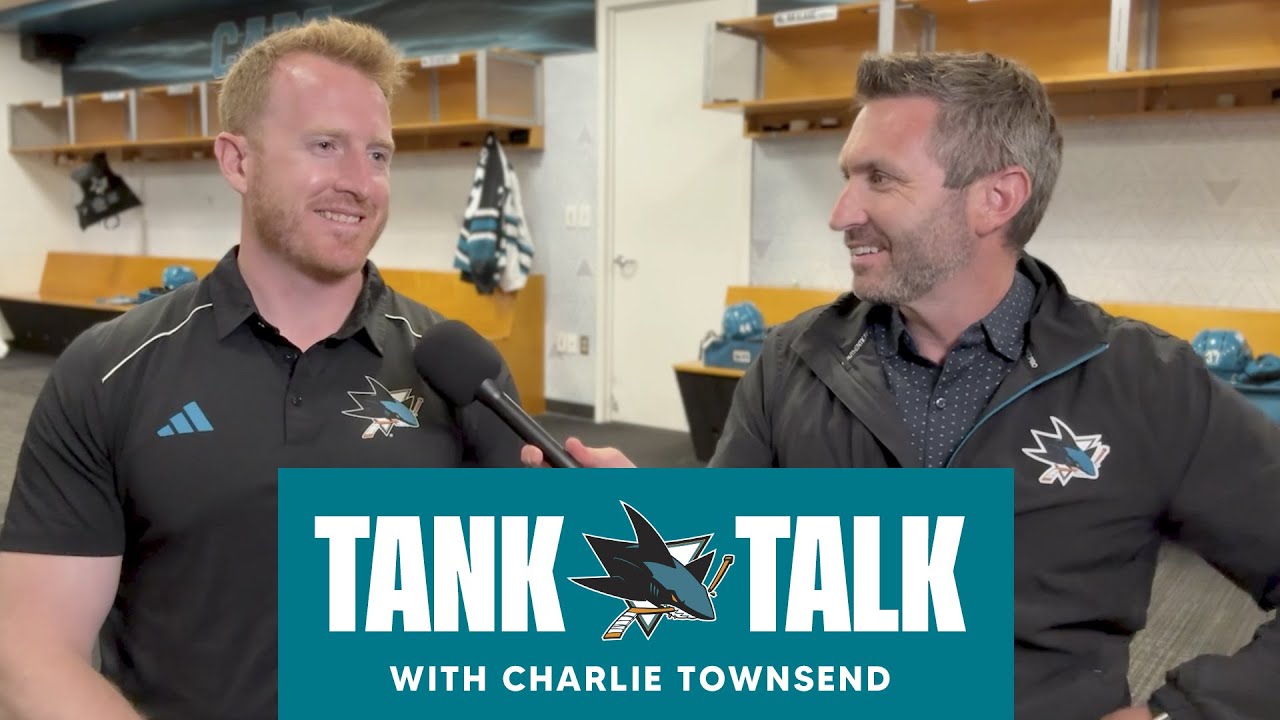
Sharks Director of Hockey Operations, Charlie Townsend, sits down with Brodie Brazil to talk about his career, current role, and where the Sharks are going.

4 comments
This was one of the most interesting Tank Talks I’ve seen, great job to both of you guys.
Wow fascinating interview! Seems like a very impressive dude
Great interview, great insight into an NHL/Sharks org. Charlie is one of the many unsung heroes who work to make the org a smooth collaborative organization!
Handsome ginger man!