
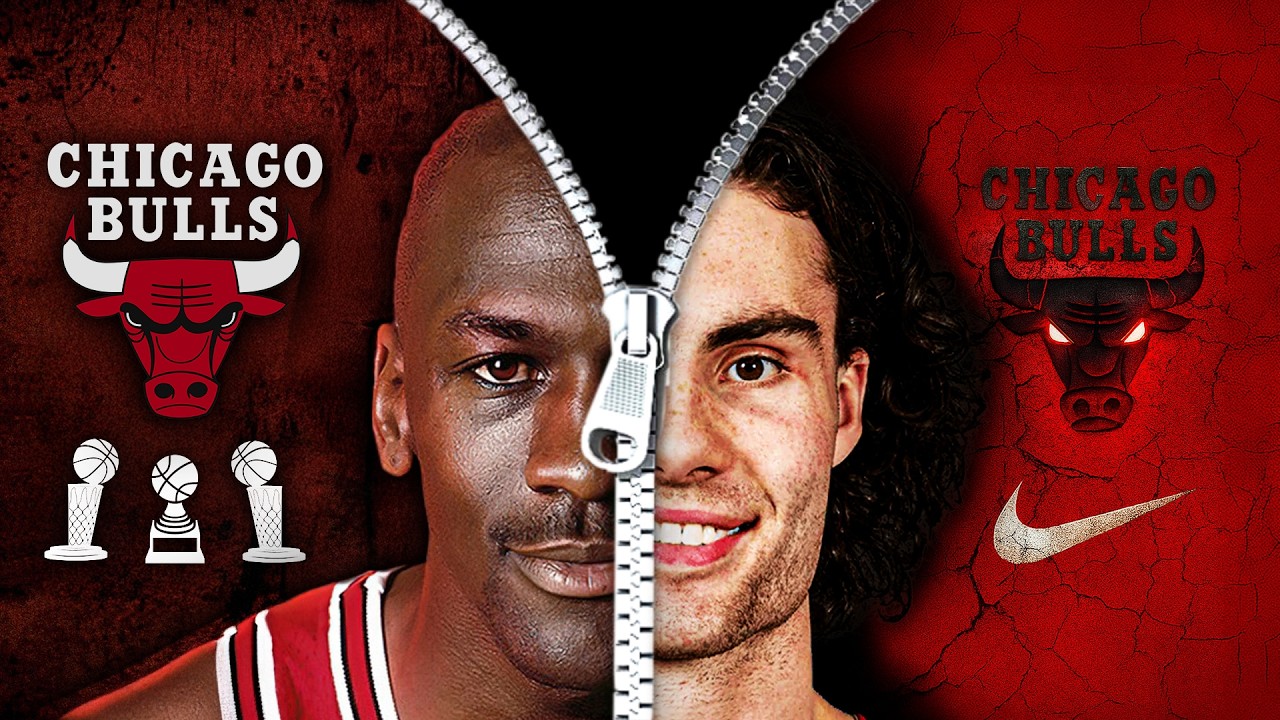
The SCARY Truth About the Chicago Bulls Nobody is Noticing
The Chicago Bulls are one of those teams that every basketball fan knows about. In the 90s, when Michael Jordan came back and led them to glory, they weren’t just good. They were untouchable. Six championships, an aura of dominance, and a global legacy that made the Bulls the team of an entire era. But when Jordan left, things were never the same. Since then, the Bulls have struggled to find their identity, bouncing between rebuilds, injuries, and short playoff runs. And yet, even in the middle of all of that, there are still reasons for Bulls fans to stay hopeful. This is the story of the rise and fall of the Chicago Bulls and why the next chapter might finally bring some light back to Chicago. From 1995 to 1998, the Chicago Bulls were on top of the basketball world. Michael Jordan came back, teamed up with Scottie Pippen, Dennis Rodman, and Ron Harper, plus a strong bench with guys like Steve Kerr, and Tony Cuck coach, and they were unstoppable. In the 9596 season, they didn’t just win, they absolutely dominated. The Bulls went from a solid 47 wins the year before to an insane 72-10 record, the best in NBA history at the time. Jordan won MVP, finals MVP, and All-Star MVP all in one year, while Rodman grabbed another rebounding title. Kerr nearly led the league in three-point shooting, and Phil Jackson was named coach of the year. They crushed everyone in the playoffs the way Zion crushes a cheeseburger and they beat Seattle in the finals to grab their fourth championship. That team is still remembered as one of the greatest in NBA history. The next season they nearly hit 70 wins again, finishing with 69 wins and 13 losses and rolled through the playoffs to beat Utah in the final. Jordan kept racking up scoring titles. Rodman kept owning the glass and Pippen stayed as one of the best two-way players in the league. By the 98 season though, things were tense behind the scenes. Phil Jackson and the front office weren’t on the same page. Pippen wanted a new contract, and rumors swirled that this would be Jordan’s last year. Even with all that drama, the Bulls still finished with 62 wins and 20 losses and took care of business in the playoffs. The Pacers pushed him to a game seven in the conference finals, but Chicago pulled through and set up one last final showdown with the Jazz. That series gave us one of the most iconic moments in sports history. In game six, Jordan steals the ball from Carl Malone, whose legacy has not aged well. Then hit B shot over Brian Russell with 5.2 seconds left. The Bulls go on to win their sixth title in 8 years. Jordan took home his sixth final MVP. And just like that, the dynasty closed with the perfect ending. After the Bulls won their sixth championship in 1998, everything fell apart. The general manager, Jerry Krauss, decided the team was too old to keep winning. So instead of trying to defend the title, he blew it all up. Pippen was traded. Rodman was let go. Phil Jackson was replaced with Tim Floyd and Michael Jordan retired again. Just like that, the dynasty was over. So what was left? A young, inexperienced team led by Tony Cuckoo. But without Jordan and the others, the Bulls were a mess. In the lockout short 1998 1999 season, they finished with a 13 and 37 record and even set an embarrassing low point, scoring only 49 points in a game against Miami. The only bright spot came when they won the draft lottery and picked Elton Brand. He was great. He won co- rookie of the year, but the team still finished with just 17 wins in 2000. Free agents didn’t want to come, and even with new names like Brad Miller and Ron Mercer, things got worse. The Bulls hit rock bottom in 2001 with a 15 and 67 record, the worst in the league. Krauss then traded away Brand for Tyson Chandler and drafted Eddie Curry, hoping they would be the future. But both were long-term projects. With no veterans to guide them, the team kept losing and coach Tim Floyd eventually got replaced by Bill Cartwright. By 2002, there was little hope again. The Bulls had a young group with Chandler, Curry, Jay Williams, and later Kirk Hinrich, but inconsistency killed them. They managed 30 wins in 2003, but then disaster struck. Jay Williams got into a motorcycle accident that ended his career. Krauss stepped down as the GM. John Paxton took over and the team tried to reset. Pippen even came back for one last run, but injuries got in the way. By 2004, things were still rough. Curry and Chandler weren’t living up to expectations. Card Wright got fired and Scott Skyles came in as the coach. The Bulls shifted to focusing on defense and while Hinrich became a fan favorite, the team still only won 23 games. It was a very tough stretch. People called them the baby Bulls and most of the time they just looked lost. From 2004 to 2008, the Bulls went through a ton of changes as they tried to rebuild into a contender again. In the 2004 draft, the general manager, John Paxton, brought in Ben Gordon, Lu Al Dang, and Chris Duhan. Plus, they added Andreas Noion, fresh off winning Olympic gold with Argentina. The season, though, started rough with nine straight losses. But the team did eventually find its rhythm and finished with 47 wins and 35 losses, making the playoffs for the first time since the Jordan era. Now, they lost in the first round to the Wizards, but Gordon shined and even won the six-man of the year. The next season, things got complicated. Eddie Curry’s heart condition raised concerns and the Bulls ended up trading him to the Knicks. Without him, the team lacked a strong inside presence, but still found their way to a 500 record and made the playoffs only to be bounced out by the Miami Heat, who, to be fair, did go on to win the title. Even though it was another early exit, the young players were gaining valuable playoff experience. In 2006, the Bulls shook things up again. They drafted Tyrus Thomas and Tabo Sephilosa. Then they signed defensive anchor Ben Wallace and traded Tyson Chandler, the last player remaining from the old Krauss era. That year they finished with 49 wins and 33 losses and pulled off a huge statement in the playoffs, sweeping the defending champions Miami Heat in the first round. But those good vibes ended in the next round as Detroit took them out 4 to2. Still though, it was their first playoff series win since 1998, and the fans were starting to believe again. In 2007, big trade rumors swirled around. Names like Kevin Garnett, Pow Gasol, and even Kobe Bryant were all linked to Shyrack. None of it happened though, and instead, the Bulls stumbled to a bad start in the 2007208 season. Coach Scott Skylles got fired in December. Jim Boland stepped in, but nothing really changed. The Bulls finished with 33 wins and 49 losses. They did make a mid-season trade, bringing in Drew Gooden and Larry Hughes while sending out Ben Wallace and Joe Smith, but it didn’t save the season. Afterwards, Boland was let go and the Bulls hired Vinnie, a rookie head coach. The only good thing was that Vinnie was surrounded by veteran assistants to guide him. Now, in 2008, the Bulls got insanely lucky. They only had a 1.7% chance of winning the draft lottery, but they pulled it off and landed the first overall pick. So much for the NBA not being rigged. With it, they chose Derrick Rose, a Chicago kid and the clear future of the franchise. From the start, it felt like the Bulls had finally found their superstar to build around. In his rookie year, Rose did not disappoint. The Bulls finished 41 and 41 and snuck into the playoffs. But the real show came in the first round series against the defending champions, Boston Celtics. It turned into one of the greatest playoff series ever. Seven games, seven overtime periods, and Rose making history with 36 points and 11 assists in his playoff debut, tying Kareem Abdul Jabar’s record for the most points by a rookie in a playoff debut. The Bulls didn’t win that series, but the entire world saw that Derrick Rose had officially arrived. In 2009, the Bulls added James Johnson and Taj Gibson in the draft, but they did lose Ben Gordon in free agency, which significantly hurt their scoring punt. They kept tinkering with the roster, moving guys like John Salman’s and Tyrus Thomas in trades, but the results stayed the same. They finished as the eighth seed again in 2010 and lost to LeBron’s Cavs in just five games. By then, it was clear the team needed a bigger shape up. Vinnie was fired as the head coach and the Bulls were heading into a huge summer, one that would define the Derrick Rose era. In 2010, the Bulls brought in a new head coach, the Boston Celtics assistant, Tom Tibido. Tibs was known as a defensive mastermind. He hadn’t gotten his reputation yet as the guy who never rotates the starting five. The fans were all very excited to see what he could do with the young Derrick Rose. That summer, the Bulls went allin during free agency. They signed Carlos Boozer to a big 5-year deal. They added sharpshooter Kyle Corver. Brought over the Turkish big man Omar Ashik and picked up guys like Ronnie Brewer, CJ Watson, Kurt Thomas, Keith Bogen, and even the legend Brian Scalabbrini. The idea was very clear. They wanted to surround Rose with depth and toughness so they could actually compete. It worked. In the 2010 2011 season, Dererick Rose exploded. He became the youngest MVP in NBA history at just 22 years old and the first Bull since Michael Jordan to win the award. At this point, Chicago wasn’t just good, they were elite, finishing with the best record in the league with 62 wins and 20 losses, and earning the top seat in the East for the first time since, you guessed it, the Jordan era. In the playoffs, they beat the Pacers in five games, took out the Hawks in six, and suddenly the Bulls were in the Eastern Conference Finals for the first time since 1998. Their opponent though, LeBron James, Dwayne Wade, and Chris Bosch, they had to go through the dangerous Miami Heat. Chicago actually struck first, winning game one, but then the Heat star power took over. The Bulls dropped the next four games ending their season. But for the first time in years, it felt like the Bulls were actually truly back in the mix. However, from 2011 to 2014, the Bulls went through a roller coaster of highs and heartbreaks. In the 2011 draft, they grabbed Jimmy Butler with the 30th pick, a move that would pay off years later. That offseason, they also signed Rip Hamilton and locked up Derrick Rose with a big five-year extension. Rose and Lu all Deng both made the All-Star team that season, the first Bulls duo to do it since Jordan and Pippen. The team finished with the best record in the league again, but everything changed in the playoffs. Game one against the Sixers, Dererick Rose tore his ACL. And just like that, the season was over. To make matters worse, Yokim Noah went down in game three and without their stars, the Bulls were upset by Philly in six games. After that, the roster was shifted. Guys like Kyle Cver and CJ Watson were gone and new faces like Marco Bellanelli, Nate Robinson, and Nazer Muhammad came in. Rose sat out the entire 2012 2013 season, but the Bulls still fought hard. They finished with a 45 and 37 record and even pulled off a dramatic 7-game win over the Nets in the first round and then even managed to snap both Miami’s 27game win streak and the Knicks 13game streak in the same season. That toughness was pure tips. Exactly what you expect from a team that is managed by the guy who looks like the penguin from Batman. Unfortunately, they still fell to the heat in the second round. Now, as a result of how tough they were, the hopes were high for them in the 2014 season, but tragedy struck again. Rose tore his miniscus just 10 games in. The Bulls ended up trading away Lu Deng mid-season, which essentially ended that chapter. Even so, they still finished with a 48 and 34 record and earned homec court in the playoffs, but they lost to the Wizards in round one. The silver lining was Yokim Noah had the season of his life, winning the defensive player of the year award, making AllNBA first team, and even finishing fourth in MVP voting. That summer, the Bulls looked to reload. They traded up for Doug McDermad in the draft, added Powell Gasol in free agency, brought Nikolola Miroic over from Europe, and resigned Kirk Hinrich. The pieces were in place, but the bigger question was, could Roads ever stay healthy enough to lead them again? The 2015 season started with a lot of hope for the Bulls. Derrick Rose was finally back. And now that they had Paul Gasol, a proven champion in the mix with guys like Taj Gibson, Miritic, Snell, McDermott, and Hinrich rounding out the roster, Chicago looked like one of the top contenders in the East, right up there with LeBron’s calves. Early on, things look good. The Bulls won seven of their first nine games. But along the way, crack started to show. There were positives like Jimmy Butler emerging as a star, jumping from a 13 points per game player to 20 points per game, and putting himself in the race for most improved player. Gasol was a steady double double machine and both he and Butler made the all-star team, but the team just couldn’t stay consistent and Rose got frustrated with the lack of chemistry. Behind the scenes, there was also growing tension between Tibido and the Bulls front office, which only made things messier. Still though, the Bulls finished 50 and 32, good for the third seed in the East. In the playoffs, they beat the Bucks in six games, absolutely bending them over in game six by 54 points, the biggest playoff win in the franchise history at the time. That set up a huge second round matchup with LeBron and the Cavs. Chicago stole game one and looked ready to make a statement. Then in game three, Rose hit an incredible buzzer beating three to put the Bulls up 2-1 in the series. It felt like maybe this was finally their moment. But as LeBron and the Cavs always do, they bounced back, won the next three games, and sent Chicago packing. After that loss, the focus shifted off the court. Everybody was wondering if Tom Tibido had coached his last season in Chicago. After another tough playoff exit, the Bulls decided it was time for a change. On May 28th, 2015, they fired Tom Tibido, saying they needed a new approach. A month later, they brought in Fred Hoyberg as the head coach. In the draft, they only had one pick, and they used it to draft Bobby Portoris out of Arkansas. The 2015 2016 season started with a lot of drama before the first game was even played. Mike Dun Levy Jr. was out for months after back surgery, so Hoyberg promoted Doug Mcder to the starting lineup. Hoyberg says Yokim Noah had suggested it, but Noah denied it, creating some early distrust. On the court though, the Bulls were on fire, beating the Cavs in the opener and jumping out to an 8 and3 record, but things very quickly fell apart. They dropped 12 of their next 17 games. Butler went down with a knee injury and the team never found any consistency. They finished with a 42 and 40 record and for the first time in 8 years missed the playoffs. The following summer, the Bulls made a huge change. On the 22nd of June 2016, they traded Derrick Rose to the New York Knicks, officially closing the book on the Rose era. In return, they got Robin Lopez, Grant, and Joseé Calderon, who was later flipped to the Lakers. To replace Rose, they brought in Rajan Rondo, and hometown hero Dwayne Wade. Later, they also traded for Michael Carter Williams. By 2017, the shakeups continued. In February, they traded Taj Gibson, Doug McDermad, and a pick to the Thunder for Cameron Payne, Anthony Morrow, and Joffrey Leverne. Despite all this roster turn, Jimmy Butler ended up having his best season yet, career-high across the board, another all-star nod, and even made the AllNBA third team. The Bulls finished with a 41 and 41 record, barely making the playoffs as the eighth seed. Against the top-seated Celtics, though, Chicago shocked everyone by going up 2-0 in the series. But after Ronda went down with an injury, Boston took control and the Bulls lost in six. In June 2017, the Bulls officially hit the reset button. They traded Jimmy Butler and their first round pick to the Timberwolves for Zack Lavine, Chris Dunn, and the draft rights to Larry Markinet. Rondo and Michael Carter Williams were also let go. Justin Holiday came back on a cheap deal and Dwayne Wade agreed to a buyout to move on. The new era didn’t start smoothly, though. On October 17, 2017, during practice, Bobby Portoris punched Nicola Miritic in the face, giving him a concussion and broken bones. Poris was suspended for eight games. Miritish missed 23 and eventually the Bulls had to trade Miritish to the Pelicans in February of 2018. As expected, Chicago ended that season poorly. 27 wins, 55 losses, right back near the bottom of the league. Now in 2018, they drafted Wendell Carter Jr. and Chandler Hutchinson. They resigned Lavine to a 4-year $78 million deal and then gambled on Jabari Parker with a 2-year $40 million contract. But in typical Bulls fashion, things fell apart quickly. They struggled out of the gate. Fred Hoyberg was fired mid-season and Jim Boland took over as the head coach. By February, Parker and Poris were traded to Washington for Auto Porter and the Bulls limp their way to a 22 and 60 record. The next year, 2019, they drafted Kobe White and added some veterans to the team. But the rebuild wasn’t clicking. After the pandemic disrupted the season, the Bulls cleaned the house in the front office. They brought in a new executive VP, Mark Eversley became the GM, and Jim Boland was fired. Instead, they hired Billy Donovan as the head coach and used the fourth pick in the 2020 draft on Patrick Williams. By March of 2021, the Bulls tried to speed things up, trading Wendell Carter Jr. and Auto Porter plus picks to Orlando for their all-star big man Nicolola Vuch and Alfaruk Amino. But really, the trade was about Vuvich. Even with that big move though, the team finished with a 31 and 41 record and missed the playoffs for the fourth straight year. It was really the 2021 offseason that gave Bulls fans hope again. This time around, the front office went all in, drafting Ayod Dosuma in the second round, trading for Lonzo Ball, signing Alex Caruso, and pulling off a big move to bring in Demar D Rozan from the Spurs. Suddenly, the Bulls had a completely new look with Zack Lavine, Demar D Rozan, Lonzo Ball, and Buchvich leading the way. Early on, they were cooking. By January of 2022, the Bulls were sitting at the top of the Eastern Conference. They were playing unbelievable basketball. D Rozan was on fire, hitting back-to-back game-winning buzzer beers against the Pacers and the Wizards. Lonzo Ball was feeding everybody. Caruso looked like the best 3 and D guy in the league. Chicago felt electric again. But as usual, the good vibes didn’t last. Lonzo Ball went down with a knee injury that required surgery and the team started slipping. D Rozan and Lavine both made the All-Star team, but the Bulls fell to the six seed by the end of the season. Then in the playoffs, they were bounced out in the first round by the Bucks in just five games. That summer, the Bulls gave Zack Lavine a huge new contract. 5 years, $215 million, the biggest in team history. It was a sign that they were confident in the core. They even brought in Patrick Beverly mid-season to try and add some grit. But once again, inconsistency continued to haunt them. They finished with a 40 and 42 record in 2023, made the play in tournament, and knocked out the Raptors in what was an emotional game for Demar De Rozan. But sadly, they lost to the Heat and missed the playoffs. In the 2023 offseason, the Bulls still doubled down. They traded for the 35th pick and drafted Julian Phillips while also resigning Vuchevich and Kobe White. But the story stayed the same. They finished with a 39 and 43 record and ended up in the playin again. They beat the Hawks, but then lost to the Heat for the second straight year. Another season of Flashes, but still no real breakthrough. The next season brought even more changes for the Bulls. Demar D Rozan left for the Kings in a sign and trade and Alex Caruso was dealt to the Thunder for Josh Giddy. Andre Drummond signed with Philly and in the draft, the Bulls picked Matas Buzzelis at number 11, a Chicago native with big potential. The biggest surprise was Lonzo Ball finally making his return after two missed seasons, which gave the team a boost in the back court. And then came the big one. On February 2nd, 2025, the Bulls traded Zack Lavine to Sacramento for Zack Collins, Trey Jones, Kevin Herder, and their own 2025 first round pick back from the Spurs. It was very clear the Bulls were finally turning the page on the Livian era. That season ended with a familiar result. 39 wins, 43 losses, ninth seed in the East, and another heartbreaking plan loss to the Miami Heat. Like how many times are you going to lose to the Heat. That made it three straight years of being eliminated by the same team and yet another year without playoff basketball. But here’s the thing. While it looks bleak on paper, there are a lot of reasons for optimism. For the first time in years, the Bulls are actually building around a new young core. Giddy, Bruceellis, Kobe White, Patrick Williams, and even Lonzo’s comeback gives fans something to look forward to. Add in the extra draft capital from the Lavine trade, and the Bulls finally have some flexibility to grow again. Now, it won’t be instant, but after years of stop and go, Chicago might finally be setting the foundation for their next true ride. If you enjoyed this video, you’ll love this one, too. Check it out right here.
In today’s video, we dive into the key stats, stories, and insights that every basketball fan should know. At PedTalksNBA, it’s all about going beyond the highlights to bring you analysis, nostalgia, and conversations that connect the past and present of the game.
Don’t forget to like, comment, and subscribe for more basketball breakdowns every week!
Powered by RohtreMedia – Best Digital Marketing Agency in India.