
Source: https://www.commondreams.org/opinion/media-billionaires
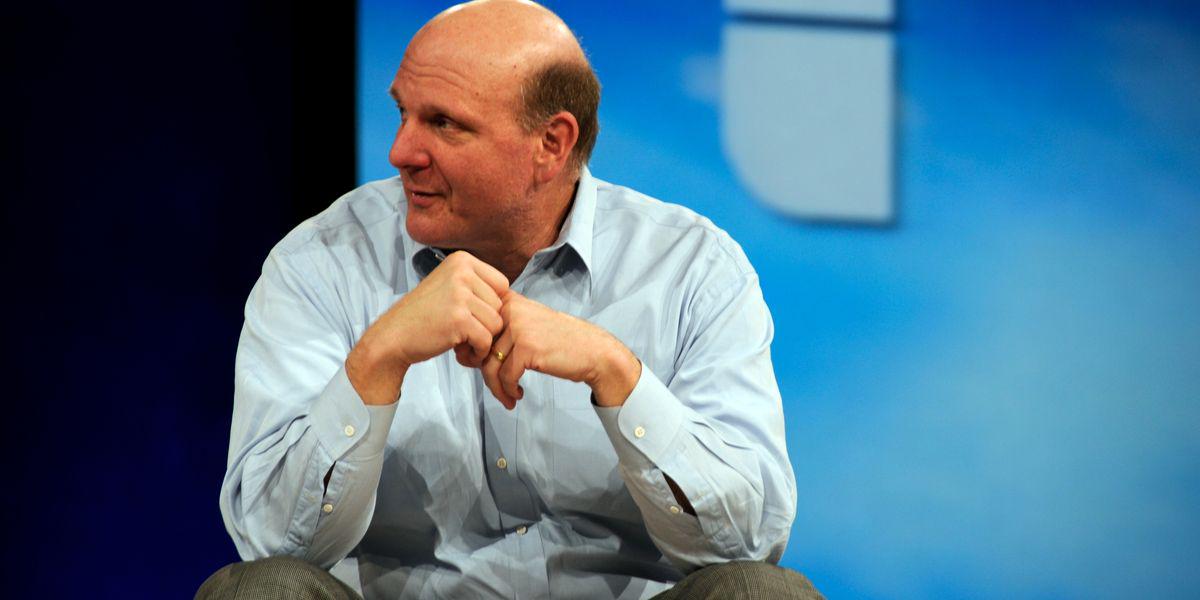
Ballmer’s career at Microsoft is often painted as the story of a bold leader guiding a tech giant through the new millennium. In reality, it was a case study in how to crush rivals and protect a monopoly. Under his watch, Microsoft racked up record fines from regulators; perfected its notorious strategy of “embrace, extend, extinguish;” and enforced a cutthroat internal culture that stifled collaboration. This wasn’t innovation. It was domination dressed up as genius.
When Ballmer became Microsoft’s CEO in 2000, the company was already facing a bruising US antitrust case over its efforts to crush competitors like Netscape and RealNetworks. European regulators soon followed, hitting Microsoft with record fines for abusing its monopoly. The Commission found that Microsoft had deliberately abused its dominant position by tying Windows Media Player to its operating system and undermining competition in server software.
At the center of these cases was a clear pattern: Microsoft used its dominance not to compete fairly but to block competitors, extend its monopoly, and extract rents from consumers and developers.
Internally, Ballmer presided over the now-notorious “stack ranking” system, in which managers were forced to rank employees against each other, ensuring that some were always labeled failures regardless of performance. Vanity Fair reported that this system was described by employees as “the most destructive process inside of Microsoft.” It encouraged backstabbing, punished collaboration, and destroyed morale.
Yet Ballmer’s reputation in the business press was rarely tarnished. Microsoft’s aggressive tactics and toxic culture were downplayed as part of the “rough and tumble” of the tech industry. Instead of being recognized as symptoms of a deeply flawed corporate ethos, they were cast as evidence of toughness, discipline, or even strategic brilliance.
Ballmer’s career is a perfect case in point. Few in the press asked whether Microsoft’s dominance strangled innovation or whether his leadership undermined workers and consumers. Instead, the coverage painted him as a colorful eccentric, a lovable billionaire, and above all a success story—as if his rise were earned brilliance rather than brute monopoly power.
Pablo Torre’s remarkable reporting on the Aspiration scandal is a reminder of what real journalism can do when it asks hard questions instead of recycling corporate talking points. His work not only exposes the hidden machinery of sports business but also shows why we need the same relentless scrutiny of CEOs and executives across industries. If journalism is to serve the public, it must puncture the myths of genius and demand accountability from those who profit most from monopoly and exploitation.
The NBA investigation may or may not conclude that Ballmer violated the rules. But the larger scandal here is not limited to basketball. It is about how our culture treats men like Ballmer as role models—how we conflate wealth with competence, market share with innovation, and ruthless opportunism with genius.
The real lesson of this scandal is that we must break the spell of billionaire mythology. Ballmer is not a singular villain; he is an emblem of an age in which billionaires are lauded as saviors while their empires rest on monopoly, exploitation, and illusion. The media has played a crucial role in maintaining this façade, selling the public a narrative of “genius” to justify inequality.
A more honest narrative would recognize that the wealth of men like Ballmer was built on systems of exclusion, not innovation. It would expose the ways that corporate culture, whether in Big Tech or in the world of “ethical finance,” uses the language of progress to mask exploitation. And it would challenge the very legitimacy of an economy in which billionaires can fail upward, celebrated as geniuses even as their companies and investments leave wreckage behind.
31 comments
If Ballmer was born now, he would never be as rich as he is. It’s all luck and we hail them as geniuses. In reality, they’re lucky thieves.
Yeah I don’t know how anyone can think that Ballmer is some kind of visionary. A lot of mythos around tech billionaires is way overstated in general but many of them at least actually did build something. Ballmer was just an early employee that rose to the top of an already very successful company and his wealth is predicated not only on the working class like many others but on other people’s visions as well.
A majority of the country sees Billionaires as visionaries, there’s a reason the president was able to gain such a very dedicated following regardless of what he did.
Billionaires are BAD
They should not exist – you should not be able to hold that much money while people are starving
If we have any hope for the future, we must get rid of these leeches off of our society and tax them into Oblivion
Eisenhower tax rates were needed YESTERDAY
I wonder who owns the media
Well as we saw earlier with Elon Musk and now Ballmer as ‘intelligent’ as they are they are also human and if you see them often enough…will display cracks in their perfectly crafted image.
I have no bad will against Ballmer but if he violated NBA rules he should be held accountable and punished in a way that is actually meaningful to him given he is the wealthiest NBA owner.
So not a punishment that will feel like a mosquito bite.
Media doesn’t serve the public when the news is only centered around information from the billionaires though. That’s why media is doing this. Would ESPN be getting the information they desire first if they have bad relationships with the people that runs the teams?
Ballmer should be forced to cover healthcare subsidies during the Trump term.
Uncle Dennis is the bourgeoisie. Pablo Torre is the Jacobins.
The conflict isn’t left vs right. It’s up vs down
EDIT: I acknowledge that many people on the right are duped into supporting the rich by wedge social issues. I can only hope they realize they’re being used before it’s too late
A billionaire paying a millionaire extra money under the table to gain an advantage against other billionaires outside of a collectively bargained agreement between the billionaires and millionaires to artificially limit the salaries of the most highly skilled millionaires is bad and should be harshly punished and threatens the integrity of the league.
But it’s not a monopoly.
Antitrust work is extremely important, but too many of these dudes have one tool (the antitrust hammer) and view everything as a nail.
Sometimes it’s a bolt or a screw.
Yall thought balmer was smart? You’ve seen this dork at a game?
Copy pasting this from a different thread I posted it in since it feels relevant to the subject. We the people cannot continue to allow Billionaires to live in their fairytale of absolute power:
Hey guys!
I just want to put it out there that the entirety of FS1s primetime sports talk show lineup (Herd/FTF/etc.) has refused to touch this story.
I’m a long time supporter and enjoyer of Nick Wright and the rest of FS1s sports coverage. Having consumed so much Nick Wright content in my life, I know with absolute certainty that he has no problems broaching sensitive political topics on air. He’ll talk about race, scandals, bad media, you name it, almost certainly making his superiors at Fox at times nervous and at times outright angry.
I say all of this to say, the fact that Nick (and the rest of FS1) has yet to mention the Kawhi scandal on air suggests only one possible explanation:
Ballmer (or someone high up his food chain) called Rupert Murdoch (or his son… or someone slightly further down the fox media food chain) and said plainly “kill this story”.
I’m not dumb enough to be fooled by the silence, and I hope none of you are as well. I refuse to give Fox Sports my viewership until this story is covered. These billionaire rats cannot be allowed to continue living as if all rules do not apply to them. We can’t let them continue to believe all problems can be waved away with a phone call and a pay check.
It’s the Billionaire’s who own the media and Ballmer is hailed as a visionary go figure
The thing you have to realize is that the executives at all of these media companies you expect to dig up and tell you the truth are the employee-class of the rich.
There isn’t a single person that has accumulated billions of dollars and not been a piece of shit.
Upvote based on the title alone
The biggest problem is the billionaires own the media. We receive whatever news they want us to see.
I know a lot of VC and tech guys, and even the biggest tech bro you’ll ever meet admits Balmer is a clown and owes his entire fortune to the housing selection committee at Harvard. Microsoft under his direction was adrift and his tenure was the era that Apple took over the consumer hardware space after being reduced to the absolute fringes previously. I have never heard anyone talk about Balmer and some sort of visionary.
Journalism in America doesn’t serve the public; it’s propaganda to further the interests of the business class that funds it.
Rich does not equal smart
The problem with this is that the people who defend billionaires aren’t intelligent enough to understand half the words you just used. Accountability, exploitation, monopoly, hell even puncture and myth are probably too much for these guys to understand.
Class consciousness on r/nba? Hell yea, brother!
Anyone with half a brain should realize NO ONE gets to a billion through sheer honest hard work and pulling up your boot straps. People dont realize how much money that is
stack ranking is one of the dumbest workplace practices ever. i’ve been seeing it make a comeback among my friends’ and family’s jobs and it really does do exactly what the excerpt says – encourage backstabbing and destroy morale. There is no incentive to help your coworkers when they’re direct competition, and sabotage can take many forms; one of the most obvious and hardest to assign malicious intent to is silence. Just refuse to speak to anyone about anything unless it’s absolutely imperative. you would have to be a ruthless (and maybe stupid) bastard to think this would somehow create a “stronger” workforce.
Which is why billionaires keep buying up all media. The media doesn’t make them money but it sure helps hide their corruption.
Once upon a time, the media kept politicians in check, but that’s long gone now.
….We cannot all be this stupid, are we? Look at the media organizations being discussed and consider that maybe their jounalism wing is more akin to a PR department than any kind of actual journalism outpost.
All of these major “Journalism” organizations are owned by massive companies. These companies are also all intricately tied to the Sporting Leagues they are tasked to cover via broadcasting and streaming rights deals. Why are we acting surprised that these conflicts of interest exist? This was ALWAYS the big concern when it came to deregulation and consolidation of EVERY nook and cranny of the broader economy, let alone the sports world.
This sub’s hero Brian Windhorst has been shilling propaganda for weeks now
Just another Jack Welch. Disgusting men, both of them.
Fantastic write up! The confusion of wealth with intelligence or somehow being a great person has honestly been one of the most insanely frustrating things to live alongside.
For most of us, life is a constant punch and kick in the face because of men like Ballmer.
The US as a whole is facing a crisis of middle class wealth extraction and exploitation.
We send enough money to certain countries that they can afford universal healthcare and what do we get?
A dead United healthcare CEO and a government trying their best to make him a villain despite fighting a system that kills tens of thousands a year.
It has ALWAYS been the haves and the have nots, the rich and the poor.
No, not all rich people are evil. Too fuckin many of them are, and their money has been given more power than any of us could ever dream.