
BRISTOL, Tenn. — Denny Hamlin began to sense something was different on the second lap. Tyler Reddick knew when he saw chunks of rubber coming off a competitor’s tires. Austin Dillon noticed it shortly after he pitted for what he thought was a punctured tire, only to realize the issue was that it had significantly worn. Ryan Blaney became aware when he saw several drivers dart to pit road far sooner than expected.
As it usually is lately at Bristol Motor Speedway, tire wear was again the predominant storyline during Saturday night’s NASCAR Cup Series playoff race. Goodyear brought a different right-side tire compound, hoping to produce greater wear than what teams experienced in the spring Bristol race, when drivers could go 50-plus laps before their tires wore.
Still, going into the weekend, no one knew whether the tires would actually wear and to what extent on the concrete Bristol race surface that has proven to be a challenge. When Friday’s practice and qualifying sessions were completed, with drivers able to again go 50-plus laps with minimal wear, most expected Saturday’s race to unfold similarly to the spring race.
“The craziest thing to me is, after the practice, we all had some wear, but not like what we saw (Saturday night),” said Adam Stevens, crew chief for winning driver Christopher Bell. “I would have bet my house that it would have been a long-run normal Bristol, run through the stages no problem.”
Had Stevens wagered his house, he would’ve lost.
Almost immediately after the green flag waved on the 500-lap race around the half-mile oval, everyone on pit road recognized just how fast the tires were wearing.
“Really quick, your mind goes to how many tire sets do we have and how long the race is,” said Billy Scott, Reddick’s crew chief. “So it was kind of just a survival to get to a point where you could break it up enough to just have tires left.”
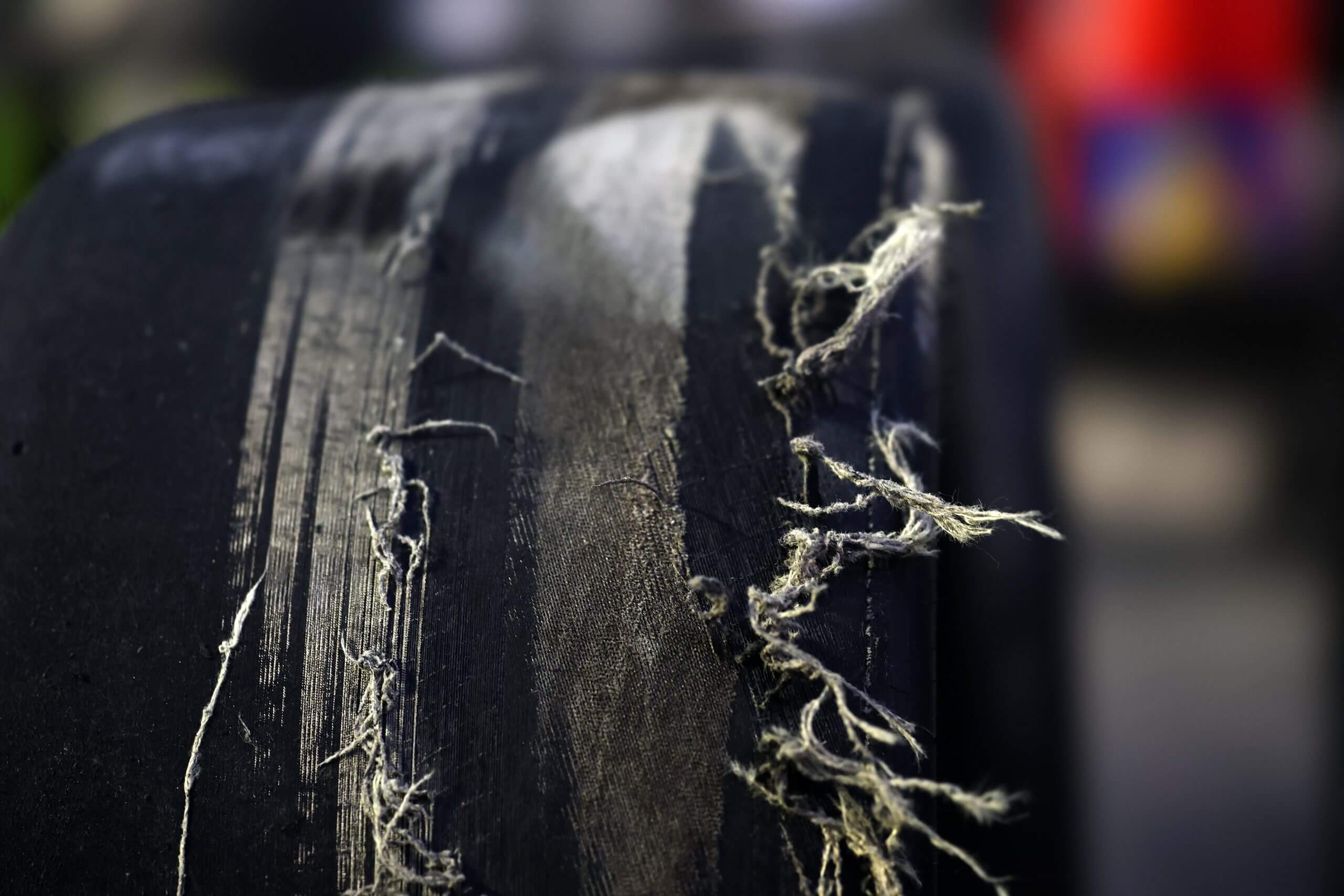
NASCAR’s Bristol Night Race was hard on tires but produced a compelling race. The “chaos,” though, left some in the garage feeling like it was too much. (Jared C. Tilton / Getty Images)
On the track, some drivers realized too late what was happening.
“High heart rate,” said Trackhouse Racing driver Ross Chastain, who finished 19th, explaining his thought process upon realizing what this race had evolved into. “Just instant panic that I went so many laps at the start of the race, not taking care of (his tires).”
Within 50 laps, a majority of the field hit pit road to get fresh tires — far earlier than anticipated. Crew chiefs were forced to adapt their strategy on the fly. That deviation was made easier because many of these crew chiefs were also at Bristol in the spring of 2024, when that race unfolded much like Saturday night’s, with the excessive wear forcing drivers to slow considerably to conserve their tires and pit sooner than expected.
“If anybody said that they knew what was going to happen (Saturday night) or what was going to happen (Friday) in practice, we were all lying to you,” said Hendrick Motorsports driver Alex Bowman, who finished eighth. “We all got it wrong. So, yeah, surprised for it not to do it in practice and to do it in the race. Kind of thought it would have done it in practice some but, I mean, it is certainly chaos, right?”
Said Stevens: “Chaos is probably a good word to start with.”
Why such a drastic change between Friday and Saturday? The prevailing theory is the weather. On Friday, the temperature for practice and qualifying was in the high 70s and low 80s. Saturday, at the start of the race, the temperature was cooler by almost 10 degrees, which in turn produced a cooler track, one similar to the conditions of the 2024 Bristol spring race.
“The temperatures have gotten really cool right now … as that temperature has dropped, it’s returned (to) about what we saw in (the) spring, 18 months ago,” said Justin Fantozzi, Goodyear’s global race tire operations manager. “So the tire is behaving exactly like it should.”
Why, exactly, the temperature makes such a difference, though, is not clear.
“It’s like some magic no one can really understand,” said Mike Kelley, crew chief for Ricky Stenhouse Jr. “It doesn’t make sense. If anyone can ever figure this out, they’re going to make a lot of money.”
Once drivers and teams grasped what was happening Saturday, strategy kicked in — some drivers ran hard while others went more slowly. The byproduct was 36 lead changes, the third-most all time in 127 Cup races held at Bristol.
“I like this,” said Team Penske driver Joey Logano, who finished fifth. “This is fun, you have to use your brain more.”
Afterward, following one of the wilder races in Bristol’s long history — and far more competitive than recent editions often featuring limited passing — the question is how NASCAR should proceed at the unique track, popular among fans due to its history of compelling racing.
The industry has been pushing Goodyear to build a softer compound tire that wears more quickly, and the manufacturer certainly delivered Saturday night. But did it wear too quickly?
Some crew chiefs were displeased, noting the race wasn’t so much about racing as it was about preservation. And some drivers echoed this belief, saying they prefer being able to run harder, longer.
“I didn’t have that one on the bingo card going into tonight. I don’t know if anyone did — truthfully,” said Joe Gibbs Racing driver Chase Briscoe, who finished ninth. “I don’t know. It was wild.”
Said Chastain: “I don’t know what just happened. I’ve got to go back and look at this, because it doesn’t make sense.”
The consensus within the garage is that while maybe the tires did wear more quickly than desired, this was still a better direction for the sport than this year’s spring Bristol race. There’s hope Goodyear can use this experience to build a tire that will have a little more wear than normal, but maybe not be quite so sensitive.
“This felt like this was a little more extreme,” said Hamlin, who finished 31st. “We should be able to run a few more laps than what we were, and that probably would have been better for the show, but I certainly prefer a tire-wear-type of race over a tire that doesn’t fall off. So it’s always about being careful what you wish for. Certainly, Goodyear found the limit.”
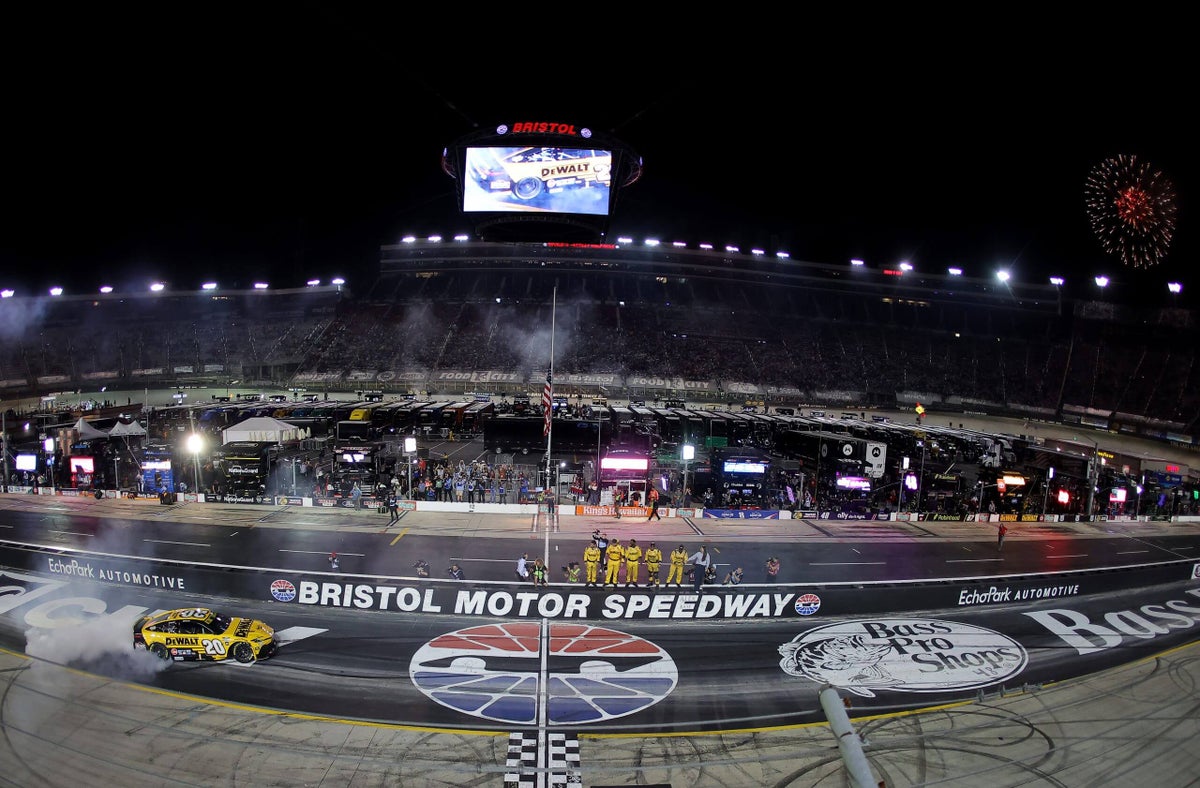
(Top photo of Christopher Bell celebrating Sunday’s win: Jonathan Bachman / Getty Images)