
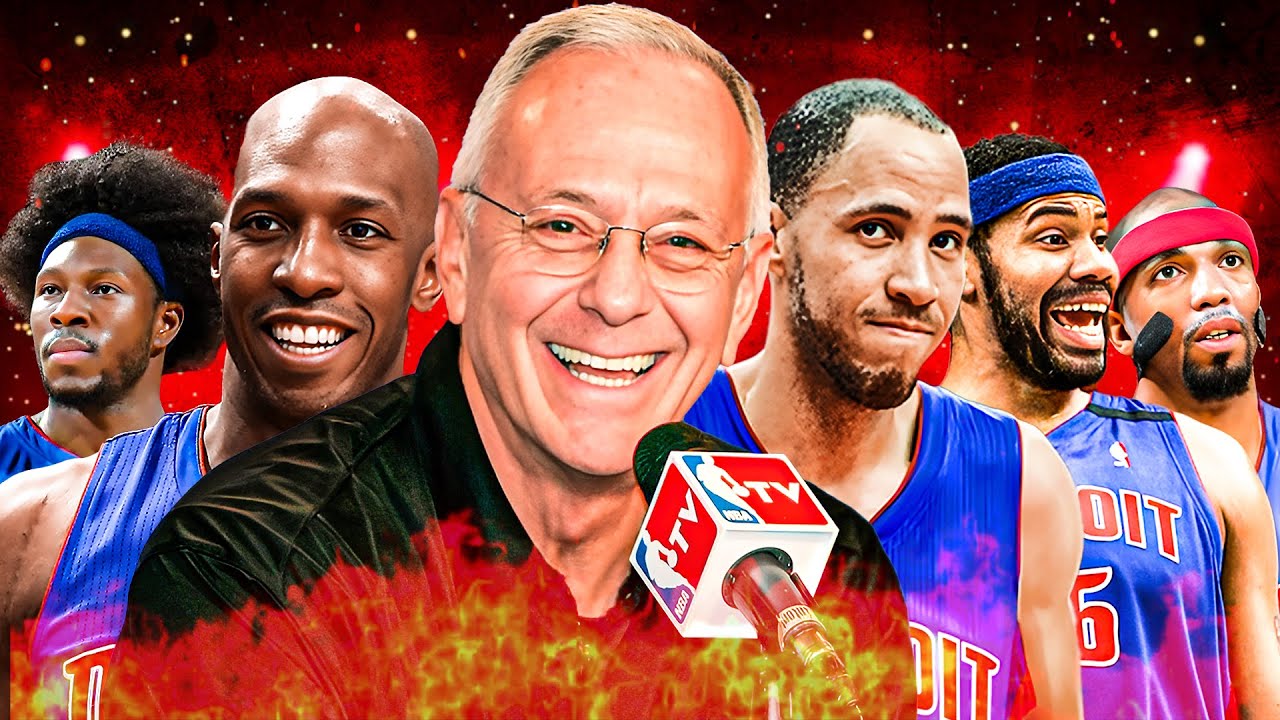
Detroit Pistons: The RISE, DOMINANCE, and FALL of the 2000s Dynasty
Detroit Pistons. The rise, dominance, and fall of the 2000’s dynasty. Early foundations, a city and a team of grit. Detroit has always been a city of resilience. A bluecollar powerhouse defined by industry, struggle, and unbreakable pride. The Detroit Pistons embodied this spirit long before their 2004 championship. From the bad boys of the late 1980s and early 1990s led by Isiah Thomas, Joe Dumas and Bill Lame beer to the gritty squads of the early 2000s, Detroit basketball has always carried an edge of toughness and defiance. By the turn of the millennium, the Pistons were in search of a new identity. The bad boys were gone and the team had endured years of mediocrity. Enter Joe Dumars, a former finals MVP and now general manager who was tasked with building a contender in a league increasingly dominated by superstar duos and trios. Dumar’s vision was different. He didn’t chase the biggest names. Instead, he prioritized chemistry, defense, and depth. In doing so, he laid the foundation for one of the most unique dynasties in NBA history. Building the blueprint, the core of a champion, Joe Dumar, assembled a roster that seemed unconventional but was perfectly balanced. Each piece of the puzzle contributed something essential. Chanty Bilips, a journeyman guard before arriving in Detroit, Bilips flourished as the Pistons floor general. Nicknamed Mr. Big Shot. His calm under pressure and ability to hit clutch shots made him the leader they needed. Ben Wallace at just 6’9 in unders sized for a center. Wallace compensated with ferocious rebounding, shot blocking, and relentless hustle. He would become a four-time defensive player of the year and the heart of Detroit’s defense. Richard Rip Hamilton, the team’s offensive engine. Rip was a master of the mid-range game, running endlessly off screens and punishing defenders with consistency. Taon Prince, a defensive Swiss Army knife. His length and versatility allowed him to guard multiple positions and his chased down block on Reggie Miller in the 2004 playoffs became iconic. Rasheed Wallace acquired mid-season in 2004. His fiery demeanor and stretch big skills gave the Pistons the final push toward greatness. With head coach Larry Brown at the helm, the Pistons motto became clear. Play the right way. No selfishness, no reliance on one star, just five men moving as one. The 2004 Miracle run the 2003 to 2004 season was magical. The Pistons finished 54 to28 and entered the playoffs as a solid contender, but few believed they had the firepower to win it all. That perception only intensified when they reached the finals to face the Los Angeles Lakers, a juggernaut featuring Shaquille O’Neal, Kobe Bryant, Carl Malone, and Gary Payton. The basketball world expected a Lakers coronation. Instead, Detroit dismantled the super team. Their defense suffocated LA, holding them under 90 points in four of five games. Ben Wallace battled Shaq relentlessly in the paint. Taon Prince shadowed Kobe and Chanty Bilips orchestrated the offense with surgical precision rip. Hamilton’s endless motion wore down the Lakers defense and Rasheed Wallace added toughness and swagger. Detroit won the series 4 to1. Bilips was named finals MVP and the Pistons shocked the basketball world. Their triumph wasn’t just a championship, it was a revolution. Proof that teamwork, grit, and defense could topple even the most star-studded teams. Sustaining dominance, the Eastern Conference powerhouse, the Pistons proved they weren’t a one-hit wonder. From 2003 to 2008, they reached six straight Eastern Conference Finals, a rare feat in modern NBA history. Then Ben Wallace became a defensive icon, patrolling the paint and energizing teammates. Bips earned respect as one of the league’s most dependable floor generals. Rip Hamilton solidified his reputation as one of the best mid-range shooters of his era. Rasheed Wallace provided the edge, stretching defenses and keeping opponents off balance. Taon Prince with his defense first mentality quietly anchored the perimeter. In 2005, Detroit returned to the NBA finals, pushing the San Antonio Spurs to seven games in a hard-fought series. Though they fell short, the Pistons cemented themselves as one of the elite teams of the decade. Cracks in the foundation. Yet, as with many dynasties, cracks began to show. Nari Brown’s departure after the 2005 finals. Brown left amid reported friction with management. His absence destabilized the team’s leadership. Ben Wallace’s free agency exit in 2006. Wallace signed with the Chicago Bulls. Losing their defensive anchor was a massive blow. LeBron’s ascension in the 2007 Eastern Conference Finals. LeBron James delivered a legendary 48-point performance, including 25 straight and points to eliminate Detroit. It symbolized a changing of the guard in the East and the Iverson Gamble. In 2008, the Pistons traded Chanty Bilips for Alan Iverson. The move was intended to retool quickly, but instead it disrupted chemistry. Iverson’s ball dominance style clashed with Detroit’s team first philosophy, and the experiment failed. By 2009, the Pistons era of dominance had ended. The aftermath, decline, and rebuild the years following their dynasty run were difficult. Without their core intact, the Pistons slipped from perennial contender to lottery regular. The Palace of Orburn Hills, once the loudest arena in the NBA, grew quiet. From 2009 through the mid 2010s, Detroit cycled through coaches and front office changes, struggling to find stability. Draft picks failed to live up to expectations, and the team searched desperately for its next star. The glory of 2004 became a distant memory. The infamous malice at the Palace in 2004 also lingered as a shadow over the franchise. Though the championship season redeemed their reputation, the brawl with Indiana continued to be a defining part of their narrative. It wasn’t until the late 2010s that Detroit showed signs of life again with playoff appearances behind players like Andre Drummond and Blake Griffin. Still, the magic of the 2000’s dynasty remained unmatched. Personalities beyond the court. What made the Pistons special wasn’t just their play, it was their character. Chony Bilips transitioned into broadcasting and later into coaching, carrying his leadership skills off the court. Ben Wallace remained connected to the franchise, becoming a team executive and eventually a Hall of Famer. In 2021, Rip Hamilton pursued business ventures and continued his involvement in basketball media. Rasheed Wallace became known as a passionate mentor and later a coach at the collegiate and NBA levels. Taan Prince entered front office roles, lending his basketball IQ to team building efforts. Each member of the core carried Detroit’s values into their postplaying careers, reinforcing the team first ethos that defined their championship run. Legacy built not bought. The Pistons 2000’s dynasty remains one of the most unique in NBA history. They had no superstar in the traditional sense. No LeBron, no Kobe, no Shaq. Yet they beat them all through collective effort, selflessness, and suffocating defense. Their 2004 championship is remembered not only as an upset, but as a triumph of grit over glamour. They left an enduring message. In a league often dominated by individual stars, unity can still win championships. Conclusion: The Detroit Pistons of the 2000s carved out a place in NBA history that will never be forgotten. From the bluecollar streets of Detroit to the bright lights of the NBA finals, they embodied toughness, resilience, and togetherness. Their rise proved that you don’t need a superstar to be a champion. Their fall showed how fragile dynasties can be. Yet, their legacy as a team built, not bought, ensures that the Pistons of the 2000s will forever stand as one of the league’s most inspiring stories. Well, guys, that’s it for now. If you like this documentary, be sure to like and subscribe and hit that notification bell. Also, what should we cover next for our deep dives? Let us know in the comments below. Until next time.
#detroitpistons #nba #ballercourt
Inquiries: ballercourtofficial@gmail.com
DISCLAIMER!!
ALL CLIPS ARE PROPERTY OF THE NBA. NO COPYRIGHT INFRINGEMENT IS INTENDED. ALL CLIPS ARE EDITED TO FOLLOW THE “FREE USE” GUIDELINES OF YOUTUBE!!
4 comments
Great team
They were tough foreal I miss this era
They were like many great teams without a superstar but awesome team chemistry that turned them into stars!…Great breakdown in this doc
Name announce incoming call