
The Arizona Diamondbacks were finished. Their ace got hurt, they sold at the trade deadline, and their playoff odds cratered to 0.4 percent on September 1. It was safe to ignore the snakes.
Until they won 13 of 19 to pull within a game and a half of a National League wild-card spot this week.
That encapsulates the good and the bad of Major League Baseball’s latest postseason expansion. Having three wild cards in each league creates opportunity for a team like the Diamondbacks — or the Cleveland Guardians, or last year’s Detroit Tigers — and keeps most of the league at least vaguely relevant to the very end of the regular season. But the best teams in each league lose some of their advantage, as lesser teams have a chance to play spoiler by getting hot at the right time.
Is such widespread viability good or bad for the game? Is the wild card a safety net that assures every good team advances to October, or is it a participation trophy that diminishes the accomplishment of a truly elite team winning in the regular season? Is all of this a feature of the current playoff system or a bug?
There’s no right or wrong answer — and the “best” playoff format might vary from year to year — but one way to think about it is to consider the alternatives. What would this year’s playoff race look like if it were played under previous formats?
Here’s a snapshot of how the playoff race would look across different eras, heading into Thursday’s games.
The current format
Total number of playoff teams: 12
Teams within 5 games of a playoff spot: 18
Competitive races within 3 games: 4
Being within five games isn’t especially close this late in the season — the Chicago Cubs were five games behind the Milwaukee Brewers in the NL Central, but FanGraphs gave them only a 1.2 percent chance of winning the division — but it’s close enough for true believers to have some hope down the stretch. Entering Thursday, FanGraphs was giving 15 teams at least a 7 percent chance of making the postseason. There’s enough late-season hope to go around.
However, while the AL West, NL West and both wild-card races are competitive enough to feel as if anything can happen — one series sweep and those playoff spots could flip — the tight division races have minimal teeth because the loser has a chance to make the playoffs anyway as a wild card, which is the same fate that could await a team that’s struggled to stay above .500 for much of the season.
2012-2021: The Play-In Era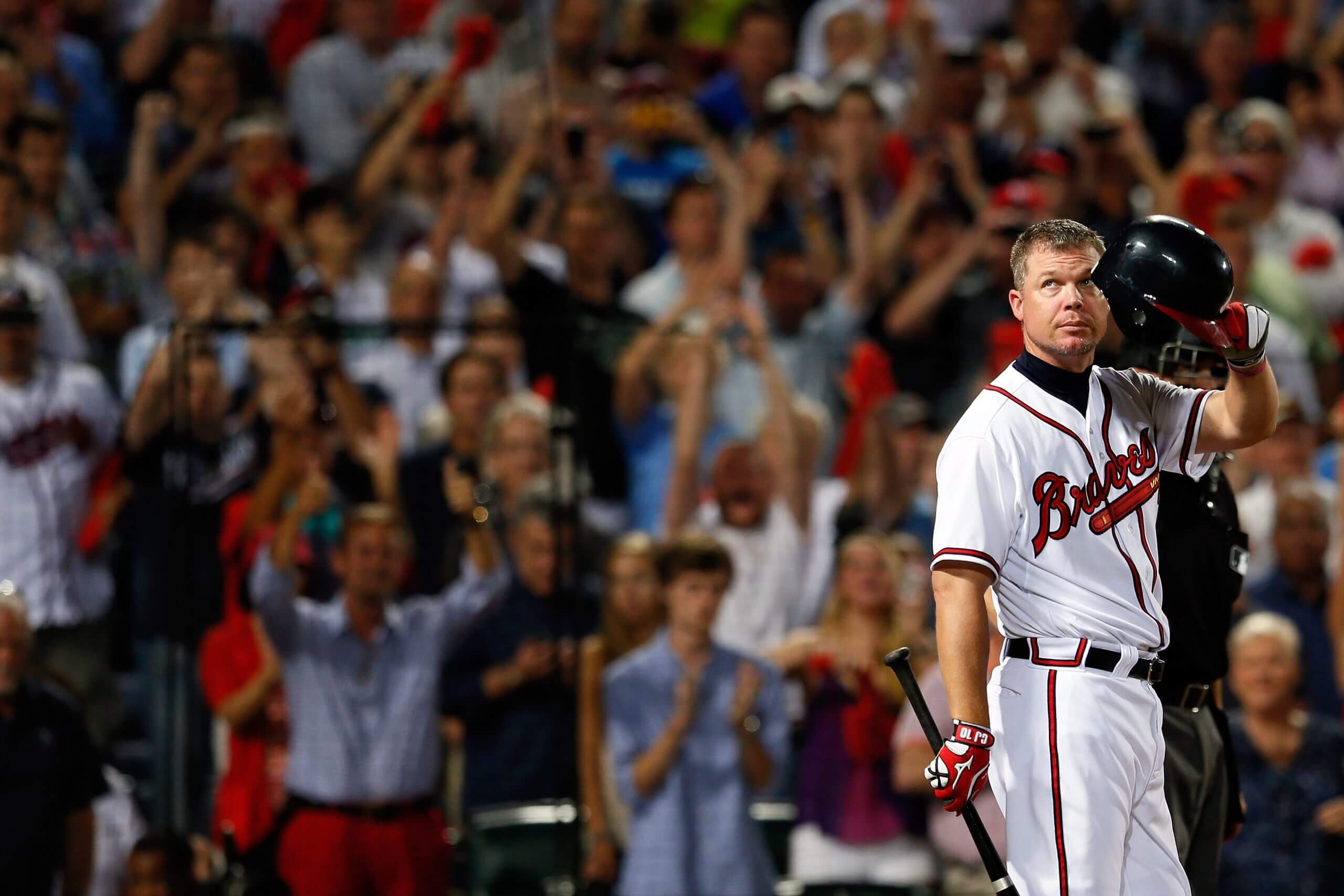
The first-ever Wild Card Game — a raucous 6-3 St. Louis Cardinals win over the Atlanta Braves — also happened to be Chipper Jones’ final game. (Kevin C. Cox / Getty Images)
The current playoff format is relatively new, and it followed a decade in which winning the division was paramount because a wild-card berth was true chaos. When the second wild card was introduced in 2012, the two WC winners in each league played a winner-take-all, play-in game to join the three division winners in the divisional series.
If 2025 had this format
Total number of playoff teams: 10
Teams within 5 games of a playoff spot: 14
Competitive races within 3 games: 3
Under this format, the NL wild-card race would not be especially close, but the division races in the AL and NL West would be even more intense — the losers facing, at best, a one-game play-in — and the American League in particular would be remarkably cutthroat down the stretch. There would be room for only three of the Mariners, Astros, Yankees and Red Sox — all of whom would be within 2 1/2 games of one another — while the Guardians and Rangers would loom within striking distance to play spoiler for another of those teams.
This is what the races would look like if this season had a two-wild-card format.
Imagine the potential of a Yankees vs. Red Sox Wild Card Game. Or the possibility of the Rangers completing their late-season charge and then starting Jacob deGrom against the Astros in a winner-take-all play-in game. Imagine, too, the preseason favorite Dodgers — entering Thursday only two games ahead of the Padres in the AL West — facing the possibility of a wild-card showdown with the Cubs, who have a better record, a higher run differential, and the opportunity to rest their best pitchers in preparation for such a must-win matchup.
1995-2011: The wild-card era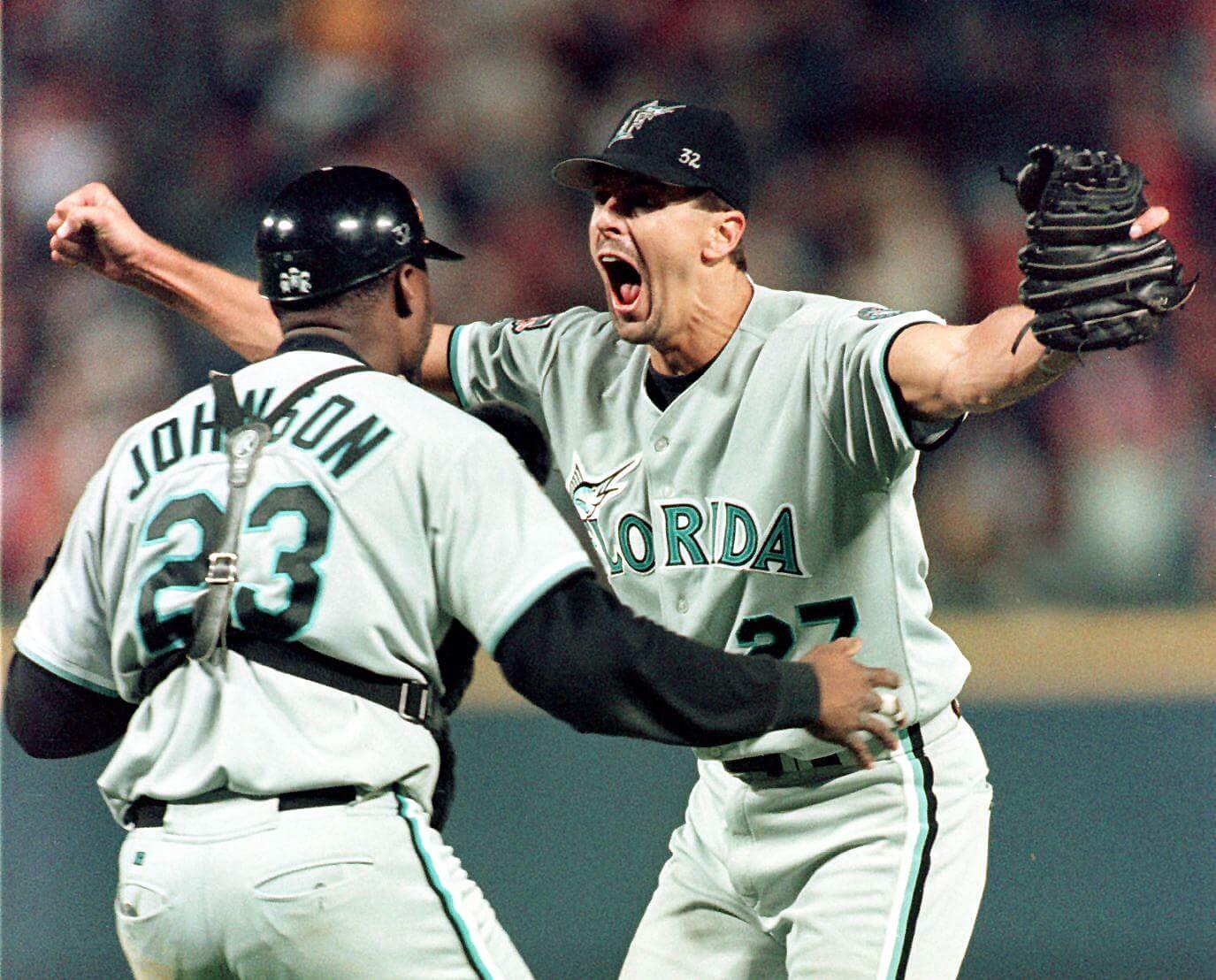
The Florida Marlins landed a wild-card berth in 1997 … and won the World Series. (RHONA WISE/AFP via Getty Images)
This format would have started in 1994, were it not for the strike. It was baseball’s most significant realignment since the late ’60s, and it introduced the three-division format in each league (there previously had been only two divisions). This format also introduced the wild card so that the best record among second-place teams advanced to the postseason to create an even field of eight playoff teams.
If 2025 had this format
Total number of playoff teams: 8
Teams within 5 games of a playoff spot: 12
Competitive races within 3 games: 3
Under this format, the Cubs would have a firm grip on the NL Wild Card, making the NL West a must-win for both the Dodgers and Padres. Meanwhile, any talk of the Mets, Diamondbacks, Reds or Giants making a push would have ended weeks ago. (The Mets’ collapse would have been well documented by now.)
This is what the Wild Card standings would look like if only one Wild Card advanced to the postseason.
NL 1 WC
AL 1 WC
Much like in the NL, the race for the AL West would be thrilling as neither the Astros nor Mariners could count on the wild-card safety net, and the rival Yankees and Red Sox — barring a late surge in the AL East — would be duking it out for one playoff spot, with the very real possibility that neither would get it. That playoff race would be red-hot, but the current narrative about the Guardians or Rangers playing spoiler would be minimized, as each would have to jump not one but three teams to actually secure a playoff spot.
1969-1993: The two-division era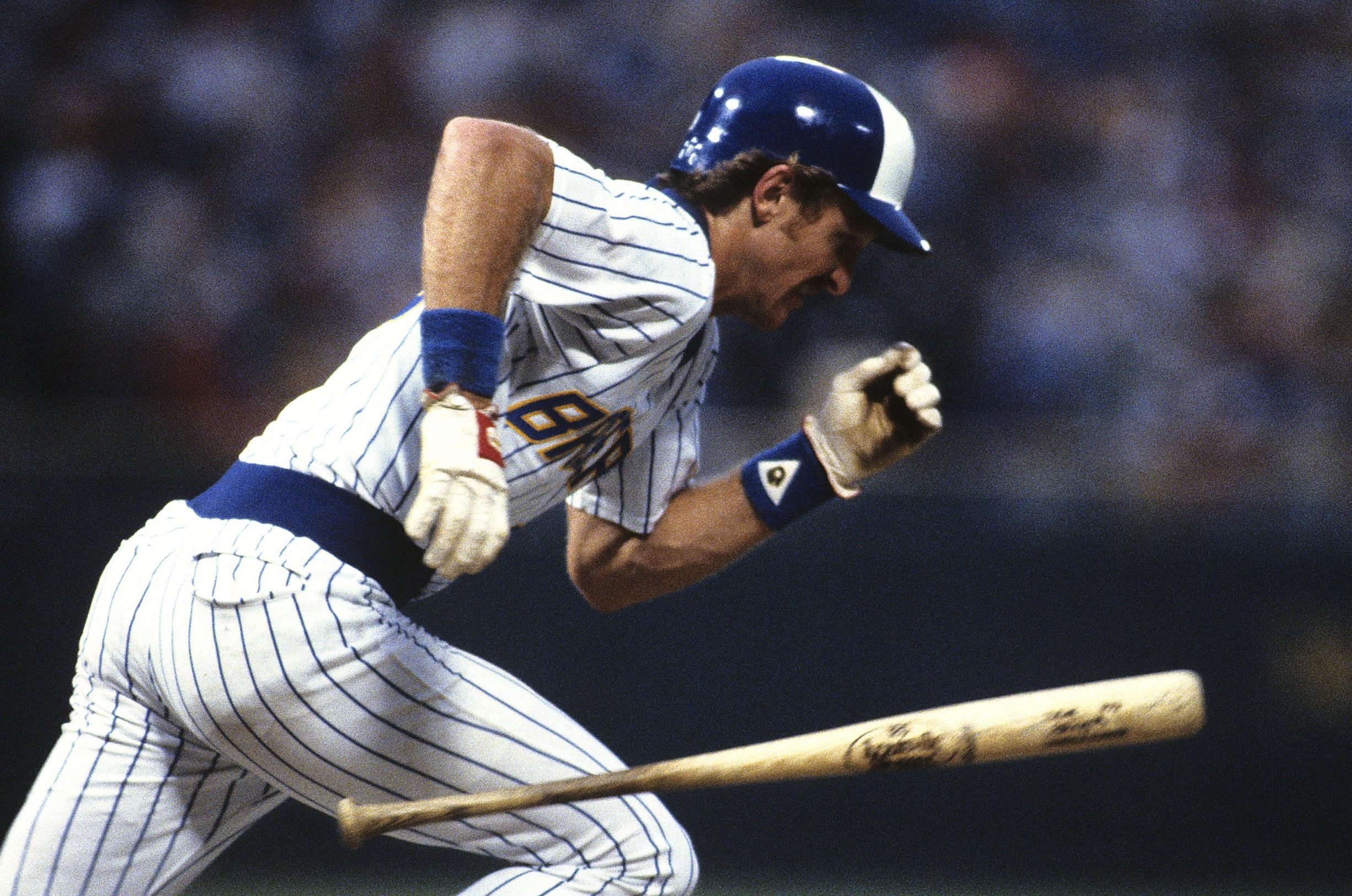
Robin Yount’s Milwaukee Brewers won their division in 1982 … in the American League. (Ronald C. Modra/Getty Images)
Major League Baseball expanded in the 1960s, and the league introduced a postseason that went beyond the World Series. Each league was split into two divisions, and the division winners met in a League Championship Series, with the pennant winners playing for a ring.
If 2025 had this format
Total number of playoff teams: 4
Teams within 5 games of a playoff spot: 9
Competitive races within 3 games: 2
To imagine this setup, we must make some assumptions about divisional assignments. The NL doesn’t separate easily, but the Brewers and Reds were initially in the West, and that alignment works as well as any. This is what those hypothetical standings would look like.
NL two-division format
National League
NL East
GB
West
GB
Phillies
—
Brewers
—
Cubs
2.5
Dodgers
8
Mets
12.5
Padres
10
Cardinals
17
Diamondbacks
16.5
AL two-division format
American League
East
GB
West
GB
Blue Jays
—
Astros
—
Tigers
4
Mariners
0.5
Yankees
4
Rangers
5
Red Sox
6
Royals
7.5
This is jarring, right? An actual race between the Phillies and Cubs? The Dodgers basically eliminated? The Tigers chasing the Blue Jays while competing with the Yankees and Red Sox? This feels wrong for any number of reasons, but it does highlight the impact of a different format and new alignment.
A return to this format would keep the AL West competitive, but it would render the NL West a cakewalk for the Brewers, while the Phillies — who have already clinched a playoff spot in the real world — would still have work to do before securing the East.
Two big storylines in this hypothetical: the disappointment of the Dodgers and the fall of the Tigers, who would be slipping out of the AL East while the Blue Jays continue their second-half rise.
1903-1968: The World Series era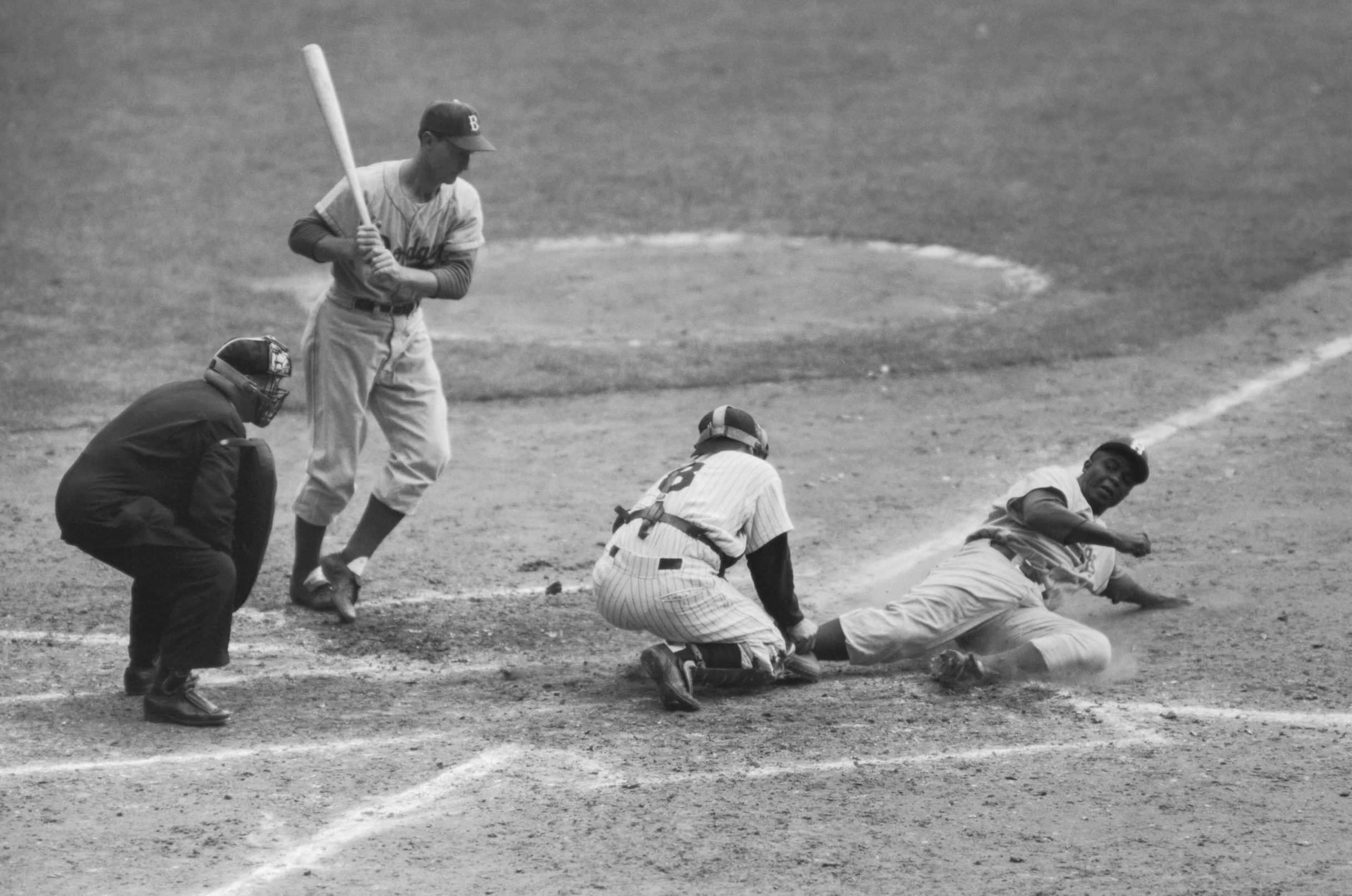
Jackie Robinson of the Brooklyn Dodgers stealing home against Yogi Berra and the New York Yankees in the 1955 World Series. (Getty Images)
For much of Major League Baseball’s history, the World Series was everything. Regular season champions from the AL and NL advanced straight to the World Series, which was completed by the middle of October. Yogi Berra won 10 World Series rings and only once played a game later than October 10.
If 2025 had this format
Total number of playoff teams: 2
Teams within 5 games of a playoff spot: 6
Competitive races within 3 games: 1
Back in 1960, each league had only eight teams, so this simplified setup made sense. Each league now consists of 15 teams, making such an all-or-nothing regular season a little too unforgiving. Had this format existed this season, 17 teams would have entered September more than 10 games out of the hunt. And 20 would have been at least 8 1/2 games out.
That would have made for a pretty miserable, hopeless month for two-thirds of the league. This is what the standings would look like today.
The World Series era
National LeagueGBAmerican LeagueGM
Brewers
—
Blue Jays
—
Phillies
2.5
Tigers
4
Cubs
5
Yankees
4
Dodgers
8
Astros
5.5
Padres
10
Mariners
6
Mets
15
Red Sox
6
It’s interesting to look at the National League and see the current storylines — the late-season fall of the Mets, and the West Coast tug-of-war between the Dodgers and Padres — completely moot, replaced by a fascinating battle between the surprising Brewers and predictable Phillies for the top of the league. Meanwhile, in the American League, the Tigers would have entered the month of September with a half-game lead and would have since fallen to something close to desperation, while the Blue Jays would be coming down the stretch as the no-doubt front-runners on the verge of the World Series.
Same season. Different format. And it makes all the difference.
(Top photo: Luke Hales / Getty Images)