Chaim Bloom with Chip & Brad | Cardinals Insider Podcast | St. Louis Cardinals
Hello Cardinals Nation. I’m Chip Carrey. Welcome to the Cardinals Insider podcast. A new season is upon us and a lot of news at Bush Stadium. Today I’m joined by my broadcast partner, great Brad Thompson, is here. And of course, the man of the hour, the new president of baseball operations for the Cardinals, Him Bloom. Him, welcome. Congratulations. Thank you. Good to be here. Quite a day. Yeah, it’s been fun. I mean, are you tired of talking yet? Um, you know, I’m not going to I’m I’m going to pass on that question. No, in all seriousness, um I know there’s been a lot of anticipation for this because I’ve been here. And one of the cool things about this is that it is more of a continuation in many ways than a start. Uh I don’t have to learn who everybody is and where the bathroom is and all that stuff in my first day. Uh which should enable us to get uh kind of a running start on what we need to do. Um, but uh I also know there’s been a lot of anticipation around, you know, what I’m going to say and our direction and and want to use the opportunity that today provides to give some uh, you know, some insight and some clarity to all the people who care so much about this organization. I I thought your press conference was interesting for a number of reasons. First and foremost was explaining to the fans who are the Cardinals and why we’re the Cardinals and what the Cardinals are going to do. It’s really basic, right? The five journalism questions. who, what, when, where, why, how. Well, you tried to answer at least three of those today. Your thought process and how you went about formulating your introductory uh notes today. Yeah, there’s so many different things you could say and especially with the advantage that I have of having been here and having been able to use the last two years, really soaking up all of the insights from people who have been here and who have given so much to this organization. And you know, I I I’ve spent a lot of time thinking about this and even over the past year talking to a lot of our player development staff about what we need to accomplish there. And it really did in a lot of ways boil down to reflection on those two questions. Who are we and how do we win? And those are obviously really important. You you can’t uh really have success in this game unless you know who you are first. Uh so you can be the best version of yourself. And winning is the name of the game and that’s what we’re here to do. That’s what our fans expect. So understanding how this organization does that best and trying to create a shared understanding around that for all of our staff is really important. And then of course I wanted to be clear on where we think we’re at. And really specifically that we know we’re not where we need to be. I don’t think that’s a shock to anybody who follows this team closely. We know that. And what I think people really want to know is, you know, what’s what are our guideposts for for getting to where we need to be. And so I wanted to create some clarity around that, too. I’m interested too when you join an organization like this and obviously spent a long time 15 years with the Rays went to the Red Sox totally different experience I’m I’m guessing uh but the Cardinals franchise a lot of uh established culture that’s already here but you are coming in new ideas fresh philosophies how difficult is that to blend those two things or maybe how exciting is it to be able to blend those two things yeah it’s pretty cool because um you know I’ve been fortunate to to work in some great places and uh have some really great experiences. Looking forward to some great experiences here. And I think you know as you go around you really understand there’s different things that make every organization special. And what you have to do in these jobs is to figure out what is really unique and special about the place where you are cuz that defines the advantages you want to lean into. There’s always things you can take from your experiences in other places. But you can’t just impose those on a new place. You have to understand where you are and understand what the best version of that looks like. It’s really not that different from what we’d ask of a player. Our job is to help players understand the best version of themselves. We have to figure out what that looks like for us as an organization. You know, when you go around, baseball is still baseball. There are things that apply in any organization in any situation. And one of the benefits of bringing in people with fresh eyes, different experiences, is that you can take some of those best practices that people have been around or in some cases innovated throughout their career and you can implement those where you are. But you also want to combine that with all of the experiences and talents and great lessons that you can learn from people who have been here, especially in a place like this where there’s been so much success, and combine all of those to hopefully try to get somewhere that is better than what any one of us could do individually. So, I’ll ask the simple question, who are we? Well, I said it today. You know, I think really uh at our best, the St. Louis Cardinals are the organization that sets a standard for the rest of baseball. When I look out over the last hundred years, uh that is what I see. Uh that’s what I’ve seen over the course of my career. Uh just finished season number 21 for me in baseball, but even just as a student of the game, just looking out over the last hundred. Uh that’s what this organization has done. And I think you can make a good argument that this organization has done that more often and better than any other organization in baseball. Probably the greatest innovation in the history of our game was the invention of the farm system. That happened here. um literally like blocks from here. Uh I believe Branch Ricky had his office in the Railway Exchange building. Um and that really was probably one of the greatest innovations. It says something about his career that it uh almost certainly was not the greatest thing he did for the country and for the game of baseball. Of course, that happened in Brooklyn, but um it really was kind of the most important uh innovation and it started from there and it just continued. I mentioned some people today who have done that time and again specifically in the area of player development, but even on the big league field, when you look at some of the teams that were built here, you look at some of what the organization did in the draft, some of the acquisitions that were made, and when you learn the how and the why behind those acquisitions, this organization’s always been willing to try to set a new standard. And that’s so important for us. The game is moving so fast right now. And especially as a mid-market organization, as an organization that has to win with its own young players, we have to be out front and we have to work really hard to be out front. And my view is just that the best way to do that is to pretend you’re not, even if you are. And that way you always keep pushing. Assume you’re behind, act as if you’re behind, and always keep, you know, certainly don’t run away from the things that you do that are good, but always keep looking for a way to improve. And that hunger is something that I know our fans share. I know it’s that sort of that that mentality that I think really is is is expressed in the bond that our fans have with this organization and it’s something that we all need to have in this organization so that we can move as fast as we need to. That sounds like the how part of the equation for you. The next question the Cardinals fans have is when. And it sounds like with you being here for two years, that when has already begun below the waterline, things that the fans may not understand or see when it comes to wins and losses at the big league level. Yeah. And I hope that we’ll be able to create uh some some insight, some windows into that, some transparency behind what we’re doing behind the curtain, what we’re doing in the minor leagues. Obviously, there are some things that we’re not going to be able to show, but uh you know, this is a this is a pretty special fan base. this fan base understands the game. They care and they will be interested in this and and I hope to find ways uh to let them in on some of what we’re doing. Um because I think this is just a group of fans that will appreciate that. Um you know, you touched on it. The the when obviously is important. We want what we want right now. Sure. We have to be realistic that for us to get the best outcomes, we are sometimes going to have to look long term in terms of how we strategize. But the one thing that’s really important is the urgency that we have, the way we get after our work, the standards we try to set. That’s an everyday thing to me. That’s cultural. That’s something that really just needs to be part of how we work. Even if we’re doing some things that we expect to bear fruit over a number of years, we should get after it every day. Like today’s the day. And that’s how you ensure that they happen. And if you do that with that that aggressive that purposeful approach every day and you have the discipline to follow strategy, that’s when you can start beat beating those so-called timets because you you’re you’re just doing the right things. You’re just stacking one good move on top of each other. You’re not taking shortcuts. Um you know, you’re not you’re not trying to skip steps and then those good things compound and you can really get things going in a good direction. I’m interested too on that note from a leadership standpoint and from baseball operations it starts with you and you talk about your intent every day to to be one of the best. Uh h how do you get that to be basically throughout the organization everybody has that same feeling about the job like like how do you get that message and keep it constant? Well, the good news is that I think the raw material raw materials are there in that uh I mean you can you can nitpick things about our staff, but trust me, like the work ethic, the care that’s that’s pretty darn good. We have a lot of that. So, that’s a really good place to start. So, it’s really more about just focusing that and creating alignment around what that means. You know, one thing I believe the reason we have a the staff that we do is because people have expert knowledge that I might not have or that, you know, some of their teammates might not have. So, I’m not going to go around telling everybody what to do. It’s more just about focusing those energies around what are the principles of how we should operate and what are our goals and then making sure that we’re working together in a way that gives us a chance to reach those goals. To me, that’s a lot of what culture is. It’s how we work together. Now, when you when you are looking at some of this building, we talked about the farm system, some things that have happened already. What what should people know, fans know about some of the moves that have already happened as far as the farm system goes, because that is the the lifeblood, has been the lifeblood of the Cardinals organization? I know you hit on that today as well. Yeah, I I’ll speak to a couple of kind of big picture things that were behind what we did this past year with the farm system. And obviously some of these I know, you know, I’ve been behind the curtain in the past year, but I know y’all have gotten to speak with Surf and and many others about how we set things up. And there were really a couple of things. One of them was uh you know, it was intentional that basically we were sort of tying together the player development department and the performance group. And so for fans that might not understand exactly what that distinction is, um, you know, the probably the best way to phrase it is that, you know, our our player development staff, our our baseball skill staff, these are people in baseball pants, right? And the performance group, this covers medical and strength and sports science and nutrition and mental health and performance in all of those areas. And for so long in baseball, uh, when my career started, it was really almost, you know, you would you would refer to these folks, the people in baseball pants were staff and everybody else was support staff. I hate that. Like I I I think that just sort of creates a secondass citizens where and literally you would see the people in baseball staff around the table and the performance staff would be around the edge of the room. To me uh it the way we win this race is by actually seeing those two groups as equals that have distinct skill sets and need to collaborate towards the same end. So so creating alignment between those two groups by having them report to the same place by making sure we had staff that respected each other the way they needed to that were aligned and that were expected to collaborate and that and expected to communicate so that our folks in baseball pants aren’t just saying hey make sure you get your stuff done in the gym. They know what’s going on in the gym because they’ve worked together with the strength coach to make sure that each player’s individual program is geared towards the movements that we need him to execute out on the field. And when you have that kind of collaboration, you end up uh getting better results more quickly. So really tying together those two departments was a big part of what we were looking to do. And then also we wanted to create um you know really flesh out that coordinator layer. Uh that was something that was lacking here where we just make sure we have consistency up and down the system and curriculum for everything that we’re trying to teach. We should be able to prepare our players well for just about everything they need to do here at the big league level. There’s some things we can’t prepare them for. We can’t prepare them for 50,000 fans. We can’t prepare them for the scrutiny um or at least not completely prepare them for that scrutiny uh for the 24/7 nature of media and social media. uh we can try to support them through that, but as far as what happens between the lines, we should be able to prepare them for just about everything. So, we need to make sure we have curriculums in place with accountability around that to get them there. And I want to be clear about this. When I say accountability, this is not that I’m saying that our people were not accountable. We have a very dedicated and accountable staff. But some of that accountability needs to be structural. It needs to be built into there is a system. There is a curriculum behind everything we do so that we can make sure that it it’s not just chance whether we’re doing really well by every player that we have a system to make sure that we are doing really well by every player. That used to be called the cardinal way here, right? It seems to me you’re putting your own spin on what historically has been very successful for this franchise. That’s what we’re trying to do. I mean, a lot of these things like like I’ve talked about, principles are timeless. It’s about updating your methods to make sure you’re beating everybody else who is trying to uh who who admires those principles and is trying to copy them and is trying to make them their own. That means we need to keep updating how we express those principles and make sure that we’re beating everybody else. Now, I know this is is day one on the job. you’ve already been doing this a lot of the stuff behind the scenes, first day talking to the media, but when you look at your your checklist, your agenda of the off season, where where do things start for you as you head into 2026? I think the main thing this month, um, look, we’d love to be doing other things this month. We didn’t earn that this year. Um, but we are going to use this time really well. Uh we’re going to focus a lot on staffing both in terms of making sure we’re squared away with our returning staff and then also uh any adjustments, any additions that we want to make uh whether it’s in uniform, out of uniform. We are going to keep uh you know making additions throughout the organization to to to try to push us where we want to go. I think that’s a really good use of uh our organization’s resources right now is just to make sure we have all the capacities we need to to perform the way we want to in terms of acquiring and developing players. uh and really happy that ownership supporting us to do that. So, that’s going to be a big focus this year. And then also just getting ready for the offseason, making sure we got our ducks in a row so that after the World Series when we can start talking to free agents, when we start talking to other clubs, uh that we’re ready, that we have, uh some sort of a game plan. We’ll get a lot of information when we get to the GM meetings in November of what other clubs are looking to do. And then we’ll get into the part of the offseason that’s really more about player transactions. But October for us is going to be about preparing for that. and it’s going to be about making sure that we’re doing everything right to bolster our staff. I’m sure our fans are interested into knowing what your relationship with Ali is like. It was announced he’ll be back next year. What is that working relationship uh between the two of you and what went into your decision to keep him for another year? Yeah, it’s been great. um you know getting to know him through this uh you know has really been one of the cool aspects of this and really I’ve enjoyed working with him and I’ve enjoyed building the relationship and the relationship obviously in this seat is a different type of relationship but based on what I’ve gotten to know of him and what I’ve seen of him. Uh I’m really optimistic about it. uh you know th this is uh this setup was unique and I wanted to make sure that it was not uh a source of stress for Ali where um you know he wasn’t sure where he was getting direction and that was something that I think went well for him that you know Mo and I had really staked out uh each of our lanes in terms of wanting to make sure there was clarity for people but it allowed me still to connect with Ali on a different level even if I wasn’t involved on the the dayto-day of the of the roster I would connect with him, you know, pretty much every time I was in town, uh, you know, we we’d get together away from the field, talk about different things. You know, I wanted him to know, look, I am not going to tell you what to do because I don’t want to that’s not my job right now. Uh, it’s not even all going to be my job going forward depending on what issue it is because I believe you got to let people do their jobs. But I’m not going to sort of interfere in things that are not uh my lane. But I want to get to know you and I’m going to be here for you. If you have a question for me, you want my opinion, I’ll give it to you. Uh but but I did start to understand how he was thinking about uh baseball philosophy and as we got closer to the fall just to start talking with him about hey here’s how I see the organization here’s where I think we need to go um sensed a lot of alignment there in terms of how we have to build this and the things that we value uh and you know that relationship uh you know between my role and his role obviously that’s a critical relationship and you build that trust over time uh but I see someone who our players respect who our players play hard for and uh I’ve enjoyed getting to know him and and look forward to continuing the relationship. Well, how huge is that too? The the cooperation, the the collaboration in all aspects. You talked about it, having the guys wearing the baseball pants and the guys wearing the suits all in the same same thing. I have to imagine day-to-day like that’s probably one of the most important parts of your job is making sure that everybody is communicating the way that they should. It’s huge. It’s absolutely essential and it’s way easier to undercommunicate than overcommunicate. Uh and I think creating expectations around the type of communication that’s necessary for us to be great. Modeling that uh holding people accountable to it uh is a really important part of my job. Um and you know when I when I say that like there are going to be disagreements. That’s okay. In fact, we need that. This has to be a place where it’s okay to disagree. To me, it’s really all about disagreeing to each other’s face and just making sure we’re open and honest with communication. That’s how we get better by challenging each other. And if you have that where people know everybody’s being straightforward, um that you’re what people are meaning what they say, you’re learning what’s on people’s minds, that’s when the trust builds and now you can really start to push each other because you have that trust and then you get better and better. You make the people around you better, you make your players better. Uh so for us to be an organization that communicates that becomes a high trust organization. Obviously, whenever there’s change, you know, some of that starts from scratch because there’s new faces. So, a lot of my job is making sure that we can get to that point of a lot of trust as quickly as possible. Yeah. And that communication’s even more important right now as you’re going through a phase. We talked a lot this year, Chip, about questions, right? This this roster, there’s a lot of questions. We’ll see with the runway of these young players and even for some veteran guys, if we find answers, as you’ve gone through 2025, were were questions answered for you? And you can get into specifics if you want to. You don’t have to like, but did you did you feel like you gained a lot of information from a big league team standpoint in 2025? I do. And now that doesn’t necessarily mean the questions were answered in the sense that we should never feel like we know everything there is to know about a player. That’s the beauty of this game. It can always surprise you. You hope those are good surprises. Sometimes they’re not. Uh but to think that you know everything about what a player can be, sometimes that can lead you astray. Now that said, we do need to make decisions on them. We do need to seize opportunities. we do need to decide um you know who who are the players that you know we’re going to put in certain places to be able to build around. So to have information on that I think is really helpful. I think we got a lot of information and then in cases where players might still have open questions then the questions for us be become okay what type of opportunity should we can we allocate to this player where does he fall in terms of some of the other people that might be competing for that spot. So I think we have a lot of that information to make decisions. There are some players who still have more that they can show us and hopefully uh it comes together in a way that we’re able to give them the opportunity to do that, but we might create competition for them too depending on what what we’re able to go out and get. What term would you call the 2026 Cardinals team? We’ve used runway, we’ve used retool, we’ve re used rebuild. I think we’re running out of adjectives to describe what to expect. And I think that’s the biggest question Cardinals fans have going into the offseason. A, who’s going to be here? and B, what is the description of this team? Because it seems like we’ve threaded the needle for the last couple of years. And as you know, that’s really hard to do consistently. It is. Yeah. And uh it’s funny, maybe maybe this is rash. Maybe I I should pick a term, but honestly, I think people can call it whatever they want to call it. I just want to lay out what our goal is, and I want to lay that out as a guidepost that I want our fans to be able to hold us accountable uh to because the moves we’re going to be making are going to be moves to push us towards that goal. And so for me, it’s really all about uh trying to stack moves towards that long-term goal, not getting distracted uh by things along the way, and just making sure that everything we’re doing is giving us every chance to build towards a team that can consistently contend for division titles and championships. There are moves you can obviously make because you have the control of that player’s contract. There are others where you’re hamstrung by either no trades or sizable contracts. What kinds of conversations can you divulge with guys like Nolan Aronado, Sunny Gay, Wilson Contrarus about whether they want to stay and be a part of this or if they would be willing to understand where the Cardinals franchise is and perhaps try to win somewhere else. Yeah. Um well, I’ve spoken with all three of them and I actually think all three have been pretty uh you know, to their credit, very forthright uh with our fans about uh where things stand. Um and that’s great and enjoyed my conversations with all three of them. Um well the first thing I would say you know first of all is um there’s not going to be a point where we’re not trying to win. Um we are always going to care about that. We may as we are now just have a strategy that’s that’s more longer term oriented. But I don’t think that means we should concede anything in the here and now. Now that being said obviously we are in a different position from if if our if we were really all in on the short term and optimizing for that. And so that puts us in a position where it might not line up exactly with where certain players are in their careers. I think in Nolan’s case, um, you know, we we were pretty much on the same page that given where we are and where he is, a fresh start is something that might make sense for everybody. And so that’s something we’re going to work with him uh to pursue and to look at, uh, obviously nothing happens until it happens. We we’ve certainly learned that. Um, but it is something that I think everybody agrees would be beneficial. And so we’re going to work with him to go find that. um and you know see what the offseason brings in that front. Uh the other guys are in different situations. You know Wilson was actually very vocal uh that uh regardless of of uh you know what work we need to do whether strategies long-term short-term he loves it here. He wants to be here. Uh if there’s some if there’s an opportunity that made sense for us that might also make sense for him he’ll listen he’ll look at it. Uh but he’s really excited to want to be here. Uh, and you know, Sunny also, I I don’t think there’s going to be any issue if we if we come into next spring training and and Sunny Gray is still wearing the birds on the bat. Uh, but he’s another player where, you know, given where we are, given where he is, it’s possible something could line up that make where it makes more sense um for us to move him and make sense for him to want to go there. And if that happens, we’ll talk to him and uh and and see uh if it works out. But for us, it’s really just again going to be held up against that yard stick of does this help us get closer to those goals we have in the long term. And I know you mentioned this today during your press conference talking about making those decisions with your goal in sight. It’s amazing sometimes how things fall into place for you even even earlier. Uh through your experiences over the years, how difficult is it to make decisions like that? Because I’m sure you build connections with with whether it’s players or a you know a fan base does like how hard is it to stay on your task with your goal all the time? Yeah, it it gets difficult both because um it gets noisy in this business sometimes and because we do care about these guys and we do uh you know find at times just we’re all human. You like to connect with these guys. You like to be there for them. This is a people business. It always has been. It always will be. Uh so I I really believe in you want people to be comfortable staff players. We all know there are business decisions to be made. But to me, the second a player comes into our organization uh until the second he leaves, like, you know, I want this place to be great for that player. And so, we’re going to make those connections uh with them if it helps further that understanding and never hiding the fact that it’s a business. So, sometimes you do need to put away those feelings to do the right thing uh to do your job and do the right thing by the organization. Those are hard. Uh but honestly, it’s harder when you don’t do them. And then really that means you’re not serving the organization and you’re not ultimately serving our fans because you’re not doing the right things to deliver them what they want. I’m I I know why I got into baseball. Turns out Chip, I wasn’t good at anything else. There are a lot of people that would say I wasn’t good at this. I get it. Uh I’m interested from from your standpoint. Smart guy. Went to Yale. How did baseball like h how was this the path for you that you decided uh this is my career? Uh well, I was really lucky to get that opportunity, but uh I grew up a big baseball fan. uh who uh let’s put it mildly, just not not a very good athlete, Brad. I’ll be honest with you. So, I love baseball, wanted to be around it, but really kind of stunk at it. So, there was going to have to be some other way in. And as I was kind of finishing high school, starting college, this was a point in time when pathways into front offices were starting to open up with for people with backgrounds like mine. Um and so I thought, you know what, I’m just going to go for this. like somebody’s going to be in these jobs. Why can’t it be me? Uh, and I’m just going to give it a shot. And I scratched and clawed and kind of hustled my way through different internships and some different opportunities. Uh, you know, I worked hard for it, but I was also in the right place at the right time. I I don’t fully trust anybody who is not willing to uh understand that there was probably some luck that went into them getting the opportunities that they’ve got. I think I think in many ways that’s how life works. It certainly was the case in my situation. Uh, and so I was able to get some really cool opportunities to get a foot in the door. And when you do that, now you got a chance to impress somebody who can help you. And you do that enough times and you might get uh, more and more opportunities. And, you know, one thing after the other culminated in my being able to snag an internship working under Andrew Friedman as the then Devil Rays were having a a kind of total organizational overhaul. And I got in on the ground floor of that and just had incredible experiences there for 15 years. You thanked your family at the press conference today. Tell us about your family and have they converted from Ray’s Red Sox fans to Cardinals fans yet? They have. Um, for circumstances that are probably obvious, it wasn’t too hard to get them off of rooting for the Red Sox. Um, but uh, yeah, they definitely have. Uh, I have uh, you know, I have family definitely uh, definitely sort of keeps your feet on the ground. Um it it’s uh you know it’s I I always like to say like baseball working in baseball is the hardest thing that I do except for parenting. Uh that is definitely true in my case. Um uh so you know we’ve got pretty busy lives. Uh you know my wife teaches law. Uh we have three kids. We have boys who are 11 and nine. We have a four-year-old daughter. Uh it’s pretty loud in our house. Uh the boys in particular uh love baseball. They love playing it. They love following it. They know the league. Um, they have opinions. They have some hot hot takes about the St. Louis Cardinals. Have you got one for us that you can share? Share them. But do they like the broadcast? That’s important. You know, I’ve never asked them if they like the broadcast. You know what? They’ll tell you if No, they’ll tell you if they didn’t. You know, let’s just I’d like to think they do. Ask them. I’m gonna ask them. If it’s positive, text me. If I hear nothing, it’s fine. But they do have some hot takes. Like I’m pretty confident my wife and I have done enough to kind of clamp down on tech usage that they’re not on social media. But God, I could swear they were on Twitter. They’ve got burners already. Fantastic. Like it’s brutal sometimes and I’ve been sort of off the hook for a couple years cuz I’m not making the decisions, but they’re not going to pull punches when I am. No, that that is like it’s a silly thing. for joking around, but that is a thing in your job with as front-facing as it is and everybody has an opinion that can be tough on families and I I know you went through it in Boston obviously like how is do you try to shield your family from that at all or do you just do you have these open conversations? Hey, this is what dad does and this a lot of these things aren’t real what people are saying. It’s just talk. Um, you know, I think this is actually something we’re probably going to need to be more thoughtful about, candidly, now just because the boys are are a little older. Uh, when we moved to Boston, they were five and three. I think it took them a couple years just to even realize what was going on. Um, I think they probably heard a little bit more of it at school than I thought. I kind of realized that over time. And um, but uh, you know, it’s it’s something we’ll have to talk about. I think the game does provide a lot of good life lessons. Uh, and it’s actually really important when you think about raising kids, uh, to understand that, yeah, you obviously need to be humble. Uh, it’s really important to me, you know, I I think humility is underrated as a virtue because if you have that mindset, you will always keep learning. You’ll always keep getting better, which as you’ve heard from the things I’ve said today is, I think, really, really important for success in this game. Um, but at the same time that doesn’t mean you listen to everybody and you have to learn what to tune out and you have to learn what opinions not to care about and be confident in the things that you know are important to you and understand who you are and uh there’s a lot of life lessons in this game. I actually really I see our players go through it all the time and you see them and and you know as kids as young men really have to deal with a level of scrutiny that uh is a lot and uh it’s a part of the game you know that everybody has to go through it. Uh so in some sense it is what it is and you just have to learn to deal with it. But it’s not automatic. It’s not easy. And so when I see what our players go through and I have young kids, I think about you know whatever they end up doing with their lives. Uh trying to you know build that resilience within them where they’re open to criticism and able to change but that they also have some confidence in who they are and what they really stand for. That’s a perfect segue. Life’s lessons. The life lesson you take from Tampa to Boston. the life lessons you take from Boston to St. Louis. Summarize those if you can. Uh, great question. Something I thought a lot about and different stops. Um, you know, I was so fortunate to grow up in the organization that I did and then, you know, went to Boston, different role, different market. A lot of things were different. Same time, baseball’s still baseball. And actually, one of the things you still learn and, you know, it’s not a coincidence that I talk a lot about organizationally not getting distracted. I think what happens in these places where baseball means so much is that it is easier for an organization to get distracted. Uh good baseball moves are still good baseball moves in any market. You do have to be yourself. Circumstances are different. Uh but there’s a lot of the fundamentals of just what it means to execute on a good move that don’t change across organizations. One of the cool things about the situation there with the raise um where obviously the struggles with attendance, the struggles with um really getting a permanent home there have been well documented. Um that obviously causes some challenges for the organization, but it also gives you this privilege of really being able to focus on that alignment between ownership in the front office and the clubhouse that’s so important. And when those things are in place, you learn when you really have that good connection between those areas, you you’ll be better than you should be. and you can outkick your coverage when you have those things in place. And you know what that’s also true in Boston and it’s also true in St. Louis and it should be true everywhere and you learn the importance of that there. Um and then I think in a big market uh you know there obviously to be honest with you there were plenty of ups and downs and obviously like not thrilled how it ended of course. Um I think if I said anything different you guys would say I’d be lying. Uh but I’m a I’m really proud of the work. Uh, I knew some of it was going to bear fruit down the line and, you know, they’re they’re playing a playoff game in a couple hours and, uh, really proud of a lot of those guys for where they’re getting and and where they’re going to go. Uh, but also with all those ups and downs, honestly, I had a blast. Like, it’s such a cool baseball town. Love the fans there. I see a I see a lot of similarities in terms of the passion and just how much it means just walking around St. Louis and talking to people in town. The fact that I’ve been kind of in the shadows for two years and people in town know who I am. That has nothing to do with me. That has everything to do with this fan base and how much this matters. And it’s cool to wake up every day knowing you got a chance to impact something that matters so much to so many people. That probably I was going to ask, we didn’t even talk. We talked about the job so much. We didn’t talk about the why. The why that it made sense to you, but that I think you laid it out perfectly like how knowing that you have an impact every single day doing what you do. That’s a pretty special. It’s almost a public trust having that job. Yeah, and it’s certainly not the only thing that motivates me. I actually, I think, care just as much about um, you know, the investment that I make in the people within these walls that I work with. And the chance to build something great with people I’m invested in is really what I think of as my why uh for why I do this. But, you know, I have not yet experienced this place, Bush Stadium, when it’s full, when it’s rocking. Um, but I know what that type of feeling feels like and I know what it feels like to have contributed to that to to feel the adrenaline, the ups and downs of of having something on the line every day. That’s one of the reasons why all a lot of us who do this, we like to compete. Um, you know, sometimes you wonder like there’s probably a little bit of masochism that goes into that. Um, because it’s, you know, there experiences we all have in the game where you’re like, man, this is no way to live. Like, but it’s fun to put something on the line every day and to to have that skin in the game and then to know that if it works, it’s going to matter that much to all those people to be able to compete for that trophy, for that parade. Uh, you know, for that chance to really um really just kind of make history for everybody who cares about this organization across so many states, really across the whole country. Anywhere you go, there are Cardinals fans. You’ll find you’ll find Cardinals fans everywhere. What a cool thing. Um, what a cool thing to be able to do. We’re 130 something days till pitchers and catchers report. We just ended the season. Uh, front office structure, president of baseball operations. How do you envision those working with and underneath you? How will that shape up? Do we have any changes on the horizon that fans can expect? And will we know who those names are? Yeah, there uh we will have some additions to this group. Um, who uh in what roles, what exactly that will look like? uh that we’re still working out. I expect we’ll get uh more clarity on that in the coming weeks and for that matter. This is not just all something that may happen this off seasonason. This is something that will evolve over a period of time and in the coming years as well. Uh I I’ve been fortunate enough to get to know better the people that I work with here and they’re really talented. Um you know that there are some things that we might shift around in order to give some people new challenges, but uh I look forward to continuing to work with all of our leaders here. Really like this group. uh you know they have the right values, they’re talented. Uh so for me it’s really about adding to that group, augmenting you know trying to continue uh you know what I felt was the importance of bringing in the right people, the right new faces with some new ideas but with the values that are consistent with the values that have propelled this organization. And I would think too the time that you’ve had here makes your job easier instead of parachuting into a situation like Boston where you didn’t know all those people well in advance. I mean, obliquely, I’m sure you did, but not on a day-to-day basis. So, this transition transition from that standpoint, I would assume, would be a whole lot smoother so that you could truly hit the ground running where it matters. Yeah, I sure hope so. Um, I think that’s how it’s kind of teed up. Um, and frankly, it wasn’t just Boston. That’s really the normal way people usually slide into these jobs. You were trying to get to know people on the fly. And look, not to say I know everybody here perfectly, but I’ve had some time to do that. So, some of that, some of those relationships, some of that trust is already building. Um, some of my assessments I can get out in front of some things earlier and maybe look to enhance certain areas earlier than I might otherwise be able to do. And maybe that means that down the road something comes to fruition a year earlier than it otherwise would have been. Now, you said that’s how it’s teed up. Okay. Now, you you don’t have time for hobbies anymore. This job is is going to be all the time. Let people in inside a little bit though. Do you have any hobbies? Obviously, you spend so much time with your families. What do you do when you you’re not doing baseball all the time? Oh, man. I used to be such a more well-rounded person, Brad. Baseball does that to you, doesn’t it? It’s mostly just work and family at this point in time. There’s nothing wrong with that. Um, you know, there was a point uh there was a point in my 20s when I tried to take up golf. This is when I was uh was not a parent. Uh boy, was I bad at it. But I love I really enjoyed playing. Uh, but I’ve I mean I told you my oldest is 11 and I’ve played three times since I became a parent. So, uh, the good news is I was never good enough for there to be any skill to atrophy. So, I could probably just get right back right back on the horse and not have missed a beat. And it’s those, you know, two or three good shots out of the 100 plus that I take that uh, keeps you coming back. That’ll do it. You got to get the kids playing. That’s the key. Well, you’ll fit right in. Brad keeps losing money to Ricky Horton. 100 plus shots or so. So, if you want to play anytime, I’m sure Brad would like to take your five bucks. Um, well, yeah, you you have to have somebody you can beat up on. That’s why I’m trying to get Chip to golf this year. That’s kind of that’s kind of the big goal. Um, I don’t know. Again, I like I sort of joke, but it’s not really a joke that I probably used to be a more well-rounded person. I did the past couple years. It’s probably going to go out the window. I did kind of reconnect to reading books again when I had a little bit more time. I was actually going to ask you about that because you talked about starting with, you know, what is your why? The Simon Synynic book starts start with why. Do you What do you read? Do you read that book? I actually don’t know. I’ll get it to you. It’s no big deal. I think you already got the question. You know, it kind of depends. I try to stay open-minded to that. Uh, you know, there’s there’s books I’ve read that I think can help me uh with my job, whether they’re baseball books, whether there’s some books about um, you know, things that help you as a as a manager and a leader. Um, but, you know, I’m really open-minded. I I’ll read some history books sometimes, uh, you know, sometimes some fiction. Open to recommendations. I’ve been given some good recommendations over the years. Uh including actually the next book on my on my nightstand is a recommendation from uh a a friend in the Boston media who said you might enjoy this book. Um so you know I try to stay open-minded. It’s nice to have a book going. But that being said, no promises now that I’m back in this chair. Um and uh you know I I used to really love cooking. I still do. I just don’t get to do it as often. What’s the goto? Yeah. signature dish. Uh, pasta. I think I may I You’ll fit right in here in St. Louis is a big pasta town. Yeah, I I I love pasta. That would be, you know, if there’s only my my last meal would be some sort of some sort of pasta dish. And um, you know, I I think I got uh good enough at it that I can make a a pretty good plate of pasta. All right. Have to hold you that. Challenge extended. Everybody has a baseball first, but we’ve talked about your why. We’ve talked about the how. You talked about how you got involved in baseball. What’s the signature Heim Bloom baseball first that confirmed or made you fall in love with the game? Had to be something somewhere. I don’t know if it was necessarily well I would tell you team-wise I was 10 when the 93 Phillies went to the World Series. I grew up outside of Philadelphia and I loved that team. Now, as a 10-year-old, I will say I I think I was blissfully unaware of a lot of the rougher edges of that group that you learn about uh especially boys on that team. Uh but they were fun to watch play, right? And uh a lot of really uh interesting personalities and good players on that team. And of course, it was a worst to first kind of Cinderella story. Everybody likes that. Um but uh yeah, the the Joe Carter homer in game six was the first of sadly many times that baseball has made me cry and brought me to my knees. Um death of the first, but not the last. Um and uh so that was definitely early on like a real sort of salient memory was kind of getting into that team. Um and there were others like actually he has some St. Louis ties, but one of my favorite players as a kid was Dennis Eckersley. I don’t know, just watching him pitch was awesome. And then so it was a thrill when I was in Boston and he was in his last couple years uh doing TV getting to know E. Um and uh I got to go in the Green Monster with him. I heard he said on TV he had never been in there. So I said, “Would you go?” I hadn’t either to that point. So I asked him if he’d go with me. Um and so he did. And that was that was cool. And he he’s led a a really really interesting baseball life and a really interesting life. And uh you know I think part of the reason you know one of the things you love about him like he and part of the reason the fans loved him you know he would tell it like it is and there’s a lesson in that too like I said you want to try to be honest with people. Um so it’s kind of cool to see someone that that you watch as a kid uh and then you get to kind of work with and learn from and he’s fun to talk baseball with. You you’re so well spoken. There’s no uh actionary words, salad, bridge, and all the stuff that the stuff that Dennis Eckersley says, you know, if a guy hits home run, he goes bridge or he’s got great salad, great moss, you know, great hairdo and all that stuff. He has a language all his own. Salad for him was really like it basically soft tossers like his cheese is if you throw hard. Right. Right. Um and it’s funny like uh God, I probably shouldn’t say this, but I will. Um, uh, Ryan Yarro, who I had with the Rays for a period of time, who who is an awesome dude. Uh, love Yarbs. Uh, but E, when Yarbs is in the division pitching for the Rays, you know, some of that time I was there. U, you know, he’s a guy, he just doesn’t throw anything straight. He’s not a hard thrower, but he’s a good pitcher because he really knows what he’s doing. He can he can create different shapes, manipulate the baseball. Um, has great feel to pitch. And Ek would just talk about, you know, salad all outing like with disgust. Um, and uh, he liked those guys that would come in and throw gas. U, that was that was what he liked. Well, while we’re on the subject of pitching, uh, I think that’s a clear need for the Cardinals going forward, right? Homegrown pitching, that’s the name of the game. You’ve got some pieces in place. I think for casual fans, how is your pitching philosophy, drafting, developing, and building that going to change or be different than the way the Cardinals have done it here for the last 10, 15 years? Well, you always want to be evolving and I actually think, you know, the Cardinals have been responsible for some of those leaps that the industry has made in pitching development. Um, I think you just want to make sure you’re always leveraging all the tools that are available to you and that you’re always valuing the things that are that most correlate with success. And so to the extent that an organization has a model of how it wants to value pitching or develop pitching, you need to make sure you are constantly uh comparing that against what’s actually working out on the on a major league field and making sure you’re leaving no stone unturned and trying to help players get to be the best version of themselves. I think the one thing with pitching and and I don’t consider myself to be a pitching expert per se. That’s part of why you want to have really good people around you. But I’ve been uh around some really good pitching programs. Um I think arguably the most unique thing about our game is that we give the defense the ball. I don’t know of any other sport that does that. So the pitcher gets to decide what is supposed to happen. And that means in confidence therefore becomes really important and identity becomes really important. So for pitchers to understand who they are, what that best version of themselves look looks like uh is a huge part of developing them. And in order to do that really well, you can’t just get locked in on just one type of pitcher. This is an area of our game. I mean, it’s true in other areas, but this is an area of our game where we can really we should really be able to uh appreciate and identify different types of talent and just work to maximize whatever that talent is. And there’s different ways to do that. Some of it might be improving a delivery, trying to add velocity, trying to create a different shape or add something to a repertoire, trying to help someone to spin the baseball more effectively, to use the seams more effectively. There’s so many different things on and off the field that go into this. And it’s really uh our industry has advanced so much in terms of our ability to help these guys. So for me, it’s really about making sure that we are at the front of the line on how we do that so that whatever a pitcher’s superpower is, whatever his special talent is, we can optimize that and we can help him become the best version of himself. I mean, I wish all that information was around when I played. Like there there used to be a hey that felt good. Oh, what did I do? I don’t know, but let’s see if it feels good again. Now you guys have all the quantifiable data. You have the right people. So when you’re talking about being at the forefront of it when you look at the organization currently from a pitching standpoint, whether it’s technology, all of the personnel, how close do you think that you are to having a lot of these pieces in place and maybe what’s next along those lines? Yeah, I this might just be my nature and kind of how I am wired, but I it’s hard for me to ever feel like we’re anywhere close to where we should be. That will probably always be true. Although I do think there’s still a lot of uh progress for us to make, tangible progress that I’m hopeful we’ll keep advancing on. And you know, as we go through the next year and the years to come. Now, all that being said, I’m really proud of what our group did in this first year of having our new pitching leadership in place, I think we were able to make great strides on what I just talked about, having pitchers understand what their identity is, uh, who they are, what’s their plan A, knowing the game is going to make you adjust, but at least understanding who you are, uh, and how your stuff plays and what, uh, your strengths are as a pitcher. And you know, I think we were also uh able to make a lot of strides in what I talked about before about harmonizing with the performance group to get the most out of delivery so we can get to more velocity and better stuff in a safe way that does not put guys in harm’s way and that isn’t just mindless chucking that we’re doing it um the right way. And we saw that happen. We saw pitchers throughout our system really culminating in that group of pitchers that led us to that double A title. We saw these guys take steps forward. we saw a lot of success stories in the minor leagues and a lot of stuff grow. Um so really proud of that group um and what they were able to do and and not even just that but even culturally within the pitching coach group. You could see this brewing even from last winter um when our pitching coaches would get together uh over Zoom and then in person once they got to spring training and talk shop and it was great to see. You had people opening up to each other, sharing ideas, uh whether they had been here for a week or whether they had been here for over a decade, all sharing ideas and learning from each other. And we were able to make strides with that. And I’m excited to see how we’re going to build on that this coming year. Two names that Cardinals fans have heard, I’m sure, a couple of times this year, Larry Day, Rob Surfolio, their roles, how they’ve done. I would assume that those two guys are immensely responsible for that culture change down in the minor leagues, and they came from a different organization. Yeah. Yeah. Yeah, and I would add to that since we were talking about uh player development and performance, Carl Cochen, who we brought in from the Dodgers as our performance director. Um those guys have worked together really well to try to really set this set this culture. And again, I should add we weren’t starting from scratch. I think one of the things that these guys did really well was I try to identify what the positives were. um they believe as I do and again it’s part of the appeal of kind of being here on the ground this organization’s been really good over time and not by luck. So to try to figure out exactly what are those strengths that we need to accentuate and build on and then what might need a fresh look and where do we need to set the target for our staff. And I’m also really proud of our staff because this is a stressful time when you’ve got kind of people who have been here been here for a long time where the organization hasn’t had a ton of change with the staff uh in many aspects and now all of a sudden there are new people coming in and you’re asking different things of people. My only ask of everybody was just stay in. Stay in it. It’s not going to be perfect day one. We actually need your feedback. We need you to tell us what’s working, what’s not working. If and don’t don’t just sit there and assume that you’re passively a part of this. We need everybody to help move us forward. And so seeing returning staff, new staff, people who uh have red jackets and people who literally like got off the plane the day before to start working here working together and and being in the fight together. Uh, I’m not telling you we’ve solved all the world’s problems in one year. We haven’t. And there are going to be some ups and downs with that. There are going to be times when people are going to disagree or people might not be perfectly happy. That’s okay because we’re going to get better from those times. We’re going to get better by those perspectives coming together. But the fact to that everybody really took that seriously like basically stayed in it and and we got through year one in a in a position happily to have like a lot of continuity uh in into year two of this and that’s because of how our staff embraced this challenge. How how important is that too to you talked earlier about maybe some young players and potentially bringing in more competition because I think competition breeds greatness. You also talked about potentially whe whether you’re looking at your front office or just different people, maybe new challenges for people. Is that an important thing for you to always be figuring out a way to challenge those around you to to make them better? I think it’s a huge part of my job. Uh and it’s something that sometimes, you know, sometimes you wake up feeling like my job is to have an awkward conversation today, but uh you know what, that is part of the job. And I and I actually take that seriously. I think like we’re not going to win because like I go head-to-head with some other GM or president and beat them. It’s going to be because all of us, all of our people are going to be able to beat all their people. So, for me to do my job well, I got to be able to lift up everybody around me that I’m responsible for. And sometimes you do that by challenging people. Uh, obviously praise is important, too, and I want to make sure I’m I’m doing that. But um if there’s something where I think a person might benefit from taking on a new challenge or I see something that they could improve or I just want to give them some feedback like I want this to be a culture where we can do that where everybody’s doing that not to each other but for each other and I also want it to be a place where anybody in this organization can walk into my office and give me honest feedback. Um when we have that and when people feel comfortable and safe doing that, we can really take off culturally. I’ve got some honest feedback right now. I love both of your shirts. It’s incredible. You guys have been constant communication already. We have good taste. This whole thing, what can you say? It will happen. Actually, it will happen again. Probably. So, yeah, those are good looking shirts, though. You guys dress for a big occasion today. Thanks. Love it. Thank you. So, what I’m getting for Christmas. Yeah, exactly. Um, what’s uh what’s the next six weeks look like for Heim Bloom and the St. Louis Cardinals? And for our fans, what should we expect? Maybe the unexpected. Yeah, well, we’ll see. I mean, look, in terms of making news, so to speak, um, October, unless we’re doing what we really want to be doing in October, tends to be quieter. Um, not our not what we want to be doing in October, but here we are. So, a lot of this is going to be, you know, just focusing on staff and focusing on offseason prep. Uh, and then stuff around players that’ll hit more in November once we get to the GM meetings and everybody’s talking to each other and learning needs. Um, but it this will be a chance for us to really, you know, make sure we’re we’re we’re dialed in on uh staff, both people that we’re hoping to add and also just making sure uh everybody who’s here uh is is signed up and clear on their responsibilities and understands uh you know how they can help move us forward. I actually think it’s been really cool to see you know almost everybody I’ve talked to in the organization, yeah sure they want to know where they stand, etc. We all do. Mostly they just want to help. Um they just want to know how I think they can help. so they can provide that uh and and you know, so that’s something I’m going to be focused on and then it’ll be an interesting and and fun offseason. We’ll see what opportunities there are. We’ll see what we’re able to do. Um but you know, I’m excited. Like I said, I think we have really interesting talent on hand and and talent coming. And now it’s a question of how much more can we put around that so we can look at this group and say this is a group that can get us where we want to go. Well, I I think I can speak for Brad and for all the Cardinals fans watching this. Welcome. Congratulations. Can’t wait to work with you and uh in the years ahead can’t wait to celebrate with a big parade down Market Street. Him Bloom, welcome to St. Louis. Thank you so much, Chip. I appreciate it. Our pleasure. That’s Cardinals Insider Podcast. Hope you enjoyed it. Can’t wait to see you next year here at Bush Stadium.
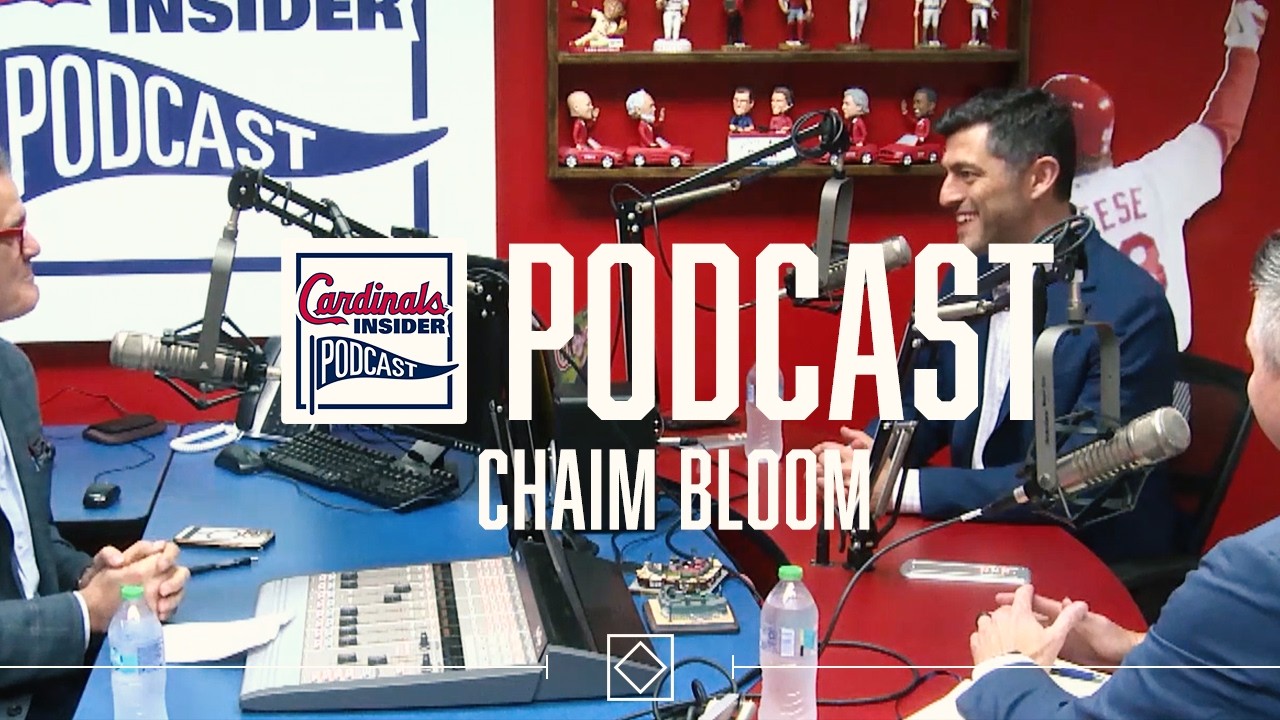
New Cardinals President of Baseball Operations Chaim Bloom sits down with TV Announcers Chip Caray and Brad Thompson for the latest episode of the Cardinals Insider podcast. Bloom shares what he thinks makes the organization special, his appreciation for the Cardinals’ tradition, his goals for the 2026 team, how he got into baseball, what he likes to do in his free time, life lessons he’s learned from his time in Tampa Bay and Boston, developing different types of pitching talent, challenging people to be their best, and more.

8 comments
First
Looking forward to the Bloom era
Welcome To Cardinals Nation Chiam Bloom
Hire Pujols or Molina????? Rebuild this pile of 💩 that was one of the best franchises to one of the worst!!!!!!!!!!!
It’s refreshing to get an hour of dialogue with a PoBO that doesn’t talk in circles for an hour saying nothing. Hope it continues.
Listening to Chaim makes me realize how far the Cards have fallen into a disorganized mess. Sounds like a smart guy and I hope for the best as long as DeWallet ponies up to build the foundation that Chaim needs.
I don't want the Cardinals to be CRAZY spending. However I think the DeWitts need to open up their wallet. Bloom is a great new face and a fresh new voice to the Cardinals organization. Make the farm system STRONG again. Next step is to build around talent. Go outside the Cardinals organization to get some superstars! DeWitt ownership? Sorry. That is what it's going to take. Chaim Bloom welcome to St. Louis good sir!❤
Bloom sounds like a straight shooter…..