
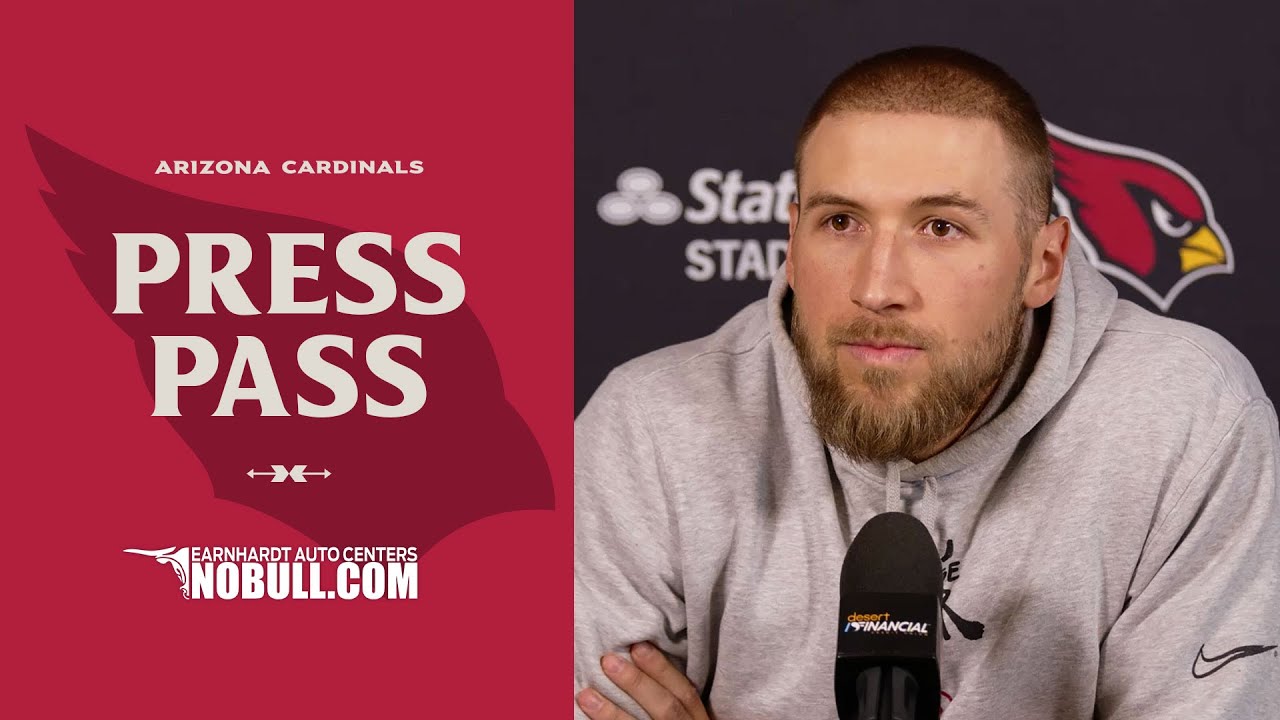
OC Drew Petzing, DC Nick Rallis & Asst. Head Coach/STC Jeff Rodgers | Press Conference – 10.7.25
I know that uh JG said at the end of the uh press conference yesterday about getting the ball more to the playmakers and just what are the thoughts right now on including Marvin more consistently through the game, including Trey more consistently through the game. Always something that’s going to be at the forefront of our mind. I think we’re operating at a high level when those guys are impacting the game and touching the football. So, we want to do that early. We want to do it often. I don’t think that’s ever going to change. There was only one play after the first quarter where Marv was targeted, maybe two. How do you kind of explain that happening if that is a focus for the offense? A number of different things. Certain things they did in coverage. You know, certain ways the game came up from a scheme standpoint, but I got to get him the ball. That’s certainly on my mind. Did you feel like there were enough plays where he was the primary read that worked for him? I felt that way during the game. You know, going back and looking at it, I think there’s maybe a couple things I could have done differently here and there, and you’re always going to feel that way when you come out of a game, but uh you know what, he had five for I think 98 yards and almost a touchdown. So, feel like he had an impact on the games. I you know, wanted to get him a ball more there towards the end and needed to. when he gets involved early like he did Sunday, what do you notice? Like how do you notice the defense react to that kind of going forward like like after all that happened? I think it’s different every week. You know, uh in that game they they kind of rearrange how they were getting lined up on defense a little bit in the defensive backfield. Some of the coverage they played, little things like that. I think you’re always going to feel that when a guy gets rolling early in the game. Um so he was outside more um Sunday than he had been in the past. Was that intentional and and if so, why? Uh each week we like to move him around the formation. Sometimes it’s in the slot, sometimes it’s in motion, sometimes we put him outside the numbers depending on matchup coverages. Uh so many different things going into that. Drew, after the third touchdown in the second quarter, you guys failed to score in the last two and a half quarters. How frustrating is that on your end in terms of trying to get the guys in the end zone or at least a field goal? Uh it’s very frustrating. you know, thought we really had it rolling there early in the game. Was really good just the flow of the offense in and out of the huddle and, you know, felt like for the most part, even in sometimes the second half felt like we were really doing a good job of moving the football and, you know, too many mistakes to to score points which ultimately falls on all of us. What was the big difference in that beginning part compared to the rest of the game there just with the efficiency that we received? You know, always going to go back and look at some of the details and the execution of the play call and what we’re doing and the finer points of it. You know, some penalties put us behind the sticks, certain details take care of the football, certain play calls in different situations. I think it’s all of it. What’s the most efficient way to clean up penalties from what you can do during the week? Uh, I think you you emphasize it in the way that you practice and what you do to an individual and the way that you talk about the technique and hand placement and foot placement depending on, you know, which penalties you’re addressing and trying to fix. You’re you point out those things around the league when they’re done well, when they’re done poorly, and try to get to a level where they’re not happening on game day. on the third on the third and eight. Uh JJ, you said you guys didn’t get the look you were looking for, but what was what went into the decision to run in the first place on on third and eight there? Yeah, I mean, at the end of the day, anytime I make a call, I’m trying to go win the game. You know, whether I’m putting the ball in the in Kyler’s hands, whether putting the ball in the back’s hands and trusting the O line, you know, I think just based on the situation where we were the down and distance, I didn’t love the call. Felt like I put our guys in a tough spot and not happy with that. So, so like I guess what because JJ said the same thing, but but what what went into the decision to go with a run in the first place there? Uh, I mean again looking at kind of where we hit the first drive. Felt like we hit that obviously on the third down on the big run earlier in the in the quarter and some of the things that they were doing to sell out to stop the run. Felt like we could try to split one there for a big one and catch him off guard a little bit. Didn’t work. Does Kyler have an option to check out that at the line of scrimmage in those situations? Uh, there are times where he has checks. He did not have one there. Why not? Uh just the play that came in did not have a check on. What percentage of the plays does he not have a check on? I mean that’s that would be very different from game to game. I mean what what goes into that? Like how how do you decide whe you know I imagine this is months ago. How do you decide in a specific play whether the quarterback is going to have a check on that play? Uh it could be a couple different things. Certain plays we only like into certain looks or certain fronts or certain coverages. So we want to give him an out because we know that there are some tougher looks. Other plays we feel like have answers to more looks or more looks. Other times there’s motions and shifts on it where you know you don’t have as much time to operate and can’t get into different things. So I’d say there’s a lot of different things that play into whether a play has a check or not. His intentional grounding play right before halftime. I think it was about 47 or something to go. What would what was that all about in terms of just the way he tossed that ball up there? I mean he would be able to answer a little better than me. I felt like he he thought he was going to have something come open. So, he was kind of holding on the ball, waiting for that window to hit and it didn’t quite hit the way he expected it. So, he kind of got caught with the ball in his hands in the pocket. I think he was trying to get it to maybe the back or the tight end in the flat there and just couldn’t get enough on it to get it in the area. When you lose a game like this and you look back like you say, you know, and you see plays that you had that could have decided the game in your favor. How hard is it to to flush it and and start to focus on the next game? Uh, I don’t think it’s extremely hard. That’s the nature of losing in this league. You know, I don’t think anyone’s undefeated anymore. So, every team’s had to go through it. That’s the nature of the NFL. I think being able to be resilient and show up on Wednesday and ready to go, I think, is a huge part of being a good team and and being a good coach, and that’s what we got to do. How would you evaluate Isaiah Adams moving over to left guard and Will Hernandez in his return? Yeah, I thought those guys did a pretty good job from a communication standpoint. You know, there’s always going to be things as we talk about that they want to clean up in terms of one-on-one technique or whether it be certain things in combination blocks or in protection. Uh, but I thought for the most part with some moving parts, I thought they handled it pretty well. Communication between the guards and the tackles is something that we’ve spoken to plenty of the guys about. How difficult or different is it for a Isaiah to be so close with Jonah on the right side of the line and then have to go over to the left and work closer with Paris? I I think they again that would be something they would speak to a little bit better than me. But just watching them do it, it’s something I have a ton of faith in. I I think those guys do a great job. They’re all in the same meeting room. They’re talking constantly and asking similar questions and hearing each other communicate. Uh I think Justin and Chris Cook do a great job of making sure that those guys are on the same page. After watching film, um, that snap or it was the turnover, were you able to figure out if it was miscommunication or timing or kind of what went into Yeah, miscommunication. How do you explain that? Yeah, you know, people make mistakes. I think you you see people fall start when they forget the snap count. You there different people who are, you know, on different mechanics when we’re using different cadences, which I think is extremely important. and a benefit of being at home. You can use your voice on some of that stuff. Um, so it’s a it’s a level of detail that I got to get right. He called it the details of coaching and said that it isn’t good enough on himself. Do you feel like the details of coaching have been good enough this year? When stuff like that happens, I’m going to look to myself first and figure out how to fix it. Why do you think that stuff has gotten worse this year? Uh, I I don’t necessarily think it’s gotten worse. I think it’s hit us in some critical times. So, that’s what we got to address. One thing Jonathan said that he talked to you about keeping the ball in Kyler’s hand in critical situations like that third and eight drive. What does that look like going forward? Is that having you throw the ball? Is that having him run? Like how does that look? It can be both. I mean, there was a critical third down. I don’t know was the second or third drive. Third and four. We put the ball in his hands on a quarterback run. You know, we certainly threw the ball a number of times in third down in critical situations or in the red zone. Um but want him to be able to affect the game at every opportunity and that’s always at the forefront of my mind. But at the same point, I don’t want to become super predictable and you know every time that we’re always going to drop back or do this or do that. At that point in the game with his foot injury, how much did that affect kind of what you could do, what you couldn’t do? Uh, it didn’t have a huge effect on it, but there’s definitely things on the call sheet you’re saying, “All right, we got to kind of back burn that or we got to stay away from that. That’s definitely part of when a guy’s dealing with something like that.” Drew, we all know the call with Amari at the goal line. What was your reaction to that? Do you think he crossed the line with the ball or what was your reaction to that whole thing? I I you know again whether he did or didn’t that’s what they call what they call um you know obviously he said it after the game he made a mistake and we can’t do that in a critical situation uh it’s something that we’re going to address and have addressed prior to that moment um it’s unfortunate uh and the thing I you know people make mistakes and I’ve told him that I think everybody in this room knows they’ve made a mistake I’ve made a mistake um I joked I said the only person I know that hasn’t is my wife um so we got to live with that uh unfortunately though it came up in a critical situation so that’s what we have to address we’ve talked a lot about uh Marv over the weeks over the different stuff he’s dealt with and and gone through. I’m curious going to Indie where his dad was a big deal. Like what’s your thought process of him going back to Indie and if that could impact I got to imagine it’s going to be a pretty cool experience for him. You know, he’ll speak to that a lot better than I can. Uh you know, kind of my version of that. I grew up a really big Buffalo Bills fan and I remember my first time coaching and being on the field in that stadium uh was a pretty special moment. You kind of get chills. I mean something you’ve, you know, he probably looked forward to his entire life. spent time on that field as a young kid. Uh so I I got to imagine it’s going to mean a lot to him and and he’s looking forward to it. One more on the third and eight play at the end of the game. Was the clock a consideration there even though it was almost a two-minute warning? Yeah, in a four-minute situation, timeouts, clock, where we are on the field, what the score is, all of those things are going to go on in terms of what you want to call. Um you know, you’re looking to get the first down first and foremost, but there’s a lot of other considerations that go into whether you run the ball, you throw the ball, what type of pass, what type of run, all those different things. that change though when it’s almost the gym morning. Uh it can again depends where we are on the field, how many timeouts they have, the yard to gain. So many things can play into that. How tough is it losing three in a row like you guys did on the last second field goal when you are you feel like you’re really close to getting over the hump on this thing or how does how does that how do you react to that? Absolutely. I think you said it. I mean it’s it’s it’s not like you’re getting blown out three weeks in a row. I mean you’re right there. it’s it’s two or three plays and you know a lot of times that’s true in in a lot of one-core games and I think if you look around the NFL what over half the games come down to the final possession or the final score so that margin is really small and I think just focusing on that is really important. I think the other thing, and I know JG said it, is got to focus on the facts, right? So, hey, we’re two and three, we got a chance to go three and three at Indianapolis. That’s got to be the focus going into the week and that’s never going to change. Without your top two running backs and then you lose tip for the season, who’s one of your best blockers, calls himself a Lawler, are you able to continue using things in the playbook you already had in the run game or are you at the point where having to be a little more creative because of all the adversity you’re facing right now? Really good question. We’re always going to have to change and tweak when guys go down to try to emphasize the skills that the guys are going on the field. So, hey, if we lost a mall or we lost a back that’s good at this or a back that’s good at that, you need to adjust slightly, but the offensive line may still be the same or or a wide. All of those things, I think, go into the game plan to make sure as we talk about like we want to make sure that the guys are that are on the field are impacting the game and their with the best of their ability. There was one play in the third quarter where it looked like Tip and and Trent McBride were blocking the same guy and then kind of released on the same route. What happened on that play? You’re gonna have to give me a little more cont. I’m not trying. I’m dead. Seriously. It ended up being a check down to to Carter. Um Kyler, right? But it was on the back side of the play. Looked like McBride and tips. Uh it was right before Ryan got hurt. Oh, yeah. Yeah. Yeah. Um uh let me think about the play real quick. I think I know the one you’re talking about. Uh, I think Trey might have had a chip shallow and I think the DN stayed with him and and tips going into the flat the other direction that, you know, I think the ball probably came out before they got to go where they wanted to. On that on that third, Jonathan said that he contemplated taking a timeout, but he didn’t. He said you he loved the call, you didn’t love the call. What’s the process there in deciding whether to take the timeout or not? And do you guys talk about it? Like what’s what’s that process? Sometimes those conversations are very in-depth. A lot of times in the in the moment I’m giving him quick piece of information and he’s got to manage clock time. He has so many other things to consider when taking a timeout or not taking a timeout. Um and again a lot of not liking a call can be hindsight too. Like maybe at the time I was like hey when I called it I felt pretty good about it as we broke the huddle. I start to look at the look or maybe evaluate what it looked like on the picture when I see the tablet after. I’m like you know I don’t think I gave him the best shot there. I could have done something different and I need to be better. Thanks coach. You guys have a lead, but the Titans get the ball back. They go 71 yards with a 16 yardd pass, a 38 yard pass. How tough is that to give up those kind of plays in that situation? Yeah. Um explosives, I mean, at any point in the game, you never want to give them up. Um, you know, there’s things we could do better there to to negate those type of plays, but no matter where when those happen, um, you never want to give them up, but you got to be able to to rebound and respond because it is it’s National Football League and they’re going to make their plays and you got to be able to get to the sideline and say, “What could we do better?” and, you know, go out there and not let them happen again. Were there things you could have done differently in that situation just in terms of defensive calls or putting guys in different positions? I mean, yeah, you can always look back at it and say, you know, with that concept, you know, this maybe this would have been better. Um, but I think overall just, you know, we got to, you know, execute some of those explosives um a little bit better to be honest. What do you tell the defense, uh, after a play like the rabbit interception turn, touchdown, like you get the turnover, you No, no matter what, um, you’re saying on the sideline, what do I tell them? I mean or or later like I mean how do you well you know in terms of you know looking at it the next day this is why we talk about you know the importance of motor is because it leads to negating explosives and the ball. So we can always look at that as a critical eye of you know what a crazy play but are we are we running you know we better be every all 11 running to that ball so if that happens we’re there you know not the other team. um you know in terms of in the game you just got to be able to reset and that that’s that’s you know that play was you know a little bit chaotic but any play um any play where you know they end up making a play and we give something up you got to be able to to reset it’s a 60-minute ball game so you got to go out continue because you talk about motor but it almost after the ball came out that guys were so anxious to get to the ball that it actually cost them. I mean can you have too much motor? No. When you’re talking about motor though, is that in regards to the fumble recovery or, you know, when the ball’s on the ground? Yeah. Until the whistle’s blown, get around the ball, you know, um whether you’re going to go make a block for the guy who just intercepted or the ball having to spits out, like are we there to to make that play? So, you’re talking about some guys celebrating before they play his dad and stuff like that. You just got to make sure all 11 are sprinting, you know? How difficult is it like when a a team like the Titans offense gets going in the fourth quarter like they were in that game Sunday? How do you stop that momentum or change that tide? Yeah, you know, we talk about momentum um in my opinion is only a thing to the untrained mind. Um and it’s not to say that we’re perfect. We need continually to train our minds. But if you’re allowing a compounding effect of the past to influence the future, then you need to train your mind better. And that goes into resiliency. Um, and being able to have a postmistake response to where no matter what happened, how can I reset my focus in order to maximize my preparation going forward. So, you know, if it’s in the moment and you’re trying to not allow it to happen, it’s too late. That’s something we continually talk about and work on and you need to put yourself through situations where you’re visualizing, you know, setting the intention that it a game is not going to be perfect and when those plays happen or those things happen, what is my response? Where does my mind go? Where’s my focus go? Um, and we got to always everybody, you know, you got to always continually work on that because it is it’s hard. You know, it’s a lot easier said than done. Um, but that’s something that we work on and talk on a lot. How tough is it when football’s such an emotional game? It’s you’re dealing with that kind of emotion that goes into a game. Yeah, I think it’s it’s, you know, everyone’s going to have a different level of, you know, emotion on game day. You know, some guys are are high high passion. Um, you know, some guys are a little bit more stoic, but you got to be able to use it positively towards shifting your focus towards what what is important in that moment, right? what whatever that next play is, that next drive, where’s your focus at? Josh, commonalities that you’re seeing that you guys are not doing as well on these final game-winning drives as you are for 55 minutes leading up to Yeah, I think it’s a combination of, you know, starts with myself with, you know, the plan and then how to call it. Um, you know, that’s that’s something I need to improve on. Um, and then there’s always things of how could we rush better, how could we cover better in those moments. So, I think it’s it’s it’s all of us, you know, uh coaches, start with myself, players, but it’s definitely something that we need to improve, right? We want to be able to out go out there and close those games. So, we’re going to continue to work on it and and critically look at it and say, “How can we be better in those moments?” You work on that specifically. Well, you practice it. Yeah. I mean, you practice it and you know, from from my perspective, it’s not as much of the practice on the field, but it is the rehearsal of the preparation. and how do I want to call it in these situations, putting yourself in those different situations. Um, you know, I think JJ does a phenomenal job of having us coordinators meet together and go through a lot of situations from around the league. So, I’m watching tape of, you know, not just the upcoming opponent, but all these other two-minute situations, maybe it’s two minute, four-minute, all these, you know, whatever he pulls and how do we want to play it there? and you guys start like the more you critically look at those, the more in the moment you’re able to problem solve and figure out what’s best. So, you know, I think JJ does a a really good job of of helping me prepare for those moments and I got to continue to get better. Josh was talking about how one of the things he enjoys about the defense is the ability to rush from all different angles and not just stay on one side of the line of scrimmage because the left side of the line of scrimmage might be way different than the right side of the line of scrimmage. How do you find that balance though with trying to be unpredictable while still trying to say, “All right, but you might be better at rushing from one side of the line.” Yeah, I think that that just goes into how we have the defense set up in terms of adaptability and on pass downs, being able to present a lot of different looks, a lot of different people in different spots. um you know whether you’re trying to rush the quarterback a certain way, whether you’re trying to create a certain matchup or you’re trying to attack a certain protection. Um and it’s a little bit of a matrix I call it because I’m greedy that I want to be able to do all that stuff and then hey, what’s the best coverage for either, you know, take away this guy or take away this route concept. So, you know, that’s like what I’m working on right now. It’s you start to kind of piece things together and you’re definitely thinking about people like like Josh. How do we get him in those positions because we know he can go out there and affect the game at a high level. What sort of advantage is it? Because I know there have been a handful of times this year where he’s had his hand in the dirt, kind of played that three tech spot, but he also has the ability to stand up. So, what sort of advantage does that give you guys knowing that you could use him in both? Yeah, it it makes it it allows you to be more creative um and be more flexible. You know, it’s it’s not just it’s not just sweaty. I feel like a lot of the OB’s can get in there and rush inside and I feel like a lot of our interior guys can flex out and play on the edge. So, it’s it’s fun to have those tools. Bolts are a pretty balanced offense when you’re going up against a team like that. What is the first priority for a defense when they’ve got Jonathan Taylor in the backfield, but they’ve got, you know, Michael Pitman out wide, the rookie tight end who’s been playing really well. How do you tackle that? Yeah, I mean, first off, they’re doing a phenomenal job. Um, you know, obviously I I worked with with Shane. Um, you know, I worked with the offensive coordinator, Jim Bob, Alex Tanny, the pass game coordinator. Uh Tom Manning, tight end coach, is a stud. He’s got those tight ends playing good. So the scheme is phenomenal. Um how Shane calls it is really difficult. And then you look at the roster and you say, “What piece do you want to take away?” So I think that’s why they’re they’re they’re really clicking on all cylinders right now is because they’re able to establish a run um with Taylor and Daniel is putting the ball where it needs to be, making the right decisions, getting out of his hand fast. So, um, a lot of different things that you have to be able to do to take that away. And it’s, you know, it’s it’s not just going to be one drastic thing. You got to be able to to defend all of that. And so, there’s going to be times where guys are in stressful downs and they got to win against some really good players. You know, you would have coached against Daniel Jones at least a few times in New York. So, to have this resurgence, what what is he building off of? what maybe seems different now with the success he’s finding, you know? I mean, he’s always been a really good player in my mind. Um, he’s mobile, he’s got arm talent, he’s extremely smart. You see him getting them in and out of calls and and plays and changing things. Um, you know, I think they’re just doing a really good job of what he’s good at and what he’s comfortable with of really operating in that realm while also featuring a lot of the playmakers they have. So, I mean, you know, just give him credit. He’s playing good like he he’s always had it in him and he’s he’s making it go right now. The past two weeks you faced uh two rookies in Horton and Da who maybe don’t have a huge target share but both have that ability to stretch downfield. Alec Pierce obviously a veteran with a very similar skill set. What challenges does that create as a defensive coordinator when a team has a wide receiver with that level of speed and verticality? Yeah. Um you know AD Bitchel’s got a lot of that as well. So they got a couple guys. Um, I mean, you have to be able to in the right coverages win your leverage the right way. You know, if you’re on top, you got to be on top. Um, which is going to open up some things underneath, right? If you got to be able to close the post so that you can play more aggressive, you got to be able to mix those type of things. So, I think as a play caller, you got to understand on when you’re stressing your corners out at times because they’re going to have to win those stressful downs, but when when can you give them relief um and allow them to be able to go make some other plays because those guys are definitely vertical threats. Um, but that opens up, you know, the rest of the pass game as well. So, I think it it goes into being multiple. Um, in terms of your past defense, is there added stress when a team is scoring as many points as the Colts are just rolling? Not really. Um, I’m excit I’m excited for the challenge. I know the players are, too. You know the play call real well. He knows you. Is there a need to sort of break tendencies or change for the sake of change just because there’s that knowledge back and forth? Um, no. I’ve never really gone into a game saying, “Well, this is what I want to do, but I know this guy, so maybe I shouldn’t do it.” Um, no, I think I can go about normal planning process. Yeah, pretty solid season and, you know, averaging over 50 yards a kick, I think, at this point. I know he was recently. like there’s so many guys between the big leagues on the field goals and the and the ever growing uh gross punting yards. Like I’m just curious like are you ever surprised that over your years that it it has increased on both those levels to like these these kickers and punters being able to do this kind of? Uh surprised no because it’s kind of been a gradual bump. Um, I do remember, what year was it, 2007? I’m in San Fran and nobody had ever netted 40 yards a punt. And Andy Lee was our punter at the time. And um, he did, but we had two horrific plays uh, via Josh Cribs at the end of the game. Um, but he set the NFL record and Leckler broke it three hours later. I think they both finished like 411 and 412. that you know that’s that that was a while ago but at the same time like nobody had done it up until that point now there’s so many guys over 40 net um the kicker thing I mean those guys have gotten better and you know I think I said this a couple weeks ago the more people have success not only your own guy but other people um you know people are willing to try and you know sometimes it’s a down and distance factor you know sometimes it’s a end of half or end of game factor Um, I think guys are just better than what they used to be. And I think as that position has become more specialized, um, the improvement shows in the stats. Both both Chad and Blake have kind of downplayed the impact of the new rules with the K balls and said that that’s kind of taking credit away from kickers and punters. How much do you think the rules are impacting it and how much is it players getting better? I’d echo what I just said. that I think players are better, but to my understanding the Kball process, the ball that the officials get, nothing has changed there. They’re still looking at it saying, is it whatever the PSI is or scuff whatever like their interpretation of the ball like that part of it hasn’t changed. The part that’s changed is the time limit in which you can prepare a ball. So, you know, here’s the here’s the inside scoop on specialists, right? Like they are absolutely mad as heck in the past if ball one disappears, right? Like K balls go here’s ball one, ball two, ball three, and it’s in order because that’s how they were prepared. And if you ever got to ball three during a game, like you’re hoping for the best because, you know, they get broken out of the plastic and those footballs are really slick and the lacers are hard and all of those types of things. Uh, and it’s, you know, it’s it’s more similar to a quarterback ball at that point than than a Kball. Um, but like those guys had I don’t know what the time parameters were, 30 minutes or something. I mean, there was a small window of time for them to be preparing. Now they don’t have that window. they can do it on Tuesday at four o’clock and um and take that ball to the game. So, you know, I don’t know that the Kball preparation parameters that have changed uh has influenced anything as much as uh I I would say that there’s there’s more footballs that are kind of like ball one now. Like they’re all ball one. So, um that’s about as far as I can take it. you maybe see more of an impact like in the fourth quarter when maybe something would have happened in the past to the first second game. Yeah, you can say I mean like a guy has a good return take this one to mom, right? Like the guy just jogs off the field. Um or if there’s a if there’s a miss and it goes in the stands like gets caught by the guy in the tunnel in Chicago. Um you know, like that stuff happens uh in games. But um yeah, I mean I that would probably be a good hypothesis. big word. What happened on the uh the one uh big kick return that they broke against you guys this week? Uh couple things. Um going to say this carefully. Um I didn’t think we did a good enough job across the board getting off blocks. I didn’t think we’d had enough players uh who defeated their blocks. There was one block in particular that was uh exceptional on their part. um where one of our players ended up on the ground um kind of torqued. But um you know, anytime you have a big play, it’s never just one thing that happens. Um I thought there was several guys who won on that play for us, but there’s only one person that you really have to defeat and that’s the returner. And until you get that guy on the ground, um you know, it’s not going to be a successful play. I thought that, you know, there were uh Deh Hall and Simei did a heck of a job effort-wise to get it. Chad slowed it down. Those two guys got the got the returner on the ground. Our defense came in did a good job. Uh forced the field goal and you know, you live to play play another day. I I thought the other three kickoffs that we had, we covered pretty well, but the um the one that gets out certainly um sticks with you. Jeff, have you ever seen so many crazy gamechanging plays like you guys had Sunday in a game? I’ve been around a minute. Um, I’ll just agree with you that there was a lot. I can’t uh off the top of my head go back to um a game with a lot of because there was just a lot of impactful plays late in the game. Thanks, coach. Oh, there you go. I was just going to say as a coach, um, do you is it easier to deal with it when it’s a crazy thing that turns out and not something where you’re like, we we made I mean, there’s always mistakes even on the crazy stuff. Like on the rabbit one, I I know that I’m sure you guys would like to for them to fall on the ball a little bit quicker or more cleaner, but whatever. But when it’s kind of that crazy stuff, is it is it easier to digest when a bad play ends up happening when it’s crazy? When it’s not like a direct like, well, he just didn’t have good technique on that coverage and he got beat over the top or whatever. Yeah. I mean, the thing that you the thing that sticks with you is win or losing games, right? Like you either won or you lost a game. Um, that’s kind of short term. everything else you’re always trying to evaluate, solve problems, improve so that the next game goes better in whatever area that it is. Um, I don’t know that that anything makes losing feel any differently. Um, regardless of how it happens, lose 3 nothing or 95 96. I mean, it’s it’s just uh it’s a lot, you know, and a lot of guys put in a lot of work into that stuff and uh it’s it’s you know, guys have talked about, you know, after win sometimes it’s easier to correct some things or loss, but you know, it’s it’s all the same. Um you know, based on the results. So, um you we just try and get everything corrected and um be better next time.
Offensive Coordinator Drew Petzing, Defensive Coordinator Nick Rallis, Assistant Head Coach/Special Teams Coordinator Jeff Rodgers address the media midweek following Week 6 against the Colts.
0:00 Drew Petzing
12:00 Nick Rallis
23:00 Jeff Rodgers
#NFL #AZCardinals #BirdGang #arizonacardinals #pressconference
2025 Tickets: https://bit.ly/4j5IeXA
✅ Instagram: https://www.instagram.com/azcardinals
✅ TikTok: https://www.tiktok.com/@azcardinals?lang=en
✅ Twitter: https://twitter.com/AZCardinals
✅ Web: https://www.azcardinals.com/
48 comments
Drew, this offence is one of the worst in the league, def one of the worst o line’s. Tip’s out for the year, Conner’s out, bensons out. Good OC’s/playcallers can overcome things like that, there’s now way you can. This is another wasted year
Fire this loser
This dude s clown and so is Gannon two joksters of the nfl
All game long nest games should be fire petzing chants
“Fi-re Pet-zing” 👏🏽 👏🏽 👏🏽👏🏽👏🏽
“Fi-re Pet-zing” 👏🏽 👏🏽 👏🏽👏🏽👏🏽
“Fi-re Pet-zing” 👏🏽 👏🏽 👏🏽👏🏽👏🏽
“Fi-re Pet-zing” 👏🏽 👏🏽 👏🏽👏🏽👏🏽
Petzing on addersll or perk 30 all on speed but doesn’t make sense
Kyler been Qb 7yrs and you don’t let him run check downs lmao this dude is a moron and is stealing money from Mike B
Stuttering like a fool
Can you have to much motor whoever asked that stupid question should be fired for being a moron
Kyler had his second best season last year yardage wise, he isn’t the problem.
NO ACCOUNTABILITY. I'M SICK OF THIS TEAM! BOYCOTT THE CARDINALS. STOP BUYING MERCH AND STOP BUYING TICKETS
ITS 3RD AND LONG LET'S RUN THE BALL
I can't imagine being this smug after you've repeatedly been exposed as the most fraudulent "coach" in the league. Just own the fact that you are a coward and have no idea how to lead an effective offense for 4 quarters.
Everyone makes mistakes id like to say except my wife I’d like to say different 🤣🤣🤣🤣
Drew… the one that SHOULD’VE been let go. The one we needed is helping Dallas!!
Drew!!! You lost to the worst team in the NFL in an embarrassing way…stop making excuses..
So Drew, don't screw it up for Marc…get him the ball…
Why is it that Rallis doesn't blitz in the final drives of the games where (SF, SEA, TN) drove down the field and kicked the winning FG? Or, if anything, the HC calling a time out to reset the D calls? THREE STRAIGHT losses, leading to losses that could have been wins! And why is it that OC Petzing did not go No Huddle in the last drive instead of same ol' three and out and run play on third and 8, giving the ball back to TN, and driving to run the clock down? Does anyone see the trend that Petzing just tries to run the clock in each game?
FIRE PETZING needs to be the chant at every game until he’s gone.
I like how they don't take unnecessary risks, it's important to understand that. But it's also important to understand when to take a risk, like locking down the game in a critical drive. If we have to throw the ball three times in a row, let's do it. If there's an interception then we have to look at the players. If it's incomplete, that's no different than running for 1 yard and punting.
Drew, turn it around now, it has gotten worse, get right, or get out! You are the 12th man for every team we play against!
JG protcting jobs with his own job. This team is cooked for another season regardless.
This organization cant be serious keeping drew.
This alien clown needs to go how in the fack did he get hired
Tell me why Marv had 98 yards in the first half and we went to trying to run the ball over and over this guy runs his offense as safe as possible needs to be fired he doesn’t have the guts to get the stars involved
The stats show you’re worse you du mass
The more I listen to this guy I’m like how on earth did anyone think this was a good hire
Fire Petzing
Fire petzing
OC is not trying to the win game you can tell in his play calling
#1 bu!!$#** in the league. A bunch of PR trained clowns ourside of rallis. They don't have the answers on or off the field, especially the OC. Numba one bull $*** organization. A bunch of losers
Sounds like the DC and head coach align from a culture standpoint, where I don’t hear the OC echo the same behavioral expectations like motor, violence, situational study, emotional awareness, etc.
Top 10+ defense
Bottom 25+ offense
Fire Petzing, and fire Monti and Gannon if they can't stomach getting rid of Petzing.
Petzing b gone
Drew everyone expects you to run on 3rd n long your not catching anyone off guard, actually throwing the ball would’ve caught everyone by surprise
Fire Drew Petzing
Why does this guy still have a job? He always has excuses
😂😂😂😂😂😂😂😂😂😂😂😂😂😂😂😂😂😂😂😂😂😂😂😂😂😂
Drew, just try something different. You're having less and less to lose at this point. Open the offense up.
In his opinion he doesn’t believe in momentum lmao. Well believe it or not it does exist and effects humans and always effected sports. It isn’t your job to “retrain the mind”, it is you job to get momentum lolll I’ve never heard a coach say this
Three losses and all these coaches are responsible for one special teams kick that gave Seattle a easy win drew petzing no balls calls and rallis unagressive play calls at the end of games let’s do better
Kliff Kingsberry is a better offense coordinator than you, ain't no way the defense is playing this good the best I've seen in a while and you can't score points🤦🏽♂️
It’s 2025 and you telling me you don’t got an audible for every play man get Drew outta here
Its always the same…"I need to be better." So when does that actually happen!!
Not rocket science man!!! Feed Trey and Marvin!!!
Run on 3rd n 8 what an idiot!
FIRE DREW
What the heck 😮😮😮😮