
For the first time this season, the Detroit Pistons have completed a five-game stretch that concluded with more losses than wins.
The Pistons still sit atop the Eastern Conference at 17-5 with a two-game advantage over the Toronto Raptors. But the Milwaukee Bucks overcame an 18-point deficit Wednesday night to storm back and beat Detroit 113-109. In addition to handing the Pistons their third loss in their last five games, the Bucks also highlighted fourth-quarter issues that have plagued Detroit over this span.
Although they’ve managed to eke out wins over the Miami Heat and Atlanta Hawks, the Pistons have been outscored 163-135 with a minus-95.2 net rating in their last five final frames.
A lack of offensive flow in the half court, coupled with turnovers, has proven detrimental to Detroit down the stretch. The Pistons are now 12-4 in clutch-time games. For clarity, the NBA defines clutch time as the final five minutes of the fourth quarter or overtime when the score is within five points.
While Detroit still boasts the most clutch-time wins in the association, its recent fourth quarters are worth further examination.
Let’s begin with the turnovers.
Milwaukee hadn’t registered a quarter of at least 30 points on Wednesday until the fourth, when it hung 35 on the Pistons. Detroit had done a respectable job keeping the Bucks’ scoring in check through the first 36 minutes of regulation, although Milwaukee lost Giannis Antetokounmpo to a calf strain three minutes into the game.
The Pistons committed eight of their 14 turnovers in the fourth. The Bucks converted those eight turnovers into 15 points while holding Detroit to 24 points through the final 12 minutes. That level of ineptitude with the ball simply won’t cut it for a team that has openly expressed its championship aspirations, especially in a game decided by four points.
The Pistons are surrendering 7.4 points off turnovers to opponents in the fourth quarter alone over their last five.
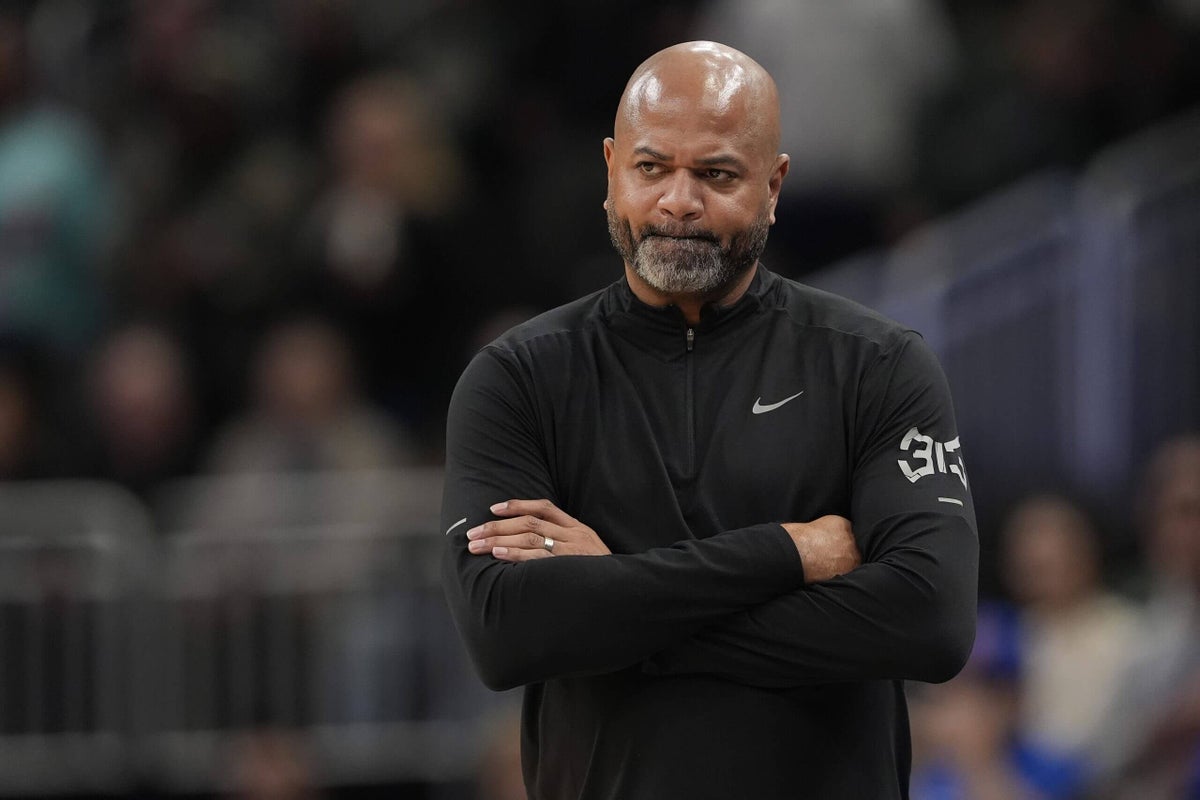
“It’s us doing a better job of relieving pressure for one another, us doing a better job of trying to stay out of small spaces, which (Milwaukee’s) zone forced us into,” Detroit coach J.B. Bickerstaff said. “But we’ll go back, we’ll watch the tape of it and these are great opportunities for us to learn.”
The Bucks switched into their zone during the second frame, limiting the Pistons to 22 points, their lowest-scoring quarter in the game. Although Bickerstaff alluded to Milwaukee’s zone, the turnovers haven’t been an isolated issue during this five-game stretch; Detroit has committed 26 fourth-quarter turnovers to just 27 assists in that span.
While some of the Pistons’ turnovers stem from carelessness, the lack of offensive flow is directly correlated.
Detroit is shooting 45.6 percent from the field and 34.3 percent from the 3-point line the past five games. Bickerstaff has mentioned since last season that his team’s identity is rooted in its ability to defend and get out in transition after forcing stops. The Pistons thrive when getting downhill in transition, as evidenced by their 370 fast-break points entering Thursday, which rank seventh in the league.
But when they aren’t in transition, their offense can, at times, become stagnant. The less movement the offense operates with, the easier it becomes for defenses to load up on Cade Cunningham.
Cunningham has made a habit of coming alive with the game on the line to will Detroit to wins this year. He trails only Cleveland Cavaliers guard Donovan Mitchell with 171 fourth-quarter points. But when he’s being blitzed the way he has been over this stretch, the Pistons have yet to find a second consistent fourth-quarter scorer who can create their own shot.
For as much as Cunningham has flourished in the fourth, he also has 11 assists to 10 turnovers during these last five fourth quarters, equating to a 1.1 assists-to-turnover ratio.
Jalen Duren has tallied 70 total points in the final frame this season, and he’s second on Detroit’s roster in fourth-quarter points. He and Cunningham have developed an unspoken chemistry in pick-and-roll actions, but Duren struggled with foul trouble Wednesday and played seven minutes in the fourth before fouling out.
As the season presses on, the team will need to find ways to aid Cunningham and Duren down the stretch.
The Pistons thus far have accomplished offensive cohesion by committee, but without consistent 3-point shooting, their schemes can at times become less challenging to game-plan for. Duncan Robinson, who has been sidelined for the team’s last two games with a right ankle sprain he suffered in Miami, has been sorely missed.
Robinson kept defenders honest and spread the floor late in games when opposing teams would try sending multiple defenders at Cunningham. Detroit has shot 4-of-16 from beyond the arc during the fourth quarters of the two games Robinson has sat out. Daniss Jenkins, who has exceeded expectations to start the season, has shot 1-of-13 from distance since being inserted back into the starting lineup over the last two.
Bickerstaff took responsibility Wednesday for the Pistons’ lack of offensive production and harped on how their defense can lead to more effective offense.
“Defense will carry us,” Bickerstaff said. “If you get stops, they don’t get an opportunity to set up in their zone. … We got stagnant versus the zone. We could’ve moved (the ball) a little bit better. So, that’s on me to help the guys more in the zone to make it easier for them.”
Detroit will have a day to fine-tune its late-game schemes and tighten up on turnovers before gearing up for its fifth set of back-to-back games already. The Pistons host the Portland Trail Blazers Friday before Milwaukee comes to town Saturday for the teams’ third meeting in Detroit’s first 24 games.