
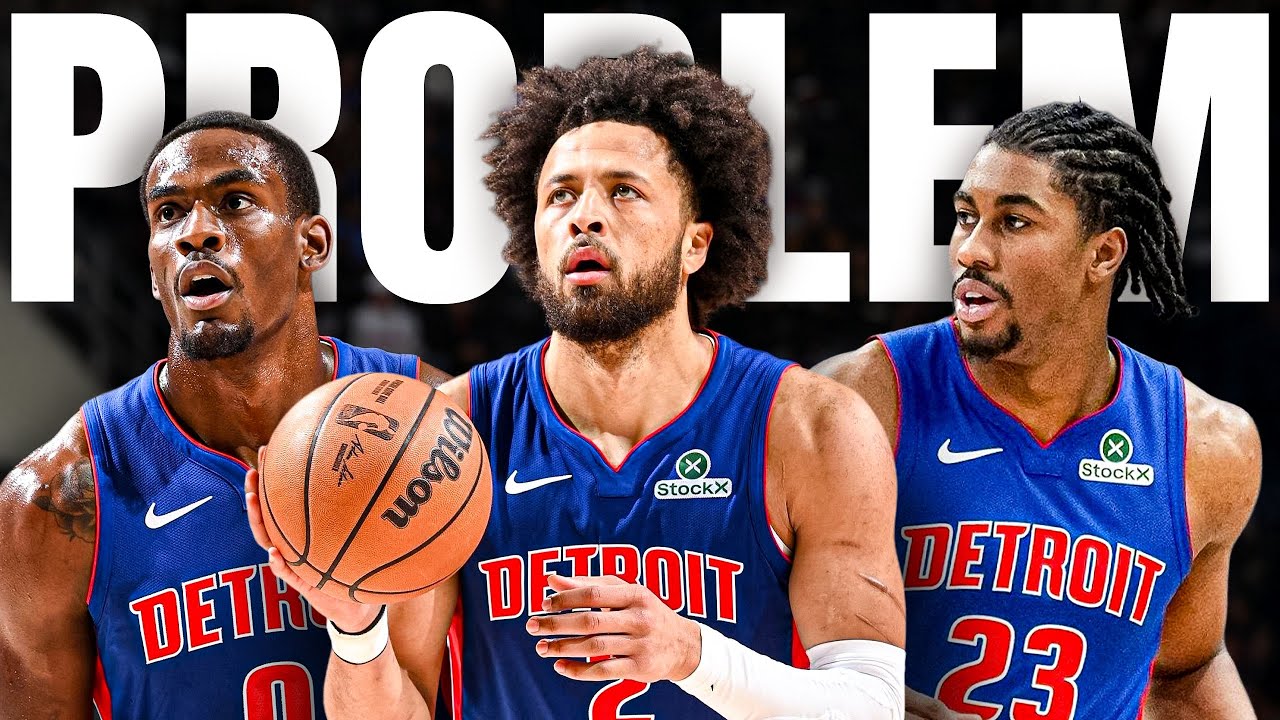
This Is Not The Same Detroit Pistons…
Kade Cuttingham is already a top 10 player in the league. The ones that’s ahead of him, they see him coming right now. And when you when I think about Cade, he’s giving me Luca Donic, LeBron James vibes, and then make guys around him better. Two seasons ago, the Detroit Pistons were the league’s soft spot. 14 wins, 28 losses in a row, possessions without shape. Habits eroded. A team stuck in suspended animation. Games that felt decided before the whistle because they weren’t competing, they were drifting. Fans showed up out of loyalty, not belief. Now there’s something else entirely. A team that dictates tempo, controls the paint, and drags opponents into a style nobody enjoys. Night after night, the pattern repeats. Detroit sets the terms and the other team adjust. This isn’t a spark or a lucky stretch. It’s an identity. One the franchise had to tear down everything to build. Ownership saw something deeper than losses. a franchise whose structure no longer held. So, they didn’t tweak it, they tore it out. Head coach Monty Williams, despite carrying the richest guaranteed contract in league history, was let go. General manager Troy Weaver followed. The front office was gutted. Roles, routines, and hierarchy were cleaned out in what insiders called administrative violence. Nothing was grandfathered in. Everything old was removed. Trejan Langden, now running basketball operations, stepped into a room with no sacred cows. JB Vicker staff brought a different temperature entirely. Training camp carried an edge. Screens finished, angles corrected, footwork checked, communication sharpened. Even walkthroughs had pace. The casual slippage of the past was gone. Detroit finally had direction. Cade gave it shape. Cade walked into the season with a max extension and a cloud of doubt trailing behind him. People questioned the ceiling, questioned the fit, questioned whether Detroit was building around the right player. He didn’t try to win the argument. He changed the terms of it. The numbers jumped first, the scoring, the efficiency, the rim pressure, but the shift went deeper. Detroit’s offense finally had a conductor. Every possession had shape. What used to be fragments is now one flow under his control. Kade dictates tempo, showing it when he wants, accelerating when the gaps appear, and the team plays on his beat. 27 points, 10 assists, five rebounds. But it’s the control that defines him now. The ability to quiet a possession before it unravels or weaponize it before the defense reacts. The turnovers come with the responsibility and the team accepts the tax because they know who’s creating the clean looks they live off. And then came the night the locker room stopped seeing him as the future. Held it to Cunningham. Yes. An oldfashioned duel and started treating him as the center of everything. The flu game. Sick, limping, exhausted. And he still carried them for 44 minutes. 46 points, 12 rebounds, 11 assists, five steals, over 70 total points created, and a game time play he made on fumes. Trainers tried to pull him. He waved him off. Baker staff tried to sub him. He stayed. Detroit needed him and he wasn’t leaving. First crack at it. Green with the rejection. Oh, Jenkins cut in half down the line. That was the night the team stopped asking if Cade could lead a winner. They realized they already had their captain. Then the season handed them a different test. Kad’s body finally shut down after the flu game. The hip gave out, the staff shut him down, and Detroit had to play without the player who organizes everything and without Jaden Ivy with Duran only available for part of the stretch. For most teams, that’s where the floor drops out. Detroit went the other direction. Three games, three wins, all by double digits. Paul Reed dropped 28 and 13 against Chicago. Javvante Green gave them 21-9 in a cup game where they held Philadelphia to 15 fourth quarter points. Duran returned and casually put up 31 on 12 for 13. And in Cad’s minutes, Dannis Jenkins handled the offense with the calm of someone who’ done it for years. Clean tempo, clean reads, nothing forced. The system ran through him the same way it runs through Cade. Detroit didn’t wobble in that stretch. They played their style, hit their marks, and looked exactly like themselves. That’s what people keep missing. Detroit doesn’t win because Cade is available. They win because the system is. Detroit didn’t chase trends. They went straight to the part of the floor that wins games and built everything around it. 59 points a night in the paint, most in the league. 42 allowed, top five, plus 16.4 paint differential, a number teams usually only reach in short burst. Detroit lives there. The league lives between plus two and plus five. Detroit is operating on a different tier entirely. Teams spend years trying to survive the three-point era. For Duncan Robinson to come right back off. Oh, they blew up the screen. Jenkins from the corner. Jenkins with the heroics. Detroit bypassed it by dominating the shots that never go out of style. And the system makes you feel that pressure immediately. Possessions tilt downhill, a downhill geometry engineered through cuts, angled screens, and spacing that forces you into the floor zones Detroit controls. Stay home and Cade walks into the nail. Help early and Duran detonates behind you. Forest Floaters and Detroit Shrugs, they’ve already won the geography. The other half of the identity lives at the rim. Opponents shoot 44.5% there in a league where the average sits between 60 and 64%. That’s a suppression gap of nearly 20 percentage points, roughly 10 points erased every night. And it’s better than anything Goar anchored since 2018. Detroit’s funnel turns drives into hesitation. Hesitation into resets and resets into the shots every defense actually wants. Against most teams, guards finish through contact. Against Detroit, they never get there. This is why the Pistons aren’t riding a hot streak. There’s no variance here. Their advantage comes from the one area that doesn’t swing with shooting luck, the rim. The highest value real estate in basketball owned on both ends. They generate the best shots in the sport and erase them for everyone. Everything they do bends back to this identity and at the center of it is the player who makes the whole thing hold. Jaylen Duran sits at the center of everything Detroit wants to be. A year ago he was labeled raw. Now he’s the anchor that makes the entire system make sense. The box scores grabbed attention first. the 22 and 22 against Utah, the 31 on Indiana where he barely touched the rim on 12 of 13 shooting. But those nights only hinted at the real change. What’s different is the precision. The timing on contests that land exactly on the beat before the gather. The patience on rolls that used to rush into traffic. The footwork that tightened over the summer and suddenly turned chaos into control. You can feel the defense trusting him in spots where most bigs need help. Duren doesn’t just erase mistakes. He erases intentions. Guards pull up early. Bigs abandon seals. Drives never turn into attempts because the offense knows what’s waiting for them. He doesn’t play like a young big sorting things out. He plays like the piece the whole identity balances on. The one that tilts possessions the moment he steps into the action. As the numbers tilt with him, Detroit’s metrics don’t read like a hot start, they read like rule breakers. Their bottom five and threes made middle of the pack in turnovers and still sitting top 10 on offense with a defense near the top of the league. A statistical profile that isn’t supposed to coexist. Detroit loses possessions through turnovers and wins them back through offensive rebounding, a math trade most teams can’t survive. And with Jaden Ivy driving the second unit, they have 48 minutes of downhill pressure instead of praying for streak shooting. None of these spikes are supposed to stack together. Teams don’t dominate the paint, erase the rim, stabilize the bench, and survive turnover margins all at once unless the entire structure is sound. That’s the tell. Detroit’s numbers aren’t rising because they’re hot. They’re rising because the system is doing exactly what it was built to do. It’s a blueprint, the kind you only appreciate once it holds up under pressure. Atlanta brought the pressure, pace, shooting, confidence. Detroit absorbed it and bent none of it. Cade returned and looked like he never left. 25, 10, and six without forcing a rhythm or chasing a moment. But this night wasn’t about his line. It was the 66 points in the paint. A number you don’t see in the modern NBA. And that’s when you see Detroit’s identity fully revealed. Every Hawk’s big got cycled through angles, screens, and pockets they couldn’t solve. Detroit took the air out of the game and dismantled them possession by possession. When it tightened late, Cade closed it with two shots that felt inevitable. No heat, no luck, just control. Different opponent, different style, same outcome. Proof the identity travels. There’s no place that tests that identity like Boston. Cade Cunningham walked in and dropped 42 on a defense loaded with elite perimeter matchups. Detroit owned the paint by plus 16 against one of the toughest rim environments in the league. Control the glass and force Boston into the kind of mid-range and floater diet they usually avoid. And yet they still trailed because Boston hit 23s and Detroit hit 11. A plus 27 threes differential is a statistical death sentence except Detroit stayed with one possession. The film told a different story than the scoreboard. Detroit’s identity stayed intact. The paint control held. The physicality held. The defensive structure traveled into a hostile arena and didn’t blink. Afterward, Vicker staff didn’t point to effort or energy. He pointed to a single flaw. We weren’t up on them as tight as we needed to be. One critique, not an unraveling, an adjustment. That’s why the Boston game mattered. It showed Detroit’s ceiling, not their cracks. If they can absorb a 23’s night in that building and still dictate the terms, the question stops being whether the system is real and shifts to what it does to everyone else. Ask around the league and you hear it quickly. Teams don’t enjoy playing Detroit. Coaches talk about them with fatigue, the kind that shows up after a matchup that drains you in ways film never captured. Nick Nurse put it simply, they keep coming. The usual answers don’t work. You can’t speed them up. They set the rhythm. You can’t collapse the paint. Cad’s pacing and Dur’s gravity punish early help. You can’t match their physicality without fouling, and you’re not beating them at the rim. Detroit forces teams into versions of their offense they don’t practice. That’s the issue the East keeps running into. Detroit strips away the options teams rely on and force them into versions of their offense they don’t practice. Detroit doesn’t just challenge you, they make you uncomfortable. And once a team starts from discomfort, the cracks show fast. Detroit has cracks, too. Every team does, but theirs live in the margins, not the core. Some parts of this rise will level out. Role players spike and settle. Bench scoring swings. The shooting comes and goes. That’s just the noise of an NBA season. But the pieces that matter, the ones that survive scouting, cold spells, and playoff pressure are already built in. The paint control, the rim deterrence, the rebounding, the physicality. Those traits travel. Those traits show up in April. Detroit still has weaknesses. They don’t take many threes. They turn the ball over more than they should. Their youth shows up in late clock stretches. Cade carries a heavy load, and teams will test that in the series. But the foundation isn’t fragile. It’s the kind of base you’d build deeper into, not around. Their strength lives in areas that don’t swing with variance. The paint, the rim, the possession game. Detroit knows where the leaks are and they’re tightening those areas while they win. Most young teams hope their strengths hold. Detroit already knows which ones survive the pressure. Two years ago, Detroit looked finished. A team fading, not growing. Now they’re the matchup nobody wants. They have the star. They have the anchor. They have a system that holds in every environment. They win because the core pieces travel. paint control, real rim deterrence, rebounding, and blunt force physicality. Basketball offensive rebound leading to that open three. Cunningham alley with authority to finish by Detroit didn’t look into this. They built it piece by piece. Standard by standard, a fortress in the paint and a version of themselves the league hasn’t seen. The old Pistons are gone. This isn’t a heater. It’s architecture. A transformation the East isn’t ready for. And it’s not going anywhere.
The Detroit Pistons aren’t a feel-good turnaround – they’re a problem.
Cade Cunningham has taken control of the offense, Jalen Duren has turned into one of the most dominant anchors in the league, and Detroit’s paint-first, rim-erasing system is suffocating opponents every night. This breakdown shows how the Pistons went from the league’s soft spot to a team reshaping the Eastern Conference on their terms.
10 comments
Talking bout the hip gave out no cam whittmore hit him in the air n he landed on his hip 😂
Very good narration, info and stats 👏🏾
Best video about this current team in its wholeness. Detroit Basketball!!!
Nasty Dawgs 30 for 30 preview lol
Weaver got f@cked over. Say that part.
Worth watching. I enjoyed this.
Great job Bruh! ✊🏾💯
To be honest no more ballerina ball. Pistons actually embraced characteristics of the real Detroit spirit. Work hard and focuse. Stay tough. I almost stopped watching basketball, because how sensitive the league is. Fun watching them nasty boys!
Too fuckin lazy to record your own audio instead of using shitty AI?
We need more prominent "AI" labeling for this kind of stuff. So obvious that a human didn't write this. Or much of anything else fo to this video.Shut this off after 15 seconds. Goodbye.