
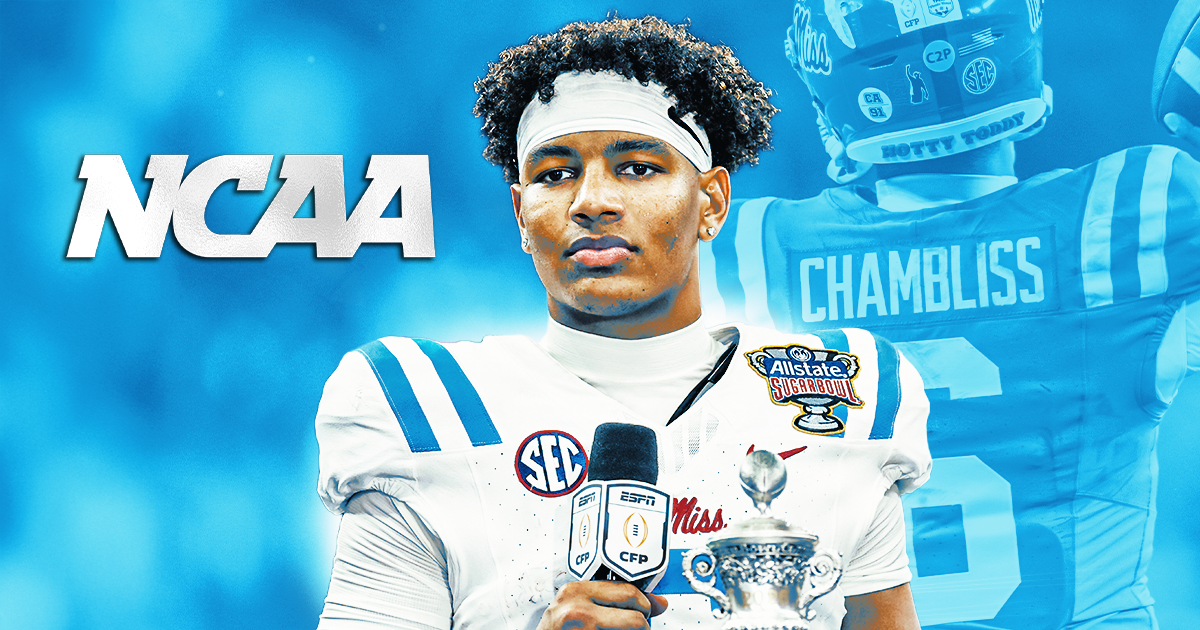
The NCAA has denied Ole Miss quarterback Trinidad Chambliss’ waiver appeal for a sixth year of eligibility, sources confirm to On3. The NCAA denied the intial waiver on Jan. 9.
The quarterback finished eighth in Heisman Trophy voting in 2025, leading the Rebels to the College Football Playoff semifinals and totaling 30 touchdowns. Ole Miss has taken preparations for Chambliss not to play the 2026 season, bringing in Auburn transfer quarterback Deuce Knight.
Chambliss sued the NCAA earlier this month, filing a lawsuit in the Chancery Court of Lafayette County, Mississippi, requesting preliminary and permanent injunctions that would allow him to play a final season for the Rebels.
The NCAA denied Chambliss’ waiver for a sixth year because Ole Miss and the quarterback didn’t provide sufficient medical evidence from a treating physician that showed he was suffering from an “incapacitating injury or illness.”
“This waiver request was still denied when it should have been approved at the NCAA staff level,” Ole Miss athletics said in a statement on Wednesday night. “Trinidad’s representatives will continue to pursue all available legal remedies, and we will publicly stand behind Trinidad while holding the NCAA accountable for a decision that fails to align with its own rules, precedent, and the documented medical record.”
Chambliss’ waiver case centers around respiratory issues he dealt with as a sophomore in 2022 at Ferris State. After the quarterback’s intial filing, the NCAA requested medical notes proving he was dealing with the issues during the season. He didn’t play in the 2022 season due to the issues.
Chambliss’ attorney, Tom Mars, previously told ESPN that Ole Miss officials provided 91 pages of medical records to the NCAA. In a supporting letter to the NCAA, Chambliss’ doctor wrote the quarterback suffered “recurrent throat infections, poor sleep quality, daytime fatigue, and exercise-related airway discomfort” throughout the 2022-23 academic year.
“Approval requires schools to submit medical documentation provided by a treating physician at the time of a student’s incapacitating injury or illness, which was not provided,” the NCAA said in a statement following his initial waiver denial.