
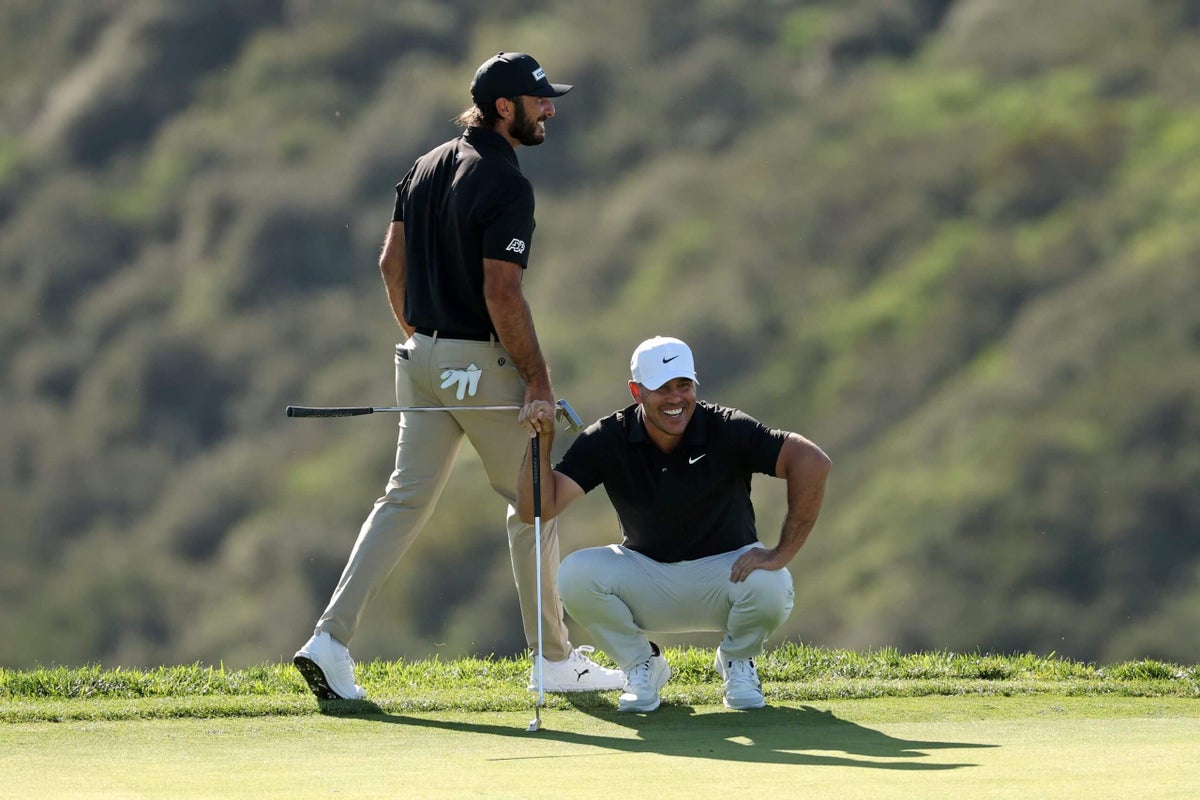
PHOENIX — It was a sleepier afternoon than the WM Phoenix Open would have dreamt for itself. Overcast skies shrouded the infamous stadium at No. 16. Unpredictable wind gusts quieted the annual hole-in-one watch party. And the Scottsdale crowd desperately needed something to unleash its buzz.
So as the day’s marquee threesome emerged from the Coliseum’s tunnel, everyone was on high alert for the moment. First, hearty claps welcomed Xander Schauffele to the tee. Typical boos resounded as Cameron Young, next up, missed the green to the right. Then Brooks Koepka took his stance. It didn’t matter where his ball landed or what his scorecard said. The hub of the People’s Open had its mojo back. The place turned on its volume and got on its feet for the former LIV golfer, welcoming him back with the loudest roars yet.
Professional golf is at its best when the top players are playing against each other.
Since the onset of golf’s great divide, no one can argue with that simple, universal truth. Just look at the four men’s majors. They’ve thrived during the fracture between the PGA Tour and LIV for this very reason. It’s better for fans. It’s lucrative for sponsors. Stronger competition means a more compelling show.
Take it from the world No. 1: “When you look at a lot of the discussions we’ve had and when you look at what a lot of the fans are saying, I think people want the best people playing together again,” Scottie Scheffler said on Wednesday.
Players view the decision to welcome back formerly banned LIV golfers like Koepka and Patrick Reed as a net positive for the PGA Tour. But it’s not just a win for the tour as a business and an entertainment product; it feels like a personal win for many PGA Tour members. And at the WM Phoenix Open, you can sense it — because the players are beginning to candidly explain why.
“When you win a tournament, if you took a lot of the top guys out of it, and you won that event, does it feel like there’s an asterisk there?” Rickie Fowler says. “One person doesn’t make that difference, but I think it starts to show that if the right people are out, it kind of can. I’m all for getting guys back.”
Whoever raises the WM Phoenix Open trophy on Sunday won’t necessarily be satisfied that they “edged” past Brooks Koepka. He shot 4-over par, among the worst scores Thursday. But the fact that the five-time major champion is in the field is a victory. The PGA Tour knows that competitive integrity is its greatest asset.
It’s become its marketing slogan for 2026: The PGA Tour, “Where the Best Belong.” Now, by creating a road back for LIV players, the tour is making headway toward being the place where all the best are.
“I think it just shows and validates that this is where the best players in the world want to play, and this is where you’re going to find the best competition in the world,” says Webb Simpson.

Fans have filled out the 16th hole stands at the WM Phoenix Open. (Alex Goodlett / Getty Images)
The tour got here because CEO Brian Rolapp found a way to walk the line. As part of the new Returning Member Program, Koepka is firmly back. As of last week, Patrick Reed is on his way, too. The 2018 Masters champion announced his official departure from LIV, and will regain eligibility at the end of the summer. The tour’s doors are now swinging open for former LIV golfers with deep competitive resumes.
But amidst all of this talk about the business of the tour, the players’ viewpoint has been lost. A simple belief is now resurfacing: Competition matters.
At the end of their careers, a top PGA Tour player will see a number of wins posted next to his name. He’ll want that number to mean everything it meant before the Saudi-backed league came onto the scene and poached very capable talent from the circuit.
“You just want to play against the best players. You want to beat the best players. You want to be proud at the end of a tournament that you beat the guys that maybe you struggle to ever beat,” Max Homa says.
Out of LIV’s 57-player roster, only a handful of names can make a meaningful and consistent competitive impact. Three of them — Rahm, Bryson DeChambeau and Cameron Smith — were already offered lifelines back to the tour. However, they did not accept the deal by Rolapp’s Feb. 2 deadline, and are playing in LIV Golf’s event in Riyadh, Saudi Arabia, this week. Others may one day follow Reed and seek PGA Tour reinstatement after serving a suspension.
In even providing the pathway, the tour signaled that those players are a welcome addition. Without them, the tour is missing something. Rewind to two or three years ago, and it was taboo to admit that LIV dampened the PGA Tour product or limited its potential.
“Hopefully more guys (come back to the PGA Tour),” Homa said. “I feel robbed as a golf fan of Rahm vs. Scottie. I feel like that would have been a semi-weekly thing. I’m happy someone started the reunion.”
If anyone were to be upset by the PGA Tour’s decision to let LIV golfers return, it would naturally be the players — especially those who had LIV offers and remained loyal to the tour. Could they have done things differently? Would they have?
“I think it just makes the products, the fields better,” says Viktor Hovland. “However, it does kind of put the tour in a tricky position now. You’ve said one thing for a long time, and now we’re changing things. What precedent are you setting for future players if I can go to a rival tour, get paid, and now seemingly come back again without the biggest consequences?”
The general understanding is that such a scenario isn’t a realistic concern. The PGA Tour has the ball in its court now. Welcoming back defectors only strengthens the PGA Tour’s value in its upcoming media rights negotiation. Most players — even those who think Koepka and Reed’s financial penalties aren’t steep enough — on balance see this move as a positive.
“It’s their money, it’s not like it’s going in my pocket,” Homa said. “We honestly got paid so much more money because of this whole thing. I don’t care. I just want everybody to be back.”
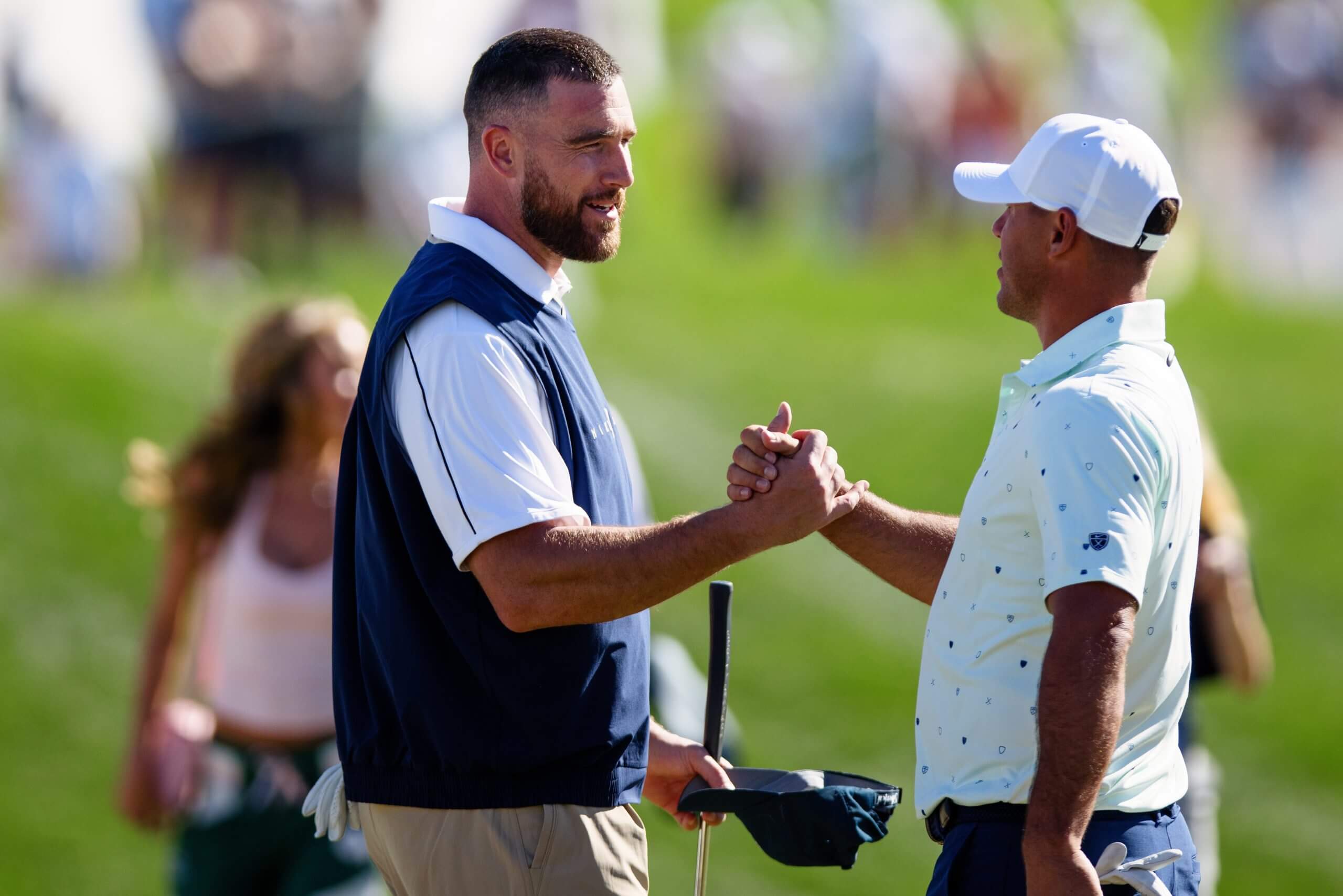
Travis Kelce played nine holes with Brooks Koepka during Wednesday’s pro-am at the WM Phoenix Open. (Justin Edmonds / Getty Images)
Fowler, orange garb and all, is a marketer’s dream. That also made him one of LIV Golf’s biggest targets. Of all the players who were offered a spot, Fowler, 37 now, was candid about the temptation to leave. But Fowler stayed, and Homa did too — each fighting through slumps and winless droughts that would have made anyone wonder about playing for guaranteed money. For them, there wasn’t a number. Elite competition is a top priority for all of these high-level players. The idea that it wasn’t only took hold when LIV started waving nine-figure contracts.
“As time’s gone on, we’ve all just realized that some people have a different outlook on how they want to go about their career,” Homa says. “I never judged people for leaving. I didn’t like how some people bashed the tour on the way out, and lied about how it’s not about the money.”
The PGA Tour is in a very different place now, compared to when Koepka first defected. The membership is smaller, purses are bigger, and overall, it’s a much better place for the stars, with the new signature event model, FedEx Cup bonuses and player equity. Strong competition is valued in a much bigger way. For both the sport at large and the players themselves, long-time calls are being answered.
“Not that we don’t want to see LIV do well, but I think what’s best is having everyone play together,” Fowler said. “Brooks, and then with Patrick in the works, I think it’s a step in the right direction.”