
Several NHL teams have been major disappointments this season, particularly the New York Rangers and Vancouver Canucks. While the Rangers have made it clear they intend to retool, the Canucks have refrained from labelling their plans, possibly due to ongoing roster assessments or other internal considerations. Even teams that have entered clear rebuilds have become apprehensive about fully starting over (e.g., the Calgary Flames), for various reasons. PHR had a piece last year that addressed why teams are choosing a retool over a rebuild, but this piece will focus on why teams have shied away from ever starting over.
The reluctance to start over makes sense from the team’s perspective, even if it hinders the team’s long-term prospects of becoming competitive again. The Rangers are a perfect example, having invested a pile of past development years into players such as Igor Shesterkin and Alexis Lafreniere. This is common among NHL teams, who constantly fall into the sunk-cost fallacy of continuing to throw money and time at a player, even though he will never be what they were hoping for or effective enough to justify the costs they’ve paid.
Beyond past costs, teams are also trapped by future expenses from contract extensions given to players who are not performing up to their AAV. This is something the Rangers are arguably dealing with in the cases of Shesterkin and Lafreniere, another bitter pill for management to swallow, as they are now in a position where they feel as though they are throwing both past and future years away on a player they piled so many resources into.
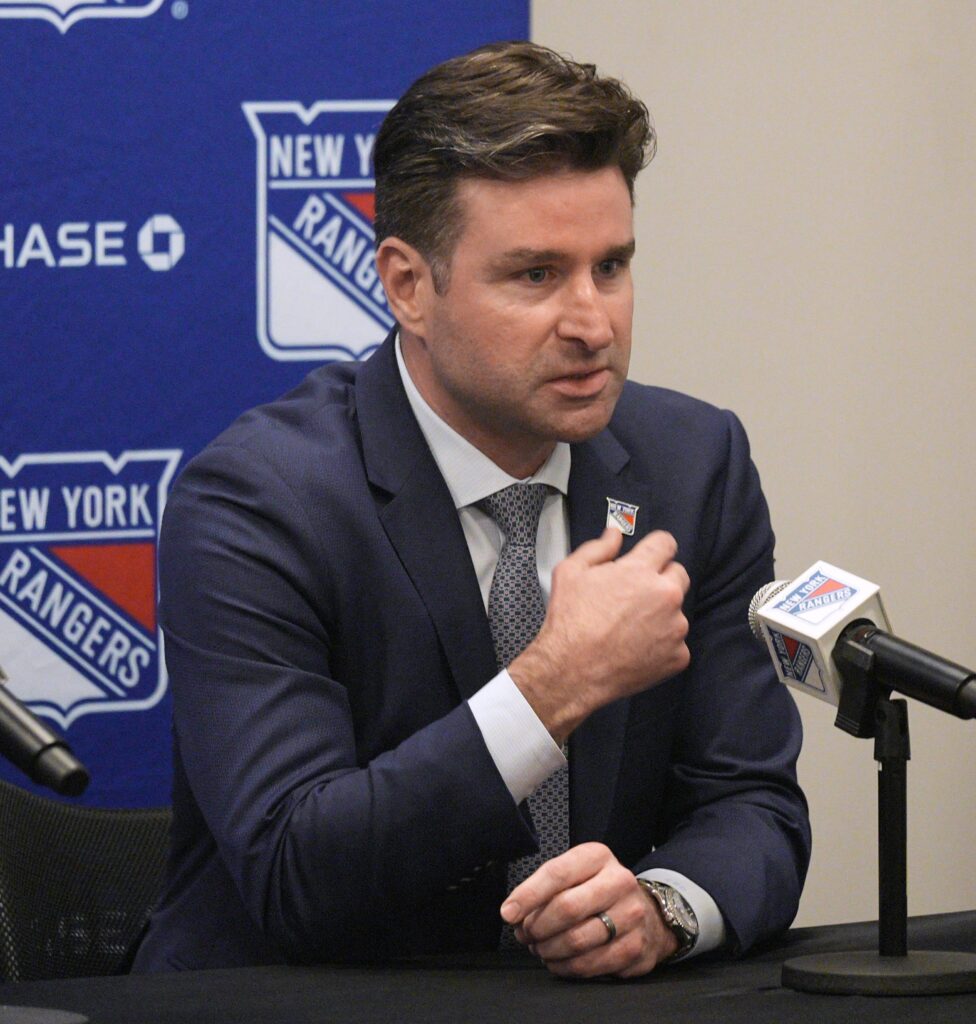
Those extensions were signed by Rangers general manager Chris Drury, and his fingerprints are all over this team. Drury has invested everything into his current club, from draft picks to term to cap space to his public messaging. It’s part of the reason he has recently talked of pivoting to a retool. Walking away completely from this core would signal a massive failure on his part. Even if the pieces in place probably aren’t the ones you’d want to retool around, Drury will likely keep a lot of them, because he staked his reputation on acquiring them.
GMs who build a team and then have to blow it up are essentially admitting they were wrong in their roster construction. Few NHL GMs want to do that, and most front offices would rather be a consistent disappointment than openly admit they are wrong.
And therein lies a big problem in the NHL. Executives aren’t necessarily rewarded for championships; they are rewarded for not collapsing. Making the playoffs is safe; finishing just outside the playoffs shows stability, but tearing down a roster and rebuilding it is a considerable risk, one that can cost you your job. A full-scale rebuild requires several ugly seasons. It means fans with brown paper bags on their heads attending games, and it means an impatient owner circling the offices, wondering when the team will turn the corner. Rebuilding is brutal and ugly, and it requires patience. Retooling is more manageable, quicker, and often leads to immediate, albeit tepid, results.
Retools can also sell hope, and teams can see it in a retool. Owners prefer hope to being told they have to tear down their team, and hope sells more tickets than telling fans you are going to start over. That matters more to owners: a full building over a full draft-pick ledger. A middle-of-the-pack team with designs on limping into the playoffs is easier to market than a disciplined rebuild with zero guarantees.
So, NHL teams opt for the theatre of optimism over meaningful structural change, and it’s tough to fault them given the incentives at play. One of the most famous examples of this is the Toronto Maple Leafs of the late 2000s, who were managed by Brian Burke. The management group had assembled a promising prospect pool but grew impatient in September 2009 and made the trade with Boston to acquire Phil Kessel. The rest, of course, is history: Tyler Seguin was drafted in 2010 with the Maple Leafs’ first-round pick, and defenseman Dougie Hamilton was drafted a year later with Toronto’s 2011 first-round pick. Had Toronto simply been patient, there is no telling where that iteration of the Maple Leafs would have ended up.
Front offices dread wasting years, and in the early stages of a rebuild, there will be wasted years. It’s also why teams rush rebuilds and mess them up. That is effectively what Drury did. He became impatient and made bold moves to bolster his lineup, which ultimately blew up his prospect system and, eventually, his NHL roster. The Ottawa Senators are guilty of the same thing, taking wild swings early in their rebuild on Alex DeBrincat and Jakob Chychrun. Teams trade their future away and call it supporting the core. They extend players to justify their original bet on a player (see last week’s piece on this). They shift their own goals from winning the Stanley Cup one day to simply not having to start over.
Again, it’s hard to fault GMs for doing this. The NHL’s structure used to encourage full-scale rebuilds, but now the rules discourage them. The draft lottery has made it harder to build through top picks; the salary cap floor requires acquiring veteran players; and some high draft picks take longer to develop. All of that has made the retool, or stated differently, the half-rebuild, safer. Even if the retool leads nowhere, which it often does.
The Pittsburgh Penguins are a prime example of this. In the 2022-23 season, it became clear the Penguins needed to get younger, but general manager Ron Hextall doubled down on his roster, trading for veterans such as Nick Bonino, Mikael Granlund, and others. He also sent Brock McGinn, Kasperi Kapanen, and Teddy Blueger out the door. It was a clear case of doing something now to change the furniture, hoping it would improve. It failed miserably. Hextall had stood still for most of his tenure in Pittsburgh, and while his flurry of moves that year showed urgency, he accomplished nothing and was fired at the end of the season.
The complex reality in the NHL is that teams can’t rebuild under current management, not in any meaningful way, because it would expose all of management’s mistakes. Bad drafting, poor development, bad signings, cultural rot in the dressing room, the list goes on. Starting over requires a top-down reset, from the president of hockey ops and general manager on down to the players, and most teams can’t stomach that kind of carnage or don’t have the humility to admit things aren’t working. This is why teams don’t rebuild until it’s five years too late, and the only choice they have is to start over and wait five to seven years for results.
The Maple Leafs are currently at that point. They can retool around Auston Matthews, William Nylander, and Morgan Rielly, or they could begin the painful teardown and build a whole new culture in Toronto. Given the incentives at play, it’s hard to believe they would choose the latter over the former, even if it might be the better choice for the franchise long term.