
Some NFL teams won’t balk at the idea of a lengthy shopping list this offseason. The first $300 million salary cap in league history makes for more room to turn fortunes around heading into 2026.
The Athletic’s NFL beat writers are here to help, too. From offensive line reinforcements to boosts to the wide receiver room and — as always — quarterbacks, our writers pick the biggest need for each NFL team now that the book on Super Bowl LX has closed and the offseason begins.
What does your team need most (you’ll notice a theme in the trenches)? Read below for more.
Arizona Cardinals
Quarterback: This isn’t so much a need as a decision. The Cardinals need to figure out what they want to do — stick with Kyler Murray, ride it out one more season with Jacoby Brissett, or go in an entirely different direction. Murray’s situation is complicated. He played in five games last season because of a foot injury. By season’s end, all parties seemed ready to move on. When asked about Murray at his introductory news conference, coach Mike LaFleur was deliberately non-committal. Murray is owed $36.8 million next season. On March 15, another $19.5 million of his 2027 base salary locks in. Finding a trade partner is the best option, but that could prove difficult. — Doug Haller
Atlanta Falcons
Defensive tackle: Six of the nine interior defensive linemen who played for Atlanta last year are impending free agents or already gone, including starter David Onyemata, and the Falcons already have enough trouble stopping the run. They finished 27th in rush defense EPA (0.01) last year, and new President of Football Matt Ryan said in his opening news conference that his team would stop the run this year. That’s going to take some big bodies. — Josh Kendall
Baltimore Ravens
Trench help: You could make a compelling argument for either the offensive or defensive line being the team’s biggest area of need, so it makes sense to group them together. The Ravens have to add two starting-caliber interior offensive linemen, and potentially three if standout center Tyler Linderbaum leaves in free agency. They also need to add two defensive linemen and potentially three if Nnamdi Madubuike doesn’t return. This is an offseason where solidifying his team in the trenches needs to be a focus for general manager Eric DeCosta. — Jeff Zrebiec
Buffalo Bills
Wide receiver: If the coaching staff remained the same, it would have been wide receiver with an exclamation point. However, even with a change in scheme that needs edge rushers better suited to defensive coordinator Jim Leonhard’s vision, I’ll still stick with receiver. The Bills’ offense was held back last season by its wide receiver room, which seldom gave it a chance to push the ball downfield. They were able to get by with an outstanding running game, but they crave a two-dimensional approach. Finding a boundary receiver who can win outside the numbers in the intermediate and deep areas is critical. Edge rusher is a close second. — Joe Buscaglia
Carolina Panthers
Pass rush: Dan Morgan has been very clear that the Panthers’ woeful pass rush wasn’t good enough. That’s been the case for a while. The Panthers ranked last in the league in sacks in 2023, then tied for the third fewest each of the past two seasons. Trading Brian Burns two years ago and releasing Jadeveon Clowney last year didn’t help matters. Morgan drafted a pair of second-day edge rushers last year in Nic Scourton and Princely Umanmielen. Scourton tied Derrick Brown for the team lead with five sacks in 2025. But more reinforcements are needed. — Joseph Person
Chicago Bears
Pass rush: The Bears finished in the bottom 10 of the league in sacks with 35 and were 21st in sacks per pass attempt (6.57%). To make the leap from division champ into a true Super Bowl contender in 2026, the pass rush needs more teeth. To a large extent, the Bears may have to lean heavily on improved production from players they already have — Montez Sweat, Dayo Odeyingbo, Shemar Turner, Grady Jarrett, Gervon Dexter, Austin Booker — to get where they want to go. Still, adding impact contributors up front is a priority with a push to become more disruptive on the interior of the defensive line. — Dan Wiederer
Cincinnati Bengals
Pass rushers: Trey Hendrickson is a free agent, B.J. Hill is 31 coming off a pedestrian season and two disappointing recent picks are in the rotation. Myles Murphy took a leap in Year 3, but beyond that, they don’t have a proven pass-rushing commodity. They need multiple rushers across the line. There are options to look for — in-between-sized edge/tackle hybrids due to versatility working alongside 2025 first-rounder Shemar Stewart. But beyond body type, this defense needs at least three starter-level rushers through free agency and the draft if it has any chance to rise to respectability. — Paul Dehner Jr.
Cleveland Browns
Offense: Sounds simple, right? The Browns hired an offensive-minded head coach in Todd Monken because they’ve got much to fix and several areas in need of upgrades. Prioritizing those needs isn’t easy — fixing them in one offseason won’t be either — but the Browns will have multiple new players across the offensive line and in the wide receiver group. There’s no sure answer at quarterback, either, but stability across the line and additional playmaking help can boost Shedeur Sanders — and help the team get a fuller read on whether Sanders is a realistic long-term option. — Zac Jackson
Dallas Cowboys
Defense: Everything other than defensive tackle should be a priority. Pass rushers, cornerbacks, linebackers and safeties are all needed to help improve what was probably the worst defense in franchise history. Having two first-round picks helps, but plenty of heavy lifting is going to be needed before the draft to fill several holes on that side of the ball. It’ll probably be more cost-effective to use those top two picks on pass rusher and cornerback than to spend big on those positions in free agency or via trade. New defensive coordinator Christian Parker will have his hands full turning things around, but he can’t be expected to do that without a significant upgrade in defensive talent. — Jon Machota
Denver Broncos
An offensive playmaker: The Broncos finished 14th in scoring in 2025. They need to improve to reach the final level of their climb under Sean Payton and claim a Super Bowl. Pick a skill position — wide receiver, tight end, running back — and you can argue it as a priority for Denver’s offseason. A more robust run game, in particular, is paramount, and the Broncos will need a new RB to pair with RJ Harvey if they don’t bring back oft-injured veteran J.K. Dobbins. — Nick Kosmider
Detroit Lions
A revamped offensive line: Given how much the Lions missed Frank Ragnow this season, center should be their top priority this offseason. Graham Glasgow struggled to fill the void and will be 34 when the season begins. He could be a cap casualty or even a retirement candidate if he believes it’s time to walk away. Adding a proven, veteran center in free agency could answer some of the questions along the offensive line, though more could arise if Taylor Decker retires. Regardless of Decker’s 2026 status, the Lions would be wise to target a young tackle in the draft on Day 1 or 2. — Colton Pouncy
Green Bay Packers
Cornerback: The Packers need a true No. 1 cornerback, or at least someone who can grow into that role. Keisean Nixon is a decent player, but I’m not sure he can be the top outside cornerback on a Super Bowl team. Complicating matters is the fact that Green Bay doesn’t have a first-round pick to draft a cornerback with in either of the next two drafts. There aren’t exactly enticing free-agent options at the position, either, so maybe general manager Brian Gutekunst uses his second-round pick on a cornerback and develops him behind Nixon and Carrington Valentine for now. At the very least, the Packers need bodies at the position both now and for the future since both Nixon and Valentine are entering contract years. — Matt Schneidman
Houston Texans
Offensive line: Offensive line help remains a pressing need for the Texans. GM Nick Caserio embarked on an overhaul last offseason, but outside of second-round pick and left tackle Aireontae Ersery, the acquisitions made were short-term solutions. As last season’s continued struggles (especially in the postseason) showed, Houston still has plenty of work to do on this front so C.J. Stroud has time to operate and can get his groove back after the rattled passer turned into a turnover machine against Pittsburgh in the wild-card round and against New England in the divisional round, blowing a golden opportunity while backed by a truly championship-caliber defense. — Mike Jones
Indianapolis Colts
Pass rush: Laiatu Latu is the only edge rusher on the roster who’s shown any promise. The 2024 first-round pick had 8.5 sacks and three interceptions in his second season. Meanwhile, veterans Kwity Paye, Samson Ebukam and Tyquan Lewis combined for nine sacks in 2025. All three will be unrestricted free agents, and none of them should be retained. What’s more, 2025 second-round pick JT Tuimoloau barely played, so it would be naive to think he’ll take a massive leap in 2026. Indy must upgrade its underwhelming pass rush via the draft or free agency to help end its five-year playoff drought. — James Boyd
Jacksonville Jaguars
Secondary: The Jaguars need to boost their secondary with more starting-caliber players who can excel in defensive coordinator Anthony Campanile’s zone-based system. They ran into coverage issues down the stretch, and midseason acquisition Greg Newsome struggled in the playoff loss to the Bills. Travis Hunter’s return will help, for sure, but the Jaguars need to add a few pieces to the competition. — Jeff Howe
Kansas City Chiefs
Defensive line: All season, the Chiefs appeared to be one pass rusher short while too often failing on the game’s most critical downs. All-Pro defensive tackle Chris Jones had a good year but not a great one, and defensive end George Karlaftis battled through a midseason thumb injury to create pressure while failing to produce sacks at his typical rate. Kansas City gets a boost with 2025 second-round defensive tackle Omarr Norman-Lott returning from a torn ACL, but inside or outside, they could use more pass-rushing juice for 2026 and beyond. — Jesse Newell
Las Vegas Raiders
Offensive line: The Raiders had arguably the worst offensive line in the NFL last season. Part of the issue was a lack of talent, injuries, and horrendous coaching. The Raiders ranked dead last in rushing success rate and sack rate. With the second most cap space in the league and the Raiders expected to take quarterback Fernando Mendoza first overall, general manager John Spytek should look to spend big and add at least two new starters to the offensive line. Opening up lanes for Ashton Jeanty and protecting Mendoza should be the top priority of the offseason. — Ted Nguyen
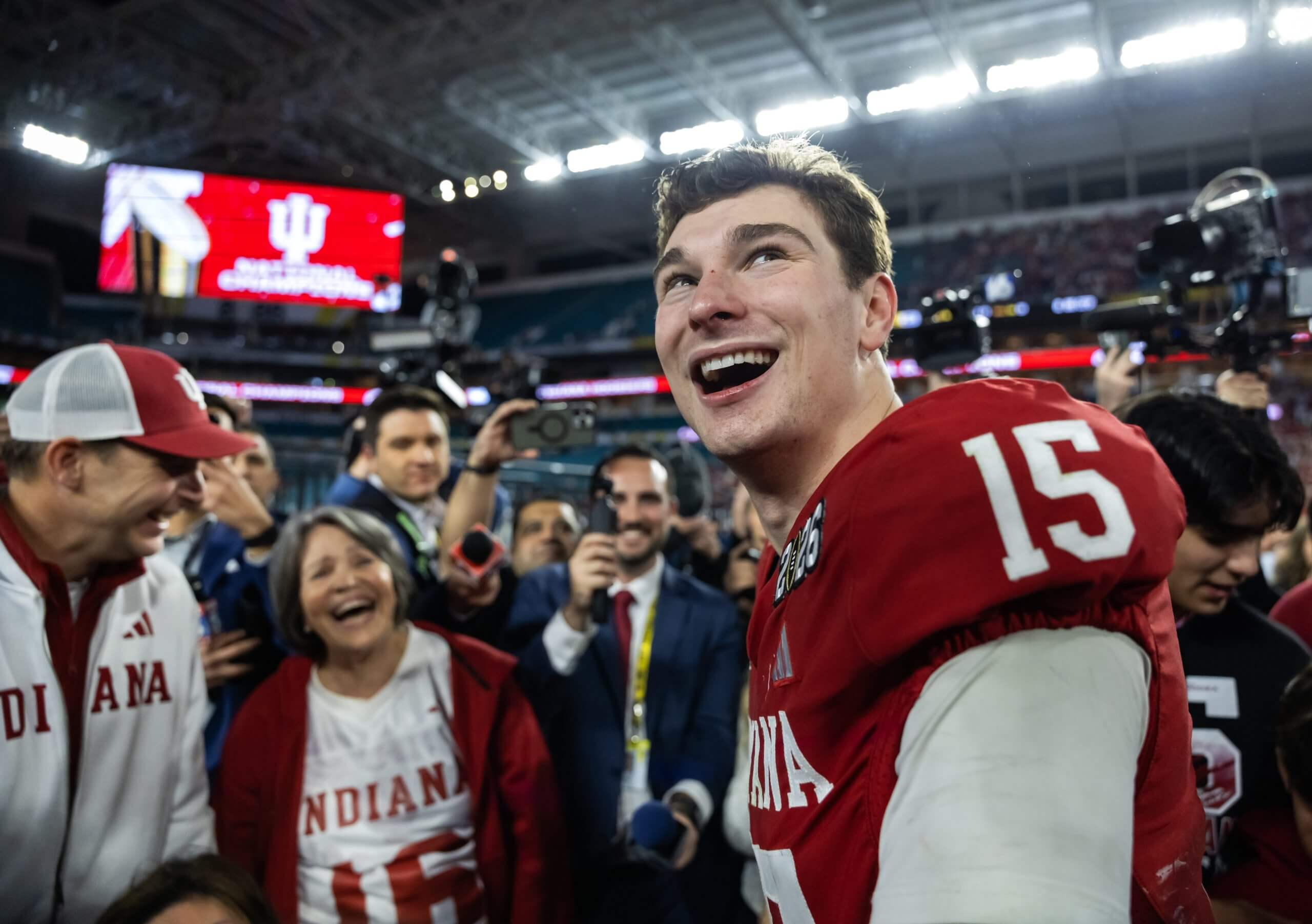
The Las Vegas Raiders will need reinforcements on the offensive line to protect Indiana QB quarterback Fernando Mendoza, who is expected to be the team’s selection at No. 1 overall in April’s NFL Draft. (Mark J. Rebilas / Imagn Images)
Los Angeles Chargers
Center: The Chargers have started Bradley Bozeman at center for the past two seasons, and he has been a liability in pass protection. They should have upgraded last offseason. Instead, they stuck with Bozeman, and Justin Herbert was hit more than any quarterback in the league. Bozeman allowed 36 pressures, most among centers, according to PFF. The Chargers must find a more capable starting center. That is their offseason priority. There are some intriguing options in free agency, including Tyler Linderbaum, who Chargers GM Joe Hortiz had a hand in drafting during his time with the Ravens. — Daniel Popper
Los Angeles Rams
Outside cornerback: The Rams’ clear biggest weakness is at outside cornerback. It’s the one premium position they haven’t invested in, opting for waiver claims, Day 3 draft picks and aging veterans. That became the downfall of the league’s lowest-paid defense in the NFC Championship Game, when Sam Darnold enjoyed a breakout playoff performance. The Rams could re-sign Cobie Durant after his three-interception postseason, but they need to utilize two first-round draft picks and ample cap space to seek out a No. 1 option more like they used to have in Jalen Ramsey. — Nate Atkins
Miami Dolphins
QB future: The Dolphins need to figure out their plan for Tua Tagovailoa, who became the first $50 million quarterback to ever get benched for performance reasons. There’s no easy way to release Tagovailoa, who is owed $54 million in guaranteed salary in 2026, so they’ll be hamstrung with dead money whether they choose a pre- or post-June 1 transaction. New GM Jon-Eric Sullivan knew what he signed up for, though, and it’ll be tough to compete under the eventual cap constraints. — Jeff Howe
Minnesota Vikings
Quarterback: A quarterback to pair with J.J. McCarthy, at a bare minimum. Head coach and play caller Kevin O’Connell is entering his fifth season. The Vikings haven’t won a playoff game during that time. Constructing a quarterback room that gives Minnesota the best chance at going deeper is the primary focus. Nothing is off the table here. The Vikings may try to swing big at the position. If they can’t, they will find themselves in a similar situation to last spring. Will the Vikings guarantee the starting spot to a potential QB candidate? If not, what type of QB will they really be able to acquire? — Alec Lewis
New England Patriots
Edge rusher: For a team that was in the Super Bowl, the Patriots have a lot of positions where they need to improve, including offensive line, wide receiver and tight end. But with K’Lavon Chaisson an unrestricted free agent, the answer for where the Pats need the most help is edge rusher. They dominated on the interior of the D-line this season. If they can improve on the outside, this could be a really good front four. — Chad Graff
New Orleans Saints
Wide receiver: It’s amazing how well rookie quarterback Tyler Shough played after the Saints moved on from their Nos. 2 and 3 wideouts, trading Rashid Shaheed and releasing Brandin Cooks around midseason. Shough and top receiver Chris Olave could use a little help in 2026. Leaning on Devaughn Vele, whom the Saints acquired via trade shortly before the 2025 season, might be a bit of a gamble. April’s draft could be a sweet spot for the Saints at WR, though. — Larry Holder
New York Giants
Offensive line: Wait, the Giants’ offensive line finally progressed to competent in 2025. How can this still be the team’s No. 1 need?! Well, now is not the time for the Giants to get complacent. The veterans of the right side of the offensive line — tackle Jermaine Eluemunor and guard Greg Van Roten — are free agents, while position coach Carmen Bricillo has followed Brian Daboll to the Titans. Aside from stud left tackle Andrew Thomas (when healthy), the Giants don’t have any cornerstone pieces on their offensive line. They need to continue investing in the position that has the greatest impact on quarterback Jaxson Dart’s development. — Dan Duggan
New York Jets
Quarterback: Wait, the Jets need a quarterback? Impossible. That never happens. But, yeah — Justin Fields was a disaster and almost certainly won’t be back in 2026. The offense is going to look different with Frank Reich running things and it’d be fair to assume they target a quarterback who fits the mold of what he typically looks for: big, tall, largely pocket passers. It’s not the best offseason to need a quarterback since the free-agent options aren’t especially enticing and the Jets are picking second overall in a draft that might only have one first-round quarterback. But expect the Jets to add multiple quarterbacks this offseason — one or two veterans plus a rookie. — Zack Rosenblatt
Philadelphia Eagles
Offensive line: The Eagles can no longer put off a succession plan for five-time All-Pro Lane Johnson. The soon-to-be 36-year-old missed the last eight games of the 2025 season after suffering a Lisfranc injury in a Week 11 win over the Detroit Lions. Signs point to Johnson returning for his 14th season, but it behooves the Eagles to invest in a successor — preferably one who can also offer snaps at guard in the meantime. A banged-up Eagles’ O-line includes left guard Landon Dickerson, who has undergone over a dozen surgeries in his career and was notably reflective about his future after playing through pain for yet another season. GM Howie Roseman built one of the NFL’s best units. He must act proactively to avoid sudden setbacks. — Brooks Kubena
Pittsburgh Steelers
Wide receivers: Finding depth behind WR1 has been a problem for Pittsburgh for more than two years. In 2024, the depth chart featured George Pickens at the top — a big gap — then everyone else. Last year, the Steelers reshuffled their deck by acquiring DK Metcalf and dealing Pickens, but the dynamic was similar. The two young receivers the Steelers were counting on to round out the room — Roman Wilson and Calvin Austin III — endured inconsistencies and injuries. Pittsburgh tried to remake its receiver room on the fly, acquiring what Aaron Rodgers affectionately termed veteran “castoffs” Marquez Valdes-Scantling and Adam Thielen. Now, Thielen is retiring and Austin is set be a free agent. To make the need even more glaring, the Steelers will transition from former offensive coordinator Arthur Smith’s tight-end-centric scheme to play-calling head coach Mike McCarthy, who has traditionally utilized more 11 personnel. — Mike DeFabo
San Francisco 49ers
Edge rusher: The 49ers finished with a league-low 20 sacks in 2025, and their two best ends, Nick Bosa and Mykel Williams, are currently recovering from ACL tears. Both are expected to return at some point during training camp, but it would be foolish to assume they will be fully back to normal at the start of the regular season. The 49ers can’t leave any stone unturned when it comes to bolstering their edge rush. If Maxx Crosby wants to exit Las Vegas, they should put out a welcome mat (or a welcome Maxx?). If there’s a pass rusher they like at pick No. 27, they should pounce. Raheem Morris’ addition at defensive coordinator likely broadens the pool of pass-rush candidates. Whereas the 49ers looked for big-bodied, hand-in-the-dirt ends in the past, Morris’ use of odd-man fronts means the 49ers could take on someone a little lighter who rushes from a standing position. — Matt Barrows
Seattle Seahawks
Offensive coordinator: The Seahawks were the most complete team in football and proved it with a dominant showing in Super Bowl 60. They have several notable free agents, including Super Bowl MVP Ken Walker III, but their biggest loss thus far is offensive coordinator Klint Kubiak, who was named head coach of the Las Vegas Raiders on Monday. Coach Mike Macdonald said their search for a third offensive play caller in as many years will include external and internal candidates. Kubiak left big shoes to fill. Finding a suitable replacement is now the top item on Seattle’s offseason to-do list. — Michael-Shawn Dugar
Tampa Bay Buccaneers
Edge rusher: The Bucs’ biggest offseason need in 2026 was their biggest in 2025. They hoped Haason Reddick would solve the problem, but he had only 2.5 sacks. Reddick is a free agent. The Bucs had one player with more than 4.5 sacks, as Yaya Diabi had seven — tied for 35th most in the NFL. The Bucs need to generate more pressure with a four-man rush to help their defensive backs if they are going to have a more effective defense than last season. Getting defensive tackle Calijah Kancey back from injury will help, but the Bucs need an edge player who can close on the quarterback. — Dan Pompei
Tennessee Titans
Edge rusher: This is not a need exclusive to the Titans, as responses on other teams make clear. But it’s a glaring one, just ahead of receiver and cornerback. If Robert Saleh’s first Tennessee team is going to make a quick turnaround on the side of the ball that he commands, it has to find someone who can rush quarterbacks from the outside. Last year’s second-round pick, Femi Oladejo, was a non-factor before he got hurt, and does he even fit into Saleh’s 4-3 defense? Jeffery Simmons is coming off an All-Pro, 11-sack season inside, but getting him help on the edge is the top priority. — Joe Rexrode
Washington Commanders
Edge rusher: The Commanders tried to do without an elite edge rusher the last two seasons and it cost them. Finding one (or two) is now a must. Washington’s void up front was glaring last season, and became especially so when defensive end Dorance Armstrong went down with a season-ending injury. From Week 8 on, the Commanders ranked 26th in the league in pressure rate (32.4 percent of opponent dropbacks). Combined with poor tackling and an often confused secondary, the Commanders’ defense was a mess. Correcting it starts up front. — Nicki Jhabvala