
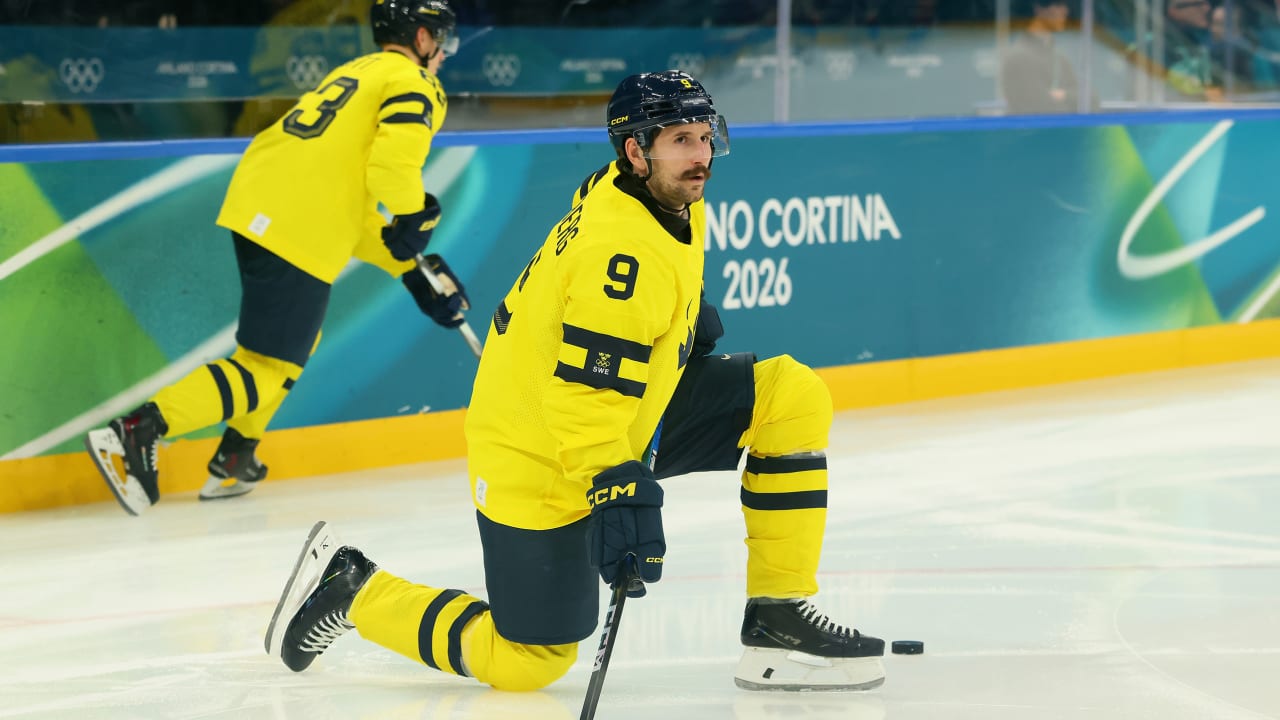
In the NHL, lineups are limited to 18 skaters and two goalies. When the NHL and NHL Players’ Association staged the 4 Nations Face-Off last season, they used the same format.
At the Olympics, teams can dress 20 skaters and two goalies.
“I think it’s just the format,” Hallam said. “We’re used to dressing six [defensemen], 12 [forwards]. You never have this question in the NHL. We didn’t have it in the 4 Nations. So, it’s the format that offers us the possibility to have an extra ‘D,’ an extra forward on the bench, and if we wouldn’t dress seven and 13 and get an early injury, I would look pretty stupid.”
It creates difficult decisions for coaches and awkward situations for players on each team, especially of the coaches who don’t want to rotate in the extra players much or at all.
“You have to be really good to make it into 25, and we can’t play 25,” Hallam said. “That’s the honest truth about it. You’re here to play for our country and it’s a tournament. We’re going to need each and every one of them. That’s the way it is, but everybody can’t play.”
Forsberg spent several minutes answering questions in Swedish before heading to the locker room. Ekman-Larsson answered questions in Swedish and English.
“You can go down a guy, or something could happen in a game,” he said. “It would be stupid not to dress that seventh or 13th guy to give you that chance. I don’t think it’s all bad. I think it’s actually pretty good, if something happens. Obviously, it gets harder [to enter the game] the farther in the game you go, but I think it’s a good option to have.”
Ekman-Larsson said he also was the seventh defenseman for Sweden at the 2014 Sochi Games, the last Olympics with NHL players.
“It’s not the first time,” he said. “I’m here to support my team, and I’m here to play if they need me to play, so we’re going to need everybody that’s here to kind of pull together and be on the same page, and that’s where we are.”