
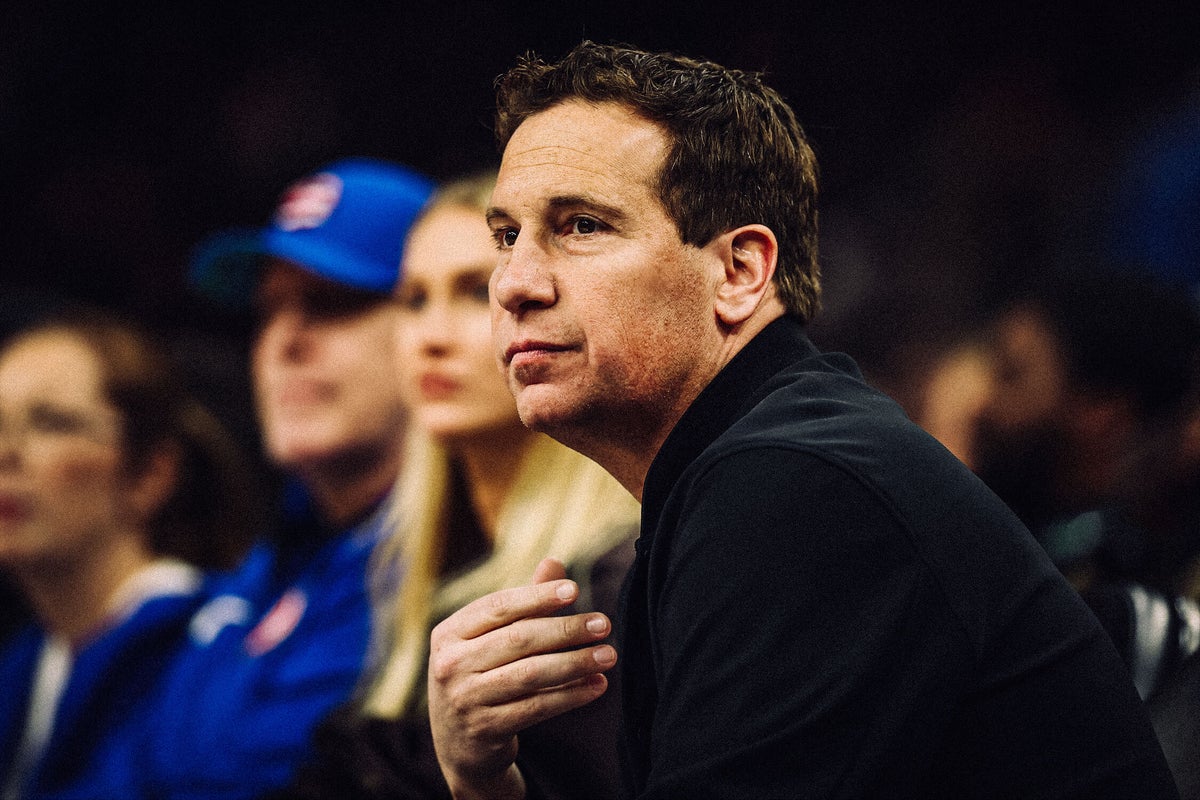
PHOENIX — The time for regrets had long since passed.
No more focusing on the Kevin Durant addition that never panned out, or the ill-fated Bradley Beal idea that put Mat Ishbia’s Phoenix Suns in a luxury-tax hell the likes of which a non-contending NBA team had never seen.
They had just fired a second championship coach in as many seasons days before, with Mike Budenholzer suffering the same fate as Frank Vogel before him, and the 46-year-old billionaire mortgage mogul, who was once accused of being the “worst owner in the history of basketball” by Stephen A. Smith, was hosting a Suns skull session at his Scottsdale, Arizona home in early May that would set the foundation for a brighter future ahead.
From the Super Team dreams that came with the Devin Booker-Durant-Beal era to missing the playoffs entirely in April — with so much constant criticism aimed at Ishbia in between — there was much work to be done.
So Ishbia, a former walk-on point guard at Michigan State who was part of Tom Izzo’s 2000 title team during his four-year Spartans stay, gathered for three-plus hours on a beautiful day in his backyard to strategize with his top two decision makers: Brian Gregory, his old Spartans assistant coach who Ishbia hired on the Suns a year before and had decided to elevate to the general manager role not long before this meeting; and Suns executive Josh Bartelstein, the 36-year-old CEO, and son of prominent NBA agent Mark Bartelstein, who was Ishbia’s first hire after he bought the Suns and the WNBA’s Phoenix Mercury from disgraced owner Robert Sarver in December of 2022.
Amid league-wide claims that he was already leaning too heavily on his East Lansing, Michigan history, with Spartans legends like Mateen Cleaves and Charlie Bell already on the Suns’ coaching staff and Phoenix fast becoming known as ‘West Lansing’ around the NBA, Ishbia decided to lean all the way into the green.
“When people wanted to blame me last time, I wasn’t actually doing it my way,” Ishbia, sitting inside a restaurant booth at the Global Ambassador hotel across the street from the team’s practice facility, told The Athletic during a recent visit. “Now, I am, and there’s no question about it.”
The man who was widely accused of meddling too much, in other words, had privately decided that he needed to be even more involved. And he wasn’t about to feel an ounce of shame for it.
For Ishbia’s part, this realization that his Michigan State experience was worth incorporating into a new endeavor was nothing new. To hear him tell it, that’s how he attacked the challenge of growing his company, United Wholesale Mortgage, from a 12-employee outfit that he took on from his father in 2003 to the one that has more than 9,000 employees today. And as it related to the Suns, there was an honest discussion to be had about organizational culture — or lack thereof.
“We’re not gonna win a championship every year — we know that,” Ishbia continued. “But we’ve gotta make sure it’s a team that we’re proud of, and an organization that we’re proud of. We have to have a culture. My mortgage business has been built on people, and caring. So I (said), ‘I don’t care how the NBA does it. We’re gonna do it a different way.’”
“The Suns’ way,” as they deemed it that day.
“I revert back to what got me here, and what got me here is I’m gonna outwork everybody, and I’m going to do things differently than how everyone else does things,” Ishbia continued. “I’m going to lean into who I am. …(What) I learned at Michigan State basketball, (and what) I learned at UWM Mortgage Company, is that it’s about people, about family, about alignment, and we’re going to make sure everybody’s on the same page.”
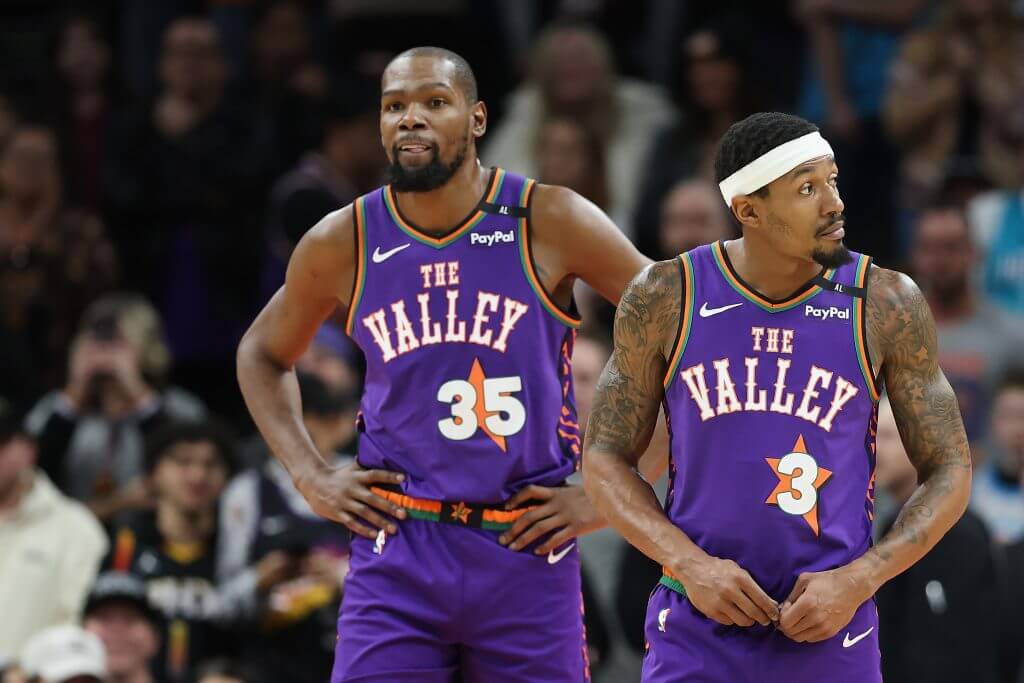
After paying a king’s ransom for Kevin Durant and Bradley Beal, only to be left with the most expensive non-playoff team, owner Mat Ishbia knew he had to change his approach. (Christian Petersen/Getty Images)
So the three men shared their detailed answers to one central question: What is the Suns’ DNA?
As they all agreed, they would build around Booker in an entirely different way this time around, putting an end to the unsophisticated star chase and instead focusing on players who were known for their grit and two-way talents. They would create a culture where they made a big deal out of players doing the little things — diving for loose balls, cheering their teammates on from the bench and giving the kind of effort at practices and shootarounds that isn’t often seen in the pros. The continued belief in Booker — a proud “Michigan man” himself, as he put it, after a childhood spent in Grand Rapids — remained at the heart of their plan.
After learning the hard way in those first few years, with Ishbia going after star players and coaches like shiny objects to put around their five-time All-Star, they wanted to flip the script. Establish the culture first — identifying all the shared beliefs and philosophies that foster synergy in the coaching, scouting and roster-building ranks — and then make the moves. Not the other way around. And despite the fact that major decisions loomed, from the latest head-coaching hire to a monumental choice on where to trade Durant, they focused on the more foundational aspects of the floundering operation.
With this sort of basketball approach, and a business playbook that included Suns games for free on local television, a $2 menu at games and new luxury options inside the arena for the first-class crowd, this was all part of a broader plan to win back the many disheartened fans whose loyalty faded in recent years.
“We wrote it down on paper: What’s the Suns’ DNA?” Bartelstein said. “What is it gonna be defined by? … Before you get to all (of the moves), let’s figure out what we want to stand for? And me, BG, and Mat said here’s the list of what we’re gonna be. The hardest-playing team. We’re going to (embrace players who) sign autographs for our fans, and stuff like that. Everyone’s up on the bench. A little bit more collegiate really, like college style. We think when everyone’s zigging, we kind of zag.”
This was the turning point, as they all see it, the moment when a Suns team that so many thought was doomed began to change its fortunes by going against the NBA grain. Entering Wednesday, Phoenix (32-22) is seventh in the West and just a half-game back of the sixth spot. Ishbia, it’s safe to say, will walk onto the court for the NBA All-Star weekend celebrity game in Los Angeles on Friday night in a much better mood than he ever could have imagined.
After hiring a first-time head coach in Jordan Ott who has proved to be quite capable, then recharging their roster by trading Durant to the Houston Rockets in exchange for Dillon Brooks, Jalen Green, the No. 10 pick and five second-round picks, there is organizational hope again for this group that was widely seen as stuck around this time a year ago. Add in the fact that Booker recommitted by way of a two-year, $145 million extension in July, and the Suns are suddenly, and surprisingly, looking ahead to brighter days again. To that point, consider this: By downing Portland on Feb. 3, the Suns beat their preseason over-under odds for win total (30.5) with 31 games left to go.
As Ishbia is the first to admit, they still have a long way to go. On the basketball side, the Durant and Beal trades left them devoid of draft picks and, in turn, constrained when it comes to building the roster from here. On the business side, Ishbia finds himself in a legal battle with minority owners that, at minimum, is a reflection of the exorbitant price paid to do those deals.
Yet by NBA standards, the organizational overhaul that sparked so much of this season’s success is as extreme as you’ll ever see. Resets don’t get much more radical than this.
The irony of it all? The media personality who once ridiculed Ishbia from his massive platform, and who would publicly apologize days later for the hyperbolic nature of his statement, also empowered him to put his personal stamp on the Suns more than ever before.
“He was like, ‘If you’re going to be who you are, be who you are,’” Ishbia said of his private discussions with Smith. “So now I’m leaning into, ‘I’m unapologetically Mat Ishbia.’ I’m going to be who I am, and do what I believe in.”
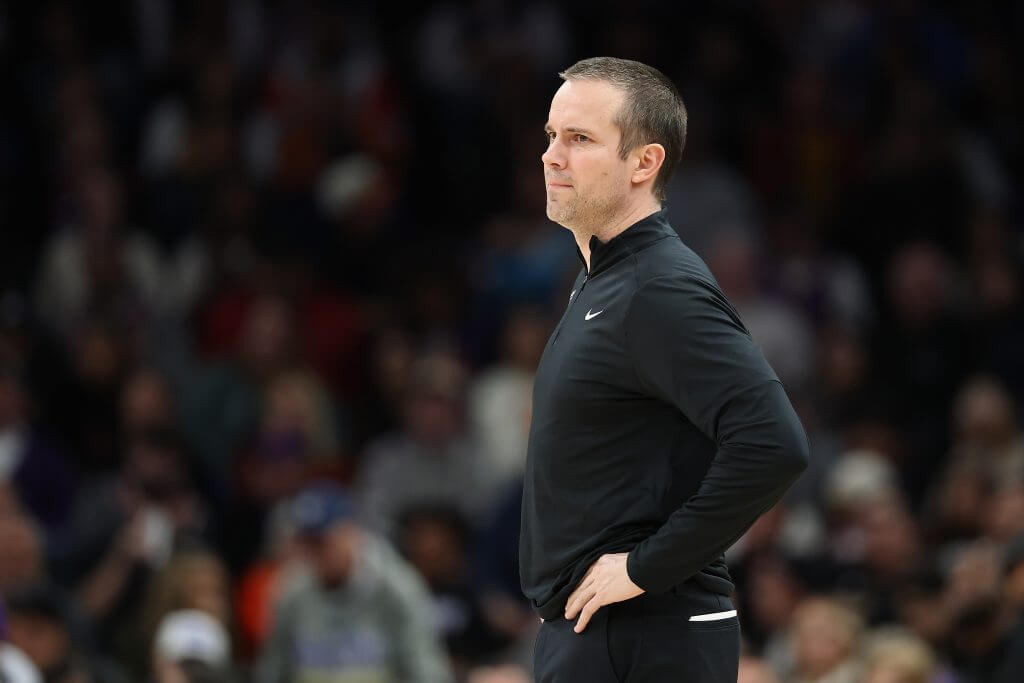
The Phoenix Suns used a rigorous process to vet potential head coaches. Jordan Ott rose to the top, and while his hiring was initially met with skepticism, his results on the court speak for themselves. (Photo by Christian Petersen/Getty Images)
When Ishbia decided to promote Gregory to the GM role, putting an NBA neophyte in the position that had been held by former player (and three-time champion) James Jones since 2018 (including the Suns’ 2021 Finals run), his longtime friend and former coach gave a blunt assessment of how he thought the unconventional move would be received.
“He was like, ‘You’re gonna get blasted for this,’” said Ishbia, who is based in Detroit and attends approximately half of the Suns’ games. “And I said, ‘F— it. We’re gonna do what the right thing is.’ I got blasted when I did everything everyone wanted me to do. Give them the money, make all these big splashy trades, do all these nice things — and I got blasted for that. So if I’m gonna get blasted, I’m going to get blasted with what I believe. And what I believe is that you are the best guy for this job.”
There was no questioning Gregory’s pedigree as a basketball lifer, one who was the head coach at Dayton, Georgia Tech and South Florida before joining the Suns in the summer of 2024. But for Ishbia, who admits that he wishes he made these sorts of changes earlier in his tenure, it was the deep trust they’d built together in the late ‘90s that mattered most. And after giving serious consideration to taking another big swing, with former Golden State executive Bob Myers reportedly among his early targets, he circled back to what he knew.
Again.
During Gregory’s time as an assistant at Northwestern, he scouted Ishbia when he was in high school at Ernest W. Seaholm High School in Birmingham, Michigan. There was never a scholarship offer, but they would meet again during Ishbia’s sophomore year at Michigan State in 1999. And this time, a partnership that would lead to a three-decades long friendship was formed.
Gregory, who was a Michigan State assistant from 1990 to 1996 and returned from 1999 to 2003, handled all the Spartans’ scouting for every game. And Ishbia, who eschewed Division II scholarship offers to come to Michigan State, was his trusted scout team partner, and point guard, on that project for three years. For nearly a half hour before every practice, they’d run through film together, peeling back the layers of each opponent’s playbook. All in the name of helping the Spartans reach that ultimate goal.
“I coached him hard every day, as if he was Mateen Cleaves, you know what I mean?” Gregory said. “And I think there was a respect factor. We loved each other. I mean, we went through a lot together.”
As Ishbia saw it, any concerns about Gregory’s learning curve were mitigated by his reputation as a relentless worker. And so long as he surrounded him with institutional knowledge, with Bartelstein and assistant general manager Matt Tellem (the son of former agent and Detroit Pistons executive Arn Tellem) on hand to assist, he was confident Gregory would be able to play catch-up when it came to the vast complexities of the job.
So when Gregory expressed concern about how the hiring might land, Ishbia didn’t budge.
“Brian Gregory, you’re the right GM for my (team),” Ishbia said he told him. “You’re the guy I want. …I don’t care what everyone else says, because they’re not gonna be in those meetings when we’re debating on a trade or fighting over a draft pick, or deciding what kind of a guy we want where we cut or sign someone.”
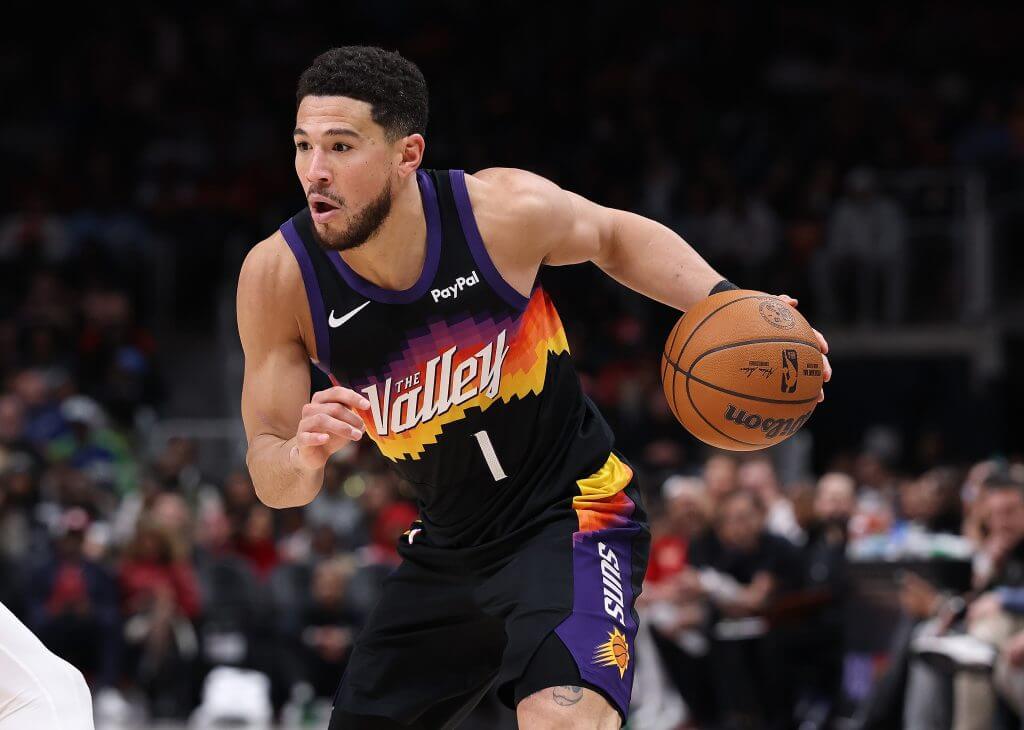
Devin Booker remains the Suns’ best player, a homegrown talent who has stuck around through recent highs and lows. (Kevin C. Cox/Getty Images)
When the time came to find the Suns’ next head coach, it should come as no surprise that Ishbia asked Izzo if he might want to leave East Lansing and head for West Lansing, as some NBA folks have dubbed Phoenix these days. But those conversations never advanced — Izzo wasn’t going anywhere — and so Ishbia leaned on him for more broad advice about the Suns chapter to come.
There was no shortage of pressure when it came to the head coaching decision, as Ishbia had jettisoned two well-respected coaches — in back-to-back summers — whose contracts were worth a combined $81 million. So in the wake of their mid-April meeting, the new Suns’ brass decided to take the opposite approach from the two hirings before. They would take their time while interviewing a long list of candidates, with a focus on experienced assistant coaches who showed great potential to develop down the line.
They started with 15 coaches in all, with Gregory leading the way during four rounds of interviews that were so in-depth that some candidates privately expressed concerns about sharing too much about their personal philosophies. If they didn’t get the job, the thinking went, there was a level of detail discussed that could be used against them in the season to come at their current job. Secrets are bound to get shared when you’re asked to prepare for a four-hour Xs and Os Zoom session.
“That’s where I really got a feel for a guy’s ability to control the room and what narrative is he trying to get across (to his players),” Gregory said.
But the process appears to have come with a side benefit, too, as it helped Gregory expand his understanding of the league that was still so new to him at the time.
“It was really all three of us working through it, and the whole thing — the transcript of the interviews, my notes — I knew it was critical,” Gregory said. “We can set the tone and tempo from up above, but the day in and day out grind (with the coach) needs to be on track too.”
Nearly two months after they fired Budenholzer, the Suns made the decision to hire Ott, who spent a combined nine seasons as an assistant with Brooklyn, the Lakers and Cleveland before coming to Phoenix. Yet while his NBA credentials were more than adequate to justify the choice — including his start as a video coordinator with the Atlanta Hawks under Budenholzer in 2013 — the public focus after his hiring quickly shifted to the fact that he had Michigan State ties.
After graduating from Penn State, Ott spent five years as a graduate assistant and video coordinator for Izzo with the Spartans.Yet in stark contrast to Gregory, Ott had no previous relationship with Ishbia.
As Gregory and Ishbia see it, the only part that matters now is that Ott — who is also known for his work ethic — is off to a very strong start. If the best-case scenario unfolds here, they’re hoping, as Gregory shared, that Ott can be their version of another former video coordinator who has carved out an elite career: Miami’s Erik Spoelstra.
“Mat has a thing from when he started his business, and he figured out that if you show up at six o’clock in the morning, or five o’ clock in the morning, every day, that’s 28 (extra work) hours a month,” Gregory said. “That’s how he thinks. And to this day, Jordan Ott is the first guy in this building every day and the last guy to leave.”
Added Ishbia: “Jordan Ott’s the worker. He comes in early, stays late, watches more film (than others), spends time with the guys. It’s not dissimilar to what Tom Izzo used to do. I don’t know if it’s gonna win a championship. I don’t know if it’s gonna be as successful as it has been (early this season), but you know what I do know? I feel really good about how we’re doing things – and the way we’re doing them.”
Ott, who raves about the prospect of having an owner and a general manager who truly know the game, has license to push his players in the kind of way that isn’t the NBA norm. There is, they all agree, a college feel to the shared strategy.
“I think the importance of doing it together is real,” he said. “We want a group that wants to go out and compete at an extremely high level, but do it together. And we trust that the group, when they feel that we’re all together, that we can do it better than any individual can.
“The skill of playing hard is extremely valuable in today’s game, and it’s stressed here by our group on both ends. Having each other’s back is something that’s talked about here more than probably some other places that I’ve been around. I think you just lose (that energy) over time in professional basketball, to a certain extent. When you get the right guys, and you already want to do that, and it’s emphasized, I think you can take it to a level that not every place is stressing in quite the same way.”
When the dust finally settled on the 2025 trade deadline, and after so much speculation that he might be on the move, Durant was still in Phoenix. While Jones was still in the top front office spot at the time — he would later be named a Suns ‘adviser’ before leaving in July for a job as the head of basketball operations in the league office — league sources say Bartelstein led the way in communications with teams that were interested in Durant. But the discussions had been held without any sort of direct involvement of Durant himself, which — after they learned that he wasn’t pleased with the prospect of a reunion — ultimately compelled the Golden State Warriors to back away from a deal. The Rockets, however, didn’t show any interest in Durant until the 11th hour.
“It was ‘No, no, no,’ (from Houston) until the day of the trade deadline last year, when (the Rockets) called me at 4 in the morning,” Bartelstein said. “(But) it wasn’t the right package. It wasn’t as good as the package we got. That was the really hard part for me and Mat at that time.”
More specifically, it was the fact the Rockets hadn’t offered Brooks that proved to be a deal-breaker. Per league sources, the offer included Houston big man Jabari Smith Jr. along with Green as the main players in the deal. As such, as Ishbia remembers it, they decided to revisit this scenario in the summer.
“The deal was never gonna get done without Jalen and Dillon in the deal,” he said. “Those are the two players we wanted. It wasn’t, ‘Hey, how do we fill a salary with these numbers?’ It was, ‘In order to have Kevin Durant on your team, I want Dillon Brooks to help me with my culture and my identity. I want Jalen Green as a 23-year-old up-and-coming leading scorer. You’re gonna get a Hall of Fame player. And then we obviously negotiate draft picks involved with it as well. But Dilllon Brooks was targeted, just like Jalen Green was targeted. …The Kevin Durant trade turned out to be everything we wanted it to be — and then some.”
A Rockets source refutes that Smith was in Houston’s offer.
To this point, this part of the plan has worked wonders. While Green (six games played) has faced injuries (hamstring, hip) that delayed his Suns start until recently, Brooks has fast become a complementary co-star to Booker and the very definition of a fan favorite. He’s averaging a career-high 21.1 points per game — second on the Suns behind Booker’s 25.3 — and providing a level of defensive intensity that has everything to do with Phoenix ranking eighth in the league on that end of the floor (they were 27th last season). While Brooks never knew Ishbia before the trade, he had been told that the Suns refused to do the deal without him in it.
“That just gave me more confidence,” he said. “And I knew I was getting traded to a team that needed some flair, some physicality, some motivation. The whole summer, I was working on my offensive game. So even though (the Suns) thought I was just gonna bring defensive spirit, I knew I had a little more in the tank. I feel like I was the right guy for the job.”
The guy who was deemed the wrong fit for the job, meanwhile, made his strong feelings about his exit known back on Jan. 5. Not long after Durant hit a game-winner to beat the Suns in Houston, the 37-year-old future Hall of Famer shared his view that he was “scapegoated” by the Suns on his way out.
“What Kevin thinks about his time here is fine,” Ishbia said. “We weren’t successful. And guess what? When things don’t go well, I’m going to make changes to get it to go well — by any means necessary.
“We’re focused on our guys now. I love our team. I love Dillon Brooks, Jalen Green, Khaman (Maluach, who was taken with the 10th pick) and Rasheer (Fleming, at No. 31), who we got in place of Kevin. Of course, I love Booker and our team and our coach. So I’m just focused on us. I’m really not focused on what happened last year anymore, because we turned that page. I know how it went. I know every detail of how it went, and now I know what we’re gonna do going forward. So how Kevin feels about that, that’s his own problem, and his own thoughts.”
Now for the bad news, Suns fans: Even with all this internal optimism, the harsh fact remains that the original Beal and Durant deals put them in the sort of roster-building hole that will still make it very difficult to upgrade from here.
For starters, the Durant deal with Brooklyn in February 2023 cost them four unprotected future first-round picks and a first-round swap. Then not only did they lose Chris Paul, four first-round pick swaps and six second-round picks in the trade that brought Beal (and his no-trade clause) from Washington in June of 2023, but the decision to buy him out in July means they have $19.3 million in ‘dead money’ on their books every season through the summer of 2030. As it stands, they don’t control their own first-round pick until 2032 (they do have a 2027 first that is the least favorable of Utah’s, Cleveland’s or Minnesota’s).
Those aren’t the only challenges that Ishbia faces, either.
In November, Suns minority owners Andy Kohlberg and Scott Seldin filed a lawsuit alleging that Ishbia has used the team as a “personal piggy bank” while also accusing him of using a June capital call to dilute their shares in the team and create a new lower per-unit share price. What’s more, they claimed that Ishbia may have been vulnerable to the potential loss of majority ownership after a July capital call that, according to the filing, was not fully funded.
Ishbia, who has since countersued against Kohlberg and Seldin, was dismissive and seemingly unconcerned about the claims.
“We had a capital call because the team lost money (after) we went so high in the luxury tax to try and win the championship,” he said. “And guess what? I’m the one putting the most money in. I own the majority. And they’re such small owners — it’s meaningless, honestly. They’re just trying to use the media to try to get bought out. And the problem with me is that I don’t settle. If I do something wrong, we’ll sit down man to man and we’ll do it. But we’ve done nothing wrong.”
When asked if there was any scenario in which he could lose control of the team, Ishbia said, “Zero concern. That’s not even a relevant thing. That’s just them trying to get the media to talk about it. There’s zero chance of any of that.”
The same could have been said about the prospect of the Suns surviving those first few years under Ishbia, too.
Yet as he finished his burger and fries inside the hotel — after watching the team’s shootaround that morning and attending the game against his hometown Detroit Pistons that night — the topic of regret was finally raised. If he could do it all over again, what might he change?
“I would have paused and said, ‘Let’s define this first,’” Ishbia admits. “You could blame me for not defining and setting the culture up front, because at the end of the day, that’s the leader’s responsibility. And I’m the owner. I’m the leader. It’s my job…So what would I have done differently? I would have said, ‘Let’s do this the right way.’ But I got excited. I bought a team.”
One that — somehow, someway — is on the way up despite all the chaos that came before.
“The transactional (mistakes) wouldn’t have happened if I had set the cultural stuff, because — no disrespect — but the type of players and the type of people we were looking to have, it’s different (now),” he said. “I would have said, ‘Does that meet my identity? Is that the definition of what we’re about?’ And we wouldn’t have made those moves, potentially.
“But (now) everyone’s aligned. …(It’s) what kind of guy do we want? What kind of player do we want? What are the things we’re looking for? We’re very aligned. We could be aligned and be wrong, by the way, too. But at least we’re f—— aligned.”