
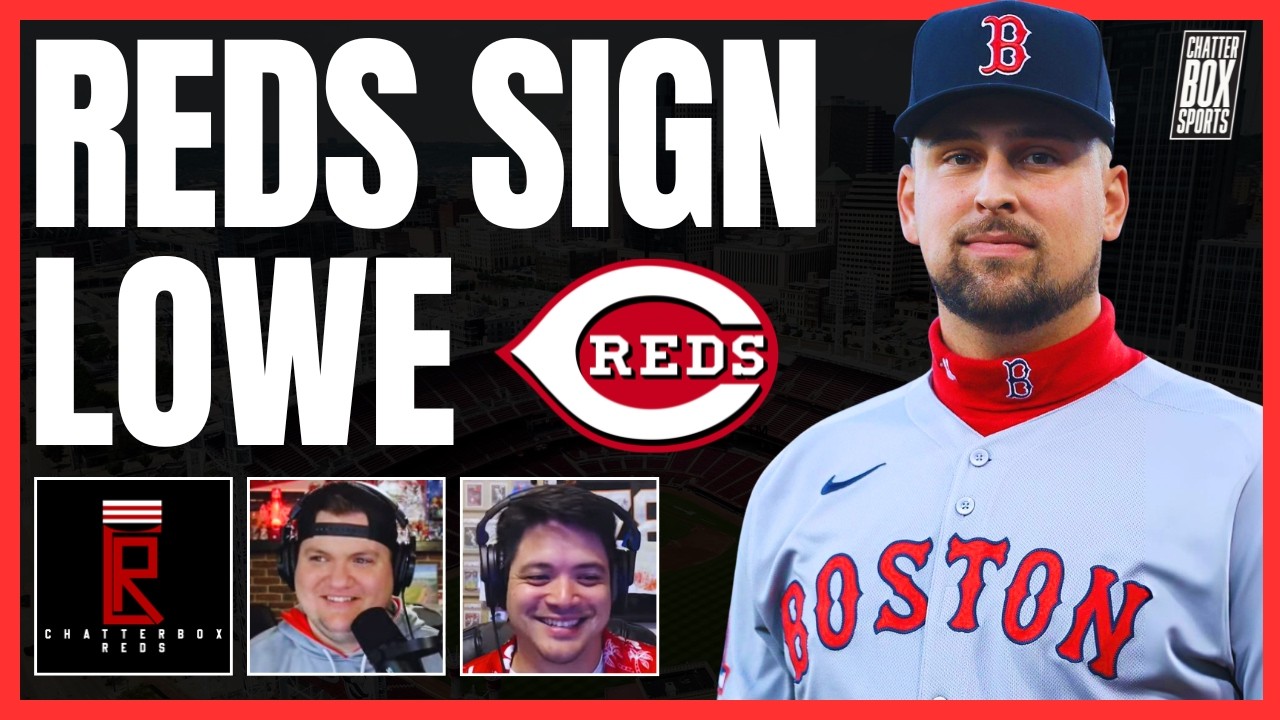
Cincinnati Reds Sign Nathaniel Lowe: Roster Decisions, Spring Training Battles | MLB News, Rumors
Nick Kirby and Mike Hart break down the Cincinnati Reds signing Nathaniel Lowe to a minor league deal and what it could mean for the roster heading into the season. They dive into Lowe’s potential fit, how he impacts the infield picture, and which player could ultimately be the odd man out if he makes the club.
The guys also react to the latest injury update on Christian Encarnacion-Strand and what it means for the Reds’ lineup depth, plus they unpack the team’s arbitration losses to Tyler Stephenson and Graham Ashcraft. All that and more on the latest episode.
—————–
The Cincinnati Reds entered this offseason at a crossroads. After flashing legitimate upside over the past two years but falling short of a playoff berth, the front office faced a clear challenge: build around a talented young core while addressing roster imbalances that kept the club from taking the next step in the National League Central.
The foundation remains strong. The Reds still feature one of the more dynamic position-player cores in the division, built around athleticism, versatility, and power. But the biggest storyline of the offseason has been fit — not just collecting talent, but figuring out how the pieces align on a 26-man roster that at times felt crowded in some areas and thin in others.
One of the focal points has been the infield. Cincinnati has an abundance of young infielders who can play multiple spots, yet the production at first base and designated hitter has been inconsistent. That led to the club taking low-risk swings on bounce-back candidates and depth pieces, including minor league deals designed to create competition in spring training. The idea is clear: raise the floor without blocking long-term upside.
Health is another major variable. Injuries derailed key stretches of last season, particularly in the middle of the order. The Reds need better availability from their power bats if they’re going to lengthen the lineup and improve run production. A healthy season from several core contributors could function as an internal “addition” as impactful as any free-agent signing.
On the pitching side, the offseason focus has centered on stability. The Reds have intriguing arms with upside, but consistency has been elusive. The front office prioritized adding experienced depth to complement a rotation that has shown flashes but struggled to maintain performance deep into the season. Rather than committing massive dollars to the top of the market, Cincinnati targeted value — pitchers who can eat innings, compete every fifth day, and keep the team in games.
Bullpen construction has also been under the microscope. The Reds showed at times they could shorten games effectively, but leverage roles shifted frequently due to injuries and inconsistency. Adding depth arms with minor league options gives the team flexibility while allowing competition to sort out the late-inning hierarchy.
Financially, this offseason reflects a measured approach. The Reds did not make a headline-grabbing, nine-figure splash. Instead, they’ve leaned into flexibility — short-term deals, arbitration decisions, and incremental upgrades. That approach keeps payroll manageable while preserving the ability to pivot at the trade deadline if the team is firmly in contention.
Arbitration decisions were another notable element of the winter. In some cases, the Reds went to hearings and lost, slightly increasing payroll commitments. While not franchise-altering numbers, those decisions signal a front office willing to defend its valuations — even if it occasionally comes at a cost. Long term, maintaining cost control over the young core remains critical.
Perhaps the biggest question surrounding the offseason is whether it’s enough. The NL Central remains winnable but competitive. Incremental improvement could push the Reds into serious postseason contention, but it will require growth from within. Player development is still the backbone of the organization’s strategy. Breakout seasons from young hitters and continued maturation from the pitching staff would change the ceiling of this roster dramatically.
There’s also the trade variable. With a surplus in certain areas, Cincinnati could still look to consolidate talent. Packaging controllable players to address a specific need — particularly a middle-of-the-order bat or a high-leverage reliever — remains a possibility as the season approaches.
Ultimately, this offseason has been about balance. The Reds didn’t overhaul the roster, but they didn’t stand still either. They added competition, bolstered depth, and preserved flexibility. Now, the outcome hinges on execution. If the young core takes the next step and the pitching staff stabilizes, the Reds will be firmly in the playoff conversation. If not, this winter may be remembered as a cautious bridge rather than a breakthrough moment.
4 comments
Tell CEStrikeout to pack his bags
Very interesting, going to be wild ride, Jerry Ft Myers Florida
I like the Lowe signing. Hes got good upside. I really hope Toglia breaks out this year though. To have another switch hitter in the lineup would be sweet
Rakes Right handed pitching