
MILAN — Cheating has been part of the Olympics since the ancient games, when violators were punished with fines, public flogging or lifetime bans.
This month’s Milan-Cortina Games have hardly been an exception.
Before the competition had even begun, a German magazine said unnamed ski jumpers were injecting hyaluronic acid into their penises in an effort to fly further. Officials dismissed that as a wild rumor but the World Anti-Doping Agency said it was willing to look into the matter just the same.
Yet that was just a minor kerfuffle compared with the outcry that erupted when some Canadian curlers were accused of cheating, a great breach of etiquette that has led to calls for additional officials and even video reviews in a polite sport where competitors have traditionally called their own fouls.
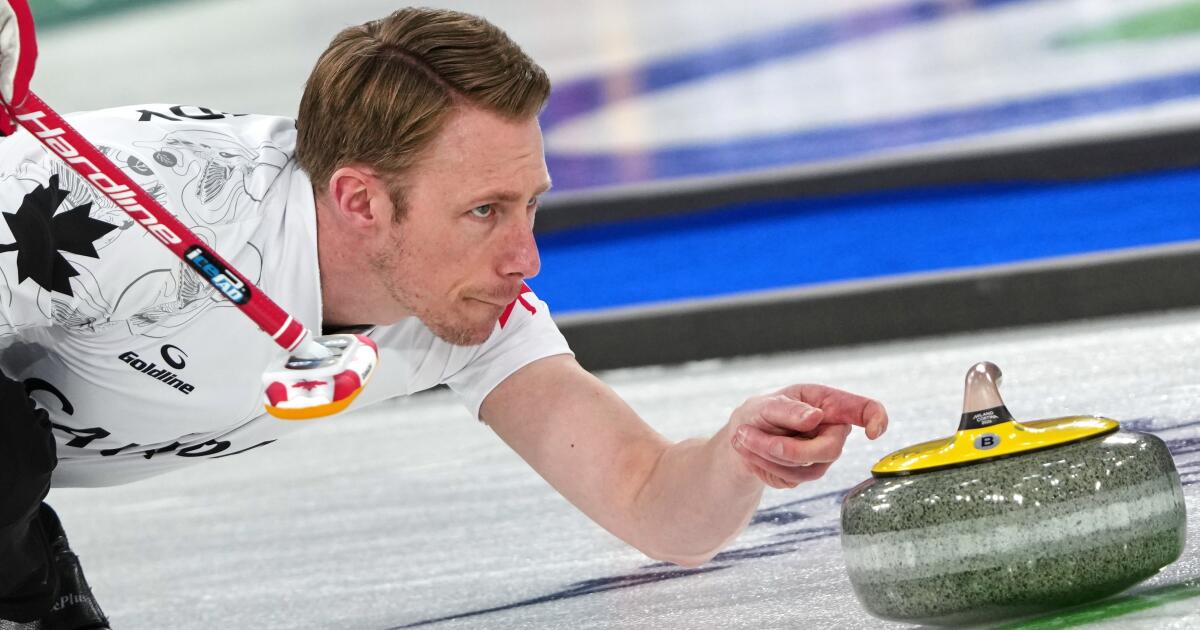
The foul in question is called double-touching. Under World Curling rules, when delivering a stone a player may retouch the handle as many times as they wish — as long as they do so before the hog line, the thick stripe that marks the end of the release zone. Touching the handle after the hog line — double touching — is not allowed.
During Canada’s win over Sweden last Friday, a video clearly showed Canada’s Marc Kennedy doing just that by touching the stone with his index finger after he had released the handle. Kennedy responded to charges that he had bent the rules with an f-bomb, which is also a break with curling culture.
“We want a game that is as sportsman-like, honest and clean as possible,” Sweden’s Oskar Eriksson said.
Canada’s Ben Hebert accused the Swedes of seeking an edge through gamesmanship.
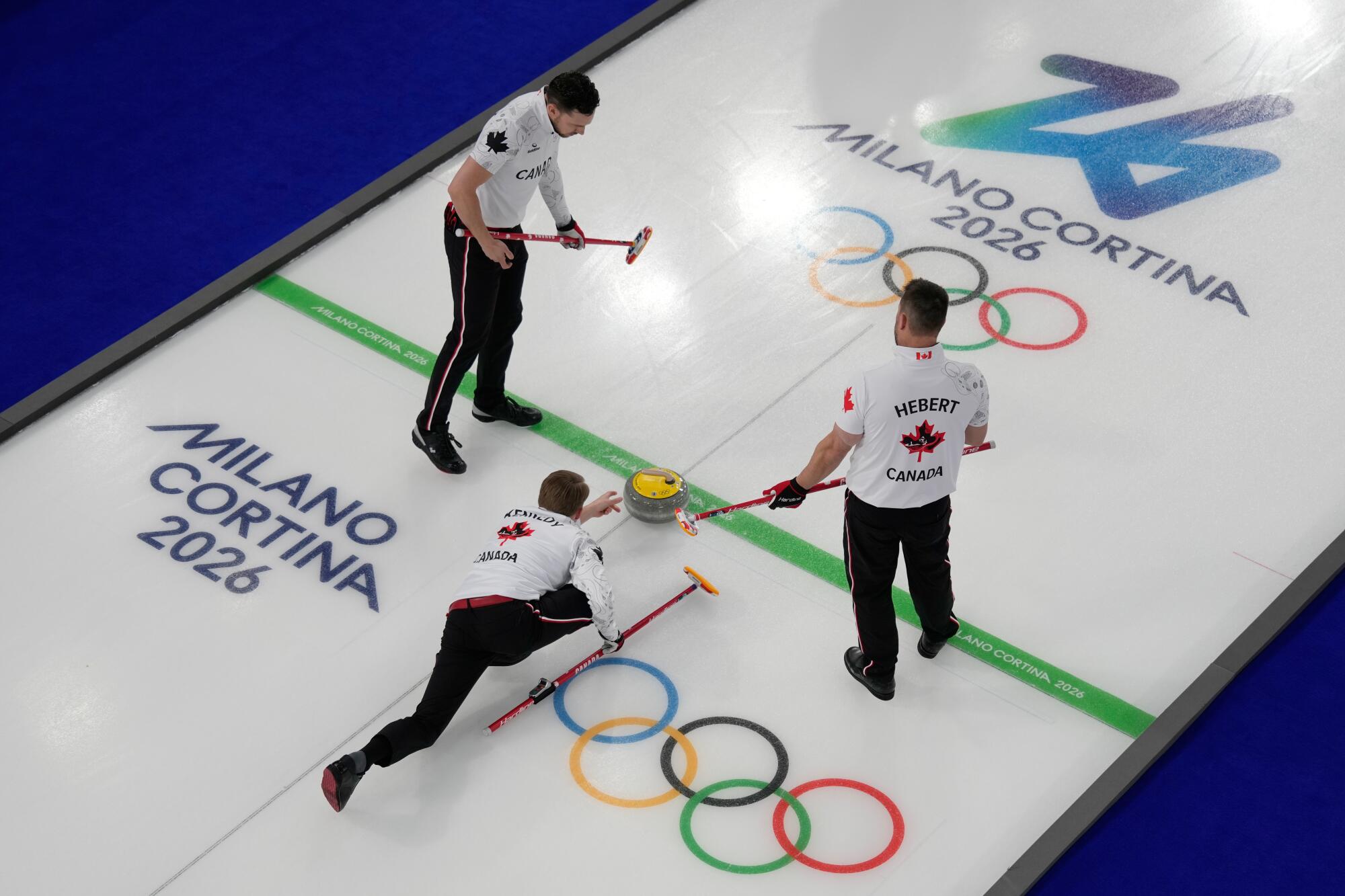
Canada’s, from left, Brett Gallant, Marc Kennedy and Ben Hebert compete against China at the Winter Olympics on Sunday.
(David J. Phillip / Associated Press)
“We’ve been curling in this game for 25 years at this level,” he said. “Never heard that before.”
But a day later World Curling, the governing body for the sport, deployed additional officials to monitor the hog line and Canada’s Rachel Homan had a stone disqualified in Canada’s loss to Switzerland when she was ruled to have touched it twice.
“Despicable,” Canadian men’s skip Brad Jacobs said of the additional scrutiny. “As Canadian curlers, we were targeted. And to go out and pull her rock like that, I think it was a tragedy.”
Curling, which started in Scotland but grew in popularity after being imported to Canada, where the game proved to be a perfect distraction during long, frigid winters on the plains of Alberta and Saskatchewan, has historically operated on a culture of trust and self-regulation. At most levels, players call their own infractions and even the slightest attempt to bend the rules is seen a major afront.
“[Curlers] compete against people they know well, often in relatively small circuits, and they see each other repeatedly over the course of a season,” said Heather Mair, a professor in the department of recreation and leisure studies at the University of Waterloo and an expert on the social aspects of curling. “That relational fabric has long been part of the sport’s informal governance.”
But when the sport returned to Olympic competition in 1998 after a 74-year break, that began to change. There was national pride, medals and funding at stake. And after the Milan-Cortina Games a well-funded professional league, the Rock League, will launch with six teams playing for money, completing the sport’s evolution from hobby to profession.
“The whole context of the Olympics is the story here,” Mair said.
“What we’re seeing in curling is this kind of dramatic, heart-wrenching conversation within the sport about cheating and honesty and all this kind of stuff. Did that happen before in this case with the ski jumping? Was there this heart-wrenching conversation about cheating?”
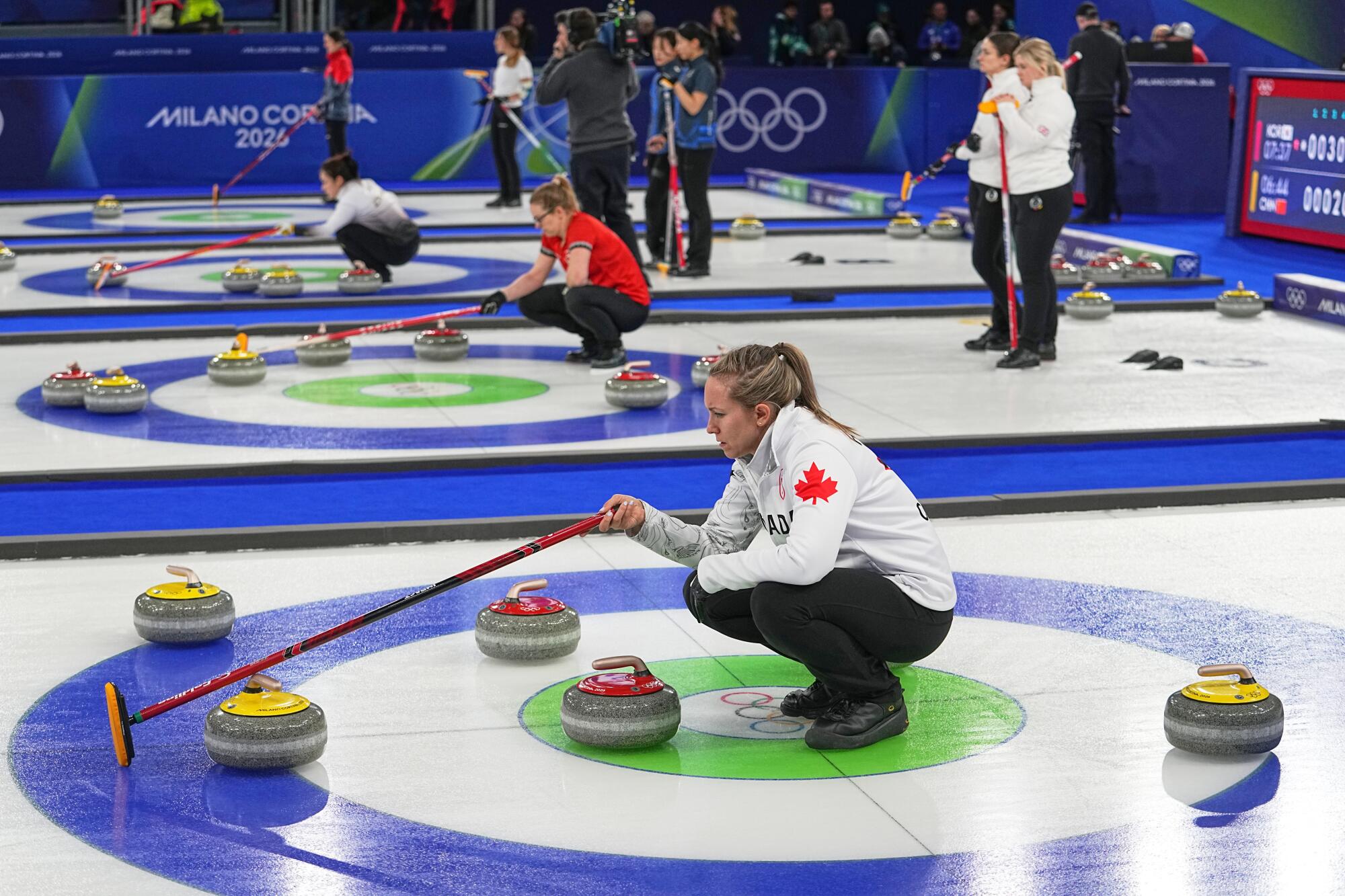
Canada’s Rachel Homan competes against China at the Milan-Cortina Games on Monday.
(Fatima Shbair / Associated Press)
Modern stones have hog-line sensors built into the handles, so they reliably detect late release of the handle. But they don’t detect a brief touch on the granite itself. And without an umpire watching closely — or without video evidence — that kind of infraction can be difficult to spot.
“This feels like a new era of surveillance for the sport,” Mair said. “I just don’t know how else we manage it.”
Canadian coach Paul Webster took a more nuanced approach, conceding there’s a problem but disagreeing with the solution World Curling tried in Cortina.
“If you listen to what Sweden said, and I think they’re right, this has been a problem that they’ve tried to identify to our international federation. And it wasn’t acted on,” Webster said. “Now we’re trying to quickly fix things at an Olympics, and I think it’s the wrong thing to do.
“A double-touch stone, or whatever it is, none of these officials have ever gone through any of their courses. We have untrained people doing things they’ve never done before. And we’re not at some bonspiel in Saskatchewan just trying things out. We’re at the Olympics.”
For Mair, the lament is that the very public controversy playing out on that Olympic stage will force changes at the top level of the sport that will trickle down to the grassroots. And what will be lost when that happens will alter curling forever.
“Once they start messing around with this trust, I think we’re on a pretty sad path,” Mair said. “This feels so ugly. But the value of these Olympic medals are such that, I guess this stuff can be sacrificed.”