
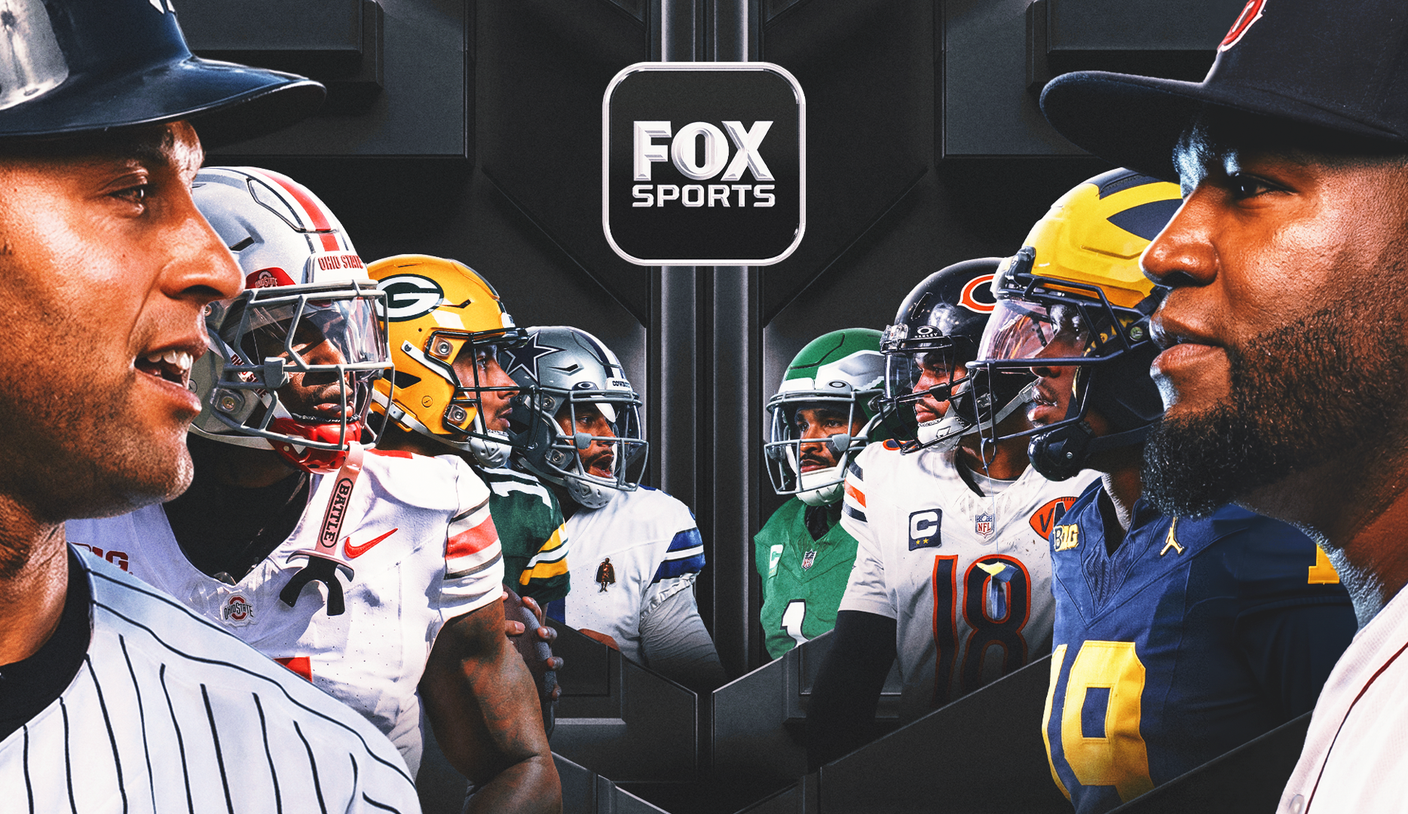
These are the definitive rivalries of North American sports.
Some of these rivalries span more than 100 years, while others have taken on a life of their own over the past decade. What they all have in common: These matchups mean a little more when the teams face off.
Here’s our list of the best rivalries across the continent and major sports:
Rowan Kavner: This rivalry dates back to the 1800s, long before both teams moved from New York to California in 1958. Remarkably, they’ve each won exactly 1,288 games against the other in their regular-season history.
Among the most historic meetings were the 1889 World Series and Bobby Thomson’s “Shot Heard Round the World” to win the pennant in 1951. The teams spent much of the 60s battling for the pennant, and the geographical rivalry has always heightened the animosity between the franchises and their supporters. That has led to some ugly moments on the field (Hall of Famer Juan Marichal once clubbed Dodgers catcher John Roseboro over the head with a bat in 1965) and even uglier and more violent events off the field between their fans.
There have been some on-field sparks in recent years, including in the 2010s between Yasiel Puig and Madison Bumgarner and later between Bumgarner and Max Muncy, who told the Giants pitcher to go get his ball out of the ocean after the southpaw took exception to the Dodgers slugger watching a home run in 2019.
The rivalry hasn’t been quite as heated lately, though, largely because the Dodgers have dominated the division while the Giants have finished third or worse in the NL West in eight of the last nine seasons. Still, the 2021 season did see one of the biggest battles in recent memory between the clubs, when the Dodgers and Giants met in a postseason series for the first time in modern baseball history. The Giants won the division that year with a record 107 victories — one more than the 106-win Dodgers — before meeting in the NLDS, which the Dodgers won in five games.
Ralph Vacchiano: The NFC East is loaded with bitter rivals, backed by rich, intense, and sometimes violent histories. But especially in the intense and violent department, it’s hard to top the war that stretches halfway across the country between Philadelphia and Dallas.
There have been many great, nail-biting games between the teams, including the 1980 NFC Championship. But the intensity is still symbolized by two games in 1989, known as the “Bounty Bowls” and sparked by a bitter feud between Eagles coach Buddy Ryan and Cowboys coach Jimmy Johnson, who accused Ryan of offering rewards to his team for injuring Cowboys players.
Their war of words got so intense that when the Cowboys came to Philadelphia later that season, it was one of the ugliest games in NFL history—marred by fans throwing snow, ice, and other objects from the stands, hitting players, coaches and officials.
Not all the 134 games between these teams have been like that, of course. But the intensity between these two NFC East powers is often off the charts.
Vacchiano: It’s a relatively new rivalry, since the Baltimore Ravens didn’t exist until 1996. But it even though it lacks a lengthy history, it has quickly become an annual clash of the NFL titans. The Ravens have had just five losing seasons since the turn of the century. The Steelers have had only one. And since the NFL realigned into the current division format in 2002, either the Ravens or the Steelers have won the AFC North 18 of the last 24 times.
In other words, when they play, it usually matters a lot. That includes five times in the playoffs and the 2008 AFC Championship Game.
And added to that is the cold, northeast weather in two outdoor stadiums; the tough, running styles both teams have built over the years; and their two long-term coaches (John Harbaugh and Mike Tomlin), who faced off 40 times over two decades in the regular season and four more in the playoffs.
As Steelers WR Hines Ward once said, “The coaches hate each other. The players hate each other. There’s no calling each other after the game and inviting each other out to dinner. They don’t like us, and we don’t like them. There’s no need to hide it. They know it, and we know it.”
Michael Cohen: Part of what makes college football so wonderful, so uniquely American, is the sport’s unparalleled pageantry. The huge stadiums, the beautiful campuses, the raucous student sections, the snappy marching bands, the lasting traditions. Taken together, all of it provides a truly unique window into this country’s culture.
The annual Army-Navy game embodies all of that and more. It’s a rivalry that embodies all the best societal aspects of college football and then infuses them with immense national pride, the Commander in Chief of the armed forces and throwback ideology that reminds viewers of a simpler time. “Go Army, Beat Navy!” and “Go Navy, Beat Army!” are rallying cries that even casual fans can appreciate.
Cohen: This rivalry is as good and as vitriolic as it gets in college basketball. With the campuses of Duke and North Carolina separated by just nine miles, the annual battles between the Blue Devils and Tar Heels are as much about geographic supremacy as they are the storied histories of each school. It means something to have bragging rights on Tobacco Road.
And then there’s the overwhelming success enjoyed by both programs: Five national championships and 18 Final Fours for Duke. Six national championships and 21 Final Fours for North Carolina. Hall-of-Fame coaches in Mike Krzyzewski (Duke), Dean Smith (North Carolina) and Roy Williams (North Carolina). More than 100 combined first-round draft picks. Oh, and some guy named Michael Jordan. What more could you want?
Kavner: Nothing stokes the flames of a rivalry like the postseason, and these two storied franchises have met in the finals more than any other pair in NBA history. The first occasion was in 1959. It has happened 11 more times since, including six matchups in the 60s and another three in the 80s.
The Celtics, under head coach Red Auerbach and later player-coach Bill Russell, had dominated the matchup, winning the first eight title bouts between the teams until Magic Johnson’s “Showtime” Lakers finally conquered Larry Bird and company in 1985 after losing to the Celtics in the finals the season prior.
The Lakers would beat the Celtics in the finals again two years later in 1987, starting a lengthy championship drought in Boston. The Celtics wouldn’t make another finals appearance until 2008 against…well, guess who? The rivalry was renewed that year when Doc Rivers’ Celtics beat the Lakers to win the title. Two years later, Phil Jackson’s Lakers responded by triumphing in a seven-game battle against Boston to win their second straight championship.
When the Celtics beat the Mavericks in the finals two years ago, it gave them their 18th NBA championship, breaking a tie with the Lakers for the most in NBA history.
Doug McIntyre: Although the United States won the maiden encounter between the teams in 1934, the first five decades of this cross-border rivalry really weren’t very exciting. Soccer-crazy Mexico completely owned its bigger, richer neighbors, who poured their attention and their money into traditional American sports. The U.S. wouldn’t beat El Tri again for another 46 years.
In the 1990s, everything changed. The USMNT qualified for the FIFA World Cup for the first time in 40 years, partly because Mexico was disqualified for fielding overage players at a youth competition. The Americans upset El Tri on route to winning the regional Gold Cup in 1991, then in 1994 hosted what remains the best-attended tournament ever. The world’s game essentially went mainstream, and the arrival of MLS raised the quality and the sheer number of players available to the USMNT.
Since the start of this century, the U.S has posted record of 19-11-8 (wins-loss-draws) against their former tormentors, including a string of 2-0 World Cup qualifying wins in Ohio plus the most famous dos-cero of them all: an unforgettable Round of 16 triumph at the main event in Korea/Japan in 2002 that stands as the Americans’ only World Cup knockout stage victory in program history.
Mexico still leads the overall series, though, with 38 wins to the Stars and Stripes’ 24.
Vacchiano: It isn’t quite the oldest rivalry in the NFL, but no two teams have played in each other more than the ones in Green Bay and Chicago. They’ve played 213 times, including the playoffs, dating back to a 20-0 win by the then-Chicago Staleys 105 years ago. And since then, they’ve played each other at least once in all but two of those years.
Since they haven’t often been good at the same time—especially over the last 60 years–the big matchups tend to be an even bigger deal—like when they faced off in the wild-card round last season (a 31-27 Bears win), or the 2010 NFC championship (a 21-14 win).
But it’s the history and personality that make this great. Two cold, northern cities with games played in outdoor stadiums. Two tough, hardened, blue-collar fan bases. And few franchises share their rich history—a combined 22 NFL championships and 61 Hall of Famers, making them the top two teams in both categories.
There’s never a doubt that they are each other’s most important game of the season. It’s why, after the playoff win in January, Bears coach Ben Johnson stormed into his locker room screaming, “F—the Packers”. And when he said later, “I don’t like that team,” everyone on both sides understood.
It’s a multi-generational thing.
Cohen: How much really needs to be said about this one? It’s the greatest rivalry in college football and one of the fiercest in all of American sports. Not only is “The Game” worthy of a moniker that informs everyone of exactly which matchup you’re referring to — even without mentioning a single school by name — it’s also a 365-day way of life for those who support either Michigan or Ohio State. There’s a reason the two programs spend all year counting down to that magical Saturday afternoon in November. And there’s a reason why conspiracy theories run wild among the fan bases.
That both schools have carried their unparalleled national success from the 20th century into the 21st only strengthens this rivalry’s already immense appeal. Michigan has more victories than any other program in college football history. Ohio State is second on that prestigious list. They’ve spearheaded a renaissance in the Big Ten that has seen the conference produce the sport’s last three national champions. “The Game” will always be synonymous with college football royalty.
Deesha Thosar: The 107-year rivalry between the New York Yankees and the Boston Red Sox isn’t just baseball’s defining feud. It’s the greatest rivalry in North American sports because it blends history, geography, culture, and competitiveness in a way few others can match.
This high-stakes divisional clash — famously featuring Curt Schilling’s bloody sock, Alex Rodriguez’s glove slap, Wade Boggs sitting on the bench and beating Don Mattingly for the 1986 batting title, and countless violent bench-clearing brawls — traces back over a century, most famously to the 1919 sale of Babe Ruth from Boston to New York, which sparked the “Curse of the Bambino.”
For 86 years after that deal, the Yankees dominated baseball, building a dynasty while the Red Sox endured heartbreak after heartbreak, turning every meeting into a bitter duel packed with resentment and arrogance. The Red Sox and all their ghosts played with a chip on their shoulder until 2004’s American League Championship Series, when Boston staged an unprecedented comeback from a 3-0 series deficit to defeat the Yankees.
In Game 4, David “Big Papi” Ortiz became forever villainized in New York after launching a 12th-inning walk-off home run at Fenway Park, giving the Red Sox their first win of the series. They rode that victory all the way to their first World Series title since 1918.
Even in the modern era, the rivalry has lived on. Yankees vs. Red Sox games feel different, complete with arguments in the stands, louder-than-life chants, and dramatic five-hour marathons (yes, even in the pitch clock era). Yankees rookie right-hander Cam Schlitter gave new life to the rivalry last October when the Walpole native held the Red Sox, his favorite childhood team, to eight shutout innings while delivering 12 strikeouts.
It’s still a heavyweight fight, with generations of players and fans inheriting the tension. The rivalry is as much about pride as wins and losses. That enduring intensity is why it stands as North America’s greatest rivalry.