LIV’s rescue mission has gathered pace this week, with the league being ‘brought to market’ in search of new financial partners after losing backing from Saudi Arabia’s Public Investment Fund. LIV has been subsidized to the tune of $5 billion since launching in 2022, but the PIF officially announced on April 30 that funding will be withdrawn at the end of the season.
In the manic weeks since the Saudi retreat, LIV’s chief executive Scott O’Neil has been cobbling together a plan for a new business model which the league is now taking to potential investors. O’Neil has hired two board members with “proven track records of navigating complex situations”, while retaining investment bankers Ducera Partners to manage any forthcoming transactions.
Axios reported this week that LIV will seek up to $250 million from new investors, while Bloomberg has claimed that the league has “begun laying groundwork for potential bankruptcy”, but the league says it is “firmly focused on securing a transaction that positions the organization for the long term.”
TG has learned that LIV bosses have only a handful of weeks after their season finale in Michigan in August to close new investments and continue.
The clock is already ticking.
The great challenge in O’Neil’s pitch is to tempt investors with a model that proves LIV has a path towards profitability. O’Neil suggested earlier this year that the league will take between five and 10 years to become profitable, but hastened to add during LIV’s last stop in Virginia that PIF’s unforeseen withdrawal has only expedited that timeline.
Yet without access to Saudi’s trillion dollar sovereign wealth pot, the league now has to prove it has made its 13 franchises viable assets for investment, which was always part of the ambitious original plan.
“We are going to create a business plan,” O’Neil said, striking a positive tone in Virginia. “We’re going to lock arms with the players. We will go to market and raise money on the top, on a league level, and then we will go and get investors in teams, in that order.”
O’Neil will at least be pleased he has some internal backing from his playing membership. TG has learned from various well-placed sources that some LIV players are going out of their way to help support the fight to salvage its future.
Multiple players, including one of the league’s most recent signings, have gone to the new LIV board with direct leads over potential backers with whom they share strong relations. There is still strong belief within LIV that private equity, or indeed a golf-obsessed billionaire attracted by the rare prospect of owning a sports league, could dig the league out of its substantial hole.
Still, there is acknowledgment that LIV will need to hugely scale back its operation if it is indeed to survive in any form. Gone will be the days of the $30 million prize funds and the exorbitant signing fees which persuaded huge names like Bryson DeChambeau and Jon Rahm to leave the PGA Tour. A restructured league would consider a reduced schedule as part of severe cost-cutting measures, while another concern is the mammoth spend on infrastructure as part of staging tournaments.
“We’ve changed pretty dramatically in my two seasons here, and I’ve been on the record saying the format changes won’t stop, and we’ll continue to evolve to optimize the business,” O’Neil said in Virginia, without delving into specifics. “So I would not be surprised to see a continued evolution in our format.”
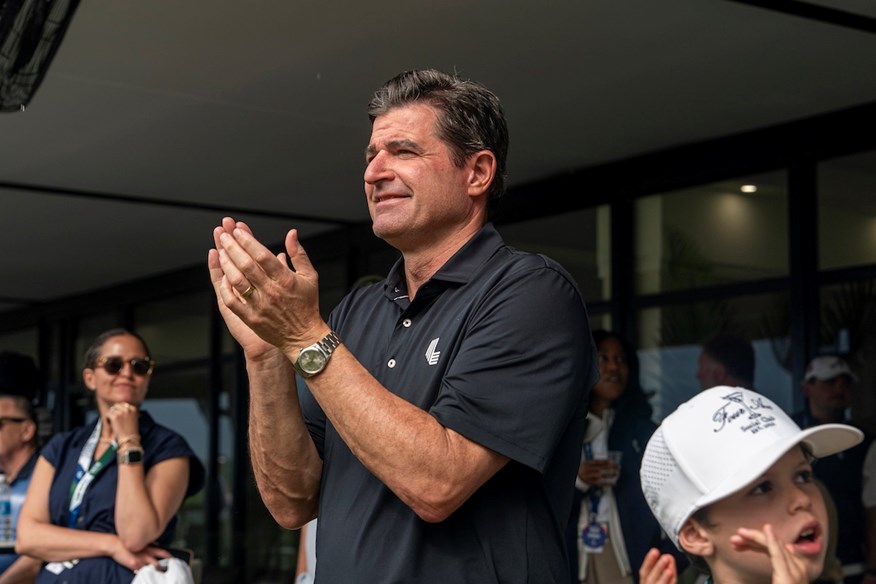
O’Neil’s task is being shaped by the ongoing questions surrounding the future of DeChambeau. The two-time US Open winner’s contract is up at the end of the season and DeChambeau continues to flirt with the remarkable possibility of one day splitting his time solely between YouTube and major tournaments.
“He’s smart, he’s driven, he’s committed, and he’s a heck of a partner,” O’Neil insisted recently. But while DeChambeau has repeatedly emphasized the value of team golf and his love for his Crushers GC franchise, he only added fuel to the fire with recent comments on the The Katie Miller Podcast.
“I’m in that weird space right now,” he said. “I don’t know what to do: either content creation or professional golf.”
Inside LIV, it is hoped that DeChambeau’s appeal as both an online superstar and major force in the game would have the power to sway potential investors, but a number of other players are also considering their options in the meantime. Rumblings emerged that the league could be in financial trouble at the Masters and TG understands that several LIV players quickly began reaching out to the DP World Tour as part of contingency planning for 2027.
Some LIV players have status on the circuit, while others would be required to enter Q School if they were to pursue the potential fallback option. If the league does manage to attract investment and continues operations, the possibility remains that more players could split their time between a truncated LIV schedule and on the DP World Tour next season.