PITTSBURGH — June has arrived, and Fenway Sports Group still owns the Pittsburgh Penguins — though likely not for long.
In April, NHL commissioner Gary Bettman said that financial transactions, such as FSG’s sale of the Penguins to the Hoffmann family, agreed upon in December, can take a long time to wrap up.
Sources within the Penguins organization remain confident that the transfer of power from FSG, which bought the team in 2021, to the Hoffmanns will happen sooner rather than later. One team source, who discussed the sensitive matters under the condition of anonymity, said the team hopes to announce the completed sale “sometime in June.”
While there is some quiet concern within the organization because the Hoffmann family’s pockets aren’t as deep as FSG’s, there is a general sense of excitement about the ownership change.
My general sense is that Penguins employees respect FSG because of its spending, particularly on PPG Paints Arena, even when it became clear the group would sell the team. Still, team sources say, the Hoffmanns have already shown an enthusiasm for owning the Penguins that FSG never quite did.
• Don’t be shocked if Mario Lemieux, who, along with Ron Burkle, sold the team to FSG in 2021, is somehow involved with the new ownership group, perhaps as a minority owner or an adviser.
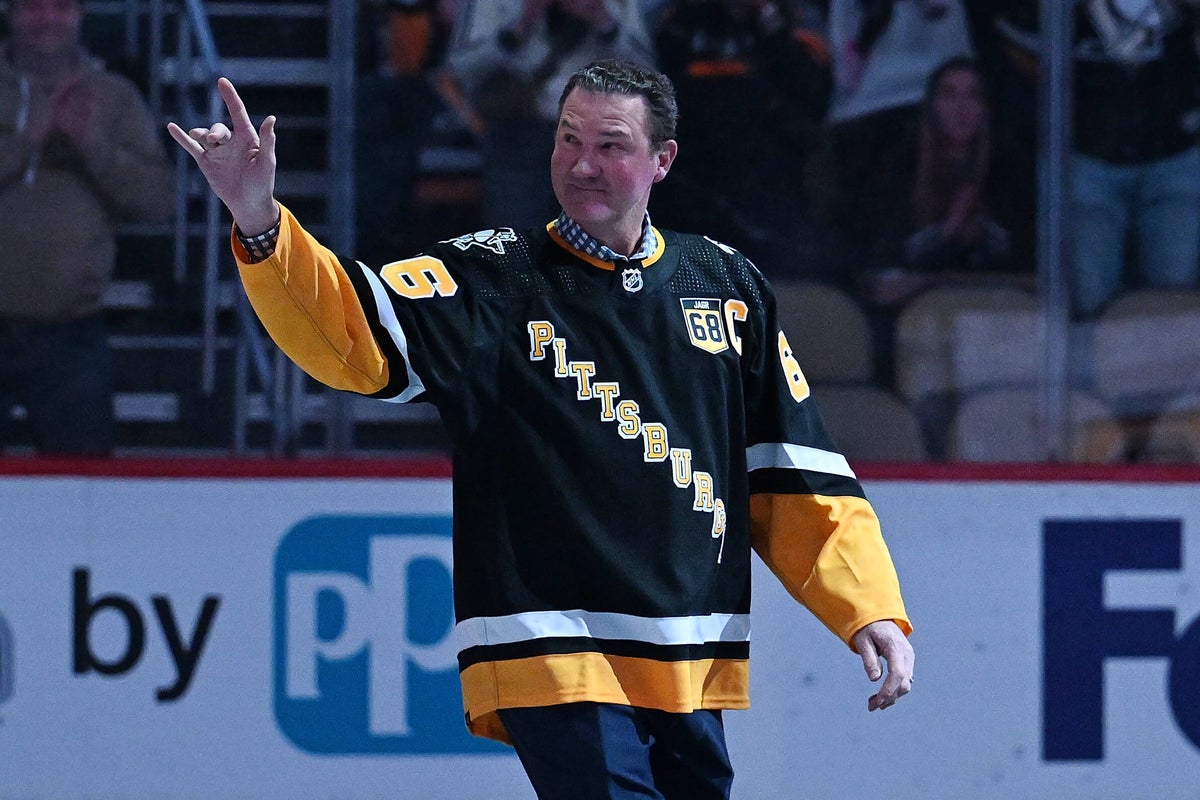
The Hoffmanns are well aware of Lemieux’s importance and popularity in Pittsburgh. A financial dispute between Lemieux and FSG kept Lemieux away from PPG Paints Arena for two years. He returned in February 2024 for Jaromir Jagr’s number retirement ceremony, and, over the past few months, after FSG initiated the sale, Lemieux became a somewhat regular attendee at games again.
Multiple team sources believe the Hoffmanns will, in some capacity, include Lemieux, who was interested in buying the team from FSG last summer.
• Goaltender Stuart Skinner, acquired from the Edmonton Oilers in last season’s Tristan Jarry trade, appears unlikely to return to the Penguins. It would take a long shot — trading Artūrs Šilovs — before July 1, when Skinner becomes an unrestricted free agent.
If they dealt Šilovs, the Penguins would be open to teaming Skinner with Sergei Murashov next season. The Penguins loved having Skinner in the locker room.
Still, smart money says they will re-sign Šilovs, a talented pending restricted free agent whose postseason performance seemed to get the organization’s attention.
While the Penguins’ leadership was delighted with Skinner’s contributions in the locker room, it believed his performance was simply adequate; one team source called his physical attributes “limited” and suggested that Murashov and Šilovs have higher ceilings.
The team also has a dramatically rising salary cap and a hungry market to consider. Teams are desperate for goaltending, as performance at the position has dropped considerably over the past five years, and tandems have become more common.
Skinner isn’t incredible, but he’s solid and has a ton of playoff experience for a 27-year-old. The Penguins believe someone will pay Skinner serious money over multiple years. Just don’t expect it to be them, given the wealth of goaltending talent on the way from AHL Wilkes-Barre.
• I don’t think the Penguins are 100 percent against bringing unrestricted free-agent winger Anthony Mantha back, but it’s clearly unlikely, as Penguins president and general manager Kyle Dubas hinted during his season-ending news conference.
Postseason aside, there is something to be said for Mantha’s 33-goal season. The Penguins’ front office and coaching staff like him a lot. On a short-term deal, they’d be happy to bring him back. It’s not like they were driving him to the airport after the season. As with Skinner, though, another team will almost certainly offer Mantha a long-term deal. The Penguins’ core is already old, and they badly want to get younger. So, they don’t plan on offering Mantha, who turns 32 in September, the kind of long-term contract that he’s indicated he wants.
• Dubas’ hands are tied with Kris Letang.
Yes, Dubas wants the Penguins to get younger, and like everyone else, he’s aware that Letang had a poor season. He’s also aware that Letang played well in the final three games of their first-round series against the Philadelphia Flyers. Dubas respects Letang’s accomplishments and the example he sets for young players. Even at 39, the defenseman remains a marvel in the weight room and a positive influence.
If there’s no financial benefit to buying out the final two years of Letang’s contract, what can the Penguins do?
The simplest option is to reduce his minutes and responsibilities. Two scenarios would allow that to happen. First, 20-year-old defenseman Harrison Brunicke, who has played well for Wilkes-Barre in the Calder Cup playoffs, would have to show that he’s ready to take on top-four minutes. Alternatively, in free agency or via trade, the Penguins could add a right-handed defenseman to play behind Erik Karlsson.
Thirty-one-year-old Connor Clifton likely won’t be back next season, leaving the Penguins thin on the right side of the blue line. Internally or externally, they need help there.