
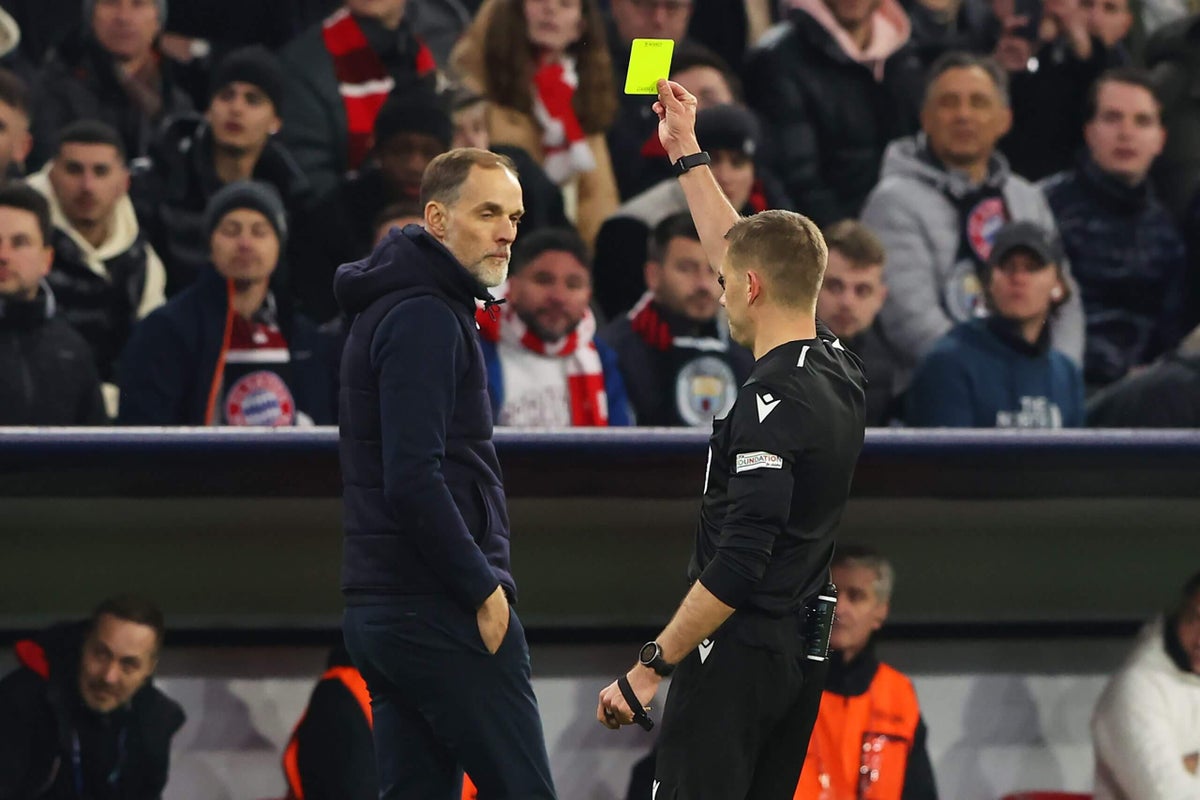
I cannot defend Thomas Tuchel’s post-match rant against French referee Clement Turpin after his Bayern Munich side’s exit from the Champions League quarter-finals in 2023, but I can understand his frustration.
Tuchel told reporters afterwards that Turpin was “Grade E… I would give him one out of 10. He was absolutely terrible. It’s unbelievable at this level.”
Not a fan, then.
The incident has returned to the headlines after Turpin was appointed to England’s opening game of the World Cup against Croatia in Dallas tomorrow (Wednesday).
I’ve watched that 2023 match back to try to work out why Tuchel was so upset. The circumstances partly explain it: Bayern were 3-0 down from the first leg away to Manchester City and needed everything to go their way in the return fixture, including the refereeing decisions.
But from early in the match, Tuchel took against Turpin, and I could see why.
In the fifth minute, the officials missed a clear foul by Ruben Dias on the edge of City’s penalty area, and eight minutes later failed to spot an off-the-ball trip by the same player, which would have been worthy of a yellow card as it denied Bayern a great attacking opportunity.
By then, there had been five free kicks, the first four of which had (rightly) been awarded to visitors City. Such a one-sided foul count is often perceived as bias even if the decisions are objectively correct, prompting comments such as, “There are two teams out here, ref”, or presumably the German equivalent in this case.
Visibly annoyed, Tuchel then blew a fuse when Turpin waved away appeals for a Bayern free kick a yard or two outside the City box, then moments later showed a red card to home centre-back Dayot Upamecano for bringing down Erling Haaland when clean through on goal.

Clement Turpin withdraws the red card he had shown to Dayot Upamecano (Alexander Hassenstein/Getty Images)
The dismissal was overturned as Haaland had been offside, but Tuchel’s public protests at the cumulation of calls against his team still earned him a yellow card from the French official.
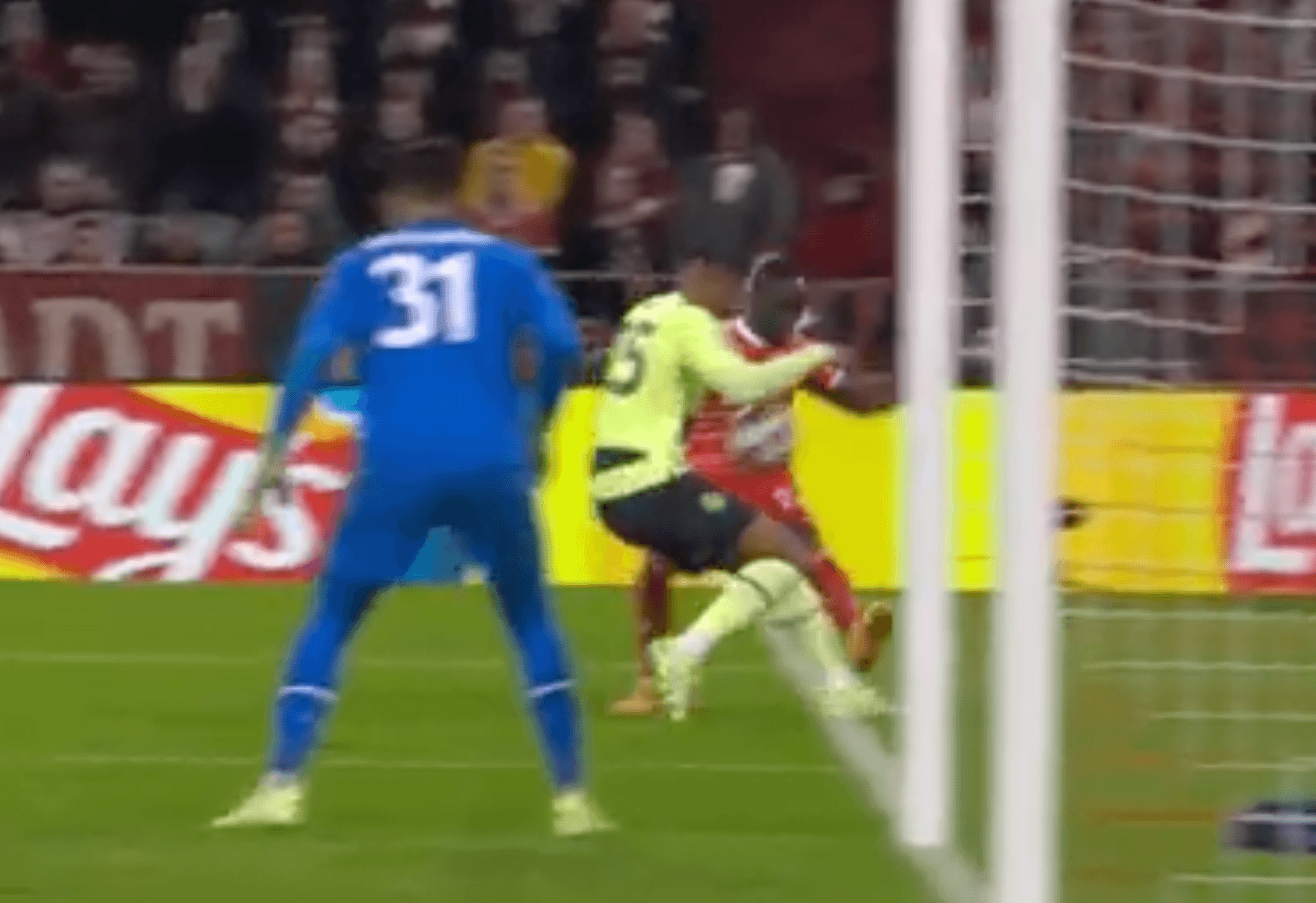
The Bayern boss therefore had to show restraint when Upamecano conceded a penalty (missed by Haaland) for the kind of farcical ‘handball’ often awarded in the UEFA competitions that feel wrong even if they meet one or more of the multiple criteria for such offences.
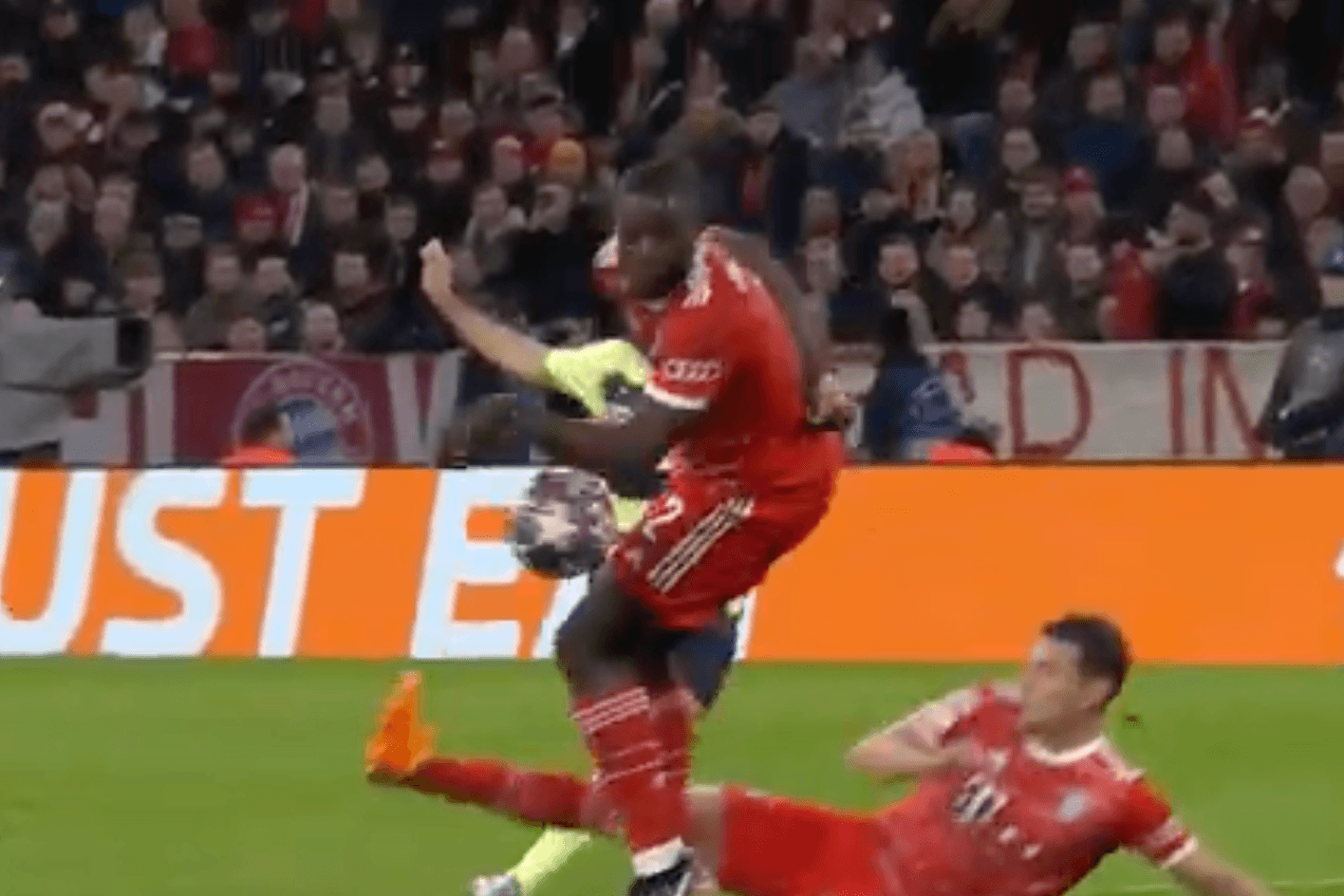
Later in the match, Turpin turned down Bayern’s penalty claims for handball by Manuel Akanji and only awarded the spot kick after a VAR intervention. It was almost impossible to detect in real time, but Tuchel will have noted nonetheless that the decision initially went City’s way.
Tuchel and Turpin have met since.
When Bayern met Real Madrid in the first leg of a Champions League semi-final the following season, the game finished 2-2 and featured a penalty to each side, both of which were accepted as correct calls. Then, last September, the Frenchman refereed England’s 5-0 win away to Serbia during World Cup qualifying, in which the home side were reduced to 10 men and conceded a late penalty. So by now all may be forgiven.
If Turpin is flustered in any way by Tuchel’s presence on the touchline, it won’t show. Among the refereeing community, he has a reputation for having a calm demeanour whatever a game throws at him, as part of a conscious strategy to maintain control of the match and his emotions. By and large, it works.
The 10 yellow cards Turpin showed in that Bayern-City match was out of character, as his average is relatively low. He will look to defuse conflict, manage the tempo of play and keep the temperature of the match under his control.
England should be relieved that they have a Western European referee in charge against Croatia, as he will have a higher tolerance level for physical contact than most other officials at this World Cup.
But they do need to be careful where they put their arms in the penalty area, as the default will be that a spot kick should be awarded every time the ball strikes an arm or hand that is even slightly away from the body.
What’s Tuchel like to referee?
I was involved in Tuchel’s first two Chelsea matches, both played behind closed doors at Stamford Bridge in January 2021 due to the Covid-19 pandemic.
Before being fourth official on the first, I was tipped off by colleagues who had encountered him on the UEFA circuit that he could be hard work, but he proved affable and polite, as most managers are during their first game in post. It’s as if they are pleased to be there, and are primarily focused on getting to know their new team.
Four days later, I refereed their match with Burnley, which Chelsea won 2-0. Tuchel was clearly bemused by the coaching style of opposite number Sean Dyche, and the pair would have a heated row on the touchline when the sides met the following season. Let’s say they had widely differing cultural expectations.
I was an official on many more of Tuchel’s games, and when the crowds returned post-pandemic and results were less favourable for Chelsea, the stress started to show. But he never overstepped the mark and would usually respond to reason.