
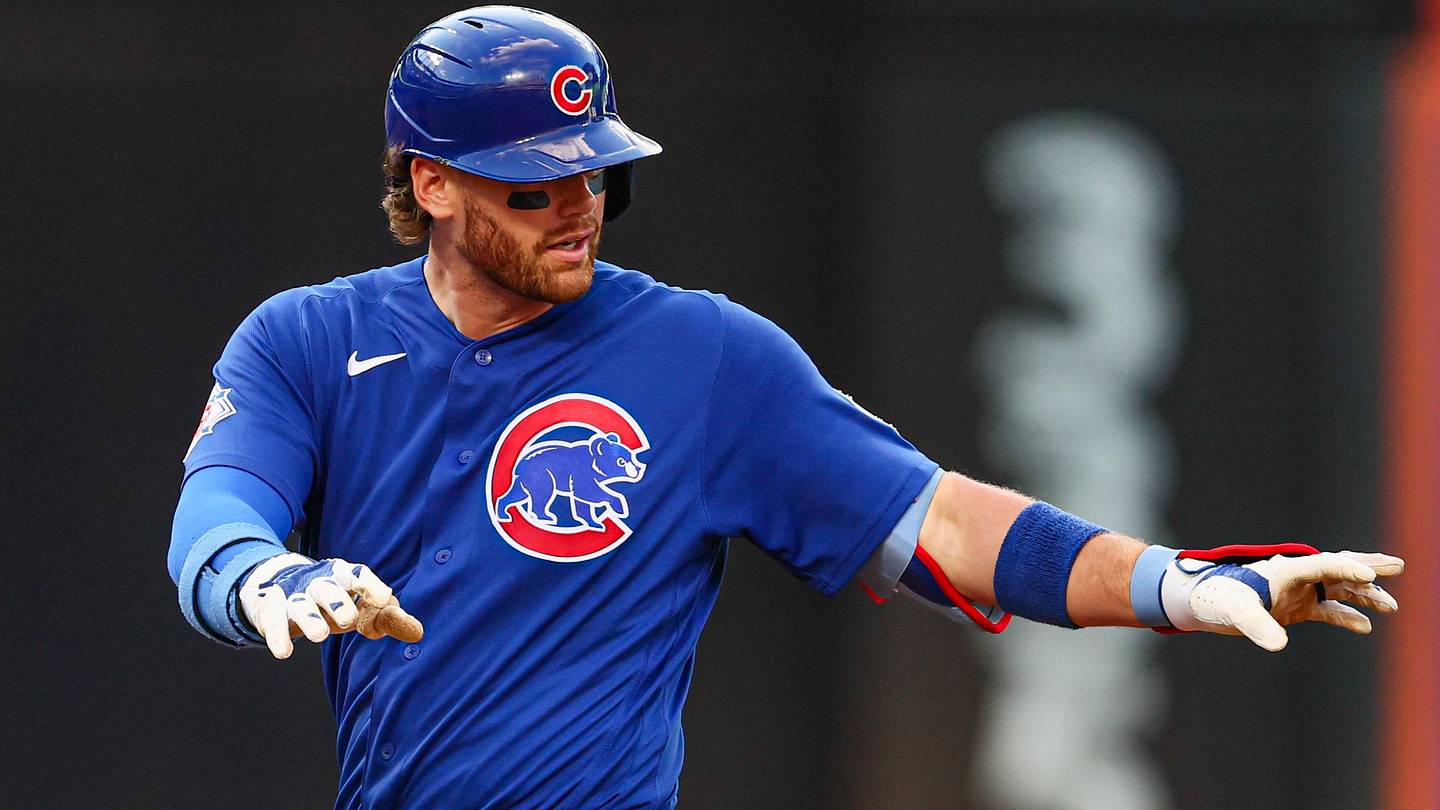
Carson Kelly has having another season worthy of All-Star consideration, sporting an OPS+ of 118 with a slash line of .281/.364/.395. It’s a reminder that once Kelly hits free agency this offseason, he’s likely going to be the most coveted catcher on the market.
It isn’t in the Cubs’ nature to race to the top of the market once one of their free agents hits the market, and it’s fair to wonder if Kelly’s asking prices eventually moves past the Cubs’ interests. Not because of Kelly resetting the market for catchers entirely, but because the Cubs will have several needs across their pitching staff, including once again replacing most of their current arms in their bullpen.
Throw in that the Cubs may be in the market for a corner outfielder, and spending to keep Kelly may not be the top priority for the Cubs this offseason.
As for internal options, Owen Ayers likely will be a part of conversation at the some point during the 2027 season, if not by Opening Day. Moises Ballesteros is once again playing as a catcher during his return to Triple-A, and could be a potential answer. And, the simplest solution may just be the Cubs returning to Miguel Amaya being their primary catcher.
The Cubs might find Carson Kelly’s replacement in the 2026 MLB Draft
Or, perhaps the first round of the 2026 MLB Draft unfolds in manner that the Cubs find Kelly’s successor at No. 23. That could be the thinking behind MLB Pipeline’s latest mock draft, tabbing the Cubs to select Georgia catcher Daniel Jackson.
There’s a lot to like about Jackson. In 319 plate appearances with the Bulldogs this year, Jackson has 32 home runs while striking out only 20.1% of the time. Beyond the power, Jackson has speed, stealing 26 bases this collegiate season.
Jackson being a college bat who could ascend quickly through the Cubs’ system while playing a position of need, it’s obvious why he would be an intriguing prospect for the front office to consider.
The elephant in the room is that the Cubs need pitching across their entire organization. Beyond the questionable results the Cubs have when it comes to developing the pitchers they draft, there’s no certainty that a pitcher they like will be on the board when they are picking in the first round. Perhaps that is why they rely on the strategy they know best: getting the most out of a college bat.
 Add us as a preferred source on GoogleFollow