

The taxi driver taking me to Kincaid Park asks whether I have bear mace. “Really?” I wonder inwardly, before he proceeds with solid advice, telling me not to run if I spot one because they’ll chase and probably maul me to death.
As I start to imagine the headline: “Bear Eats Sports Reporter in Alaska”, the driver comes at me with more information: “Moose are a bigger problem because they are more grumpy. Do you own a gun licence?”
The park, sitting just behind Anchorage’s Ted Stevens Airport, looks out at Fire Island and Cook Inlet, the bay which Captain James Cook misjudged as he searched unsuccessfully for Alaska’s Northwest Passage in 1778.
Today, if you pack your bag properly and find your way past the animals that might tear you apart, you’ll discover Anchorage’s only civic football pitches, which everyone locally tells me are in pretty bad shape because of their exposure to the elements.

Alaska is an outpost in both geographical and soccer terms (Simon Hughes/The Athletic)
John Oliver, the state director for youth soccer in Alaska, has a photograph in his possession of the challenges posed by the weather in this part of the United States. During winter in 1993, he and his friends shovelled out snow so deep that on the touchline, the ice was higher than some of the players who kept bashing into it.
Most of Alaska, you might forget, is closer to far eastern Russia than any other part of the country it belongs to and the nearest host city at the FIFA World Cup is actually in British Columbia, Canada — nearly 3,500km separates Anchorage from Vancouver, a three-hour flight away.
Alaska feels like it is on the edge of everything, an unsullied land on the ragged margins of society, where vast silence reins (unless you are being chased by bear or moose). It possesses the freezing summits of North America’s highest mountain range, rivers that are big and fast, and mosquitoes that will eat you alive.
“The wilderness has a grip on American imagination,” wrote the author Jon Krakauer. Yet it is for that reason Alaska does not have a grip on American sport: the state does not have a professional sports team of any kind nor, accordingly, a stadium that could host a 2026 World Cup match. Only a few sportspeople have made it out, forging successful careers elsewhere, unless you count ice hockey.
There are exceptions though: an Alaskan is involved at the World Cup. Obed Vargas, who was born in Anchorage, is playing for Mexico. So far he has appeared as a 70th-minute substitute in their second group fixture, a 1-0 victory over South Korea, and he came on in the 63rd minute for their 3-0 win over Czech Republic. Mexico will play Ecuador in Mexico City in the round of 32 on Tuesday (2am on Wednesday in the UK).
Earlier this year, Vargas moved from Major League Soccer’s Seattle Sounders to Atletico Madrid after an industrious performance against the La Liga giants at the FIFA Club World Cup last summer.
“Diego Simeone (Atletico’s famously demanding Argentine coach) doesn’t strike me as an easy guy to impress,” says Scott Hickox, the former executive director at Vargas’ old club in Alaska, Cook Inlet SC. “I guess it shows you what Obed is made of.”
Hickox travelled with his son and Vargas’ father, Obed Snr, to watch the 20-year-old in Guadalajara, albeit without knowing whether he’d feature at all against South Korea. It was only his seventh cap for Mexico after switching from the USMT set-up in 2024, having represented the country of his birth at under-20 and under-23 levels.
Hickox understands why Vargas made the decision. “You’ve gotta appreciate the family,” Hickox twangs. “Obed is where he is because of his ability but that comes from his passion for soccer. He spent his childhood watching Liga MX games on the television because his dad was a soccer player, who came to Anchorage without speaking much English and worked at a cannery. But he was obsessed with soccer and because of that obsession, Obed got the support he needed from his parents to push on.
“One of the biggest obstacles in any Alaskan soccer player’s career is a family’s willingness to take that risk, to invest the time, money and energy to help a kid follow their dream,” Hickox concludes. “It can get really expensive when you’re from Alaska because you have to travel and you have to be out of state if you are going to reach the highest level. When the costs start going up, families sometimes lose interest but hey, it’s understandable because the odds are stacked against you.”
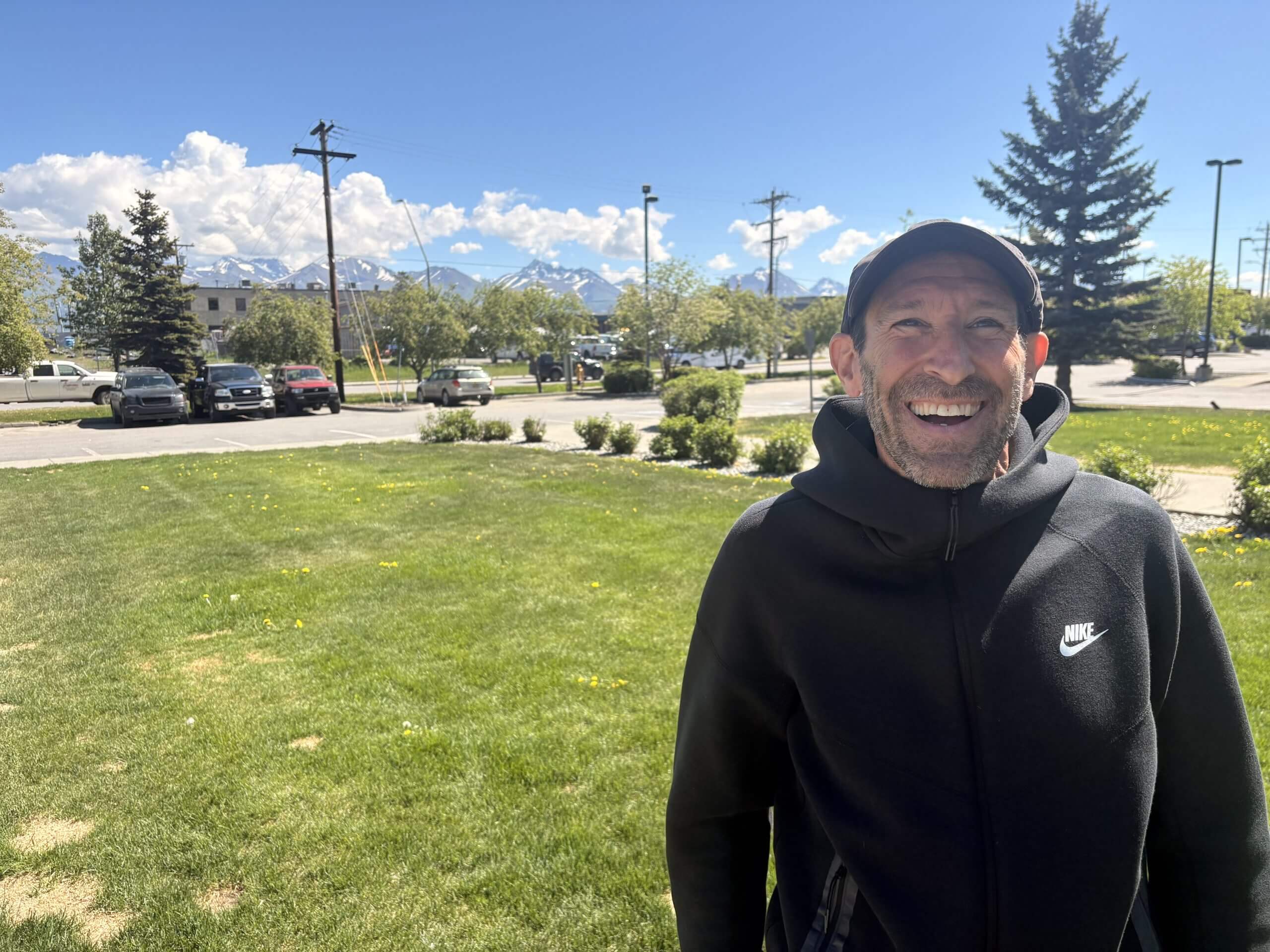
Scott Hickox is invested in the development of Alaskan soccer (Simon Hughes/The Athletic)
Hickox is sitting in the passenger seat of Oliver’s pick-up truck while we wait for the doors of an Anchorage sports bar to open at 11am, showing France’s opening World Cup fixture with Senegal. The timing is another reminder of Alaska’s detachment — New York City is four hours ahead and London, nine.
Hickox says Vargas has two sisters and a brother and each of them are playing football at a relatively high level, with one of the sisters close to joining a Mexican club. Obed Snr worked “two or three jobs at a time” to pay for coaching but what separated his children, particularly Obed Jnr, was his appetite to practise by himself. “That kid was at the park with cones, doing his own thing; he was always trying to get his friends to play. He was watching, living, eating, breathing the game from the moment he could understand.”
His emergence as a footballer, however, did not follow a straight line. Despite trials with academies in New York City, Dallas, Austin, Portland and Minnesota, to name a few, Vargas was not picked up until the Sounders liked what they saw. He turns 21 in August but his professional debut is already some distance in the rear-view mirror having been selected for the first team when he was 15, making him the third youngest player in MLS history. Aside from his talent, a combination of factors led to the opportunity: the squad was in the midst of an injury crisis and other players were missing due to international commitments.
“One of two things happens to a player in this situation: either the moment is bigger than them and they struggle, which isn’t always the end, but it’ll be harder; or alternatively the moment is another step forward,” Hickox says. “Obed showed he was already a soccer player because the moment was not bigger than him.”

The 2026 World Cup on a screen in an Anchorage bar (Simon Hughes/The Athletic)
Vargas impressed but Sounders managed his development carefully, with his next appearance coming in the following season when he played 13 times in MLS. After that, his exposure steadily increased in line with his own availability (2023: 22 MLS appearances; 2024: 30 appearances; and 2025: 26 appearances).
Vargas is not, however, the first Alaskan to have earned a contract with an MLS club. The fact that a 6ft 7in goalkeeper called Hunter Sulte broke new ground only eight months before Vargas’ debut reflects how late Alaska has been emerging on the MLS scene, though Sulte, who is now 24, has been registered with Portland Timbers since he was 13.
When I meet Sulte at the club’s training centre in Beaverton, Oregon, he reveals that while his family were hugely supportive of his choices when he was barely a teenager, they were not particularly into soccer, and when Timbers made their initial approach to bring him to Portland, “my mom’s instinct was to ask, ‘Is this guy a scammer?’”
Instead, it was Steve Reese, then the Timbers’ academy goalkeeper coach, who had spotted Sulte at a tournament held in Phoenix. “Our team was getting killed but I think Steve saw my mentality that day because I was trying to fight through it,” Sulte says. After a week’s camp in Alaska, Timbers made their move, but Sulte was too young to even live at the residency provided by the club. Fortunately, he had an aunt in Portland, but his parents were nervous about letting him go.
“I missed half of my childhood with my family to become a soccer player,” Sulte reflects. “This past Christmas, my dad wrote a card to everyone in the family. His card made me cry because he said he felt like he wasn’t much of a dad to me due to those years I missed with him. That was really tough to read. But my family backed me all the way.
“There were times when I struggled and wanted to quit but they always held strong. It was always hardest in the off season when I’d go back home for a month and see everyone. I liked it in Portland but saying goodbye over and over again was something that took a long time to get used to.”
Timbers realised Alaska was an untapped resource and two years after Sulte’s arrival, the club agreed to form an alliance with a junior team in Anchorage called Alaska Youth Soccer Club (AYSC). Portland has similar agreements with youth sections in other removed locations like Boise in Idaho, with the club’s coaches flying out of Portland two or three times a year to lead sessions, while teenagers make the return journey to Oregon for evaluations. Timbers also provide tactical advice relating to how their junior sides play, in theory making any potential transitions slightly easier, but so far no Alaskan has made the same jump as Sulte.
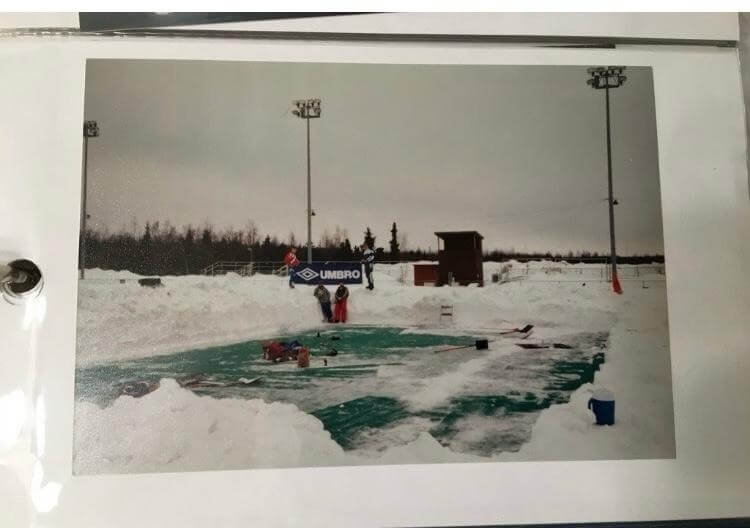
Alaskan conditions for soccer can be… difficult (Simon Hughes/The Athletic)
In Anchorage, a city which you can cross from east to west inside 20 minutes on a busy day of traffic, everyone inside its football community seems to have a connection: AYSC technical director Jeremy Johnson, for example, played as a striker beside Obed Vargas Snr when he was younger, and he vividly recalls watching his famous son play for the first time more recently. “He was this little guy. I’m sure people underestimated him. Then he took over the match and I was, like, ‘OK, now I see it.’ He was a great player on and off the ball. He could impact the match right away. He stood out here but it was impossible to think of him in La Liga, because nobody had done it before.”
Raw geography, a small population, weather, significant costs and a lack of public facilities (especially when compared to basketball), are barriers for Alaskans trying to make their way in the game. Those who do tend to be from wealthier families these days but as Sulte suggests, when players see their chances of progression retreating, they tend to “fade” away altogether. For someone like Oliver, the challenge is not just about producing players, it is keeping their attention and ensuring “they stay in the game, maybe helping others improve”.
“You have to try and convince people that wherever they fall, it’s gonna be OK,” Oliver says. “If your only goal is to win or being at the highest level, if you come up short, then how do you feel?”

AYSC technical director Jeremy Johnson played with Obed Vargas’ father (Simon Hughes/The Athletic)
Oliver’s family, as well as Johnson’s, arrived in Anchorage because their fathers were airmen who had lived in different parts of the world, bringing with them a sport that Alaskans sometimes judged suspiciously because it was popular amongst eastern Europeans.
This impression was reinforced when Polish seafarers escaped from a navy ship sailing around Alaska’s freezing waters and settled in Anchorage, forming a football team called “Solidarity”.
“Some Alaskans thought it was a communist sport,” remembers Steve Simmons, another US airforce child, who started high school in Anchorage in 1982, just a year after soccer became a school sport. His father had earlier been stationed in England, where Simmons was exposed to BBC’s Match of the Day and the greatness of a Liverpool team that swept all before it, the club he began supporting. He describes the soccer scene in Alaska in those days as “archaic but something,” but it was so removed that when Liverpool won the European Cup for the first time in 1977 and Kevin Keegan left for Hamburg, he was unable to find out for a couple of months.
Simmons missed having live football to watch and he thinks the lack of a professional club in Alaska stops families from truly buying-in to the sport in the way they do elsewhere. “Soccer, or as I call it, football, is a played sport in Alaska. If you watch it, it is on television. This means you miss the community aspect of it. In Europe, a lot of people fall in love with football because they feel like they are playing a role in a team’s fortunes as a supporter.”
Simmons was good enough to play college football and was one of the first players to leave the state. It was then he realised that “standing out in Alaska is one thing, but do you stand out in Seattle, Los Angeles or New York? Would you stand out in Europe? Just because someone jumps off the page in Alaska, it doesn’t mean they’ll jump off the page elsewhere”.
While the sport has provided a career in coaching for Simmons, who now lives and works just outside Portland, back in Alaska figures like Oliver are attempting to connect more dots across the state. Beyond Anchorage, there is interest in soccer and two years ago a teenager called Matthew van Horn, born in a village called North Pole just outside Fairbanks, was drafted by Colorado Rapids of MLS.
Fairbanks is a six-hour drive north of Anchorage. Most of the other Alaskan clubs are located in the south east of the state, in outposts like Sitka, Juneau and Ketchikan. Oliver has been trying to get futsal into places even further away but he has found it difficult getting “champions” who will turn up and organise, regardless of the weather.
His fantasy is to introduce soccer to a remote village, for the village to produce a team, and for the team to win the indoor soccer state championship. “If that happens, interested film directors should call me.”