
GREEN BAY — The Green Bay Packers are not in any clear and present danger financially. Team president/CEO Ed Policy said so himself on Friday afternoon.
“The Packers are in great financial shape,” Policy said during a session to discuss the team’s most recent fiscal year with a handful of reporters in advance of Monday’s annual shareholders meeting at Lambeau Field. “And we’re going to continue to invest whatever it takes to field a championship-caliber team.”
But, Policy cautioned, there are challenges ahead, including one that he called an “existential threat” regarding the NFL’s revenue-sharing model.
“Candidly, I think we have to be more aggressive in terms of revenue generation going forward,” Policy said. “It’s like other teams kind of have access to this ATM machine that we just don’t have.
“Keeping in mind the only expense that we have that’s capped is player costs [because of the salary cap], everything else — whether it’s facilities, coaching staffs, or other things — there’s quite frankly a little bit of an arms race going on around the NFL in terms of those resources.”
Although the team cited increased player costs in reporting an operating loss of $1.1 million — their first operating loss in a non-pandemic year since 1990 — they also took in $453 million in revenue sharing from the NFL, they reported $753 million in operating revenues, and they have $701 million in their rainy-day corporate reserve fund.
But Policy spoke of several looming challenges the Packers face as the NFL’s lone community-owned franchise, pointing to how other teams with wealthy owners can quickly create cash flow through selling small ownership stakes to private equity, as well as a number of teams moving into new or refurbished stadiums in the near future.
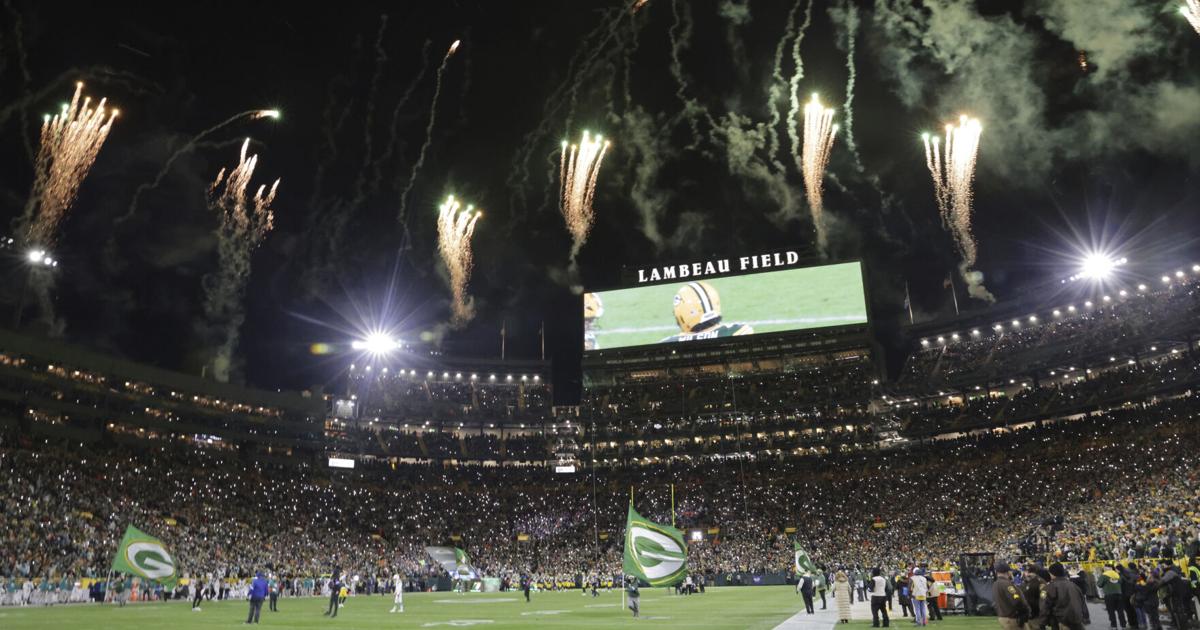
The Packers also seemingly were setting the stage for future conversations with local and state officials to secure financial parameters to help with the upkeep and upgrades of Lambeau Field.
“I would say I feel very good about the Packers financial situation. I feel great about where we are in the short-term and in the medium-term. But we are keeping a close eye on some of the current trends and how they might impact our long-term financial health,” Policy said. “[But] the cost of competing in the NFL is going up. And as we all know, other NFL teams have access to some resources and some capital that we don’t have access to.
“We do have to make sure that we’re just always in a position where we can continue to invest wisely in whatever it takes to field a championship-caliber team, whether that’s player costs, football staff or facilities.”
Policy signed the Packers’ three top decision-makers on the football side — ninth-year general manager Brian Gutekunst, eighth-year head coach Matt LaFleur and director of football operations Russ Ball — to contract extensions after the team’s season-ending playoff loss to the Chicago Bears.
The leadership trio has gotten the team to the postseason six of the past seven years but has not been able to get back to the Super Bowl since the 2010 team won Super Bowl XLV 15 years ago.
The team recently renovated its locker room, corporate offices, training room and equipment room but has other projects within the stadium on its to-do list.
Policy said the Packers need to “collaborate with the city, the state, the county and the stadium district board on coming up with a really good long-term plan for Lambeau Field.
“This stadium needs some very significant long-term investment in it if we’re going to keep it to be up to Lambeau Field standards for the next 50 or more years. It’s going to require an incredible amount of investment. And I think a long-term plan is going to have to involve some discussion with all those stakeholders that I mentioned about, how do we fund that?”
In the more immediate future, Policy said the team must get creative with ways to increase revenue.
Although he was very clear about the team not selling naming rights to its iconic stadium, the team does sell such rights to the stadium’s various entrances. Other naming-right deals are on the table, Policy said, including for the team’s Titletown entertainment district and the Don Hutson Center practice facility. The club’s indoor practice facility within Lambeau Field, known as the “CRIC” (conditioning, rehab and instruction center) could also theoretically add a naming-rights partner.
“We are going to focus on being a little more aggressive on generating revenue,” Policy said. “That’s going to be in part through sponsorships.”
Another way to generate local revenue is through non-football events, such as hosting the Sept. 6 Wisconsin-Notre Dame football game, concerts like the two days of Luke Combs shows in May, and other sporting events like the 2022 Bayern Munich-Manchester City soccer match, in which FIFA World Cup breakout star Erling Haaland made his debut with Man City.
Again, Policy pointed out that teams with domes or artificial surfaces have an advantage because those venues can host more non-football events without damaging their fields.
“We’re going to really focus on bringing more of those events into Lambeau Field,” Policy said. “They’re very good for us in terms of revenue generation, but I think they’re also really good for the community and the rest of the local economy.”
“We just have to make sure that Brian, Matt, and Russ are always in a position where they have every tool in their toolbox that every other team has to build a roster. I’m never going to tell them how to use those tools or which tools to use, but we have to make sure they have every tool to compete.”
COPYRIGHT 2026 BY CHANNEL 3000. ALL RIGHTS RESERVED. THIS MATERIAL MAY NOT BE PUBLISHED, BROADCAST, REWRITTEN OR REDISTRIBUTED.