

Earlier this month, Beatriz Haddad Maia announced she would be stepping away from tennis for the rest of 2026 to focus on her mental health. “My relationship with tennis hasn’t been easy,” the Brazilian tennis player, pictured above, said in an announcement. Also this month, New Zealand’s Lulu Sun, 25, the country’s top women’s singles player, revealed she would be taking an indefinite break from the sport, citing “the physical and mental demands of a competition schedule.” In February, Australian tennis player Destanee Aiava retired, writing in a now-deleted Instagram post that “life is not meant to be lived in misery. After Wimbledon, Alex de Minaur said he felt “broken inside.” Even Carlos Alcaraz said earlier this year “I don’t want to be a slave to tennis.”
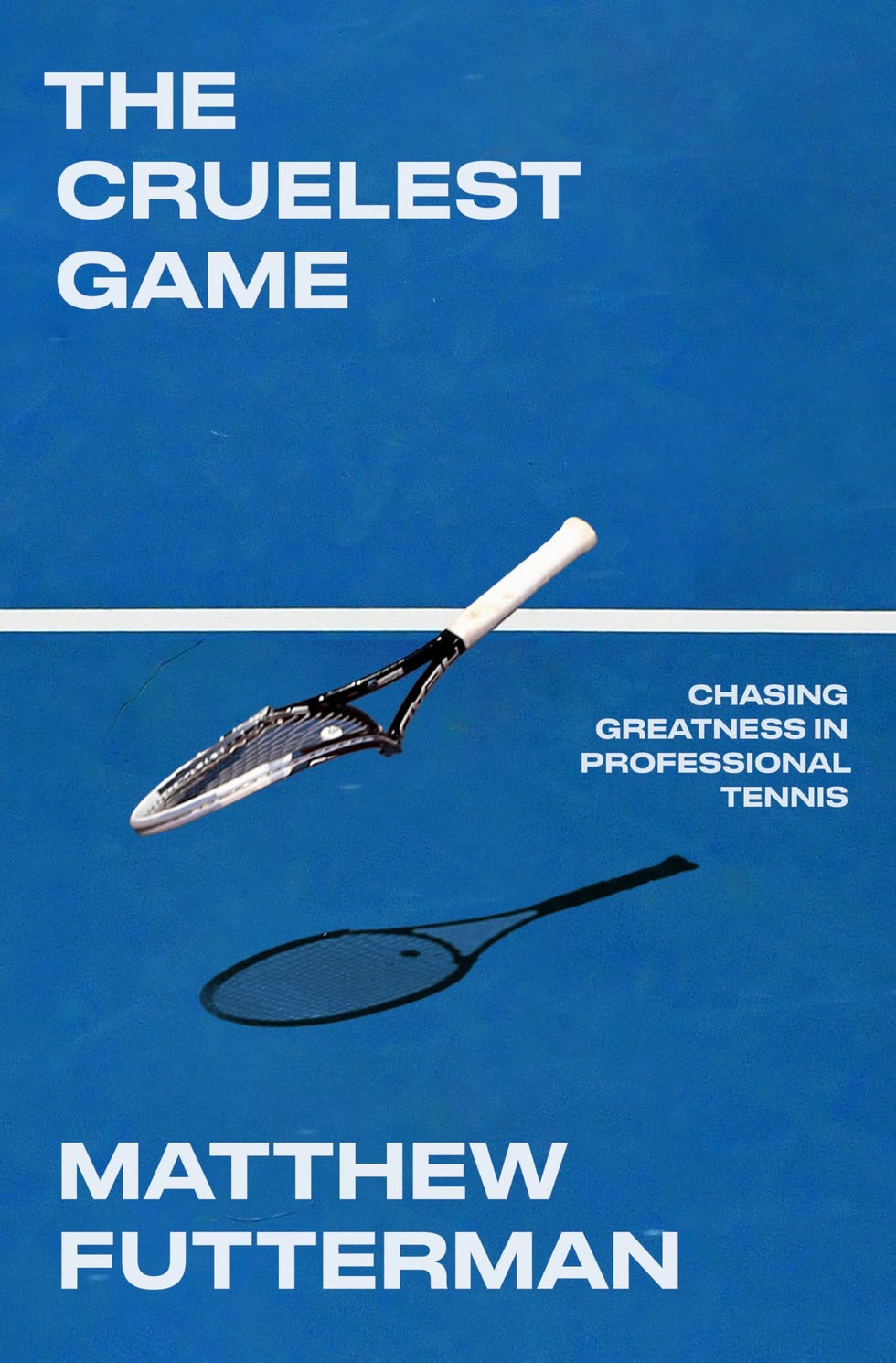
It’s not the rosiest picture of a sport. In his new book The Cruelest Game: Chasing Greatness in Professional Tennis, Matthew Futterman, the senior tennis writer at The Athletic, investigated the under-discussed aspects of tennis—namely, why is the game so brutal? “It was striking and so shocking to me just how miserable so many tennis players were,” he says. Here, Futterman speaks with T&C about what inspired him to write The Cruelest Game, the impact a crowd has on a player, and who he’s looking forward to watching at the 2026 U.S. Open.
What was the impetus for writing The Cruelest Game?
In 2020, I became a full-time tennis writer. Very quickly, I saw that top players were really, really struggling with the sport and were on the verge of quitting. One of them did, Ash Barty, who was the world number one, and she was 25 years old, and she quit. And I had a flashback to being a kid and Björn Borg quitting at 26 years old when he had just been deposed [from no. 1] and so now he was number two, and he just couldn’t take it anymore. I saw that this had been happening over and over and over again, and it was something that just doesn’t happen in other sports.
Superstars in other sports do not walk away from the sport in the prime of their athletic careers in their mid and late 20s and leave tens of millions of dollars on the table like that. What I really wanted to figure out was: What makes this sport different from all other sports? The players who do stick around, the ones who survive, but not only survive, but also thrive, what do they know that everybody else doesn’t know? [I wanted] to paint the picture of this new generation of players desperately seeking to learn what those secret codes were so that they wouldn’t fall victim to the same fate.
On the outside, [tennis] looks like this incredibly glamorous life. On the inside, when you start traveling around with these people and they start unloading to you, you realize you’re not in an NFL locker room anymore. You’re not talking to basketball players, or baseball players, who mostly seem like a pretty happy lot—tthere are some of them that are struggling with all kinds of regular issues that everybody else struggles with, but not to the point where they’re like, “No, I’m not doing this anymore. I’m done. I don’t care about that hundred million dollars I’m supposed to make in the next few years. It’s over.” Doesn’t happen.
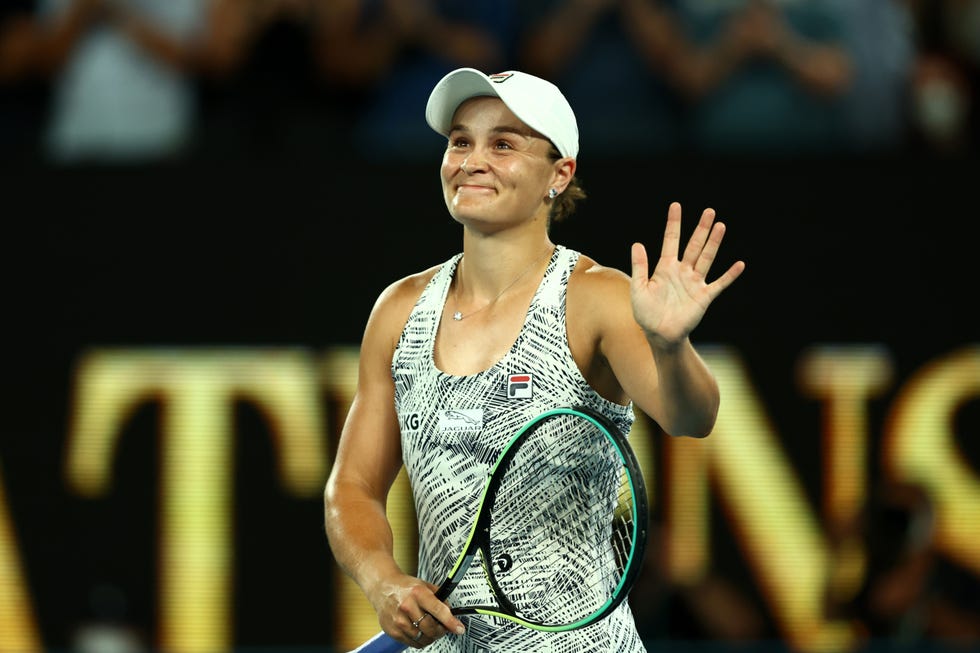 Clive Brunskill//Getty Images
Ashleigh “Ash” Barty won the 2022 Australian Open; two months later, she announced her retirement from tennis.
I feel like it really contrasts with the messaging of tennis is the happiest sport, healthiest sport. Get out there, improve your life.
[The USTA is] always pushing that study that showed that tennis players live longer than every other player. I don’t know that that study has been normalized for the fact that people who play tennis probably have a decent income. It’s a pretty well-educated group of people who play tennis. They probably go to doctors regularly. They probably do lots of other things that correlate with longevity and good health besides getting out and playing tennis, which is a good habit as well.
Do you find that the tours are concerned with their players’ mental health?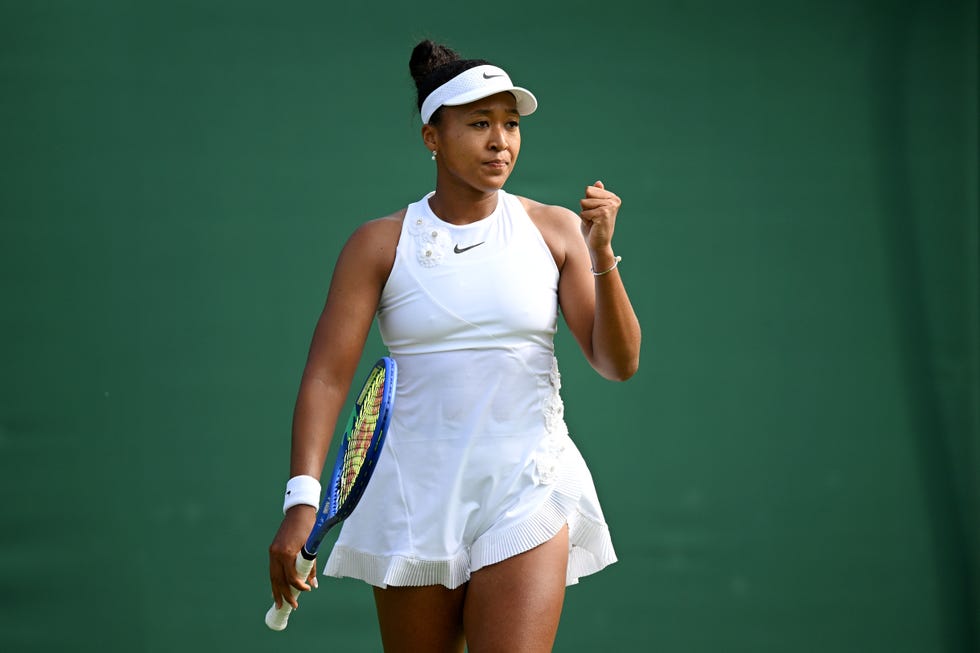 Matthias Hangst//Getty Images
Naomi Osaka, pictured at Wimbledon last month, has been outspoken about her mental health.
To an extent. I mean, they’re certainly getting there. They were rather late to come around to it and feel like it was their problem and not just something else. But also, it’s generational. Thankfully, we now live in an era where being open about and acknowledging that you’re struggling with or that you do address your mental health concerns is seen as a strength and not as a weakness. It’s a great thing.
Now, it’s just totally normalized to be like, why wouldn’t you see a therapist? Why wouldn’t you deal with a psychologist if you’re in this unbelievably pressure-packed profession and it’s the one thing you’ve done since you were eight years old and everything is riding on your success and your family has put every penny they have into your tennis success and you feel like the love you’re going to get from your mother and your father and your brother and your sister and everybody around you depends on whether you win a tennis match… Because that is the reality that a lot of tennis players deal with, aside from the basic fact that often they’re supporting everyone in their family.
It’s just totally normal now to be speaking with mindset counselors and sports psychologists and regular psychologists that have nothing to do with performance. And that’s seen as hopeful and healthy and should be an integral part of any tennis player’s team.
How much do you think the atmosphere of a tennis game impacts the mentality of these players?  Matthew Stockman//Getty Images
Djokovic celebrates match point against Alcaraz after the Cincinnati Open final, 2023.
It totally impacts all of them. All I needed to know was the night I was having dinner with Novak Djokovic three years ago, and he had just come out of a crazy three-set, four-hour match in Cincinnati in the final with Carlos Alcaraz. And I said to him, “Can you take me inside your head?” And I fully expected him to give me the usual line that so many other top athletes had given me like, “Oh, it just gets really quiet in my head. I don’t even hear the crowd. I shut it out,” which I always thought was bullshit. And Novak was just like, “Oh, it’s a total rollercoaster. The crowd is going crazy. You’re hearing it. I’m filled with doubt.” And moments of ecstasy and there’s exhaustion. And so if he’s feeling all that, and he’s won, at the time, 23 Grand Slam titles, now 24, if he’s experiencing all that, then certainly everybody is feeling all that.
 Al Bello//Getty Images
Sabalenka after the 2023 U.S. Open final, which she lost to Coco Gauff.
I mean, Aryna Sabalenka has been very honest about how the crowd gets to her, how it probably cost her that U.S. Open final against [Coco] Gauff, maybe cost her the French Open final last year against Coco once more. Though that I think was more she let the conditions and the wind get to her. I’d just been talking to her in Cincinnati about this, trying to figure out how she had figured solve the puzzle of New York. And she had talked about getting to this place of acceptance and understanding and realizing that, “if I’m able to show my personality and share myself with this crowd, that exuberance that they have, I can use that to my advantage.”
It’s a matter of, do you love it or do you hate it? A lot of players, they hate it and they’re not willing to open themselves up to it, and they end up not having great success at the U.S. Open. And then there are ones who are like—I mean, Francis Tiafoe just absolutely loves the lunacy. He loves that it’s loud. He loves the celebrities. He loves that, as he puts it, everyone’s half drunk on honey deuces and it’s sort of his scene. Ben Shelton said it the same way.
Do you think to succeed at the U.S. Open, they have to embrace the crowd and the noise and the chaos?
You can’t fight it. And one thing I learned from this book is that the minute you start letting things you can’t control get inside your head while you’re on a tennis court, it’s hard enough just trying to hit the ball back and land your first serve at 4-4, 30-30 in the best of circumstances on a perfect day, on a quiet court in the middle of the forest. Those are hard things to do. If you start focusing on all of the things you can’t control, like the crowd, like the wind, all of that stuff, yeah, you’re basically fucked.
Have you noticed a change in the crowds at the U.S. Open?
What I love about the New York—I mean, I’m a New Yorker, and what I love about the U.S. Open is that it’s the rare tennis event that doesn’t look exactly like the city that it exists in, but it looks more like the city it exists in than any other big time tennis tournament in terms of diversity. Over the last six, 10 years, it gets more and more diverse every year.
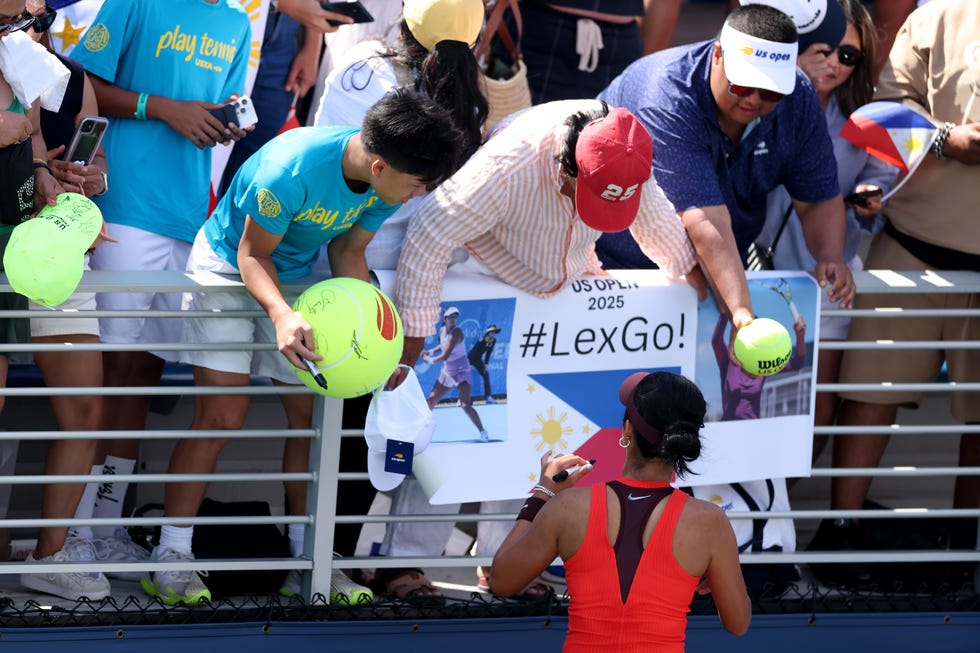 Elsa//Getty Images
Alex Eala signs autographs at the 2025 U.S. Open.
Especially as you see players coming into the fold like Alex Eala from the Philippines, and all of a sudden there’s this massive Filipino diaspora. People have never gone to watch tennis before coming to the U.S. Open because they can. And because there’s proper messaging that this is their sport too, and it’s totally normal for you to go to the US Open no matter what country you were born in or your parents are born in and no matter what color you are or anything like that.
As you see more players like that come from what would be referred to as a non-traditional tennis country, you see that and it’s great. Alex has been such a godsend to women’s tennis over the last year. Other players will say that too, because suddenly a third round match on a Tuesday night in Toronto is a packed stadium with a crazy atmosphere. And not just for her, but for her opponent and the people who like that, the players who most of them like that stadium. Some of them get a little rattled if the crowds are too exuberant. Just like I was talking about before with Sabalenka and U.S. Open, you have to learn how to embrace it. And with New York, that’s a situation that’s just sort of on steroids.
What do you think coaches are working with their players on in the lead-up to performing your best in this type of louder atmosphere?
The good ones are telling them to embrace it and to get themselves into a position of, A, you chose to be here. This is the life that you dreamed of, and this is what you wanted. So celebrate that. Don’t fight it. Go with it. So that’s one big thing.
 Pedro Salado//Getty Images
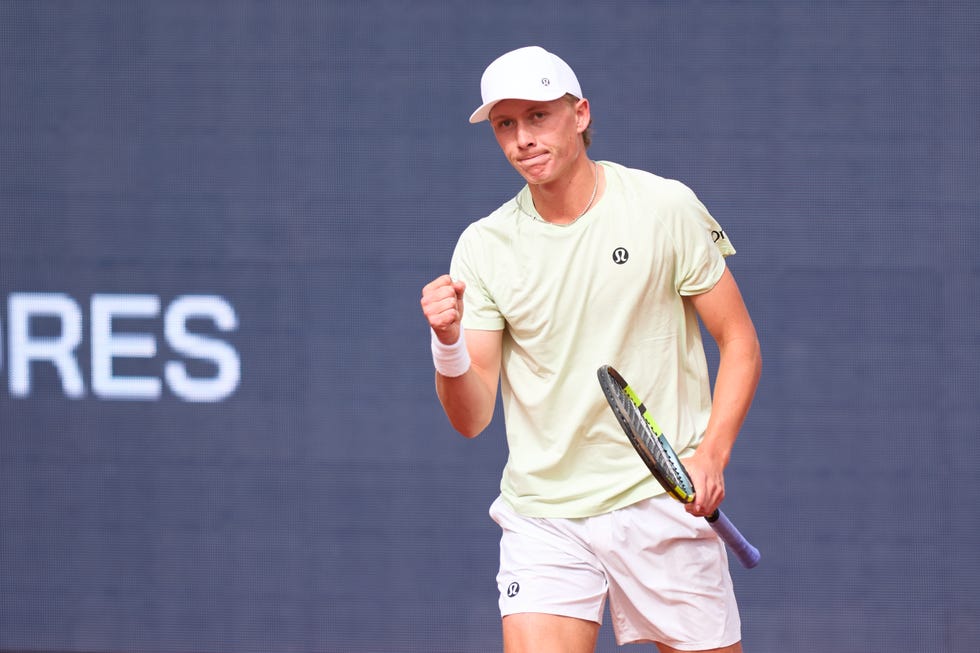
Ethan Quinn earlier this year.
There’s Ethan Quinn, a young American player who’s still finding his way on the tour. He’s really talented NCAA champion. And his coach told me that he works hard with them to what they refer to as “find your seven,” which is if you put your emotions on a scale of zero to 10, you can’t sustain a 10 throughout a five-set match. So after each point, he’s going through a routine, whether it’s breathing correctly or going to his towel or bouncing the ball a certain number of times. He has in his mind after each point to reset, find his seven, which is sort of what they have determined. It’s the number you want to be at so that you’re keyed up, but you’re not overly keyed up and hyper. And that’s a good place to be.
It all starts with breathing. Jason Stacy, who’s Sabalenka’s coach, he comes from jiu-jitsu. He talks about adapting it to tennis and the whole thing is in jiu-jitsu, if you’re upside down in a headlock, the first thing you have to do, you can’t panic about being upside down in a headlock. What you have to do is just try and find your breath because if you can breathe properly, you can think clearly.
That’s really important with most players and coaches. This is something that Novak has worked on for 20 years, is getting himself back to right here, right now, this moment. “What does my breath feel like? What does the thing I’m drinking feel like? What does the towel feel like?” All of these very present, thematic experiences. And if you can find that sort of peace, the crowd can be screaming and it’s okay because you can control your peace.
Who are you excited to watch at the U.S. Open?
Well, definitely Alex Eala because her matches have become great events. Carlos Alcaraz, because he hasn’t played in four months, so that would be the most exciting thing. Although a big part of me doesn’t want him to play because I think it’s too big to have that be the return. Yeah, to have that be a return. So I would say those two probably I would put at the top of my list.
 Dylan Buell//Getty Images
Coco Gauff is fresh off her Cincinnati Open win.
I’m always incredibly excited to watch Coco in New York because U.S. Open has become her party and to see how she handles that is an interesting experiment to watch in real time. Especially with all the trouble she was having with her serve last year at the U.S. Open, and that was where she really started to rebuild it; so to have this as the one-year marker and see… The fact is she’s back to having a low-key one of the best serves in tennis, even though she has this reputation for double faulting a lot and it going away, but she’s getting much closer to the point where it’s moving towards a weapon again. And it already is, in some cases.

Emily Burack (she/her) is the Deputy Digital Editor for Town & Country, where she covers entertainment, celebrities, the royals, and a wide range of other topics. Before joining T&C, she was the deputy managing editor at Hey Alma, a Jewish culture site. Follow her @emburack on Instagram, Twitter, and other social media platforms.