
The moniker “National Championships are won in April but are built in the spring” rings a bit hollow in a college basketball offseason that may never end. A slew of fifth-year seniors have brazenly challenged the NCAA for an extra year of eligibility, and it’s changing the complexion of teams just a few weeks before first official practices tip off in late September.
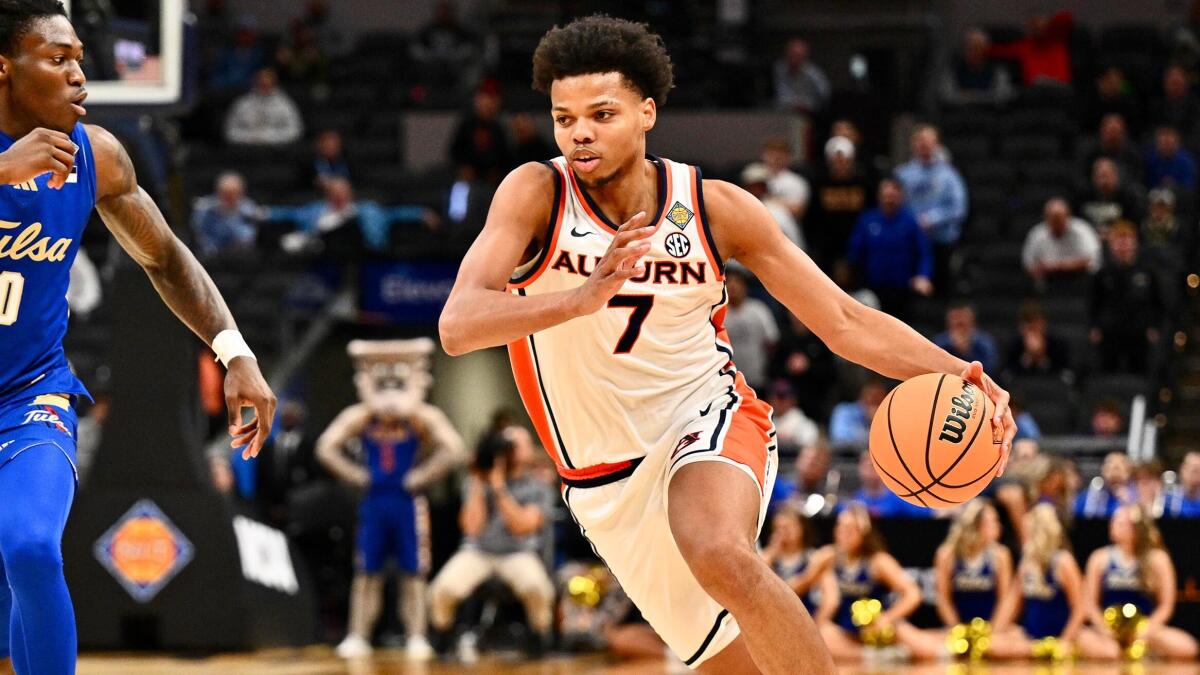
St. John’s is the latest team in the news. Rick Pitino earned a commitment from Auburn transfer Keyshawn Hall, one of the SEC’s premier scorers, on Tuesday to shore up a huge position of need. St. John’s, suddenly, is a different club. BYU is a different team with Michigan State transfer forward Jaxon Kohler. Kentucky is a different (and way better) team with Mark Mitchell. LSU’s backcourt picture has gone from murky to a potential strength after landing UCLA vets Donovan Dent and Skyy Clark.
But Will Wade was not finished. Former St. John’s star RJ Luis was handed a preliminary injunction from a Louisiana judge on Monday, clearing the way for the former Big East Player of the Year to return to college basketball for his fifth season. The same Luis who brazenly stayed in the 2025 NBA Draft despite plenty of pre-draft feedback that he was not going to be a first-round pick. The same Luis who a two-way deal with the Utah Jazz and an Exhibit 10 deal with the Celtics’ G-League club. Luis suited up in the preseason but never played in a regular-season NBA game. As the NCAA’s eligibility model became challenged, Luis began to explore a return to college basketball in the spring and committed to LSU in May.
He had no path to eligibility at the time. NCAA President Charlie Baker has stood firm that anyone who signed a two-way contract with an NBA franchise would not be eligible to return to college basketball.
Now he does.
Anything is possible with the right judge in college athletics these days.
Editor’s note: The SEC announced a new policy on Tuesday, barring anyone who signed a contract with an NBA team from joining one of its institutions. That would seemingly mean Luis is ineligible. Luis’ representatives are expected to take it to court.
Candid Coaches: Who will be the best college hoops team in 2026-27? Florida, Duke, Tennessee lead the way
Matt Norlander

As of now, the Big 12 is shaping up to be a major winner after a handful of victories in court cases have cleared the way for fifth-year seniors to return back to college ball. Texas Tech, Cincinnati, BYU, West Virginia, Oklahoma State, Arizona and Houston have all landed legitimate starters or rotation players from the fifth-year market. The Big 12 has reeled in 12 fifth-year seniors in the last month. The SEC is second amongst high-majors with seven fifth-year seniors currently committed.
Let’s dive into how the most notable names will impact their respective clubs.

St. John’s — Keyshawn Hall
Former school: Auburn
Instant analysis: St. John’s had a vacancy in its rotation after prized 4-man Donnie Freeman tore his Achilles in late June. Hall, who ranked fifth in the SEC in scoring at 19.3 points per game, can vault into the starting mix for the Johnnies … if he can get eligible.
Hall is one of the premier scorers that’s ever graced the portal, totaling 1,892 career points with stops at UNLV, George Mason, UCF and Auburn. But it always follows a similar script: a bunch of points, plenty of turnovers, little-to-no defense and a team that sits at home on Selection Sunday.
Quite simply, he’s going to have to change his game to succeed for Rick Pitino. Hall is an excellent isolation scorer who can get to the foul line at will. If St. John’s trots out Ruben Prey at the 5, the paint should be unlocked for Hall to get downhill and draw contact. He’s an excellent free throw shooter (86%) and has worked hard to become a 38% 3-point shooter on major volume. That’s all fine.
It’s defense, rebounding and conditioning. Those are non-negotiables for Pitino. That’s the stuff that Hall will have to master.
If Hall buys in, he can be one of the best players in the Big East.
Also, don’t be surprised if this is a bit of an insurance policy in case there are any hiccups with prized international point guard Quinn Ellis. The NCAA has cracked down on clearing international prospects, especially 23-year-olds like Ellis who have played professionally for multiple seasons. Losing a star point guard like Ellis would be a major, major blow at the final hour, but a trio of Hall, Tounde Yessoufou and Ian Jackson would be more than serviceable to build a Big East contender. Grade: A- — Trotter

LSU — RJ Luis
Former school: St. John’s
Instant analysis: On the basketball front, you can certainly see why Wade wants Luis on his roster. The 6-foot-7 wing is an elite athlete and an exceptional multi-positional defender. LSU has a real shot to be a nasty defensive team with Luis, Skyy Clark, Mo Dioubate and former Cleveland Cavaliers’ second-round pick Saliou Niang forming a trio of high-level defenders who can switch, scramble and execute Wade’s aggressive defensive coverages.
In theory, this LSU defense could be a takeaway machine, and Luis is also an excellent rebounder for his position, who can guard up and down the lineup rather effortlessly.
Scoring over 18 points and ripping down over seven rebounds per game is nothing to scoff at, but Luis used overwhelming athleticism to put up torrid counting stats in the Big East, and the SEC is regarded as a much more athletic league. Pure, raw athleticism will only get Luis so far in an SEC that’s shaping up to be the best in the country next year. He has to polish up his skill. How much improvement has he made with his shot? He drained 46 triples at a 34% clip last time he was in college, but Luis is notoriously streaky from downtown. Has anything changed in a year in the NBA developmental system? How much can he play on the ball for LSU? If lightning-fast point guard Donovan Dent is zooming up and down the floor, Luis is going to smash in transition, but there are still some questions about just how good this LSU halfcourt offense could be. If Luis has polished his handle, he could certainly become the guy that LSU runs its halfcourt offense through, alongside Dent.
It may be as simple as: defend, rebound, run and we’ll figure out the halfcourt offense later. Can you win this iteration of the SEC with a so-so halfcourt offense? I don’t think so. Florida is way, way too good. Grade: B — Isaac Trotter
Editor’s note: The SEC announced a new policy on Tuesday, barring anyone who signed a contract with a NBA team from joining one of its institutions. That would seemingly mean Luis is ineligible. Luis’ representatives are expected to take it to court.

Kentucky — Mark Mitchell
Former school: Missouri
Instant analysis: Pope has been under a microscope this offseason after Kentucky’s second-round exit in the NCAA Tournament. The Wildcats had a very high-priced roster last season, and with the talent Kentucky has landed, the roster’s cost is shaping up to be among the highest in the sport. Mitchell is a terrific add for Kentucky, assuming he’s eligible.
The fit next to Milan Momcilovic and Malachi Moreno in the frontcourt will be one to watch. You can argue that Mitchell is the best player who is seeking an additional year of eligibility, so Kentucky landing him is a massive win. On the flip side, the pressure is really, really going to be on Pope to get this right. The Wildcats have the talent on paper to compete for a Final Four berth. Anything less would cause for a revolution next offseason. Grade: A — Cameron Salerno
Mark Mitchell transferring to Kentucky: Wildcats land former Missouri big man after court allows fifth season
Matt Norlander
LSU — Donovan Dent
Former school: UCLA
Instant analysis: LSU’s a bold strategy this offseason of recruiting as many players as possible who may not be eligible for the 2026-27 season is something that will either be genius or backfire. I don’t think there will be an in-between. Dent is one of the best seniors fighting for an extra year of eligibility available, so it makes sense why LSU would at least try. One suitor that made a ton of sense for Dent before the dust settled was Gonzaga, but LSU could have some major holes on its roster if players aren’t given a fifth year of eligibility. Dent is one of the best passers in the sport and would raise the floor of this roster immediately, which is trying to make noise in Year 1 of Will Wade’s tenure. It’s hard to picture how this will play out when the season starts in November. However, the bottom line is adding a player of Dent’s caliber during late August is unheard of. Grade: A- — Salerno

BYU — Jaxon Kohler
Former school: Michigan State
Instant analysis: You could make a strong case that Kohler was the best fifth-year senior on the board. His fit with BYU is almost perfect. BYU needed rebounding in the worst way. Kohler is an insatiable rebounder who rated in the 96th percentile in defensive rebounding and the 85th percentile in offensive rebounding. That’ll play. BYU also needed a pick-and-pop big man to keep the paint open for point guard Rob Wright, who is a rim-pressure machine. Kohler can hold up that end of the bargain as well. Kohler splashed 58 3-pointers for MSU last season.
He also provides a maniac competitor, who should be a fan favorite in Provo from the jump. Kohler can play the 4 or the 5 for this Cougs’ club, which gives Kevin Young plenty of lineup versatility. BYU can lean offense with a five-man lineup of Wright, Collin Chandler, five-star freshman Bruce Branch, Tyler Betsey and Kohler. That’s five shooters. Or BYU can go with a double-big lineup with Kohler at the 4 next to Polish big man Jakub Urbaniak. You’ll also see some lineups with Kohler paired next to hyper-energetic, uber-athletic forward Khadim Mboup.
With Kohler in the mix, BYU has elevated from an NCAA Tournament-caliber team into a true Big 12 contender. Grade: A — Isaac Trotter

Oklahoma — BJ Edwards & Duke Brennan
Former schools: SMU and Villanova, respectively
Instant analysis: The Sooners have done yeoman’s work in the fifth-year senior market. Edwards and Brennan both project to be Day One starters for Porter Moser. Edwards was one of SMU’s most valuable players, and the Ponies missed him dearly in its late-season collapse. The 6-foot-3 guard is an excellent defender who chips in with creation, shot-making and rim pressure. He just does a lot of things well.
Brennan, meanwhile, is a major shot in the arm for OU’s frontcourt. He is slated to start at center after averaging 12.4 points and 10.3 rebounds for Villanova this past season. While he’s not an elite rim protector, Brennan has a ton of utility because he can pass and is always in the right place at the right time on defense. Oh, and he’s tough.
Oklahoma looks every bit the part of a dangerous NCAA Tournament team with Brennan and Edwards teaming up with star point guard Xzayvier Brown and returning forward Derrion Reid to form a legit nucleus of veteran difference-makers. Grade: A — Isaac Trotter

UNLV — AJ Storr
Former school: Ole Miss
Instant analysis: Storr is one of the most well-traveled players in college basketball and will play for his fifth different school in the last five seasons if he suits up for UNLV. After stops at St. John’s, Wisconsin and Kansas, Storr had an up-and-down season at Ole Miss under Chris Beard. Storr can be an impactful player in the right situation, but the fit is everything. Grade: B- — Salerno

Louisville — Seth Trimble
Former school: North Carolina
Instant analysis: This is all about fortifying Louisville’s defense. With Trimble in tow, Louisville has an elite point-of-attack defender to pair with big man Flory Bidunga, who will be on the short list for National Defensive Player of the Year. Trimble is an excellent athlete who can take the toughest assignments every single night. When Louisville plays Duke, Trimble will guard John Blackwell. When Louisville plays Miami, Trimble will shadow Acaden Lewis. You get the point. Trimble is also physical enough to switch up the lineup onto bigger wings or forwards, giving Louisville’s staff some extra defensive versatility from a scheme perspective.
There’s meat on the bone offensively, too. Trimble won’t ever be a high-volume 3-point shooter, but he’s an elite transition scorer joining a scheme that wants to score a ton in transition. Trimble won’t be a star, but he can impact winning with his defense, rim pressure, turbo transition scoring and knack for getting to the foul line.
Trimble will compete with Adrian Wooley and De’Shayne Montgomery to start at the 2, but don’t be surprised if Louisville explores starting Wooley and Trimble if Arkansas transfer wing Karter Knox isn’t up to snuff.
Louisville has spent an exorbitant amount of money on this roster. It’s time to win. Grade: B+ — Isaac Trotter
LSU — Skyy Clark
Former school: UCLA
Instant analysis: LSU has only four (eligible) players on its roster with less than three months until the 2026-27 season begins. So, what’s the solution for first-year coach Will Wade? Recruit more players who have eligibility in limbo. Clark will need a waiver to play a fifth season. If he’s eligible, he will add shooting, defense and a lot of college experience to LSU’s roster. Wade’s roster building this summer has certainly been a major question mark and storyline. If some or most of the players he recruited are ruled eligible, then LSU will be able to compete in the SEC. If they’re not, well, it could get ugly. Grade: B — Salerno

Texas Tech — Darrion Williams
Former school: NC State
Instant analysis: We all know how this is going to go because we’ve seen it work at such a high level. Darrion Williams became the best version of himself in Lubbock, helping Texas Tech make the Elite Eight in 2025, and that’s the expectation in his reunion. The Red Raiders have an extremely potent offensive ceiling with Williams in the mix. His ability to mismatch hunt, draw two defenders and spray it to snipers like Cruz Davis, DaKari Spear or Dra Gibbs-Lawhorn should give Texas Tech some easy buttons to press offensively while All-American big man JT Toppin heals up from a torn ACL.
But there were also times last year at NC State where Williams looked lethargic and disinterested. That won’t fly for McCasland, whose secret sauce may be how he draws out a different level of competitive fire from his club. You will compete, or you won’t play. Williams looks poised to be a 15-point, five-rebound, three-assist guy for a Texas Tech team that will be among the Big 12’s best once March rolls around. Grade: A+ — Isaac Trotter

Arizona — RJ Godfrey
Former school: Clemson
Instant analysis: Are you allowed to play for Arizona without being a weight-room warrior? Godfrey, a chiseled 6-foot-7, 240-pound forward from Clemson, will give this Arizona front line some serious thump. Arizona just battered teams last year with physicality from Koa Peat and Tobe Awaka. Godfrey can supply some of that. He’s not a shooter (8-for-37 from 3-point range in his career), but he knows that his bread is buttered in the paint. He’ll be an impactful rebounder, defender and secondary playmaker. Godfrey just impacts winning and projects to be a Day One starter for Arizona. Grade: A — Isaac Trotter

Syracuse — Amarri Monroe
Former school: Quinnipiac
Instant analysis: Monroe was on high-major radars a year ago at this time before exiting the portal to return to Quinnipiac for his senior season. He was one of the elite mid-major prospects with a combination of positional size and skill that is extremely tantalizing.
At 6-foot-7 and 230 pounds, Monroe will have no problem adjusting to the size and speed at the high-major ranks. Monroe won’t average 15-and-8 at Syracuse, but he’ll help Gerry McNamara’s club as a high-feel role player. Monroe just blends into any roster because he impacts the game in a ton of different ways. He can cut. He can post mismatches. He can knock down a jumper. He can make plays for others. He can guard three or four positions. Monroe also fits into the ethos of Syracuse’s new supersized roster. 11 of Syracuse’s top-12 players will be 6-foot-5 or taller. This looks like another no-doubt rotation player, but I’d expect Monroe’s defense to be ahead of the offense for a minute. Grade: B — Isaac Trotter

Houston — Chendall Weaver
Former school: Texas
Instant analysis: Weaver is one of the elite offensive-rebounding guards in college basketball. Do you need to hear anything else about his fit with Houston? That alone should curry favor with a Houston coaching staff that prioritizes rebounding more than anything else in basketball. Weaver’s motor is always revving. His athleticism and court coverage will also be a valuable asset for a Houston defense that traps, rotates and swarms everywhere. Grade: B — Isaac Trotter

Cincinnati — MJ Collins
Former school: Utah State
Instant analysis: There’s comfort in familiarity. Collins turned into the best version of himself (17.5 points, 36% from 3-point range) under Jerrod Calhoun at Utah State. Following his coach to Cincinnati should be a wise decision. Collins was one of the best athletes in a down Mountain West last year. He won’t be able to overwhelm opposing guards quite as easily in the Big 12, but the 6-foot-4 guard is a capable shot-maker who is excellent in transition, moves without the basketball well and does not turn it over. Cincinnati has a lot of good players on this team, but Collins may have the best case for All-Big 12 honors. Grade: A — Isaac Trotter

Tennessee — Jalen Washington
Former school: Vanderbilt
Instant analysis: Tennessee’s frontcourt desperately needed another body to fortify this group. Washington provides Rick Barnes with a chance to tap into some five-out lineups, but he can also play alongside DeWayne Brown or Miles Rubin in a Twin Towers look. Washington should have a path to play at least 18 minutes a night, and he’s an upgrade over VCU transfer Christian Fermin. While the 3-ball has never become a huge part of his arsenal, Washington should provide a serviceable target in the pick-and-roll game for Tennessee’s talented backcourt. He rated in the 84th percentile as a roller in pick-and-rolls last year, although Tyler Tanner has a ton to do with that.
Most importantly, Tennessee now has three playable big men it can cycle in and out as Barnes sees fit. That’s key after losing Jaylen Carey, JP Estrella, Cade Phillips and Felix Okpara to the portal or graduation. Grade: B — Isaac Trotter

Gonzaga — Javon Bennett
Former school: Dayton
Instant analysis: Bennett is a bit undersized at 5-10, but a supersized Gonzaga roster can cover up those gaps. Bennett, in return, can provide plenty of utility because he has a strap and rarely turns it over. Bennett shot 39% on 153 catch-and-shoot 3s last season for Dayton, and he is a very capable pull-up shooter as well. You can’t go under pick-and-rolls when Bennett is involved in the action. Grade: B+ — Isaac Trotter

North Carolina — Cameron Fens
Former school: South Dakota
Instant analysis: Fens adds a different look to North Carolina’s frontcourt. The burly 7-footer averaged 14.4 points and 8.7 rebounds in the Summit League last year. His offensive rebounding and wide screens should be useful for a UNC frontcourt that was a little light in the britches. But the defensive concerns are very real. Fens struggles to guard in space, and he will get picked on defensively in pick-and-rolls. Fens is not a problem-solver on that end for UNC, but he can be a serviceable rotation player. Grade: C — Isaac Trotter