
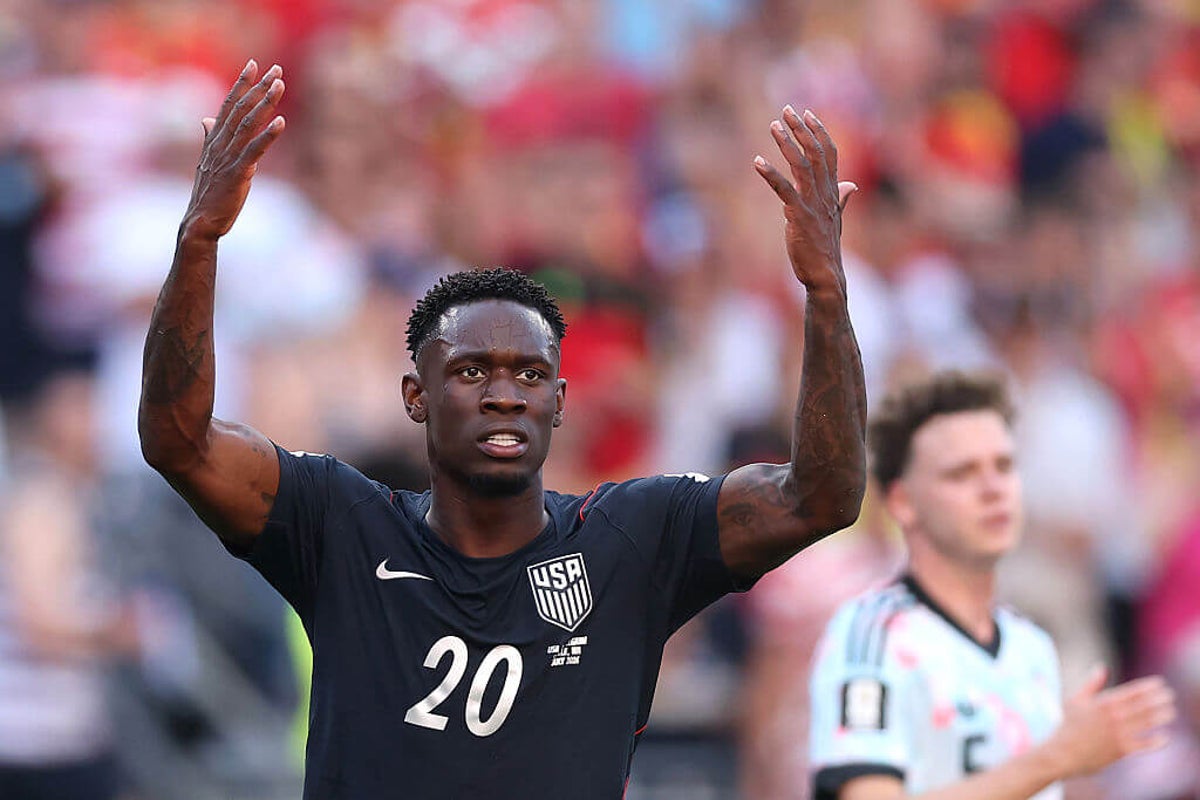
When Folarin Balogun was scoring World Cup goals with 30 million Americans watching, or as he sat onstage with LeBron James as the tournament wound down, he seemed like the prime candidate for a prime summer move to a superclub that could further his stardom.
He was 25 years old and one of the faces of the 2026 World Cup. He signed with LeBron’s agency, Klutch Sports, to capitalize. He went on major morning shows, and a major transfer seemed to be next. At the very least, surely, Balogun had to find a route to continued relevance.
Yet when clocks struck 11 p.m. in England on Tuesday and the transfer window closed, no such move materialized.
Balogun had traveled to Merseyside to sign with Everton, but after the 11th hour, with issues arising during his medical, an agreed-upon deal collapsed.
Even though Everton submitted a dealsheet document to the Premier League, a mechanism designed to give clubs an extra two-hour slot to finalize transfers that press up against the transfer window’s deadline, Balogun left the club’s Finch Farm training ground, opting not to put pen to paper.
Balogun was not alone in seeing a move from the Principality to the Premier League collapse. Monaco pulled out of a deal to sell Senegalese midfielder Lamine Camara to Chelsea at the eleventh hour ahead of Tuesday’s transfer deadline.
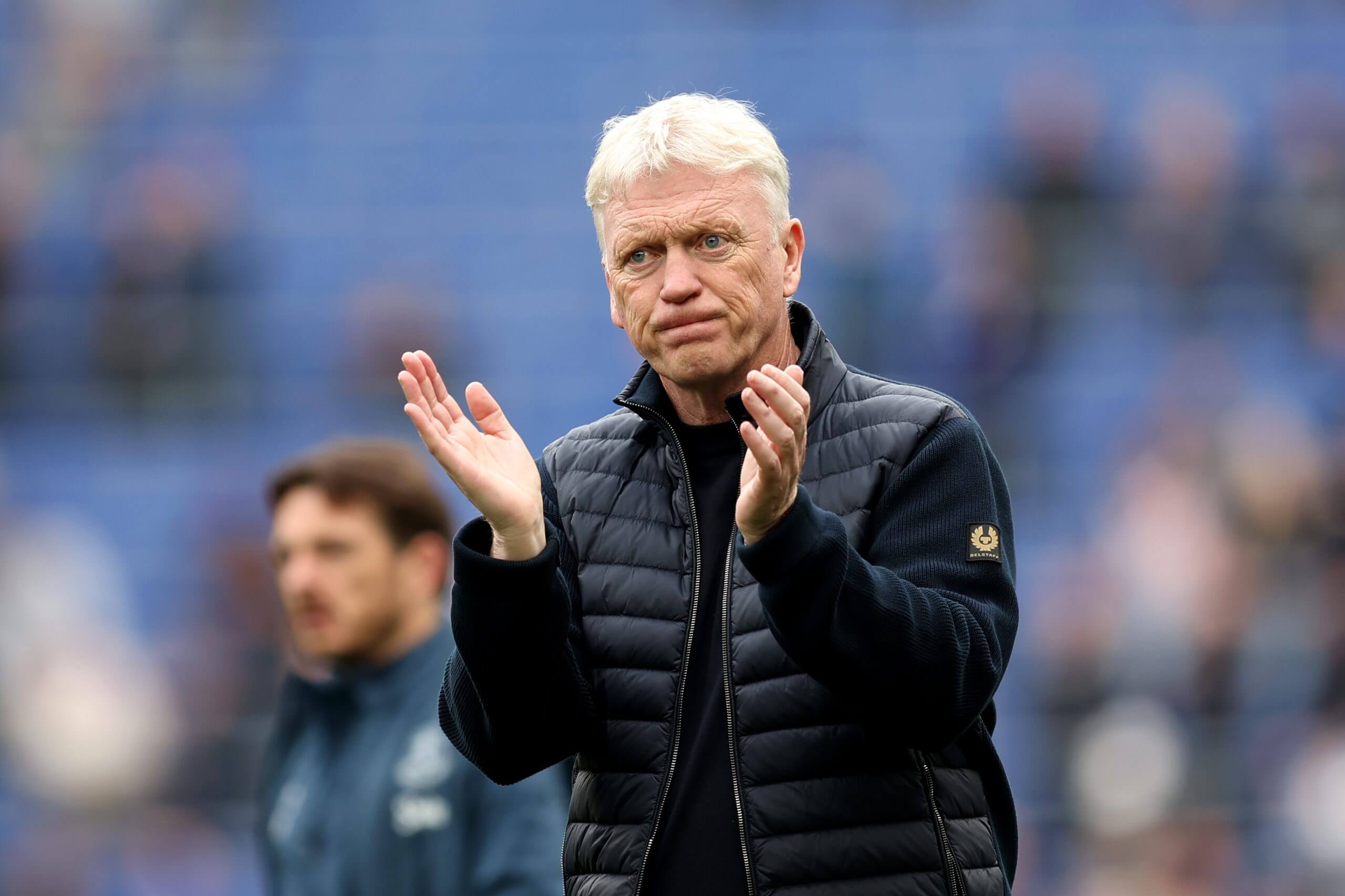
The Balogun non-deal left Everton and David Moyes with limited striker options as the transfer window closed. (Matt McNulty / Getty Images)
And so, at the end of a dreamy summer, two months after he seized every spotlight imaginable, Balogun will retreat to the relative anonymity of Monaco, to home games at a half-empty 16,360-seat stadium, to a league that few in the United States know how to watch.
It’s a hugely disappointing outcome for Balogun, who seemed ready to leap back to England. After lighting up the World Cup, he was vaguely linked with a move to multiple Premier League clubs, including Tottenham Hotspur. As the end of the summer window neared, Aston Villa popped up as a potential suitor, then Everton came calling. Although they weren’t ideal landing spots, each would have been a step up from Monaco.
Spurs ultimately secured a loan deal for Omar Marmoush (with an obligation to buy next summer), and Villa went for Nicolas Jackson, two strikers who scored a combined zero goals in nine 2026 World Cup games.
Everton initially agreed to pay an initial $52.3m (£38.58m; €45m) plus a prior sell-on fee and $5.8m (£4.3m; €5m) in add-ons; but then, after Tuesday’s medical, attempts to re-negotiate the deal ended with Balogun deciding against the move.
A summer that began with so much success and acclaim ended, presumably, in frustration — for multiple reasons.
To uninitiated viewers who tuned in on June 12 or July 1, Balogun looked like one of the very best soccer players on the planet. He introduced himself to the U.S. by scoring three World Cup goals and creating another. He wowed aficionados and new fans alike with his movement, his pace and his precise finishing. Then, when a red card kindled controversy all around him, he wowed everyone with his grace and poise.
Even before President Donald Trump got involved, Balogun was the archetypal breakout star who, in a bygone era, big clubs could not resist. He was James Rodriguez in 2014, or El-Hadji Diouf in 2002. In the old days, before data analysis and on-demand video became ubiquitous, when clubs let small-but-spotlighted samples sway them, a striker like Balogun might have jumped to, say, Barcelona or Manchester United or Paris Saint-Germain.

Folarin Balogun rapidly made a name for himself during the 2026 World Cup. (Alex Livesey / FIFA via Getty Images)
Nowadays, though, most clubs are smarter. They know that three full years at Monaco are better predictors of future success than three games against Paraguay, Australia and Bosnia.
Marmoush and Jackson have experience in England and other top-four leagues — unlike Balogun. Jackson, at age 25, has now reached double-digit goals in four consecutive seasons at Villarreal, then Chelsea (two), then Bayern Munich. Marmoush, 27, scored 37 goals in one-and-a-half seasons at Eintracht Frankfurt before his move to Manchester City (which limited his minutes as a center forward).
Balogun’s record at Monaco — 31 goals and 9 assists in 91 appearances — was hampered by injury. And to be clear, there’s a chance that Tottenham and Villa made mistakes. Even before the World Cup, Balogun had hit a new level at Monaco. He scored nine Ligue 1 goals (on a league-leading 8.8 xG) from Feb. 1, 2026, through the end of last season. He also hit two in the Champions League against PSG. He had sharpened his running off the shoulders of defenders. He looked ready for an elevated stage.
But prior to that double against PSG in February, he’d scored 20 goals in two-and-a-half seasons (4,734 minutes), a rate of 0.38 per 90 minutes. He did much of it in a league, France’s top flight, that boasts only two teams that would survive a season in England’s top flight, per Opta’s power rankings. At the World Cup, he toyed with aging Paraguayans and sped past overmatched Aussies, but he didn’t look all that special against Belgium’s Brandon Mechele (33, Club Brugge) and Nathan Ngoy (23, Lille).
So, there were lingering questions about his ability to light up the vaunted Premier League. Rather than jump straight to one of the biggest, richest clubs in the world, he needed an intermediate step.
Everton would have been that step. It seemed like a suitable platform, both for Balogun’s talent and for his prestige.

Monaco’s crowds are typically small compared to Ligue 1’s other leading clubs. (Alex Pantling / Getty Images)
Monaco, frankly, isn’t.
It’s a wonderful place to live, an impossibly fancy haven on the Mediterranean. And the club is well-run, with coveted players cycling through regularly. But it averaged 8,165 fans per game last season as it stumbled to a seventh-place finish in Ligue 1.
Monaco won’t have Champions League football in 2026-27. Instead, they will play in UEFA’s third-tier tournament, the Conference League. And its domestic games — Balogun’s games — are stuck on streaming services in both the U.S. and UK.
It is the opposite of the spotlight that Balogun embraced this summer like few American players ever have. The pressure and attention seemed to lift him. Some players crumble beneath it; Balogun seemed made to meet the moment.
Now, he will have to wait at least five months, and maybe a year, for his next one.