
The first thing you notice while sitting in the upper tiers of Arthur Ashe Stadium is the noise. A persistent exterior hum filters up from ground level, fed by the massive ventilation and cooling units that sit outside the stadium, the clack of the Long Island Rail Road to the north, and the forklifts receiving goods from the refrigerator trucks that keep the USTA Billie Jean King National Tennis Center flush with its essential supplies of Evian, champagne, and premium IPA. Overhead, planes descending toward LaGuardia airport ensure the auditory assault takes place by land and air simultaneously. In the lower rakes of the stadium, the babble of the spectators is incessant; it’s not unusual to overhear full-volume conversations on various non-tennis topics – work, family, romance, last night’s dinner – that continue without interruption for the duration of an entire match.
New York is famously noisy, and the US Open, as the most glamorous annual sporting event in town, has always been loud in sympathy with its environment. Indeed, the brashness of the American grand slam has historically been its major selling point, the signature that distinguishes it from the Australian Open (the “happy slam”), Wimbledon (strawberries and cream, all-white attire, the home of tennis), and the French Open (French). People have been complaining about the volume of the New York crowd for decades. But this year the noise at the US Open feels different. This year noise at the noisy slam has become A Problem.
Influencers have been fingered as the main culprit: one “creator” filming with a ring light caused a brief stoppage in Naomi Osaka’s first-round match; another group of dancing TikTokers went viral with their balcony routine during a match last week; various players have griped about ticketholders more interested in filming themselves than watching the tennis causing distractions during play. But influencers are not solely to blame, and there have also been more general grievances about fan behavior: Jakub Menšik got a drunk spectator ejected during his loss to Learner Tien, while Aryna Sabalenka complained about the persistent smell of weed invading the court during her victory over Kamilla Rakhimova. “It’s become a bit of a zoo,” said journeyman Adrian Mannarino last week when describing the atmosphere at this year’s Open, and there’s now an abiding sense that measures must be taken to arrest the lawlessness that has taken hold among the crowds.
How bad are things really, though? It’s true that the grounds at the US Open this year have felt at times oppressively crowded. But the shoving obliviousness of the fans – the constant staring at phones, the almost universal lack of spatial awareness, the inconsiderate jostling in the interminable lines for the courts and the drinks and the $38 French dip sandwiches and the tiny free canisters of Dove deodorant – reflects nothing more than the poisonous effect of tech and commerce on culture at large. The tournament is drenched in commercial influence: more than it is a series of tennis matches, the US Open is a showcase for brands shilling everything from yogurt to $100,000 cars.
Tournament organizers have no standing to complain about all those naughty influencers when they themselves have so cravenly courted the very commercial dollar that brings influencers through the gates; a tournament built on brand activations and clammy promotional partnerships, with all its associated chaos, is very much a creature of their own making. If the USTA was actually serious about reducing the impact of influencers at the Open, it would reduce its own dependence on the brands that solicit them. But that, of course, will never happen.
A fan takes a photo of the court during a night session at the US Open. Photograph: Patrick Smith/Getty Images
Then there’s the question of the actual disruptiveness caused by all this noise. Tennis, like golf, is unusual among the big professional sports in its insistence on a respectful silence during play; there’s none of the mockery and jeering throughout points that might greet, say, a basket player looking to drain a free-throw in front of a hostile crowd. Is it time for tennis to change? On the outer courts at Flushing Meadows, doubles teams and lower-ranked singles competitors lash the ball at each other with a ferocity that seems entirely undiminished by the crush of spectators gabbing and milling about in their vicinity. If these players are unbothered by the bickering couples, wayward kids, and visor-wearing dads loudly discussing their 401ks all around them, why can’t the thoroughbreds on the fancy courts learn to shut out the noise and stay focused?
But also: we live in a society! Yes, the smell of weed is unavoidable on the streets of New York, and sometimes (though I’ve never smelled it personally on the grounds of the National Tennis Center) that trademark skunk will waft on to the courts at the US Open. So what? Part of making a substance legal – as marijuana is in New York state – is that the odor of that substance is also legal. This city has always been an intensely odiferous place, and the land on which the US Open is now held has its own rich olfactory heritage; the ash heaps that used to dominate the point where the National Tennis Center now stands – made famous as the “Valley of Ashes” in F Scott Fitzgerald’s The Great Gatsby – were probably not, one imagines, all perfume and roses. As a nod to local tradition, what could be more appropriate than a US Open that’s consistently smelly?
I’m joking, of course, but part of coexisting with other humans is dealing with the externalities they generate – their sounds, their smells, their movements and outbursts. The debate over odor, noise, and influencer inanity exposes a deeper crisis in tennis and organized sport more generally. Every US Open now begins with a week of hand-wringing over ticket prices, hundred-dollar chicken-and-caviar nuggets, and the prospect of tennis’s flashiest tournament turning into a compound for the super-rich; the USTA then goes into crisis mode and activates all its standard messaging about “access” during the pre-tournament fan week, the underappreciated democratic benefits of demand-driven dynamic pricing, and the important work done to reinvest the windfall generated by the Open into grassroots development of the sport.
But then the tournament begins and the narrative shifts: what, the tennis purists immediately demand to know, is this boozy, stoner rabble stumbling through the gates and why are they making so much noise? Have they no respect for the sport? Suddenly, a public conversation that was about accessibility becomes a policing operation centered around heritage and etiquette; brands have reportedly already begun the work of influencer re-education, and during Sunday morning’s pre-match coverage there was much excitable conversation on the Tennis Channel about the example of Wimbledon, which is considering introducing a kind of finishing school for influencers to make sure the ring-light crowd behaves itself while taking in matches on the hallowed grounds of SW19. Well, which one is it going to be: do we want grand slam tennis to be a sport of the people, or the exclusive entertainment of a well-behaved, stupid-monied few? If tennis wants more fans, inevitably it will have to make peace with the fact that not all of them will be model spectators.
Fans look at their phones during the 2025 US Open. Photograph: Timothy A Clary/AFP/Getty Images
As annoying as a lot of the fans at the US Open are, it would be a mistake for the USTA to use the backlash against influencers, weed smokers, mid-point talkers, and various other behavioral deviants in the stands as the pretext for a restriction of access to the sport; if anything, a more affordable and democratic tournament might even dilute the impact of the reel-filming set. “You want people to continue to grow the sport,” Osaka argued when quizzed on this year’s influencer controversy. “I just think it has to be in a way that everyone knows the rules and the etiquette.”
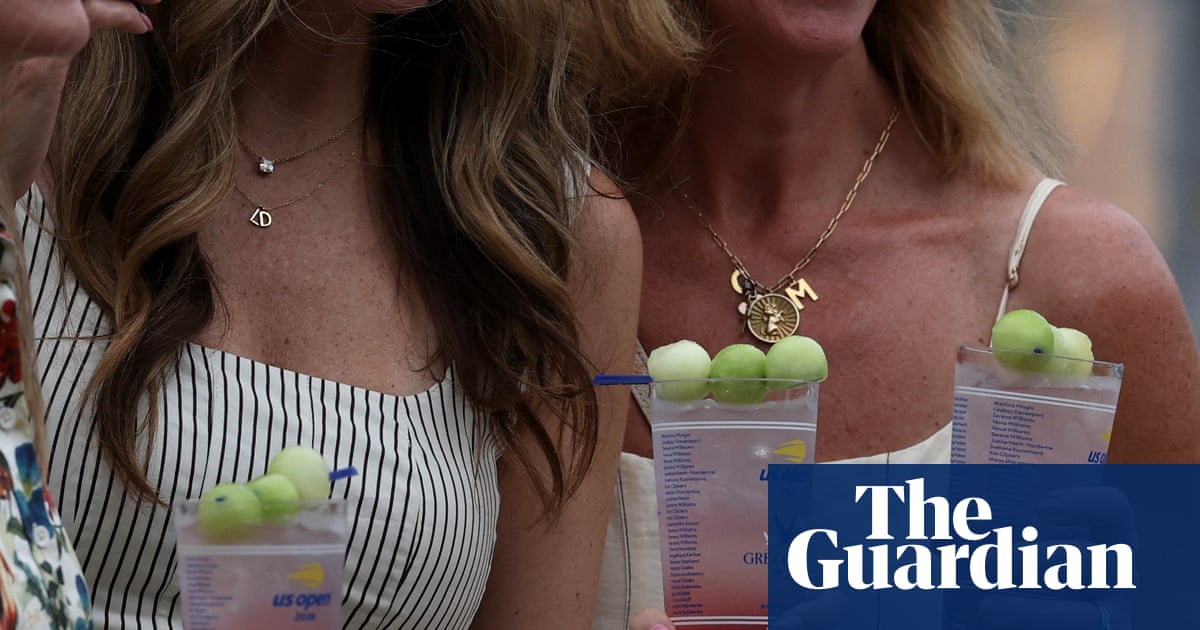
That seems like the most diplomatic and sensible line for players to take on the issue, but there’s ultimately a limit to how much etiquette and re-education campaigns can really achieve. I despise influencers as much as anyone, but it’s not up to me – or the USTA, or the players on tour, or anyone else – to decide who gets to buy a ticket to the US Open; the sole criterion of entry to the grounds at Flushing Meadows is the ability to pay the price of admission. Sporting crowds, even at expensive events like the Open, are necessarily a reflection of society – and the society of dancing TikTok buffoons, Honey Deuce selfie takers, and casual fans asking AI to explain who is contesting the match they are watching with their own eyes, as hideous as it may be, is simply the world that we live in now.
But nothing is inevitable. Tennis, like everything else in sport, like everything else in culture, can be whatever we want it to be. One of the most instructive walks you can take at the US Open is once you leave the grounds. Exiting to the south and west, you’ll find groups of mostly Hispanic families and friends having the time of their lives on the vast fields of Flushing Meadows Corona Park, playing football and volleyball and grilling and drinking long into the night; from one of the park vendors, a giant skewer of chicken giblets, served on a paper plate with roasted potatoes and red onion and doused in salsa picante, will set you back $6, a far better deal than anything you’ll find on the US Open’s miserable menu of overpriced “viral” culinary abominations.
Continuing west you’ll eventually land in Corona, a densely populated working-class neighborhood with a significant presence of Mexican and Ecuadorian immigrants. Here the contrast with the hordes at the US Open is genuinely fascinating. The streets are clamorous and intense, filled with the clatter of the elevated 7 train, the pop and sizzle of the food trucks, the chatter of twilight conversations on stoops and sidewalks, and the slap-slap-slap of the games of dominoes that crowd every corner. But there are no phone-gazing zombies meandering across pavements; there’s none of the greedy insensitivity of the masses at the Open; there aren’t even many devices visible. These streets are packed with people and thrumming with life, but their vibrancy is neighborly, uplifting, and welcoming, rather than hectoring, selfish, and bland as is the case for the hyperactivity beyond the entrance gates of the National Tennis Center.
I’m not suggesting, of course, that the US Open should relocate to 37th Avenue in North Corona, but the juxtaposition of these two ideas of urban coexistence is powerfully informative. Changing the crowds at the US Open would mean changing society – throwing away the phones and the chatbots and the Bluetooth microphones, rejecting the delusions of the attention economy, saying once and for all that no, in fact, you will not “get ready with me”. It would mean embracing a life of community and human contact and non-screen-mediated concern for each other. But until the distant day when that happens, we’re stuck, I fear, with more of the same – and the US Open will continue to reflect our profoundly stupid and ugly cultural present.