
Valdas Dambrauskas can phone a friend. He can maybe even turn around and ask the audience.
A former Who Wants To Be A Millionaire contestant in his native Lithuania, Dambrauskas used his winnings to pay for his coaching badges in England. On Thursday, he will walk the sideline to the away dugout at Old Trafford.
Sabah, last season’s title winners in Azerbaijan, travel to Manchester United in their first-ever game in the Champions League proper, having overcome The New Saints of Wales, Finland’s KuPS, Danish side Aarhus and Hapoel Be’er Sheva from Israel in four rounds of play-offs.
They have already played eight games in the competition since the middle of July in order to play (at least) another eight between now and late January.
It is a reminder of the continued eclecticism the Champions League can still occasionally bring, especially in its expanded format, now into its third season.
Sabah did not exist as a club a decade ago, only being formed in 2017. Now, improbably, they prepare for further league-phase games against Barcelona, Arsenal, Napoli and Borussia Dortmund, hoping, perhaps, for much more than a reputation as an inconvenient and long away day for Europe’s elite, and aspiring to a shock, like the one everybody’s favourite Transnistrians, Sheriff Tiraspol, pulled off against Real Madrid at the Bernabeu in this competition’s old group stage in 2021.
The Champions League is not just the establishment. It is new faces such as Sabah, Viking of Norway and Austria’s LASK and, remarkably, Como. Some come in the footsteps of fallen giants; Como, for instance, qualified at the expense of Milan and Juventus, finishing fourth in Serie A. They may now be monied like a lakeside hotel, glittering like the water beyond its terrace and impeccably coached by a once-great player who promises to be the game’s next great coach in Cesc Fabregas, but they were fourth-tier as recently as 2019, and the progress they have made shouldn’t be taken for granted.

Fabregas celebrates beating Parma in May (Giuseppe Cottini/Getty Images)
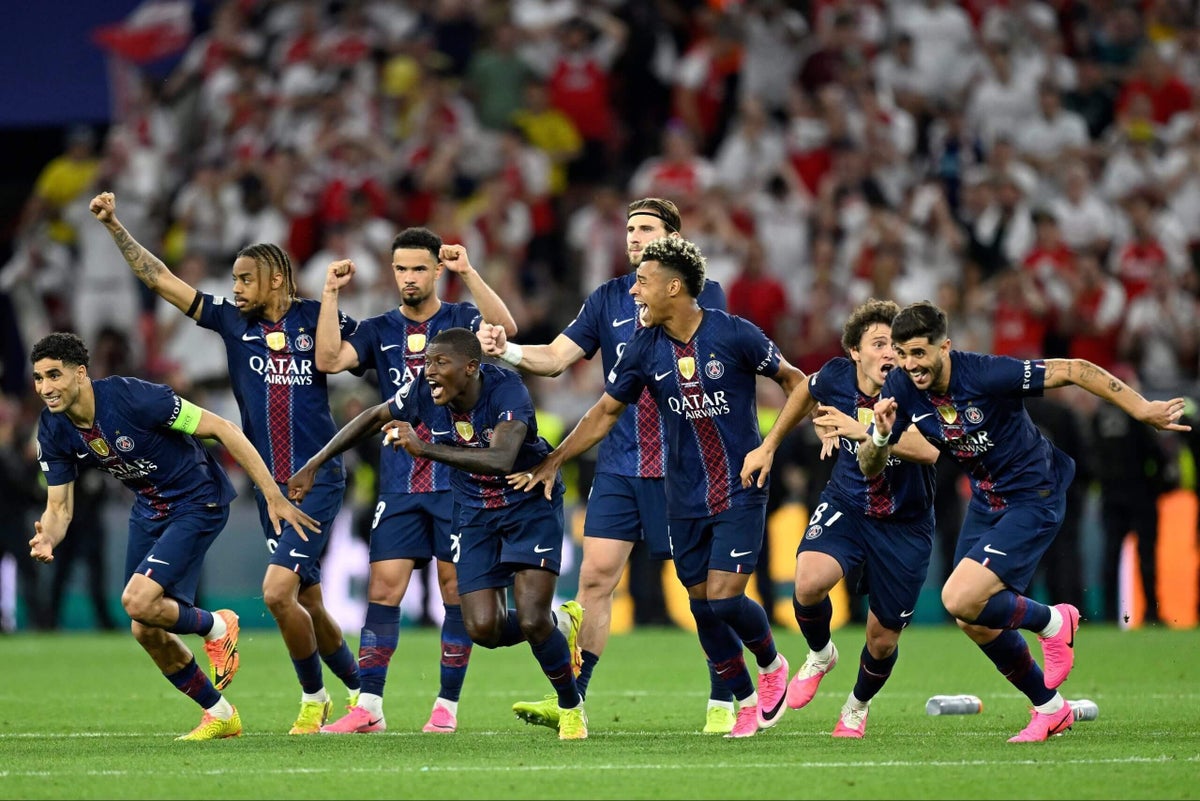
Fabregas’ 2026-27 Champions League journey will take the Catalan back to his hometown, as Como play Barcelona at the end of January. Before that, they have Paris Saint-Germain, the back-to-back European champions who like to perform a league phase rope-a-dope act, then liven up in the knockout rounds.
PSG aside, finishing top four in the league phase is usually a good predictor of the Champions League’s final four. In the first season of the new format, three of the four teams who performed best from September to January made the semi-finals. Last season, it was two. The outlier in both? Oddly, PSG. In 2024-25, they required a play-off to make the knockouts proper, pummelling fellow Frenchmen Brest 10-0 on aggregrate. Last time, Monaco, another of their domestic rival in Ligue 1, very nearly knocked them out at the same stage.
These antics have, fleetingly, left the impression that PSG haven’t got what it takes, or aren’t what they once were.
It’s similar to how Madrid — the most recent club to win the Champions League three times in a row (from 2015-18), and the only one to do so in the modern era — tended to confound observers who couldn’t read coach Zinedine Zidane and expected more than off-the-cuff individual brilliance from a champion of Europe.
PSG divide less in this regard. Nobody looks at them and asks: “How did they do that?”
With Pep Guardiola on sabbatical after stepping down at Manchester City and Jurgen Klopp studying international football as the German national team’s new coach, there is no doubt that Luis Enrique, a double treble-winner with Barcelona (2014-15) and now PSG, is the pre-eminent manager in Europe at the moment. He turned Ousmane Dembele into a Ballon d’Or winner. Five members of his PSG team made the top 10 in the voting for that award last year. None of them are superstars and, as such, they may split the vote this time around.
A poor start to the season — PSG are winless in Ligue 1 after three matches and seven points off the top — has prematurely led to doubts about their ability to join Madrid and the Ajax and Bayern Munich teams from the 1970s as the only ones to three-peat. Goalkeeper Matvey Safonov doesn’t exactly convince and isn’t considered one of the world’s best. Several elements of their supersub bench of last season were sold off for a combined €400million (£343m; $465m) this summer, raising some questions about depth.
But PSG have earned a reputation as the best-run operation on the continent in recent years. They have continuity, discipline and patience.
For all the Safonov sceptics, PSG retained the Champions League having sold his predecessor Gianluigi Donnarumma, who is considered one of the world’s best, last summer. The previous season, they waited six months to buy Khvicha Kvaratskhelia from Napoli in the winter window and got him for a price, €80million, that looks cheap when compared with the going rate for wingers and other attackers these days. Fellow forward Xavi Simons was let go in 2022, bought back for €4m 12 months later, then sold again in January last year for €50m. This is remarkable business.
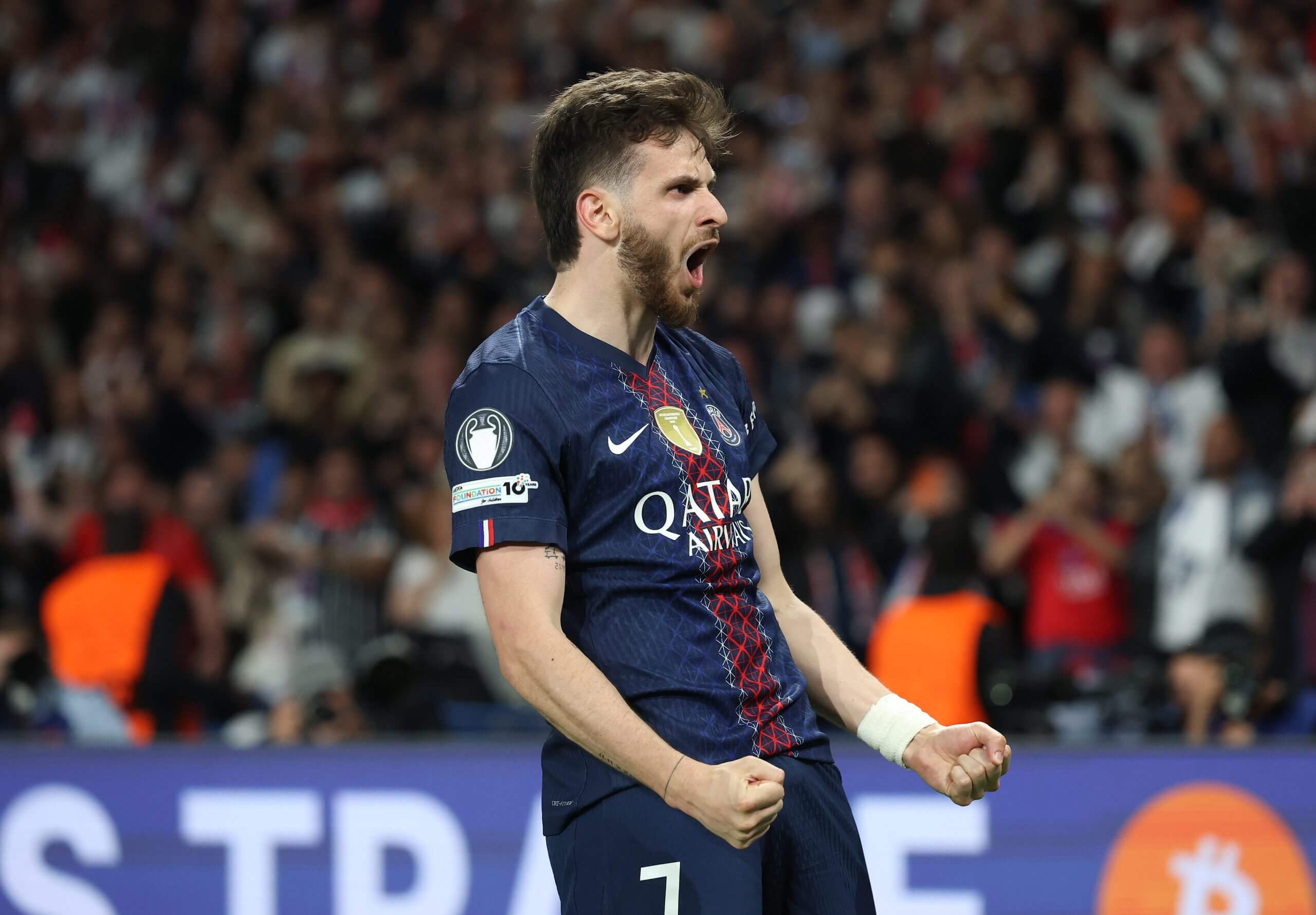
Kvaratskhelia has been outstanding for PSG (Alexander Hassenstein/Getty Images)
Who then might be a match for title holders who benefit from resting players in 18-club Ligue 1 and having a fresh team for the back-end of the Champions League each season? May’s runners-up Arsenal are at least on track to maybe lift the trophy for the first time. Every year for three years now, Mikel Arteta’s team has gone one better: quarter-final, semi-final, final. The deepest squad in the competition has only become deeper this summer, too.
However, the unsuccessful pursuits of Vinicius Junior and Julian Alvarez, sagas that ended with both players staying at their Madrid clubs, Real and Atletico respectively, perhaps made acknowledgement of a couple of things.
On the one hand, Arsenal’s need for a proven match-winner in attack. On the other, the inconvenient truth for the big-spending Premier League that the world’s best players continue to choose Real Madrid and domestic rivals Barcelona over them. Vini opted to remain at the Bernabeu, Alvarez only wanted Barca and now has to mend his relationship with Atletico, who will be determined to reach a final that will be played in their Metropolitano stadium next June.
Other than Arsenal, it is hard to see where else the big challenge comes from among the super-rich of England.
Manchester City are in transition.
This is a team who finished with 71 (13 off the title pace) and 78 points (seven) in the Premier League and suffered Champions League elimination in the knockout phase’s play-offs and then the round of 16 in Guardiola’s final two seasons. If that was all the best coach of the era could wring out of City, albeit in apparent tormented personal circumstances, it does make you wonder what uplift his successor Enzo Maresca can deliver.
A prodigious Champions League goalscorer, Erling Haaland’s first season at City, their 2022-23 treble campaign, remains his best for them in this competition.
Quite how a new-look side evolve after the exits along with Guardiola of key midfield pair Rodri and Bernardo Silva is a source of interest, and it remains to be seen whether a team coalesces after the half a billion net that City have invested in new signings over the past two and a half years. Donnarumma is a Champions League winner. Enzo Fernandez has won a World Cup. Rayan Cherki and Ayyoub Bouaddi are a pair of artists in their Blue Period. But is it enough?
Barcelona’s acquisition of the 2024 Ballon d’Or winner and this year’s World Cup player of the tournament, Rodri, feels significant in manager Hansi Flick’s ability to control games better while committing to his high line.
While Rodri has been reunited with several team-mates from the triumphant Spain squad he captained at the World Cup, most notably Lamine Yamal, the focus in Catalonia has been on Barca’s inability to sign Alvarez amid tensions with Atletico.
The summer departures of Robert Lewandowski and Ferran Torres, scorer of the winning goal in July’s World Cup final, without an outstanding replacement, other than Gabriel Jesus of Arsenal as a stop-gap, coming in threatens to hang over Barcelona like a dark cloud. Or does it? They have scored 17 goals in the first four La Liga games this season, and a fit-again Raphinha considers himself back to the form that put him in the conversation for the Ballon d’Or a year ago.
By missing out on Rodri, the Toni-Kroos-and-Luka-Modric-sized hole in Real Madrid’s midfield remains.
New coach Jose Mourinho, for now, does not seem to mind. Back at Madrid 13 years after his departure, this is the best squad he’s had at his disposal since his subsequent second spell at Chelsea. That was his most recent league title-winning team (in 2015), and it remains to be seen if he can rebound and give his career a second wind just as Carlo Ancelotti did between 2021 and 2025 when he went back to the Bernabeu for another go.
Madrid spent big in the summer, including making teenage winger Yan Diomande the most expensive African player of all time. What they don’t lack is speed and skill in attack — an abundance that could make them lethal in transition.
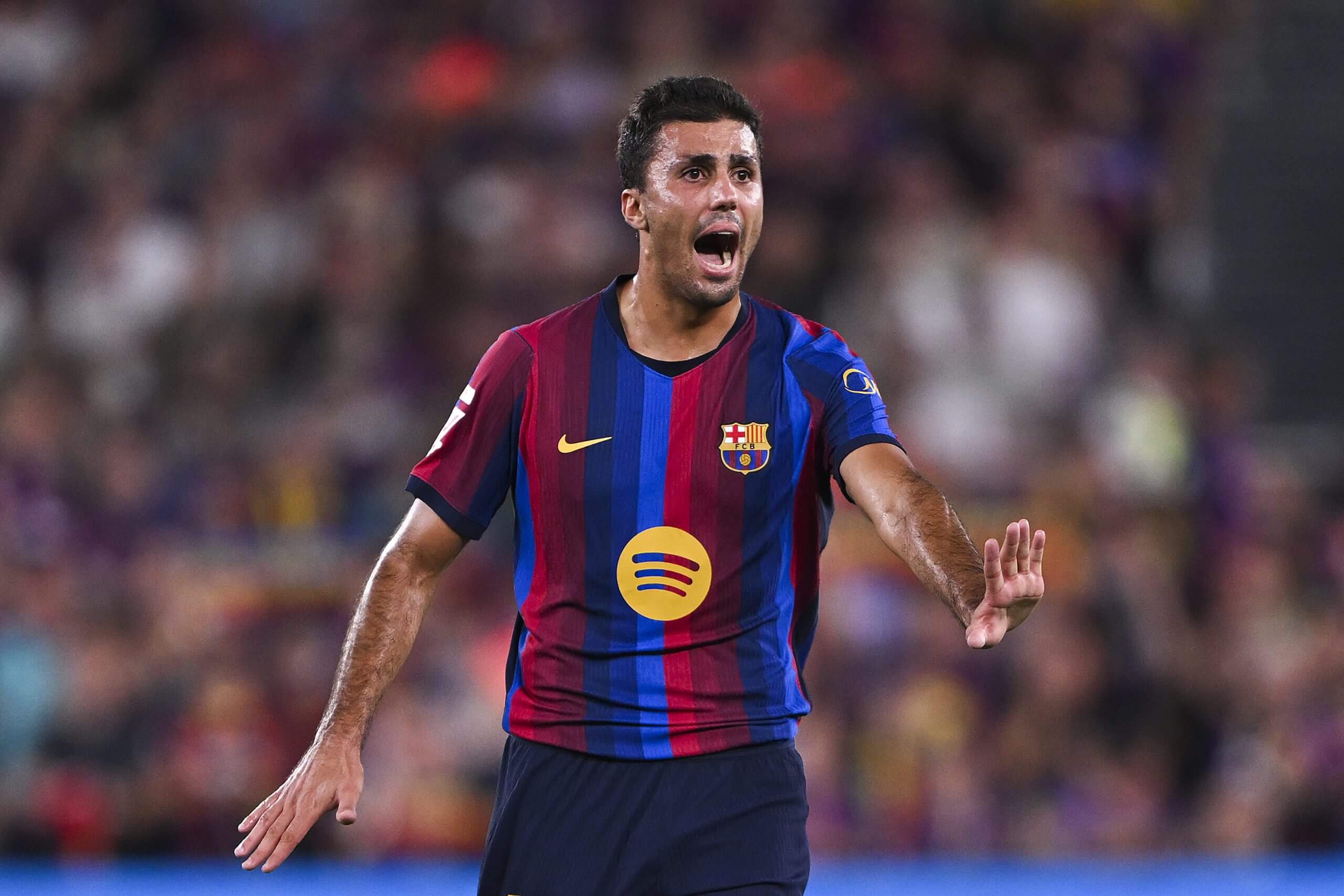
Rodri has joined some of his fellow 2026 World Cup winners at Barcelona (David Ramos/Getty Images)
Kylian Mbappe was the Champions League’s top scorer last season with 15 goals. He returned from the World Cup as the tournament’s career record scorer, too. It is no wonder Mourinho has been actively campaigning for him to win the Ballon d’Or ever since.
The Frenchman’s principal rival for that prize, at least according to the betting markets, is Bayern’s Harry Kane.
Bayern smashed the record for goals in the Bundesliga last season, with 122 in the 34 matches. They emerged as PSG’s principal Champions League challengers and the semi-final first leg against them, a thriller of a 5-4 defeat in Paris, was one of the greatest games in the competition’s history.
Michael Olise has stayed amid reports that he was Madrid’s first choice, over Diomande. The hierarchy have applied a couple of touch-ups here and there, adding Germany full-back Nathaniel Brown and Ismael Saibari, who had an impressive World Cup up front for Morocco, but this is a near-complete team.
The outsiders continue to be Atletico and Inter, with the latter having a renewed Champions League focus after last season’s disappointment; out to Bodo/Glint of Norway in February’s first knockout round.
The Italian champions’ addition of Three Lions — England internationals John Stones, Curtis Jones and Djed Spence — is aimed at bringing more dynamism to a wily group who have reached two Champions League finals in four years. Coach Cristian Chivu still has to prove himself at this level, but he isn’t the only one, as many teams all over the continent find themselves in a state of flux.
The long road to Madrid on June 5 begins…