
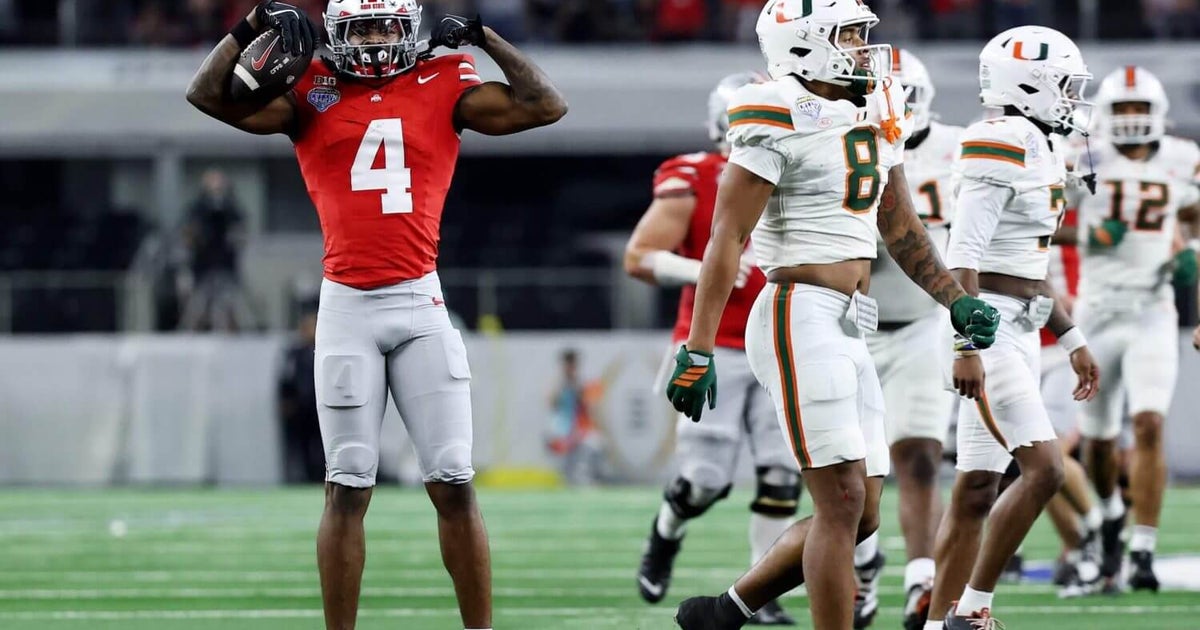
During an offseason survey of coaches and staffers around college football, a general manager in the Big 12 called his own audible. He said the No. 1 thing he’d most like to see change in college football right now is increased transparency in the world of name, image and likeness money.
“Everyone has to turn over what they pay their guys,” said the GM, speaking on condition of anonymity to offer candid assessments of opposing teams and players. “Every other sport does it. You can see how much (Nikola) Jokic and Myles Garrett make. Now, an agent can’t tell me what Oklahoma is paying some guy. I could actually look it up.
“And, if you’re not in favor of transparency, why not? The marketplace is dictated by the agents, the parents and the players, and we don’t have a way to fact-check it. It could hold a fire to some of these agents who are trying to extort money because they’re trying to reset the market at every chance they get.”
This summer, The Athletic spoke with more than 70 sources to build the most specific estimates yet of what every major college program is spending on its roster this season. You can view our full findings here, but the individual responses for specific schools often varied dramatically.
We worked to get as many independent, trustworthy estimates as possible, and we contacted at least one employee from each school to give them an opportunity to offer information about their roster budgets. The best source I think I have on this stuff told me right before the season that there were six programs with a budget of $50 million this year: LSU, Ohio State, Oregon, Miami, Texas Tech and Texas. He’s well-sourced at just about every big program in the country, but that doesn’t mean his information is rock-solid. Compiling the true value of some 100 college football players’ deals can get quite murky, and so much ends up open to interpretation.
It’s not all fuzzy math, but the ways in which top programs account for the money moving around in their deals with players is complicated by several factors:
• Agents, often the most likely party to leak the terms of a deal, factor in incentives that aren’t part of the bottom-line expectation of the contract’s worth.
“The presentation of it is all over the place,” said a former Power 4 general manager. “It’s not apples to apples. In the NFL, you have ‘likely to be earned’ bonuses and ‘not likely to be earned’ bonuses … and when you hear those numbers, it’s usually coming from the agent and they’re going to do everything possible to float that number as high as possible.”
Those inflated numbers could be an extra 20 percent, and in some cases much more, the former Power 4 GM said.
“You might hear about a full number, but what’s really the guaranteed number?” one ACC GM said. “On the college GM side, we’re usually writing incentives that we don’t think the kid’s gonna make, and if he does, we’re happy that we’re paying him for it. But nine out of 10 kids are probably gonna see zero out of the incentives, so when I look at our books, it ends up almost insignificant because it might be $100,000 or $200,000 — and that’s over a lot of players.”
• The value can get skewed because a player’s deal may include access for a year to a vehicle or residence that he doesn’t actually own. The car or the condo may be worth six figures, but it’s not his to sell.
“I think those ‘gift-in-kind’ things, if you want to call it that, are one of the reasons why the numbers are inflated,” the ACC GM said. “And when you start doing the math on all the ones that are really inflated, you very rarely get ones that are deflated, so there’s not really an averaging out of it.
“Then there are guys with two-year deals and the agents are putting it out as if it’s a one-year deal: ‘Yeah, he’s getting $1 million.’ But it’s actually over two years. That happens probably more than you think.”
• In some cases with top-tier players, deals from national corporations or even big local businesses can impact what the agents broadcast that a player is getting, though that money is not coming from the school itself.
“It’s tough to say what exactly is Ohio State paying (star receiver) Jeremiah Smith because he’s getting massive national deals right now,” said a former Power 4 athletic director. “But who knows what exactly they are on the hook for?”
A few weeks ago, when The Athletic surveyed over a dozen coaches about their thoughts going into the 2026 season, we asked them which program they thought had the biggest NIL budget in college football. We allowed them to name more than one school if they felt they couldn’t just pick one.
Texas received the highest number of votes with nine. LSU, Miami and Texas Tech each received seven votes. Ohio State got six votes, USC had five votes and Oregon had four.
“I think there’s about six in the same level, all in that $50 million range,” said the Big 12 GM referenced above. “The schools are all gonna lie about it and they’ll never admit that, since they’re not following the rules with this cat-and-mouse game. The math just isn’t math.”
Coaches and GMs are only part of the group we interviewed to hone our estimates for each school’s roster spend. Their read on the nation’s richest programs underscores that when you are able to build a team talented enough to compete for a national title, others will take notice and attempt to do the math — then try to use it to help their own cause.