
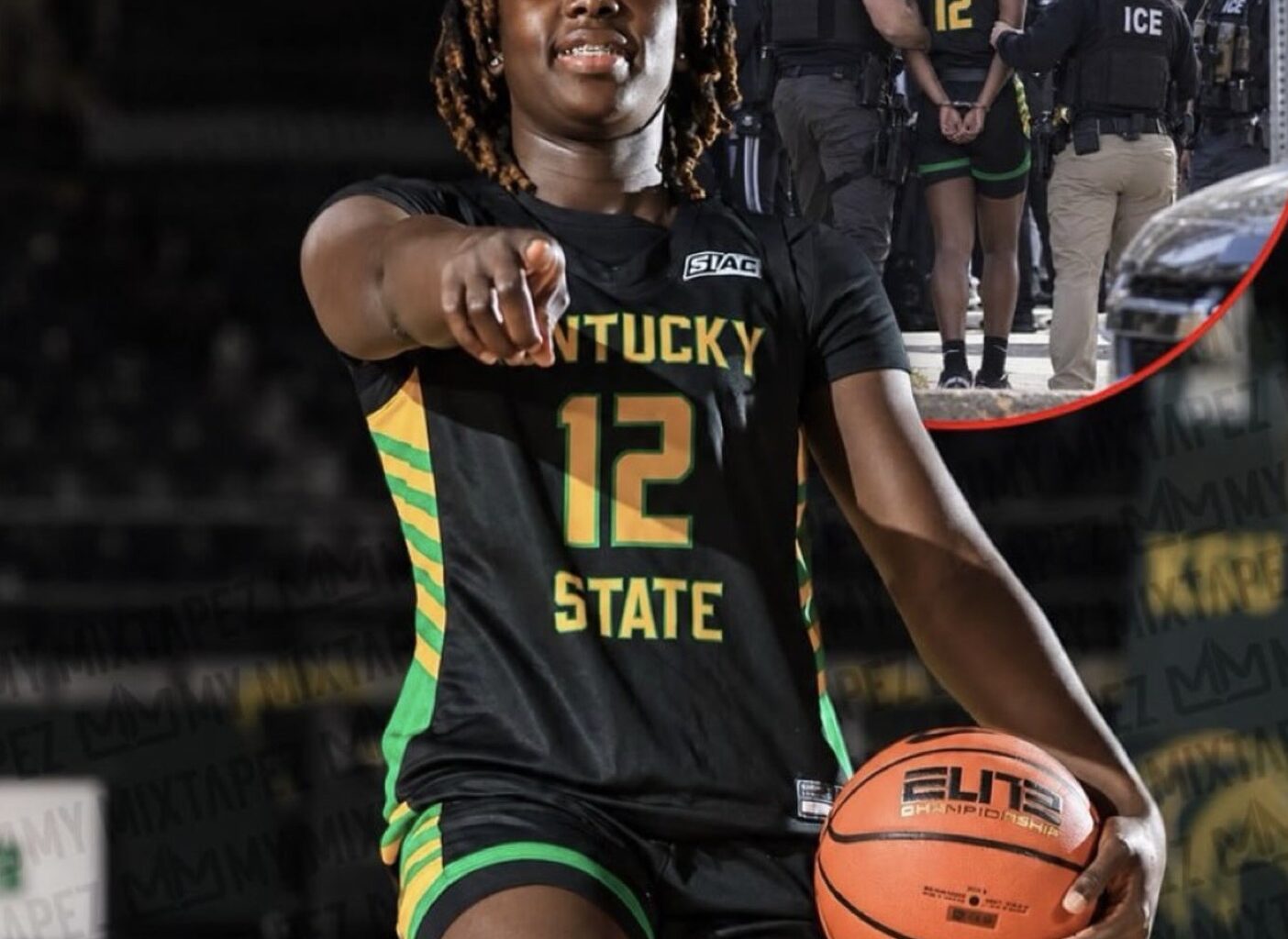
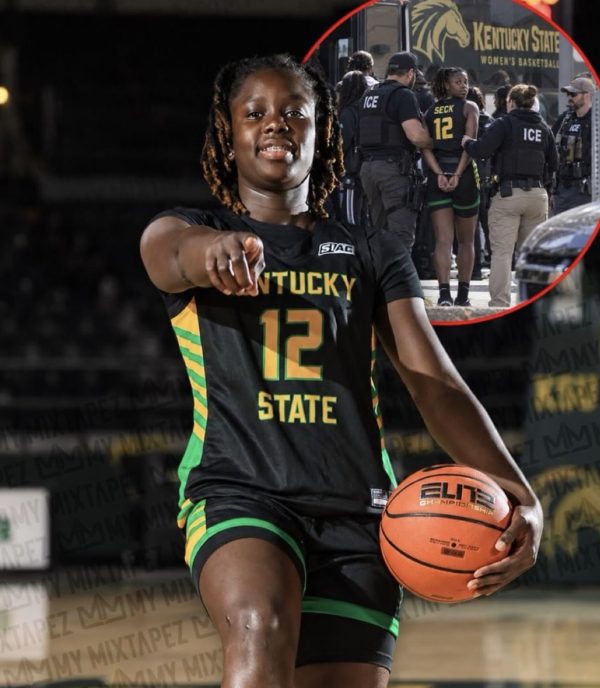
A college basketball player from Senegal has spent more than six weeks in immigration custody after being detained at a Kentucky airport while traveling with her team, with her attorney now raising serious concerns about the medical treatment she has received while being held.
Aminata “Amina” Seck, a 26-year-old senior center for Kentucky State University’s women’s basketball team, was taken into custody by U.S. Immigration and Customs Enforcement on August 7 at Louisville Muhammad Ali International Airport.
Seck, who is from Dakar, Senegal, had passed through airport security and was preparing to travel to New York with Kentucky State for a basketball trip when she was detained. Instead of boarding the flight with her teammates, the 6-foot-4 student-athlete entered an immigration detention system that she remains in more than six weeks later.
According to Sadiqa Reynolds, an attorney helping with Seck’s case and the former president and CEO of the Louisville Urban League, an issue involving Seck’s student visa appears to be at the center of the case. Reynolds said Seck may have missed a deadline involving her immigration paperwork while dealing with significant medical issues, including recovering from back surgery.
“It’s not like she was hiding,” Reynolds told WEKU. “She’s been at Kentucky State, going to school, playing basketball. Pretty high profile. I don’t think it was anything that was done intentionally.”
ICE has not publicly detailed the specific circumstances that led to Seck being detained, according to recent reports. Kentucky State has also declined to discuss her case, citing privacy concerns.
Since August 7, Seck has reportedly been moved between at least four detention facilities, including locations in Kentucky and Chicago. As of September 21, she was listed as being held at the Grayson County Detention Center in Kentucky.
But her immigration status is only one part of the growing concern surrounding her case.
Seck was already dealing with a significant leg injury when she was detained. Reynolds told reporters that Seck has an ACL injury requiring surgery and has experienced considerable pain while in custody. According to Reynolds, Seck has struggled to receive consistent medical attention and even regular access to ice for the injury. More recent reporting says she has received medication, including ibuprofen, but her attorney maintains that she requires more substantial treatment.
“She needs surgery. She needs medical attention,” Reynolds said while calling attention to Seck’s condition.
The medical situation has also made obtaining information about Seck increasingly important for those advocating on her behalf. Reynolds said that when she attempted to visit Seck at the Grayson County Detention Center, she learned that Seck had been taken to a hospital but initially wasn’t told which hospital.
Before her detention, Seck had developed into an accomplished student-athlete at Kentucky State, an HBCU competing at the NCAA Division II level.
After transferring from Langston University, another HBCU, Seck became an important part of the Thorobrettes’ frontcourt. During the 2025-26 season, she averaged 11.9 points per game and led Kentucky State on the boards while contributing on both ends of the floor. She earned Third-Team All-Southern Intercollegiate Athletic Conference honors and received the SIAC Elite 16 award, which recognizes academic achievement at conference championship events.
Kentucky State head coach Amani Williams has reportedly remained heavily involved in efforts to support her player. Reynolds has credited Williams with going “above and beyond” while Seck remains separated from her teammates.
For Seck, what began as a routine basketball trip to New York has now turned into more than six weeks away from her school, teammates and normal medical care.
Her case also brings several issues together at once: immigration enforcement involving international student-athletes, the vulnerability of student visa status when medical circumstances interfere with administrative requirements and, perhaps most urgently, access to appropriate healthcare while in federal immigration custody.
For now, Seck remains detained while her representatives continue working on her immigration case and pushing for the medical treatment they say she needs.
A basketball season that should have been about preparing for another year at Kentucky State has instead become a fight to get the Senegalese student-athlete back to her life outside detention.