
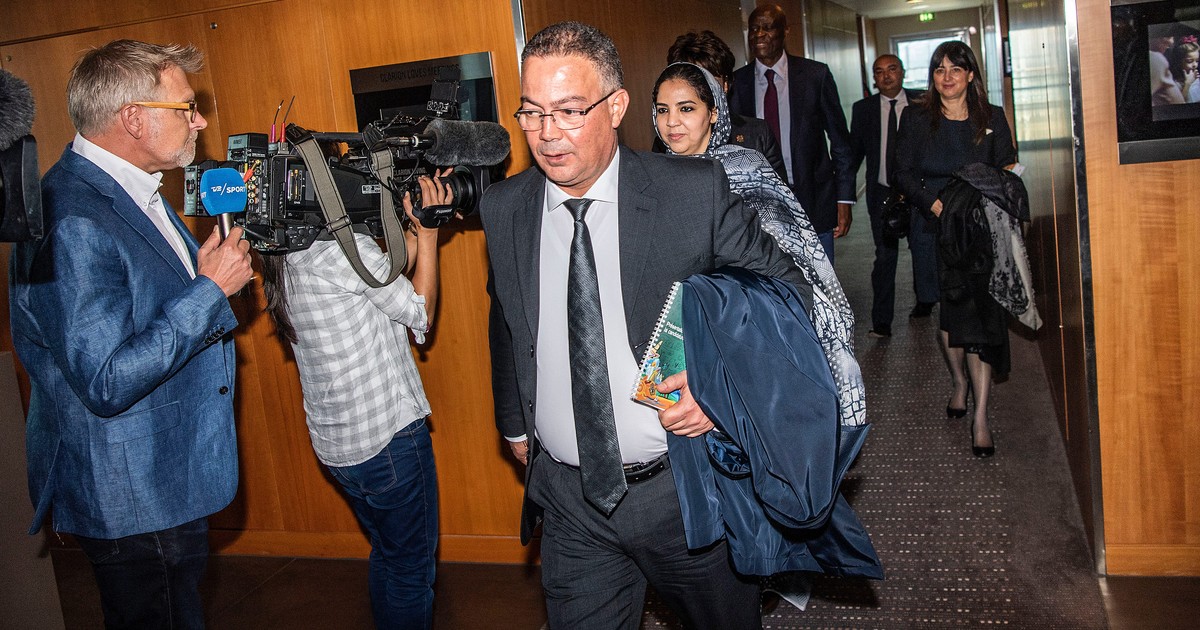
Fouzi Lekjaa, president of Morocco’s football federation and a government budget minister, has emerged as a possible prime minister after the Authenticity and Modernity Party, known as PAM, won the most seats in Wednesday’s parliamentary election.
PAM secured 97 of parliament’s 395 seats, according to preliminary results announced by Morocco’s interior minister. The National Rally of Independents, which led the outgoing government, came second with 66 seats. The Istiqlal Party won 65, while the Islamist Justice and Development Party took 54.
Lekjaa joined PAM’s leadership only weeks before the vote. Reuters reported that he and party leader Fatima Ezzahra El Mansouri are both being considered as potential heads of government. Neither has been appointed.
Under Morocco’s constitutional system, the king selects the prime minister from the party that wins the most seats.
Whoever gets the job will help oversee the final stages of an estimated $20 billion programme to prepare Morocco to co-host the 2030 FIFA World Cup with Spain and Portugal.
That gives Lekjaa’s possible appointment an unusual significance. He has been associated with both Morocco’s rise in international football and its World Cup preparations.
The investment figure, however, refers to a wider national programme, it is not a budget that would personally pass to him.
His football prominence has also brought political friction. Earlier this month, Lekjaa said Morocco’s planned stadium near Casablanca would host the World Cup final, drawing a rebuke from outgoing Prime Minister Aziz Akhannouch because FIFA has not announced the final’s venue.
The episode illustrated how questions about the tournament can quickly become questions about political authority and public spending.
PAM’s 97 seats leave it well short of the 198 needed for a majority. Coalition negotiations will therefore matter as much as the question of who leads the party into government.
During the campaign, PAM ruled out renewing its partnership with Akhannouch’s party. After the result, El Mansouri softened that position, saying she had no “red lines” in negotiations. “We have turned the page,” she said, according to Reuters.
The next government will also face pressure to deliver on PAM’s campaign promises, including a proposed $37 billion spending programme and one million new jobs. With voter turnout falling to about 38%, the government will need to show that Morocco’s massive World Cup investment can deliver economic benefits beyond football.