
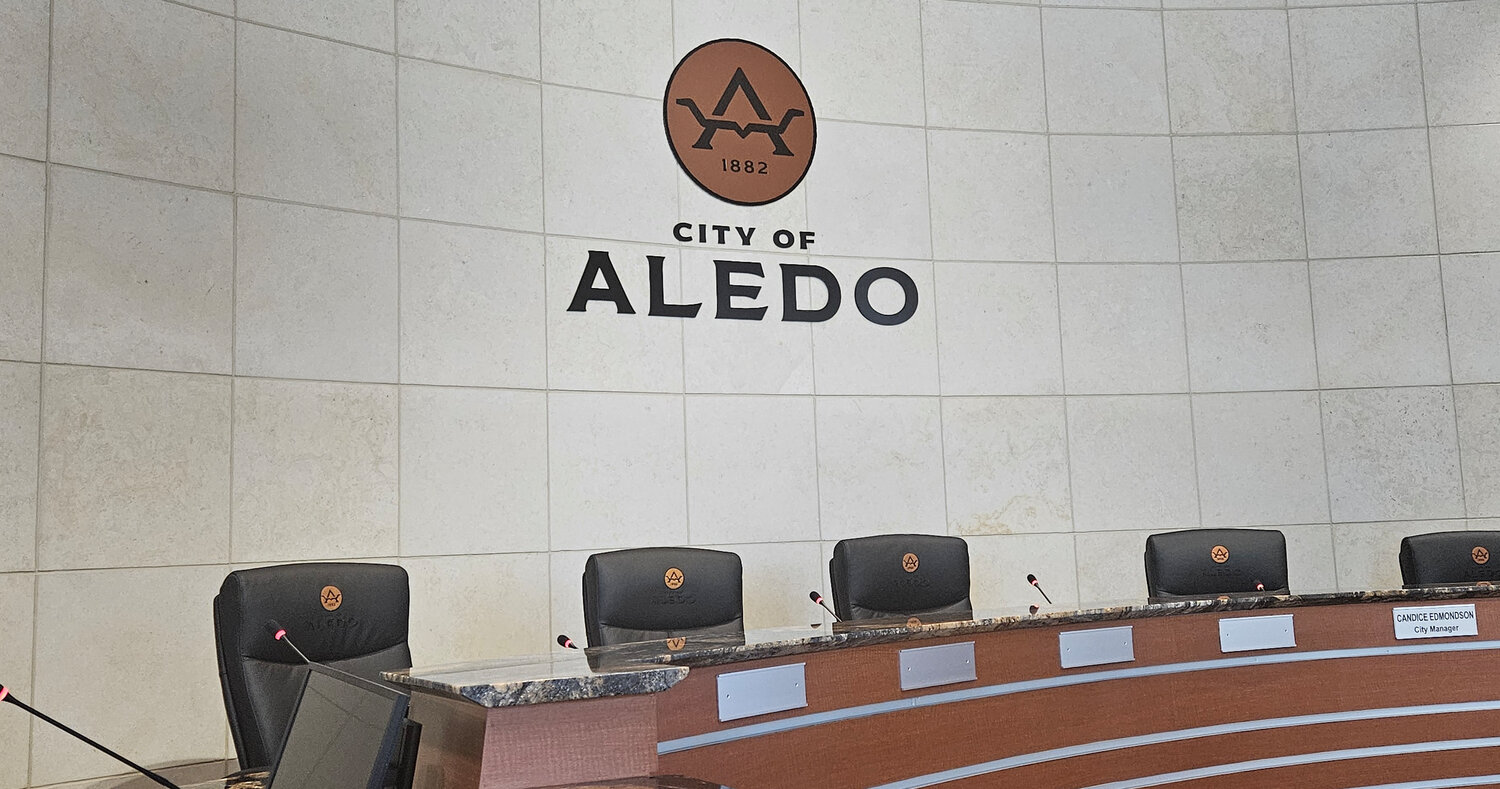
Aledo City Council on Thursday, Sept. 17, approved an ordinance allowing golf carts on many city streets and granted a variance that clears the way for a gas station across from a school to seek a permit to sell beer and wine.
Council members also took their first look at a set of proposed municipal fee changes.
Golf carts, ATVs, bicycles, and e-bikes
A new ordinance allows licensed drivers to operate golf carts on public streets with posted speed limits of 35 mph or less.
Police Chief Carol Riddle presented the ordinance, which was drafted after council feedback at a Sept. 3 work session.
Carts must have a state license plate, two working headlamps and taillamps, reflectors, a parking brake, mirrors, a slow-moving-vehicle emblem and proof of insurance. The ordinance defines a golf cart as one with a top speed of no more than 25 mph.
The ordinance also directs riders to use any seat belts the manufacturer installed. It does not require carts to have seat belts.
Golf carts remain barred from farm-to-market roads and state and federal highways, including FM 1187, although they may cross intersections with higher speed limits.
The ordinance bans ATVs, utility vehicles, recreational off-road vehicles and pocket bikes from roadways, sidewalks and public streets. City-owned vehicles used for official business are exempt.
The measure passed with one “nay” vote, that coming from Councilman Ben Clark. He explained later that he feels seatbelts should be installed and required to be worn.
Council passed another ordinance that requires riders under age 17 to wear a helmet while operating a bicycle or e-bike. It also holds parents or guardians criminally liable, as a misdemeanor, if they allow a child to ride without one or in violation of the ordinance’s other provisions.
It also sets equipment requirements for nighttime riding (front lights and rear reflectors or lights), requires e-bikes to display manufacturer stickers noting their class, top speed and motor wattage, requires operators to yield to pedestrians, and sets a minimum age of 15 for riding Class 3 e-bikes, aligning local code with the Texas Transportation Code.
Violations of either ordinance are misdemeanors, with fines set under Section 1-10 of the city code. Each violation counts as a separate offense. That code indicates maximum fines of $500 for each offense.
The ordinances go into effect following publication in The Community News. However, city staff indicated there will be a grace period.
Alcohol variance
The council approved a variance for Aledo Shell, 401 S. FM 1187, from a city rule banning alcohol sales within 300 feet of a school, church or hospital. The station sits across the street from Aledo Middle School and Vandagriff Elementary, about 77 feet away measured property line to property line.
The variance lets the store pursue a Wine and Malt Beverage Retail Dealer’s Off-premise Permit.
Two Aledo school district officials said the district ws not opposed to the application, according to city staff. Store manager Rupendra Pandey told the council that fuel prices are up, sales are down, and the store is struggling because the two other fuel stations in town already sell alcohol.
No one spoke during the public hearing related to the variance.
Fee schedule
In a work session, staff presented a municipal fee schedule with 18 new fees, 12 revised fees and six proposed removals. City Manager Candice Edmondson’s memo says staff compared fees with benchmark communities and the cost of providing services. No action was taken, and final adoption is scheduled for Oct. 1.
Staff proposed several reductions for developers:
Eliminating the $1,000 concept plan fee.
Cutting the preliminary plat fee to $750 plus $20 per acre over five acres.
Lowering the final plat fee to $500 plus $15 per acre over five acres.
Staff said Aledo’s fees were higher than every benchmark city they reviewed, and that the city was one of the few charging for a concept plan.
Utility customers would see several new charges:
An extra $50 after-hours charge on connections, non-payment reconnects and temporary cutoffs for repair.
$25 per re-read after two free re-reads.
$25 per leak test after one free test a year.
Meter relocation billed at cost, with a $300 minimum.
A $150 residential deposit.
Meter box and setting fees range from $500 for a three-quarter-inch meter to $1,800 for a two-inch meter, raised to match the city’s own costs.
The return check fee would rise from $30 to $35.
Other changes:
Fire inspection and permit fees would come off the city’s schedule, with residents referred to the Parker County Emergency Services District No. 1, which collects them.
A $75 temporary food vendor health inspection fee would be removed, because the city can no longer charge it.
Short-term rental owners would pay a $150 annual permit renewal and $65 for re-inspections.
New contractor and occupancy fees: a $100 general contractor registration would replace separate renewal and right-of-way contractor fees, and a revised occupancy request would cost $150.
The Community Center cleaning fee would rise to $150 per rental.
A $75 special-event permit would be added.