

PHOENIX – It was 3:30 a.m. at Arthur Ashe Stadium in Queens, and half the building was still full.
Eric Mitchell, executive director of USTA Southwest, a section of the United States Tennis Association (USTA), was one of the fans who stayed. He had flown to New York for leadership meetings during the U.S. Open, a trip that was part work and part pleasure. He watched Ben Shelton push Carlos Alcaraz deep into the night in the men’s singles quarterfinal.
“It was an amazing match,” Mitchell said. “Some people had to leave, I’m sure, for work, being in New York City, but we still had half the stadium packed there at 3:30 in the morning watching the match. It was electric.”
That’s the prevalent feeling about tennis right now. The sport has stars, a U.S. Open that has turned into a three-week cultural event and a generation of players, including Alcaraz, Jannik Sinner, Shelton, Coco Gauff and Aryna Sabalenka, who are famous well beyond the court.
But that’s only half of the story.
Underneath the highlight reels from stars is a more complicated issue, and one that matters more to the future of the game: What does it take for a kid to get onto a court in the first place, and what happens once they’re good enough to matter?
There’s no single answer. There is an access problem and a cost problem. There is also a college tennis shift that is less a problem than a total reshuffling of how players get from junior tennis to the pros.
Ask anyone who has coached long enough what Gen Z tennis looks like and the first answer is usually the same. It doesn’t look like anything that came before it, and that’s the point.
Sheila McInerney, Arizona State’s recently retired, but longtime women’s tennis coach, witnessed an era with its own uncertainty about who would replace John McEnroe, Jimmy Connors and Andre Agassi.
“You never thought anybody would take their place,” McInerney said.
Tennis solved that problem the way it always has, by producing someone new. Right now, McInerney said, that’s Alcaraz.
“On the men’s side, the key right now is Carlos Alcaraz. He’s an icon already,” McInerney said. “Nice kid, plays with a lot of flair, always got a smile on his face. Even coming back and playing at the Open, he lost to Ben Shelton, but he had a smile on his face losing.”
Matt Hill, ASU’s men’s tennis coach, sees the Alcaraz-Sinner rivalry less through the star power lens and more as a study in contrast.
“Sinner seems a lot more robotic and methodical to me, and Carlos is much more of an artist with the variety he brings,” Hill said. “That contrast makes their matchups really fun to watch.”
Emilija Tverijonaite, a senior on ASU’s women’s tennis team who hails from Lithuania, grew up around the sport. Her parents and two older brothers all played competitively. For her, the Gen Z answer is just as clear.
“Ben Shelton for sure. Right now he’s just on top,” Tverijonaite said. “Also from the women’s side, I think Coco Gauff is at that level as well.”
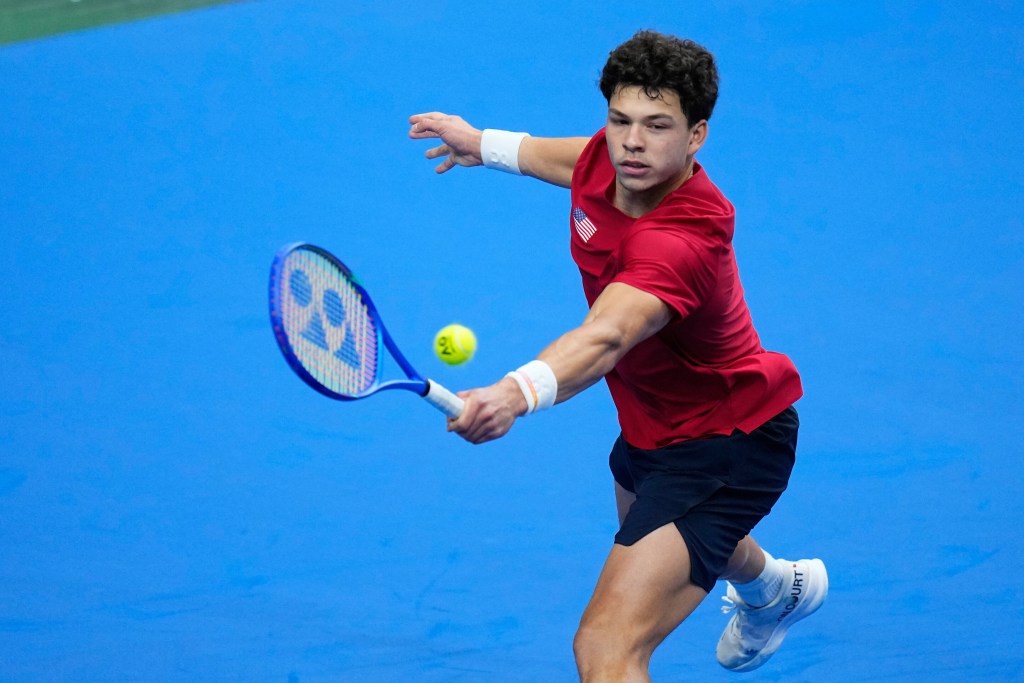 The United States’ Ben Shelton returns the ball to Czechia’s Jakub Mensik during a Davis Cup second-round qualifier match between the Czech Republic and the United States in Prague on Sept. 19, 2026. Shelton is currently No. 4 in the ATP rankings. (Photo by Petr David Josek/AP Photo)
None of that is in great dispute. What has changed is what’s underneath: a sport with no single dominant dynasty, a deeper and more global field, and a women’s game that McInerney argues has quietly become tennis’s biggest asset.
Women’s tennis produces more true household names – from Serena and Venus Williams to Jennifer Capriati, Gauff, Sabalenka and Jessica Pegula – than most team sports do for individual athletes.
Here’s where the story gets less glamorous. Tennis, more than almost any other sport, comes with a steep cost. That hasn’t changed in a generation, even as everything around it has.
“Tennis, compared to other sports, is very expensive to play at a high level,” Hill said. “If you’re talking about playing Division I at a school like ASU, you’ve got to be one of the best juniors in the country or the world, and that’s an expensive road for anybody.”
McInerney put it more bluntly. Unlike team sports, there is no organization footing the bill for travel, coaching or physical therapy.
“That’s part of why you don’t see as many of the best American athletes gravitating to it,” McInerney said. “A lot of girls in particular go to team sports like volleyball instead, because the individual-sport route doesn’t have that cushion.”
Juan Herrera, director of tennis at IMG Academy in Bradenton, Florida, frames the cost question as one of strategy. Families don’t need to do everything, he said. They need to do the right things.
“It’s a sport where you have to be careful where you put your money,” Herrera said. “You gotta be going to the right tournaments.”
A weeklong trip to International Tennis Federation junior events in the Caribbean might make sense for one family. A four-hour drive to a USTA Level 3 tournament might make more sense for another. What has changed, Herrera said, is that there are more entry points than there used to be, including USTA events and, increasingly, the Universal Tennis Rating system, or UTR, which lets kids build a competitive résumé locally instead of flying across the country.
Hill sees the same shift from the college side, pointing to UTR’s Pro Tennis Tour events.
“UTR has done a nice job with their PTT program and tournament schedule,” Hill said. “It increases visibility for players and lets even junior players earn money, which has been productive for kids who don’t have the resources to fly around and play the ITF Junior World Circuit at a young age.”
Mitchell’s organization exists almost entirely to fill that gap. USTA Southwest’s goal, he said, is to grow the game by being inclusive, bringing more players in through schools and getting rackets in kids’ hands.
The section’s data backs that up. People ages 13 to 34 make up 43% of all active tennis players in the Southwest, well above their share of the general population.
Nationally, the numbers tell a similar story. Players under 35 make up 55% of all U.S. tennis participants. Core participation among 13- to 17-year-olds, meaning those who play 10 or more times a year, has risen 25% over the past five years, according to the Physical Activity Council.
Gen Z isn’t drifting away from tennis. It’s arriving through different doors. Social media, fashion, pop culture and other racket sports are pulling young players in more than the traditional pitch about fitness and health that hooked older generations.
 Arizona State senior tennis player Emilija Tverijonaite was named 2026 Big 12 Women’s Tennis Player of the Year and selected to the All-Big 12 First Team in singles after posting 32 singles wins during the 2025–26 season. She became just the sixth Sun Devil in program history to reach the 30-win milestone in a single season. (Photo courtesy of Sun Devil Athletics)
If there is one place the sport has been rebuilt in the past five years, it’s college tennis. The word every source used, unprompted, to describe the transformation was NIL, short for name, image and likeness.
“It’s changed a lot, especially in the last five years, not just because of NIL and NCAA eligibility rule changes,” Hill said.
Hill also credited Shelton and other former college players who have won Masters 1000 titles and climbed into the top 10 for carrying the college tennis flag forward. Five years ago, he said, top-20 juniors weren’t telling college coaches at the U.S. Open that they wanted to play college tennis. Now it’s common.
“We were fighting the narrative that you only go to college tennis if you’d quit on tennis,” Hill said. “That’s changing globally now.”
Players can turn pro, collect prize money and still come back to college with extra eligibility. What used to be a binary choice between pro and college is now a pipeline that runs both ways.
“It’s making college tennis a lot stronger,” McInerney said. “Whether you think that’s the right way to do it is debatable, but it’s turning college tennis into a real pathway to the pros.”
That pathway cuts both ways for coaches. Hill’s biggest recruiting headache isn’t talent. It’s information.
“Some coaches and players get bad information on what NIL money is actually out there,” Hill said. “Not just what’s promised, but what actually gets paid.”
Losing a recruit to a school that oversold its NIL package isn’t the player’s fault, Hill said. It’s misrepresentation, and it’s becoming the defining fight of modern college recruiting.
For Tverijonaite, the shift shows up in something simpler: the athlete sitting next to her at practice.
“We’ll see more professional, high-ranked players come to college,” Tverijonaite said. “Just because of everything college really provides, like NIL and all that stuff.”
Put it all together, and Gen Z tennis isn’t in decline. It’s expanding in every direction at once.
There are more entry points at the grassroots level, even if the price tag hasn’t dropped. The college game, once a consolation prize, is now a legitimate stop on the way to the tour. And at the top, the pro game has more depth and more must-watch personalities than it has had in years, filling stadiums until 3:30 a.m.
“I think tennis is popular,” McInerney said. “The Slams have turned into events.”
This <a target=”_blank” href=”https://cronkitenews.azpbs.org/2026/09/25/gen-z-embracing-transforming-tennis/”>article</a> first appeared on <a target=”_blank” href=”https://cronkitenews.azpbs.org”>Cronkite News</a> and is republished here under a <a target=”_blank” href=”https://creativecommons.org/licenses/by-nd/4.0/”>Creative Commons Attribution-NoDerivatives 4.0 International License</a>.<img src=”https://i0.wp.com/cronkitenews.azpbs.org/wp-content/uploads/2026/02/favicon1.png?resize=85%2C85&ssl=1″ style=”width:1em;height:1em;margin-left:10px;”>
<img id=”republication-tracker-tool-source” src=”https://cronkitenews.azpbs.org/?republication-pixel=true&post=106447″ style=”width:1px;height:1px;”><script> PARSELY = { autotrack: false, onload: function() { PARSELY.beacon.trackPageView({ url: “https://cronkitenews.azpbs.org/2026/09/25/gen-z-embracing-transforming-tennis/”, urlref: window.location.href }); } } </script> <script id=”parsely-cfg” src=”//cdn.parsely.com/keys/cronkitenews.azpbs.org/p.js”></script>
Canonical Tag:
Copy Tag
Article Content:
New generation, different game: Gen Z embracing transforming tennis
Cooper Krigbaum, Cronkite News
September 25, 2026
PHOENIX – It was 3:30 a.m. at Arthur Ashe Stadium in Queens, and half the building was still full.
Eric Mitchell, executive director of USTA Southwest, a section of the United States Tennis Association (USTA), was one of the fans who stayed. He had flown to New York for leadership meetings during the U.S. Open, a trip that was part work and part pleasure. He watched Ben Shelton push Carlos Alcaraz deep into the night in the men’s singles quarterfinal.
“It was an amazing match,” Mitchell said. “Some people had to leave, I’m sure, for work, being in New York City, but we still had half the stadium packed there at 3:30 in the morning watching the match. It was electric.”
That’s the prevalent feeling about tennis right now. The sport has stars, a U.S. Open that has turned into a three-week cultural event and a generation of players, including Alcaraz, Jannik Sinner, Shelton, Coco Gauff and Aryna Sabalenka, who are famous well beyond the court.
But that’s only half of the story.
Underneath the highlight reels from stars is a more complicated issue, and one that matters more to the future of the game: What does it take for a kid to get onto a court in the first place, and what happens once they’re good enough to matter?
There’s no single answer. There is an access problem and a cost problem. There is also a college tennis shift that is less a problem than a total reshuffling of how players get from junior tennis to the pros.
Ask anyone who has coached long enough what Gen Z tennis looks like and the first answer is usually the same. It doesn’t look like anything that came before it, and that’s the point.
Sheila McInerney, Arizona State’s recently retired, but longtime women’s tennis coach, witnessed an era with its own uncertainty about who would replace John McEnroe, Jimmy Connors and Andre Agassi.
“You never thought anybody would take their place,” McInerney said.
Tennis solved that problem the way it always has, by producing someone new. Right now, McInerney said, that’s Alcaraz.
“On the men’s side, the key right now is Carlos Alcaraz. He’s an icon already,” McInerney said. “Nice kid, plays with a lot of flair, always got a smile on his face. Even coming back and playing at the Open, he lost to Ben Shelton, but he had a smile on his face losing.”
Matt Hill, ASU’s men’s tennis coach, sees the Alcaraz-Sinner rivalry less through the star power lens and more as a study in contrast.
“Sinner seems a lot more robotic and methodical to me, and Carlos is much more of an artist with the variety he brings,” Hill said. “That contrast makes their matchups really fun to watch.”
Emilija Tverijonaite, a senior on ASU’s women’s tennis team who hails from Lithuania, grew up around the sport. Her parents and two older brothers all played competitively. For her, the Gen Z answer is just as clear.
“Ben Shelton for sure. Right now he’s just on top,” Tverijonaite said. “Also from the women’s side, I think Coco Gauff is at that level as well.”
None of that is in great dispute. What has changed is what’s underneath: a sport with no single dominant dynasty, a deeper and more global field, and a women’s game that McInerney argues has quietly become tennis’s biggest asset.
Women’s tennis produces more true household names – from Serena and Venus Williams to Jennifer Capriati, Gauff, Sabalenka and Jessica Pegula – than most team sports do for individual athletes.
Here’s where the story gets less glamorous. Tennis, more than almost any other sport, comes with a steep cost. That hasn’t changed in a generation, even as everything around it has.
“Tennis, compared to other sports, is very expensive to play at a high level,” Hill said. “If you’re talking about playing Division I at a school like ASU, you’ve got to be one of the best juniors in the country or the world, and that’s an expensive road for anybody.”
McInerney put it more bluntly. Unlike team sports, there is no organization footing the bill for travel, coaching or physical therapy.
“That’s part of why you don’t see as many of the best American athletes gravitating to it,” McInerney said. “A lot of girls in particular go to team sports like volleyball instead, because the individual-sport route doesn’t have that cushion.”
Juan Herrera, director of tennis at IMG Academy in Bradenton, Florida, frames the cost question as one of strategy. Families don’t need to do everything, he said. They need to do the right things.
“It’s a sport where you have to be careful where you put your money,” Herrera said. “You gotta be going to the right tournaments.”
A weeklong trip to International Tennis Federation junior events in the Caribbean might make sense for one family. A four-hour drive to a USTA Level 3 tournament might make more sense for another. What has changed, Herrera said, is that there are more entry points than there used to be, including USTA events and, increasingly, the Universal Tennis Rating system, or UTR, which lets kids build a competitive résumé locally instead of flying across the country.
Hill sees the same shift from the college side, pointing to UTR’s Pro Tennis Tour events.
“UTR has done a nice job with their PTT program and tournament schedule,” Hill said. “It increases visibility for players and lets even junior players earn money, which has been productive for kids who don’t have the resources to fly around and play the ITF Junior World Circuit at a young age.”
Mitchell’s organization exists almost entirely to fill that gap. USTA Southwest’s goal, he said, is to grow the game by being inclusive, bringing more players in through schools and getting rackets in kids’ hands.
The section’s data backs that up. People ages 13 to 34 make up 43% of all active tennis players in the Southwest, well above their share of the general population.
Nationally, the numbers tell a similar story. Players under 35 make up 55% of all U.S. tennis participants. Core participation among 13- to 17-year-olds, meaning those who play 10 or more times a year, has risen 25% over the past five years, according to the Physical Activity Council.
Gen Z isn’t drifting away from tennis. It’s arriving through different doors. Social media, fashion, pop culture and other racket sports are pulling young players in more than the traditional pitch about fitness and health that hooked older generations.
If there is one place the sport has been rebuilt in the past five years, it’s college tennis. The word every source used, unprompted, to describe the transformation was NIL, short for name, image and likeness.
“It’s changed a lot, especially in the last five years, not just because of NIL and NCAA eligibility rule changes,” Hill said.
Hill also credited Shelton and other former college players who have won Masters 1000 titles and climbed into the top 10 for carrying the college tennis flag forward. Five years ago, he said, top-20 juniors weren’t telling college coaches at the U.S. Open that they wanted to play college tennis. Now it’s common.
“We were fighting the narrative that you only go to college tennis if you’d quit on tennis,” Hill said. “That’s changing globally now.”
Players can turn pro, collect prize money and still come back to college with extra eligibility. What used to be a binary choice between pro and college is now a pipeline that runs both ways.
“It’s making college tennis a lot stronger,” McInerney said. “Whether you think that’s the right way to do it is debatable, but it’s turning college tennis into a real pathway to the pros.”
That pathway cuts both ways for coaches. Hill’s biggest recruiting headache isn’t talent. It’s information.
“Some coaches and players get bad information on what NIL money is actually out there,” Hill said. “Not just what’s promised, but what actually gets paid.”
Losing a recruit to a school that oversold its NIL package isn’t the player’s fault, Hill said. It’s misrepresentation, and it’s becoming the defining fight of modern college recruiting.
For Tverijonaite, the shift shows up in something simpler: the athlete sitting next to her at practice.
“We’ll see more professional, high-ranked players come to college,” Tverijonaite said. “Just because of everything college really provides, like NIL and all that stuff.”
Put it all together, and Gen Z tennis isn’t in decline. It’s expanding in every direction at once.
There are more entry points at the grassroots level, even if the price tag hasn’t dropped. The college game, once a consolation prize, is now a legitimate stop on the way to the tour. And at the top, the pro game has more depth and more must-watch personalities than it has had in years, filling stadiums until 3:30 a.m.
“I think tennis is popular,” McInerney said. “The Slams have turned into events.”
This article first appeared on Cronkite News and is republished here under a Creative Commons Attribution-NoDerivatives 4.0 International License.
Copy Content
Tracking snippet:
Copy Snippet