
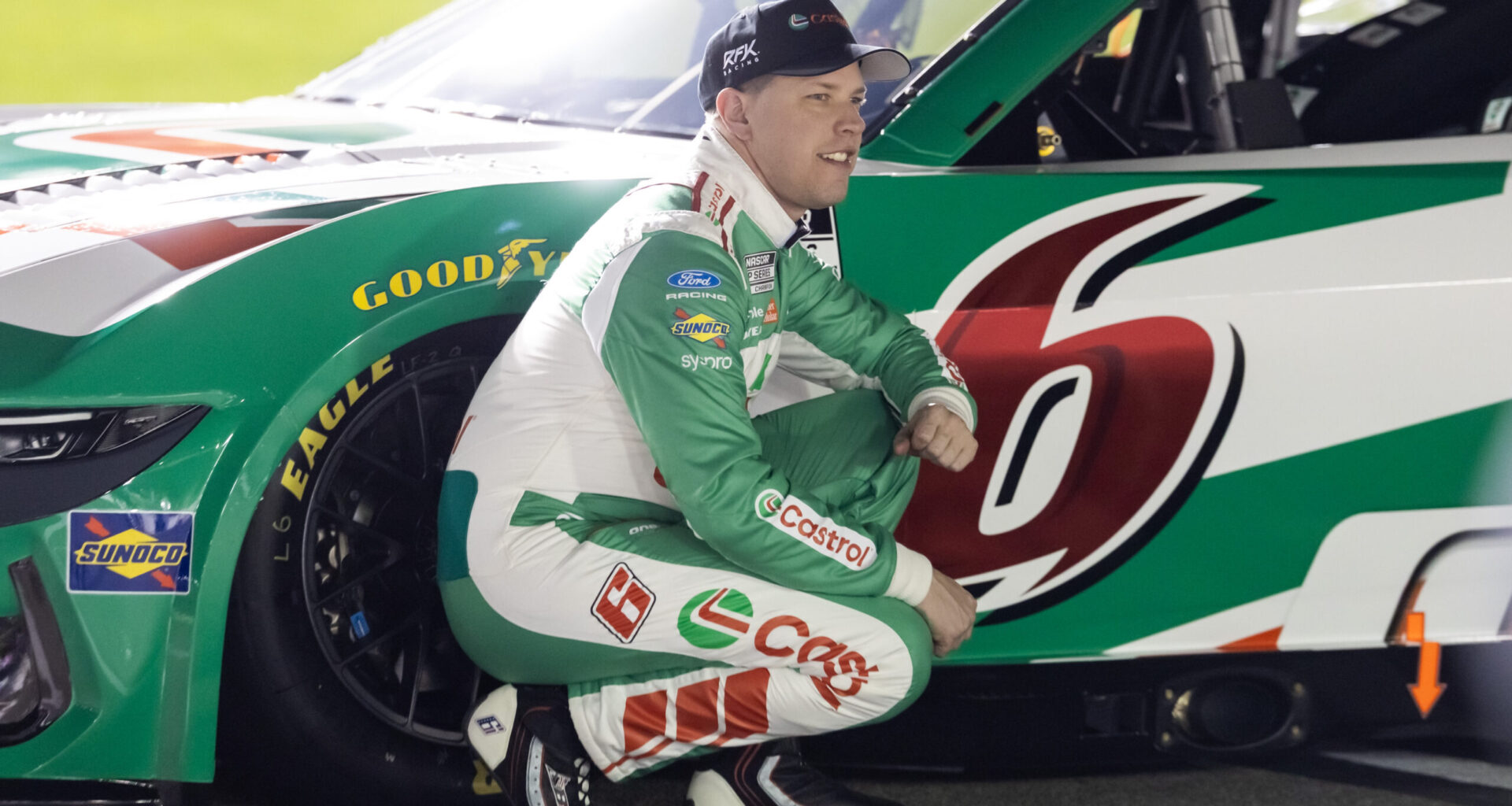
Three weeks ago, Brad Keselowski left Darlington Raceway with a wrecked race car and a warning for Carson Hocevar.
On Saturday at Kansas Speedway, Hocevar was suddenly the one spinning through the field, Keselowski was right in the middle of it, and the question practically asked itself.
Was this payback?
Keselowski insists it wasn’t. But considering everything that preceded the latest run-in between the two NASCAR Cup Series drivers, even he could appreciate why everyone was asking.
“Makes for a damn good story,” Keselowski said.
Brad Keselowski’s comments to the USA broadcast on his contact with Carson Hocevar:
“I don’t know, they crashed, I didn’t see what happened. They were in front of me and then they weren’t. From what I’m told, they made some contact there, the outside lane.
“So I don’t really… pic.twitter.com/JuIOtrhSb1
— Steven Taranto (@STaranto92) September 27, 2026
It certainly does.
The latest wrinkle in one of NASCAR’s simmering on-track feuds came on Lap 122 of the Hollywood Casino 400. Hocevar and Ty Gibbs converged during a restart, Hocevar lost control of his No. 77 Chevrolet and went sliding across the track, setting off a crash that also swept up several other cars.
Keselowski emerged from the chaos. Hocevar did not.
Brad Keselowski gets the question everyone was asking
There was already plenty of reason to scrutinize Keselowski’s role in the Kansas incident.
Then came an exchange over his radio.
“Move of the race, nice job,” spotter TJ Majors told Keselowski.
“It was more of survival than anything else,” Keselowski replied.
“Move of the race, nice job” – TJ Majors tells Brad Keselowski.
“It was more of survival than anything else” – Keselowski#NASCAR
— Dustin Albino (@DustinAlbino) September 27, 2026
That hardly amounted to an admission of anything. Still, with the Darlington incident only three races in the rearview mirror, USA Sports’ Trevor Bayne went straight at the question after the race: Was what happened at Kansas simply racing, or was it the retribution Keselowski had promised?
Keselowski said he didn’t cause it.
“I don’t know,” Keselowski said. “They crashed. I didn’t see what happened. They were in front of me and then they weren’t.
“From what I’m told, they made some contact there, the outside lane.
“So I don’t really feel like that had anything to do with me. But, makes for a damn good story.”
That final line captured the situation better than any definitive declaration of payback could have.
Keselowski wasn’t claiming responsibility. He was doing the opposite. But he also understood exactly why a relatively ordinary moment of restart chaos had become something much more interesting.
There was history attached to it.
Carson Hocevar’s explanation points away from Keselowski
The bad blood started in the Chase opener at Darlington, when contact with Hocevar sent Keselowski spinning into the wall and effectively ended his race.
Keselowski didn’t hide his frustration afterward.
“I’ve got to fight back with anybody in the garage,” Keselowski said. “You can’t just let people run over you.”
Three weeks later, Hocevar was wrecked with Keselowski nearby.
But Hocevar’s own account of Kansas offers an important counterweight to any retaliation theory. He didn’t blame Keselowski at all. In fact, he blamed himself.
“Yeah, I mean, it just looked like me, and the 54 were just kind of going for the same spot,” Hocevar said. “He was in my blind spot.
“So I didn’t know he was shooting that (far) middle. I guess it’s on me.
“But yeah, we just got, you know, we just ended up wrecking. Then after that, our car was destroyed.”
Hocevar finished 33rd after showing legitimate speed earlier in the afternoon, and the result dropped him three positions to 11th in the Chase standings.
There is no admission from Keselowski. There is no accusation from Hocevar. And Hocevar’s description of the wreck places the decisive moment between himself and Gibbs.
So Kansas doesn’t provide a neat answer to whether Keselowski has settled the score from Darlington.
What it does provide is another chapter.
And judging by Keselowski’s reaction afterward, he knows exactly how compelling that makes whatever happens the next time the No. 6 and No. 77 find themselves racing for the same piece of asphalt.