
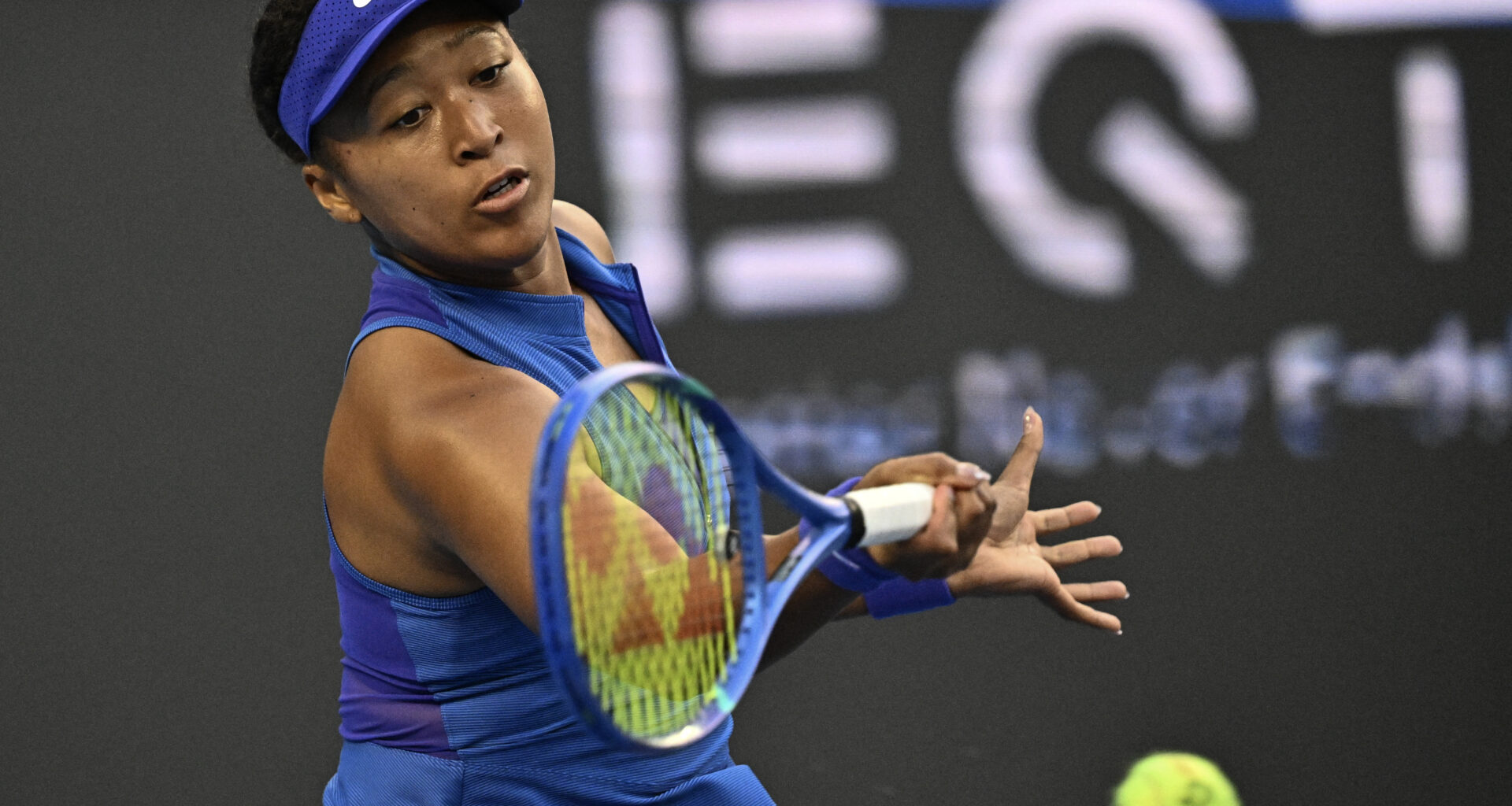
No. 12 seed Naomi Osaka was made to work hard to kick off her China Open campaign, ending a valiant Maria Timofeeva’s resistance 6-3, 3-6, 6-3 in 2 hours and 4 minutes.
Osaka, who lifted the trophy here in 2019, is one of three former Beijing champions in this year’s draw alongside No. 3 seed Coco Gauff (2024) and No. 8 seed Iga Swiatek (2023). By contrast, Timofeeva is making her main-draw debut at the tournament this year — she fell in qualifying to Greet Minnen 12 months ago — and was facing a Top 20 opponent for only the third time.
The 22-year-old Uzbek has already delivered some eye-catching results in her career, though. Timofeeva is one of only 10 players to win the title on her WTA main-draw debut, which she did at Budapest in 2023. The following year, she upset Beatriz Haddad Maia to reach the fourth round of the Australian Open as a qualifier. A slump followed, but this year Timofeeva has been resurgent — she’s collected three WTA 125 titles already and came into Beijing on a winning streak from the latest of them, in Porto last week, and at a career high of No. 68.
Throughout a high-quality battle on Lotus Court, Timofeeva forced Osaka — who was playing her first match since falling to eventual champion Elena Rybakina in the US Open fourth round — to find her best tennis in order to advance. Here’s how it unfolded.
Set one: Timofeeva provides hot shots, Osaka delivers winning shots
Timofeeva’s panache was on show from the start. Through much of the first set, she pulled off the hottest shots and won the lion’s share of the best rallies. Her crowd-pleasing specialities were a delicate drop shot — she conjured three winning ones in the space of two games — and an irresistible backhand down the line, which garnered her another three winners as she held in the sixth game.
But despite Timofeeva’s highlights, it was Osaka who had a firm grip of the scoreboard. Her service winners, one-two punches and overheads might not have been as flashy, but they were just as valuable — particularly as Osaka found them in the most important moments. The pair ended the set tied in winners (12) and unforced errors (nine), but Osaka had converted the only break point she held while saving all four she had faced.
Two of those came in a riveting final game, in which Timofeeva staved off five set points before Osaka sealed her sixth with an emphatic smash.
Set two: Timofeeva surges back with five-game run
The same pattern continued at the start of the second set. Timofeeva began it with another drop shot winner, but Osaka powered a forehand crosscourt to break again, quickly moving out to a 2-0 lead.
At this point, Timofeeva had neither converted nor saved a break point. But she finally captured Osaka’s serve at the seventh opportunity to level at 2-2, the Japanese player’s backhand sailing long. In the very next game, Timofeeva managed to fend off four break points — with her backhand down the line coming to the fore once again — to hold for 3-2.
Now, she was in full flow both offensively and defensively. Timofeeva responded to Osaka’s hardest strikes with awkward short, low slices — but she was able to take control on her own terms, breaking the former World No. 1 for 4-2 with a return winner, extending her run of games to five, then closing the set out with back-to-back aces.
Set three: Osaka uses experience to raise her level
Timofeeva continued to surge in the opening game of the decider, and held a break point for the immediate advantage. But Osaka stayed on the front foot, and saved it as Timofeeva’s backhand found the net. As is so often the case, the game following a missed opportunity was one to circle. Timofeeva played her loosest game of the match, handing Osaka triple break point with a pair of unforced errors and a double fault. Sensing opportunity, Osaka played one of her best — and longest — points of the match, slamming home a forehand winner for a 2-0 lead.
Now, it was Osaka surging as Timofeeva faded. Racking up backhand winners, the four-time major champion leapt out to a 5-0 lead. There was one last burst of resistance from Timofeeva, who steadied her game to cling on with a three-game run. But Osaka made no mistake in serving for the match for a second time, sealing her first match point with a simple one-two punch, her 35th winner of the day compared to 32 for Timofeeva.
“It was a tough match,” Osaka said in her press conference. “I’ve never played her before, but also it was a little hard to get my bearings, because I haven’t played since New York. Overall I was glad how I regrouped in the third set, and I was also glad that I had the opportunity to play her — because I’m sure she’ll be around with how well she’s played this match.”
Osaka will next face No. 20 seed Sara Bejlek, who came through 6-3, 7-5 against qualifier Maddison Inglis on her Beijing debut. It will be an intriguing first-time meeting — the 20-year-old Bejlek has cemented herself as one of the most exciting young talents on the WTA Tour Driven by Mercedes-Benz by winning her first title in Abu Dhabi in February and reaching the Cincinnati semifinals in August. The latter of those runs featured eye-catching upsets of Aryna Sabalenka and Madison Keys — results that showed that the diminutive Czech has a taste for taking down the tour’s most powerful players.
Osaka wasn’t present at either tournament for either of Bejlek’s best runs, and says that she usually doesn’t watch tennis when she’s not playing herself and so will need to refresh her knowledge of the youngster. But even so, Bejlek has popped up on her radar.
“I remember seeing her name around and just thinking, ‘Wow, it’s cool that there’s young, good players coming up,'” she said. “And she was kind of added to like my mental list of [them] — I think I watched her play a couple points in Cincinnati because she played Sabalenka.”