
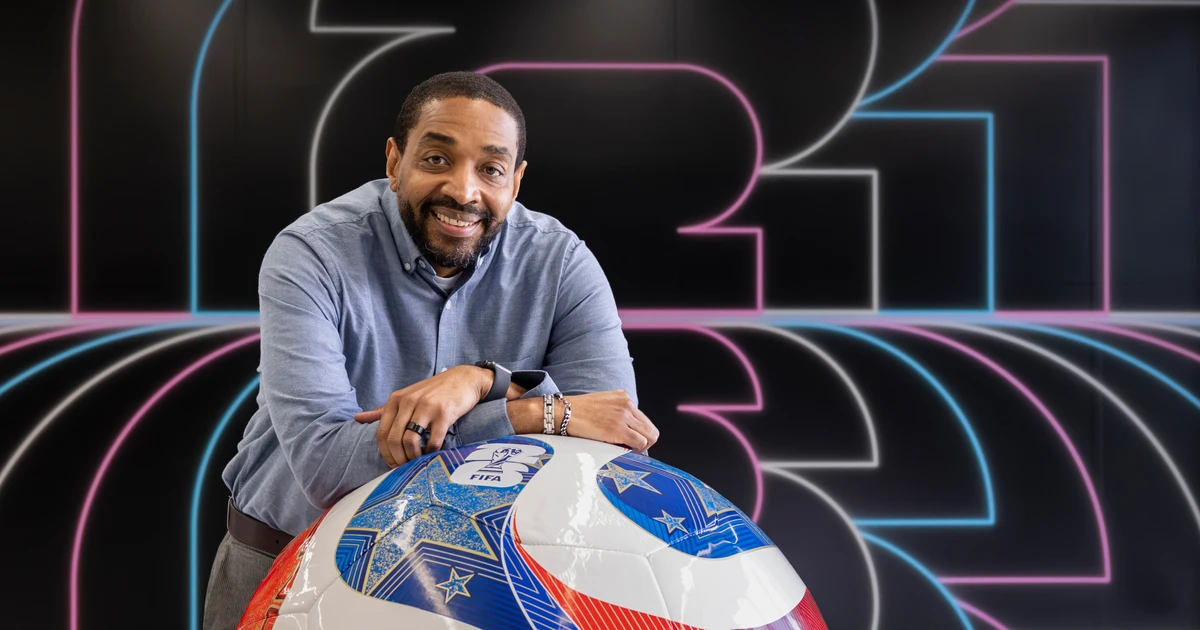
For fans, the 2026 FIFA World Cup was measured in goals, wins, and jerseys collected. For Curtis Franks, it was measured in contracts, contracts, and more contracts.
As FIFA’s first-ever hired general counsel for the World Cup, Franks spent three years overseeing the legal machinery behind the largest soccer tournament the organization has ever staged: 48 teams playing across 16 cities in the US, Canada, and Mexico, with a budget of approximately $3.7 billion.
Franks helmed a legal team of just 21 people responsible for solving high-pressure operational issues, from stadium and transportation agreements to employment, vendor, security, and cross-border matters. Each of the three countries had a director of legal with teams of attorneys working for them.

During the tournament, Franks might have held morning meetings in Miami — he splits his time between there and Atlanta — spent hours in the operations center, and then boarded a plane. Los Angeles. Seattle. Boston. Rinse, repeat. Eventually, the days began to blur together.
“I really didn’t know whether or not it was a Tuesday or a Sunday,” he said, “unless I walked outside and saw there was no traffic.”
While fans fretted over yellow cards and penalty kicks, Franks was busy thinking about everything that could go wrong off the field. Only after the final whistle cemented Spain’s victory over Argentina did he begin to grasp what he and his lean team had achieved.
“Now I can sit back as a fan and be like, ‘Man, that was a great ride.’”
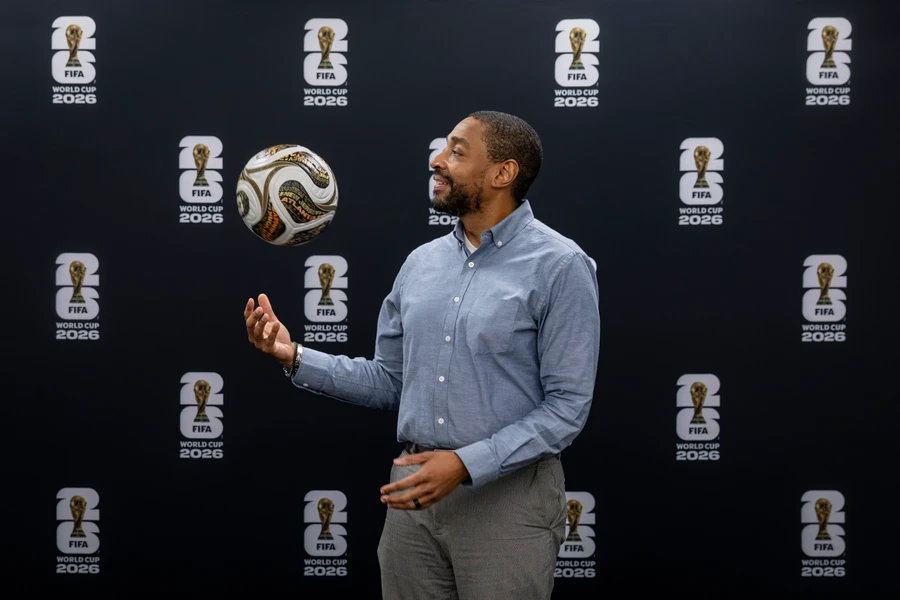 Curtis Franks, general counsel of the FIFA World Cup 2026, poses for a portrait at FIFA’s offices in Miami, Florida, US, on Monday, Sep. 21, 2026. Photographer: Eva Marie Uzcategui/Bloomberg Law
Growing up in Atlanta, Franks liked sports but wasn’t an athlete himself.
The self-proclaimed bookworm’s first real connection to the business side of events came when he was 16, working for the Coca-Cola Co. during the 1996 Atlanta Olympics. His title was product distributor — “a nice way to basically say the guy who fills up the vending machines around the stadium,” Franks joked.
The experience solidified his interest in a sports-adjacent career. He originally set his sights on becoming a team doctor — until he took his first organic chemistry exam in college. “It was like a foreign language.”
Medicine was out. LSAT books were in. Franks did well enough to earn a spot at Tulane Law School, where he gravitated toward sports and entertainment law.
By the time he graduated in 2005, Franks had watched friends toil their summers away and knew the traditional path from Big Law to in-house wasn’t for him. Instead, he took an internship with the Atlanta Hawks HR department. When one of the team’s lawyers went on maternity leave, the general counsel gave Franks some lower-level work.
He stayed on in a hybrid business and legal role until his career took him to The Atlanta Journal-Constitution, NBC, and the NCAA. He led the Covid-19 legal response for the governing body of college sports, troubleshooting pandemic disruptions and even sitting in on the 2021 men’s basketball championship bubble, said NCAA Chief Legal Officer Scott Bearby, whom Franks worked under.
“His style in trying to find solutions, trying to find compromise — that worked really well,” Bearby said. “People in the industry even then trusted Curtis that he was going to do what he said.”
In a full-circle moment, Franks came back to Coca-Cola the following year — this time to lead legal strategy for a $600 million-plus marketing portfolio. There, he found himself sitting across the table from colleagues at FIFA, who suggested he apply for the World Cup position, he said.
He was uncertain about leaving an established job for the unknown. His boss at Coca-Cola offered some encouragement: A World Cup in his own country was a “once-in-a-generation opportunity,” Franks remembers being told.
He decided to go for the goal.
 Curtis Franks, general counsel of the FIFA World Cup 2026, at FIFA’s offices in Miami, Florida, US, on Monday, Sep. 21, 2026. Photographer: Eva Marie Uzcategui/Bloomberg Law
Franks became the World Cup GC in 2023. The demands were a far leap from restocking beverages at the Olympics. He had to quickly assemble a team of technically skilled lawyers who felt comfortable navigating executive-level decisions.
“It’s not all glamour,” Bearby said, reflecting on the crisis leadership Franks exhibited at the NCAA. “Anything could go sideways if it’s not buttoned up.”
FIFA’s legal department is divided between a central Zurich staff reporting to FIFA Chief Legal Officer Emilio García Silvero and local subsidiaries. Franks’s domain, split among the three host countries, was executing the tournament itself.
That meant hundreds of contracts that probably never crossed fans’ minds.
“When you see a bus transporting a team, that’s a contract,” Franks said. “When you see LED boards, that’s a contract.”
Deals signed years earlier sometimes conflicted with the realities of 2026. A stadium might have renovated a space FIFA had banked on using, or someone might not remember signing on the dotted line at all.
Franks’s response could be as simple as pointing to clause X on page Y, but sometimes host cities and stadiums had operational concerns that FIFA had to address. Franks stood out for his ability to stay calm and focused under pressure, said Amy Hopfinger, the World Cup chief business and strategy officer.
“Curtis always brought the temperature down,” she said in an email. “He would quickly bring the right people together, identify the key decision points, and create a clear path forward.”
His flexibility was tested during emergency legal fights in Los Angeles and Seattle over Iranian-American fans’ display of Iran’s pre-revolution “Lion and Sun” flag, despite FIFA’s ban on political symbols at matches. Franks traveled to both cities to attend hearings in June. That month, the judges sided with FIFA, denying plaintiffs’ motions for injunctive relief.
Immigration became another interesting challenge. FIFA staff, teams, and personnel were moving among three countries with differing laws. Someone based in Mexico might need to travel to the US, which has cracked down on immigration under the Trump administration. The rise of fuel prices amid the US-Iran war was another geopolitical shock, complicating FIFA’s flight budget and bookings.
Intellectual property rules also added a layer of complexity as influencers, streamers, and bloggers tested the limits of what could be filmed and shared online. Franks helped identify and escalate potential violations to FIFA’s commercial legal team.
The rules extended to the host stadiums themselves. Levi’s Stadium, for example, was required to go by “San Francisco Bay Area Stadium” and cover its iconic logo, as the apparel brand was not an official FIFA partner. The Levi’s marketing team responded with a wink, changing social-media profile pictures to a concealed version of the logo.
Still, the biggest issue on Franks’s mind wasn’t IP or contracts. It was safety.
A bombing in Atlanta’s Centennial Olympic Park during the 1996 Games caused two deaths and injured more than 100. As an employee at the time, Franks remembered how suddenly the atmosphere changed. During the World Cup, every call from the security chief could put Franks on edge.
“You’re holding your breath because you don’t know what he’s going to tell you,” he said.
Ultimately, the tournament proceeded safely, he said.
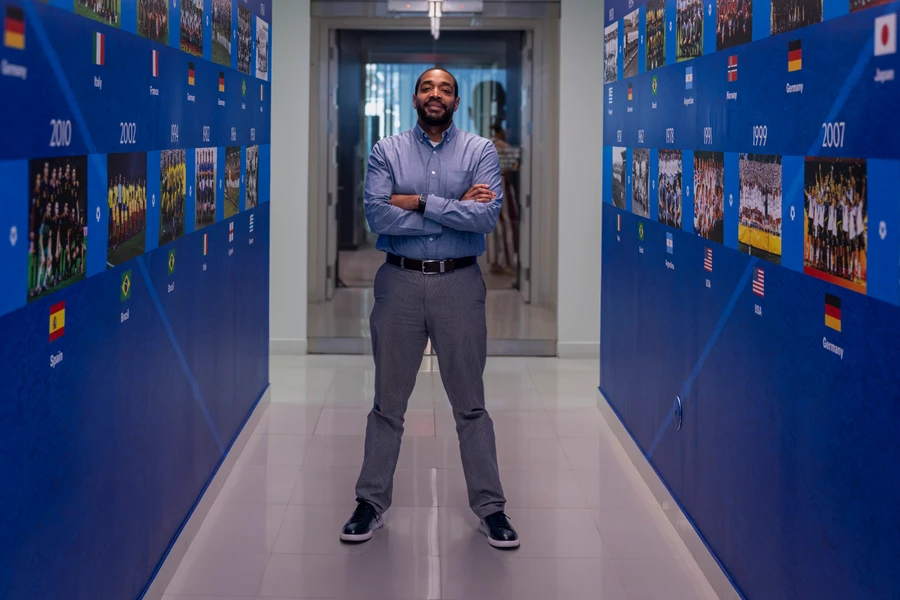 Curtis Franks, general counsel of the FIFA World Cup 2026, poses for a portrait at FIFA’s offices in Miami, Florida, US, on Monday, Sep. 21, 2026. Photographer: Eva Marie Uzcategui/Bloomberg Law
Away from FIFA, Franks’s life in Atlanta involves less jet-setting and more chauffeuring of two young boys. He and his wife’s sons, ages 9 and 7, play tennis and have tried soccer, baseball, and track.
Franks is on the board of the Sports Lawyers Association, a nonprofit advocating the advancement and ethical practice of sports law. His own athletic passion isn’t soccer, but bowling. Before his career became so demanding, he traveled around the country for tournaments. He hopes to compete again now that the World Cup is over.
If fans remember the world’s largest sporting event for what happened in 90-minute matches, Franks’s contribution lies in everything that happened before and after the players left the pitch.
Looking ahead, the 2030 World Cup will span a whopping three continents, and Spain, Portugal, and Morocco are set to host. Local laws and logistics will present uncharted challenges.
Franks said his legacy is giving the next generation of events lawyers his blueprint to take that leap into the unknown.
“You don’t have to build this from scratch in the way I had to,” Franks said. “Here are some big stepping stones.”