
If anything, the league sees Bayern as a way into the league – a window into the various stories that make the Bundesliga as a whole immensely compelling. One of those, for example, is the fact that the German top flight has always been a breeding ground for American talent – something fans in the U.S. connect with.
“It doesn’t have to be necessarily always the super top star. There could also be a rising talent with American roots. You could also talk, ‘Okay, Malik Tillman, is it his breakthrough season at Leverkusen? Yes or no?’ He might get the overall recognition on the same level as as Luis Diaz, but it’s it’s it’s a story. We have the league with the most U.S. American players in history, with more than 80,” Austermann explained.
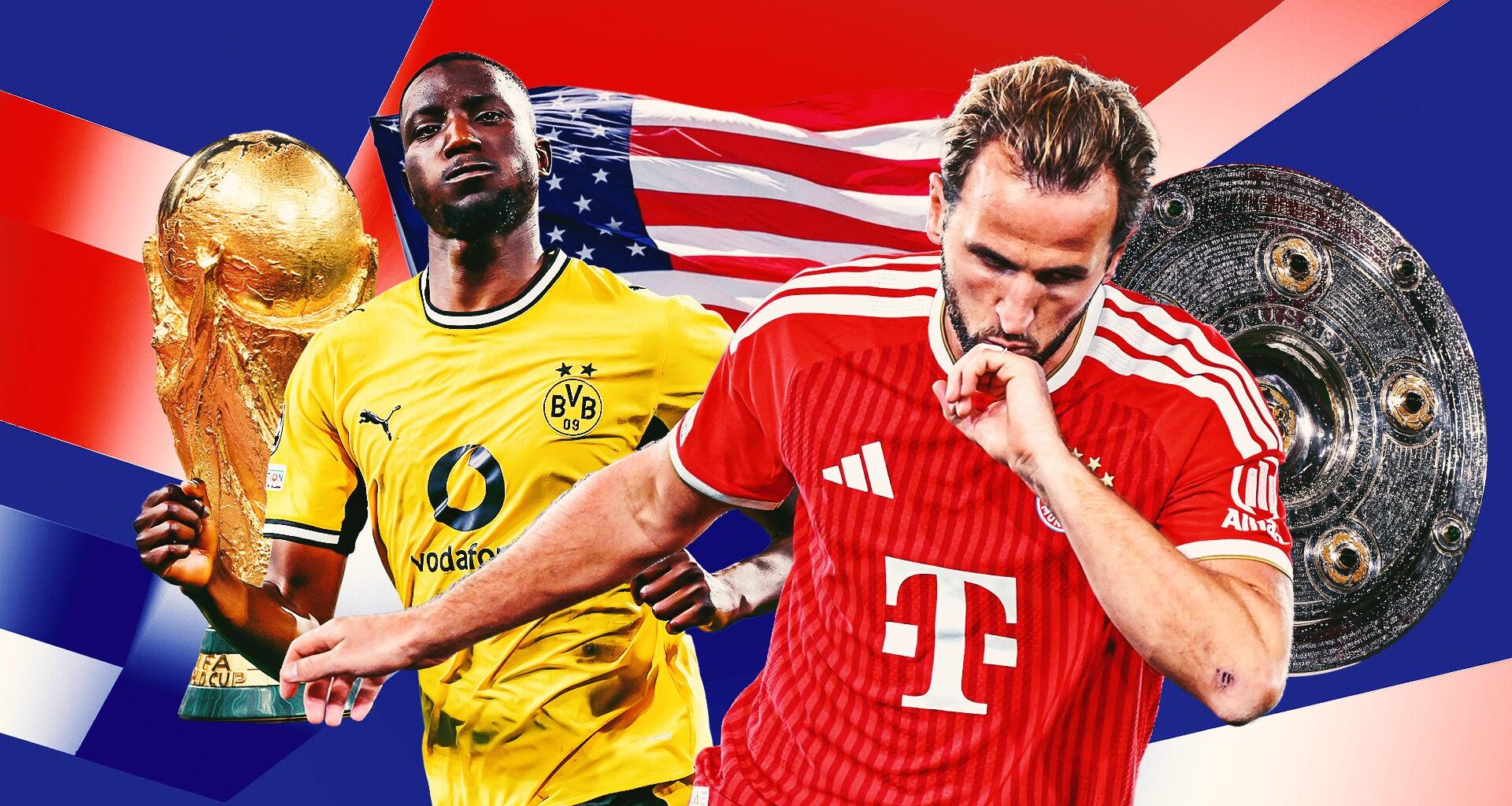
And then there’s the other stuff. Frankfurt, Dortmund, Leverkusen, Hamburg – these are all immensely captivating clubs with glittering histories. Now, the Bundesliga is trying to tell their stories more effectively. Jobe Bellingham, Serhou Guirassy, Christopher Nkunku; these guys are all immense talents. Their fanbases are massive.
“What is it to be a Frankfurt fan, a Dortmund fan? What’s so special about the Yellow Wall? Why are the stadiums always so loud? Those are kind of the stories that we need to actively tell. Because again, I cannot take it for granted that you, your friends, people in the U.S., just know about them. We need to, in this case, promote it and educate the audience in a certain way,” Austermann added.
That means using talent with significant followings to do deep dives on individual clubs. That’s part of the ‘Discover a Club’ initiative that has opened up so-called smaller Bundesliga teams to a much wider audience.
“We are sending one creator from the United States, one from Mexico, over to Germany. They spend an entire week with the club and tell the story of Frankfurt, Schalke or so, in a completely different way from an American angle. We provide it to our broadcaster, and we use it on social. And this narrative can be used throughout the entire season,” Austermann explained.
It helps, too, that Bundesliga clubs are far more intrigued by global collaboration than those of other leagues.
“Our clubs are super open to that. They are really active. They want to tell the stories for sure. They’re competing on the sporting level, but when it comes to international activities, specifically in the U.S., we know that people follow players, clubs, and then the league. Yeah. So we can do a lot, but we also need the clubs,” Austermann added.
There’s other stuff, too. German football carries a certain mythology. Clubs tend to be run pretty sustainably. They seldom spend big and are fan-owned. Their atmospheres are entirely unmatched. The rest of European soccer is corporate. Germany isn’t perfect, but there’s a folksy charm about it, too.