
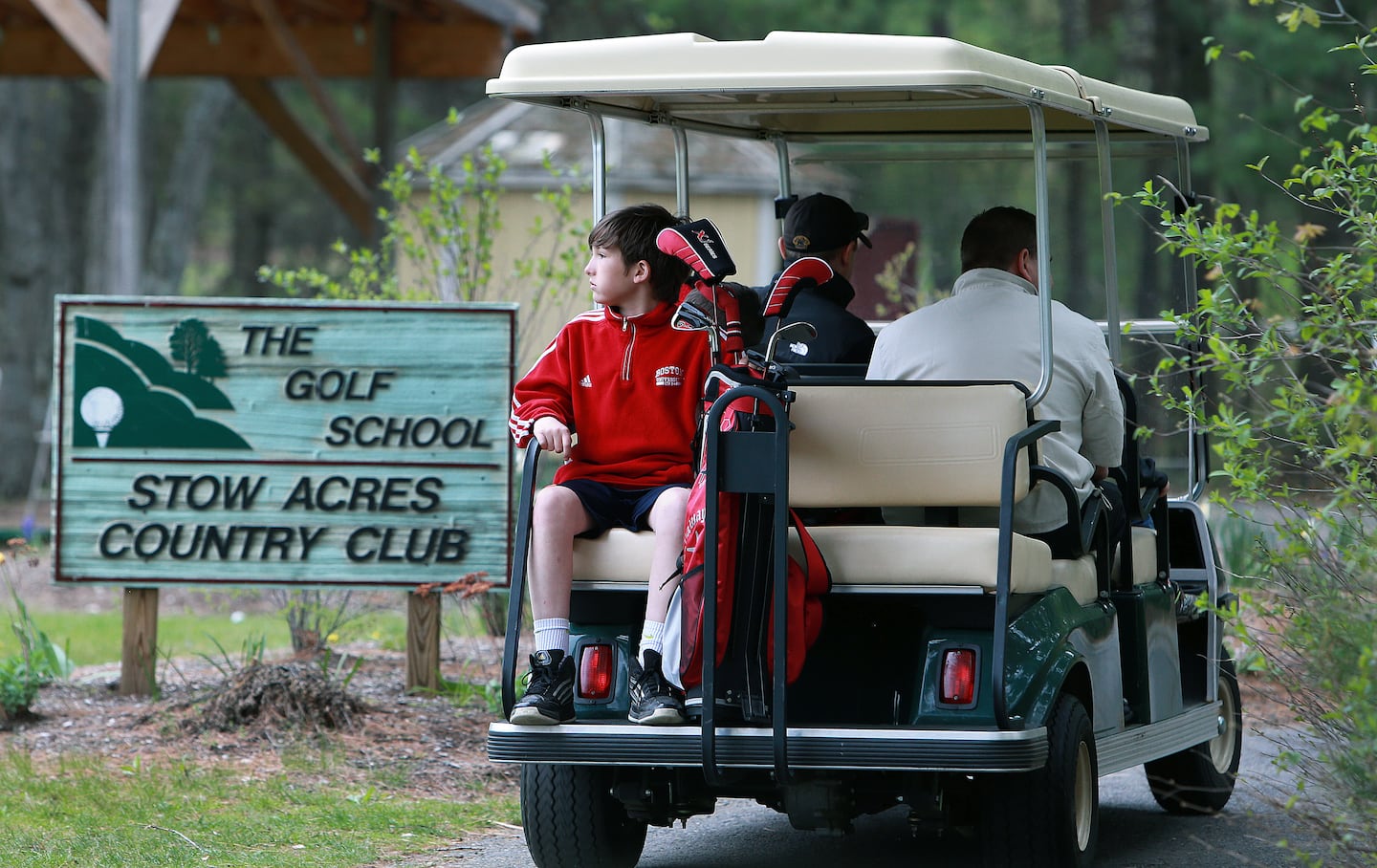
The prices, too, were straight from that era, with rounds Tuesday through Thursday this week costing just 50 cents per player.
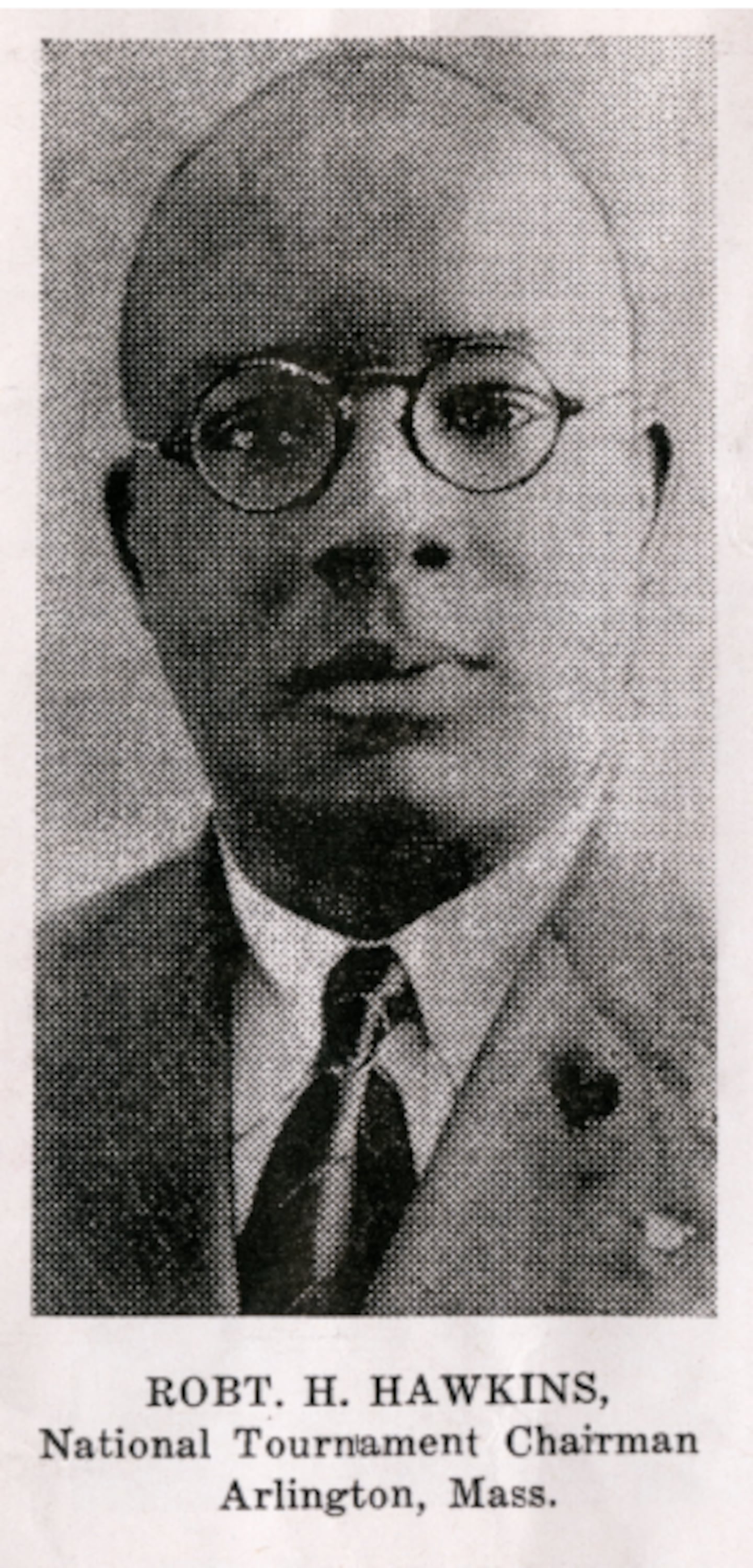 Robert H. Hawkins in an undated photograph.Courtesy Rediscover Mapledale
“Obviously we’re not gonna get rich on 50 cents a golfer, but it’s more of a goodwill promotion, getting people out onto the course,” Carlson said. “We’ve been looking forward to our 100th anniversary to celebrate what happened here.”
Much of the history of the course had been forgotten until a resident-led group began dusting off records about six years ago.
In Hawkins’s day, the course was known as the Mapledale Country Club. At the time, it broke new ground by welcoming Black people at a time when segregation froze Black athletes out of professional play, according to Rediscover Mapledale, a nonprofit group of historians and residents.
“As near as can be recalled, [it] is the only one of its kind in the country,” the Globe wrote of the club in a 1926 article, noting the venue’s 18-room colonial clubhouse, which still stands today.
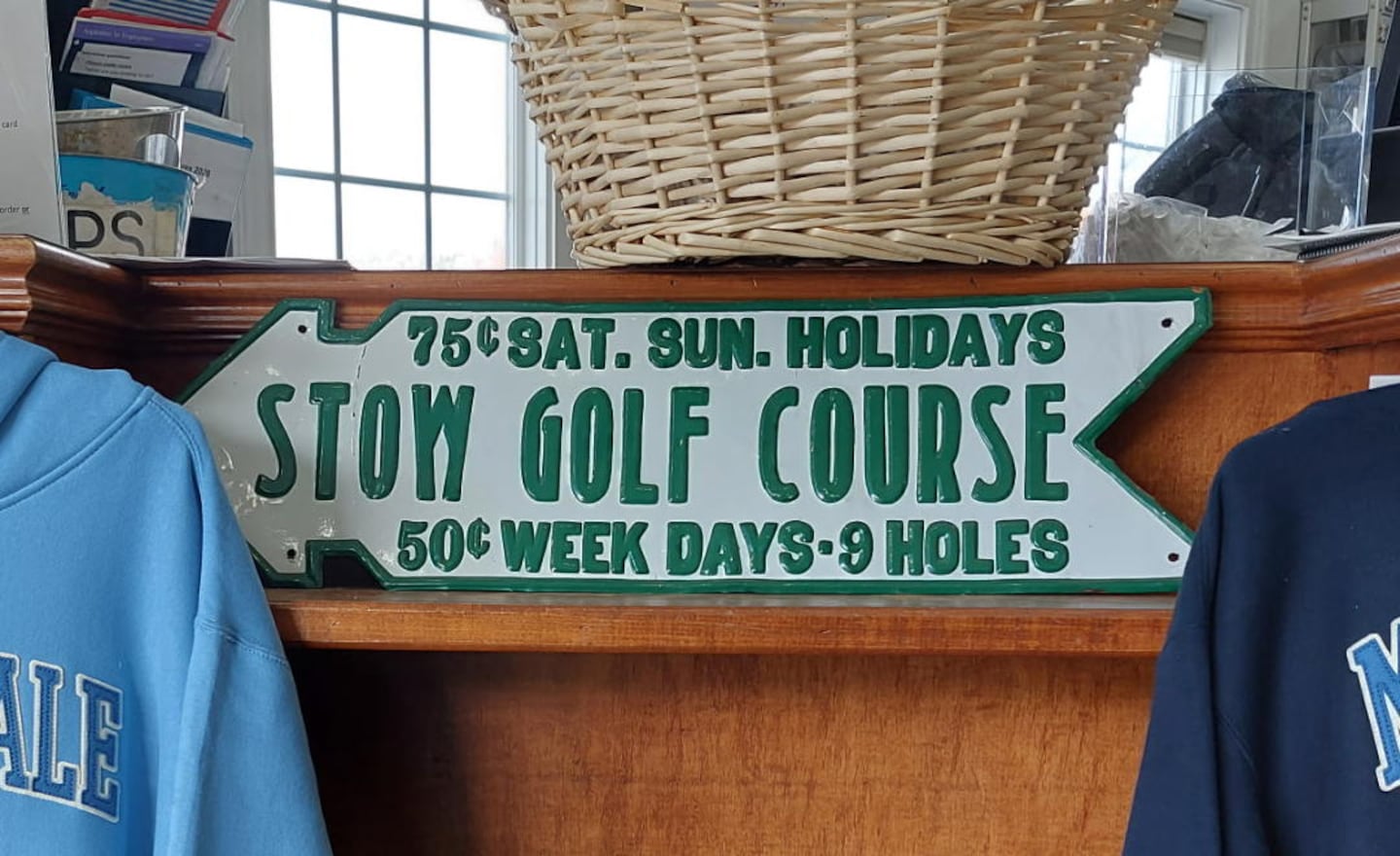 An old sign advertising 50 cent weekday golf rounds recovered from the Stow Acres clubhouse. SUBMITTED PHOTO
Hawkins bought the property from a doctor in 1926 for $10,000, according to Kelly Lawlor, a founding member of Rediscover Mapledale and a middle school English teacher in Lexington.
Carlson, who has worked at Stow Acres since the 1990s, said for decades he was unaware of Hawkins and the founding of the course. That changed as the anniversary neared, and the local group began combing census records and found Hawkins’s name on an old club deed.
“My first 10 years here, the history had been lost,” he said. “There was no talk of it.”
So little was known, Carlson said, that as recently as 2015, the club’s logo mistakenly said Stow Acres was established in 1921.
Places like Mapledale warrant “a reassessment of the history of golf” and an acknowledgment the “central role African Americans played in elevating and spreading the game,” said Robert Bellinger, an associate professor emeritus in African American history at Suffolk University and a Rediscover Mapledale historian.
In 1929, hit hard by the Great Depression, Hawkins sold the club to a white owner, and it was later rebranded as Stow Golf and Country Club, according to records.
The history became so obscured that Mapledale didn’t even get a mention in Hawkins’s 1973 obituary published in the Globe, which instead highlighted him as the former manager of Greenacres Country Club in Framingham, where he worked in the 1930s and 1940s.
“It’s a big deal,” Carlson said of Mapledale and the reclamation of the course’s history. “Black history isn’t as well preserved as it definitely should be, and [having] an opportunity to unearth this and shout it out is kind of exciting.”
Since 2024, the club has held the Robert H. Hawkins Memorial Golf Tournament in honor of the man who once hosted premiere golf tournaments for Black golfers on the same grounds, including the National Black Men’s Championship in 1926 and the first three United Golf Association Negro National Open Golf Tournaments from 1926 to 1929.
“There was this period where Black golfers were able to flourish and thrive and win golf tournaments,” Lawlor said. “This was a hidden history.”
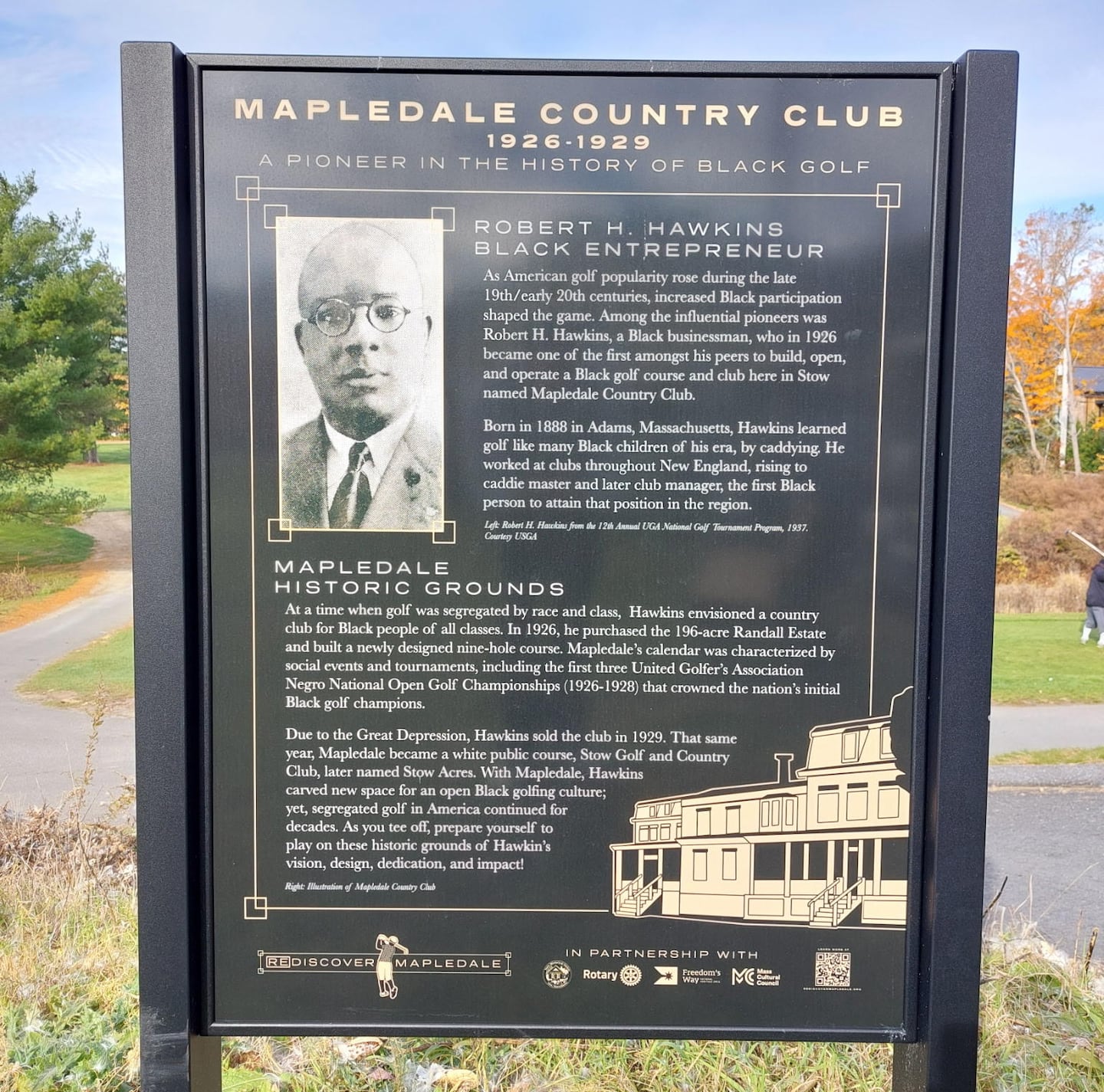 A plaque informs golfers about Robert Hawkins at Hole 1 of the Stow Acres Golf Course.submitted photo
She highlighted how — contrary to modern perceptions of golf as a sport for the wealthy and white — some of its most influential pioneers were Black, including John Shippen, the first American-born golf professional who competed in the 1896 US Open.
Hawkins, who learned the sport while caddying at golf clubs across New England, became the region’s first Black club manager in Wayland before buying the Mapledale property.
He was also a founding member of the United Golf Association, formed in response to the segregated Professional Golfers’ Association of the time, which didn’t integrate until 1961.
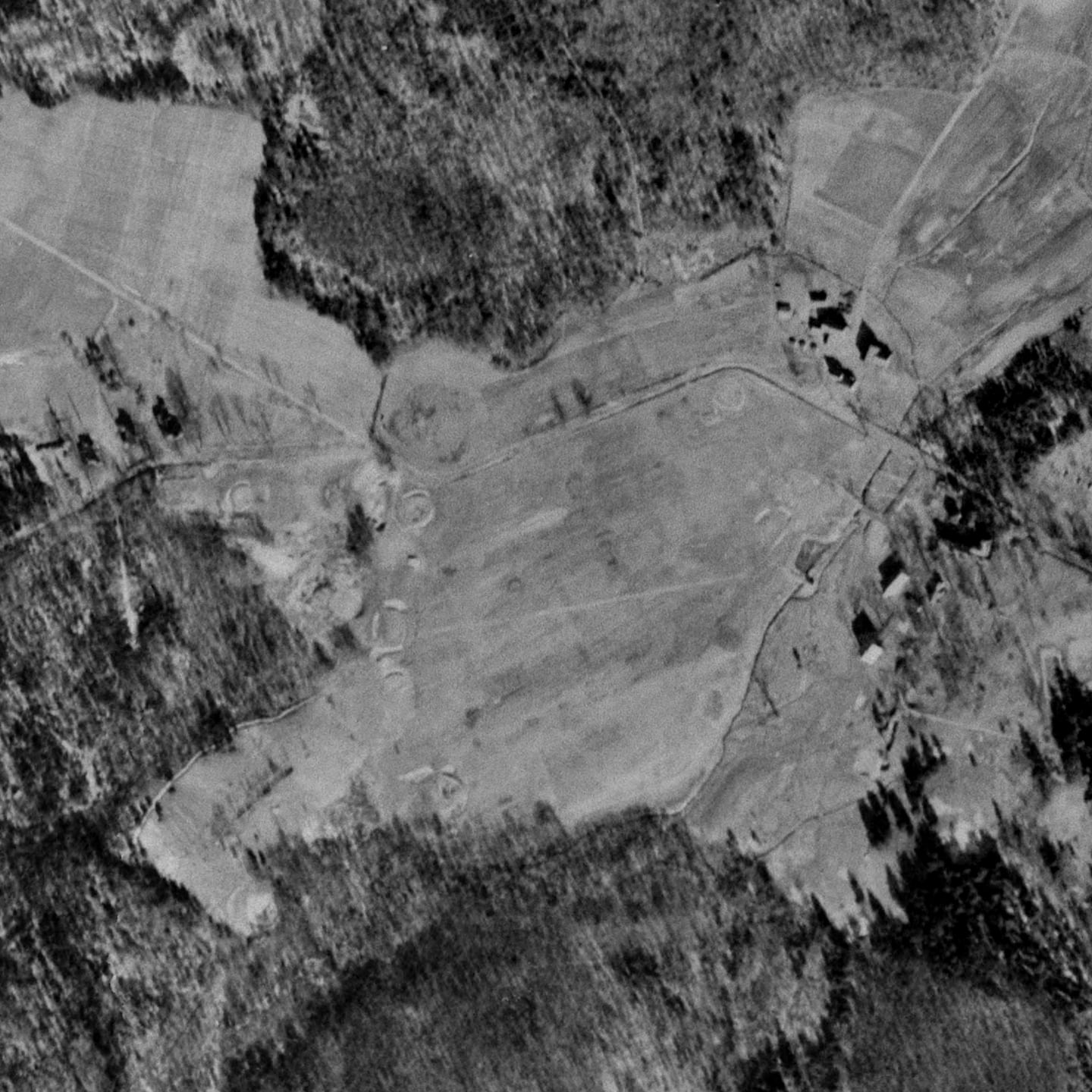 An aerial photograph of Mapledale Country Club’s 9-hole golf course taken in 1938. Carlson used the photo to reshape the greens for the 100th anniversary.Submitted photo
For Stow officials, recreating the old course wasn’t easy, Carlson said, namely because of the lack of records. They had to rely on an old photo for details.
“It was kind of grainy, but you could see where the greens were and from that I was able to see where the nine holes were,” Carlson said.
As part of their research, club officials found a sign collecting dust in the clubhouse attic advertising 75 cents for weekend play, and 50 cents for a weekday tee time. From there, the anniversary promotion was born.
“For 50 cents, we knew we’re going to get a lot of happy people” this week, he said.
The short course overlaps with parts of Stow Acre’s current 27-hole layout. The greens will be converted back to their usual layout after this week to allow for the resumption of regular play.
For those who missed the promotion, Carlson said the club is considering bringing it back next year. A traveling exhibit on the course’s history is also currently on display at the Major Taylor Museum in Worcester.
 A groundskeeper tends the greens at Stow Acres Country Club in 2014. Ellen Harasimowicz for The Boston Globe
Thanks to four historical plaques put up this year, all visitors to Stow Acres can how learn of the property’s history, Carlson said.
Of course, just playing a round of golf can be its own time machine.
“When you’re out on the golf course with your clubs and a ball, and turn your phone off,” Carlson said, “you’re probably feeling a very similar separation from the world as as they were feeling a hundred years ago.”
Bryan Hecht can be reached at bryan.hecht@globe.com. Follow him on Instagram @bhechtjournalism.