
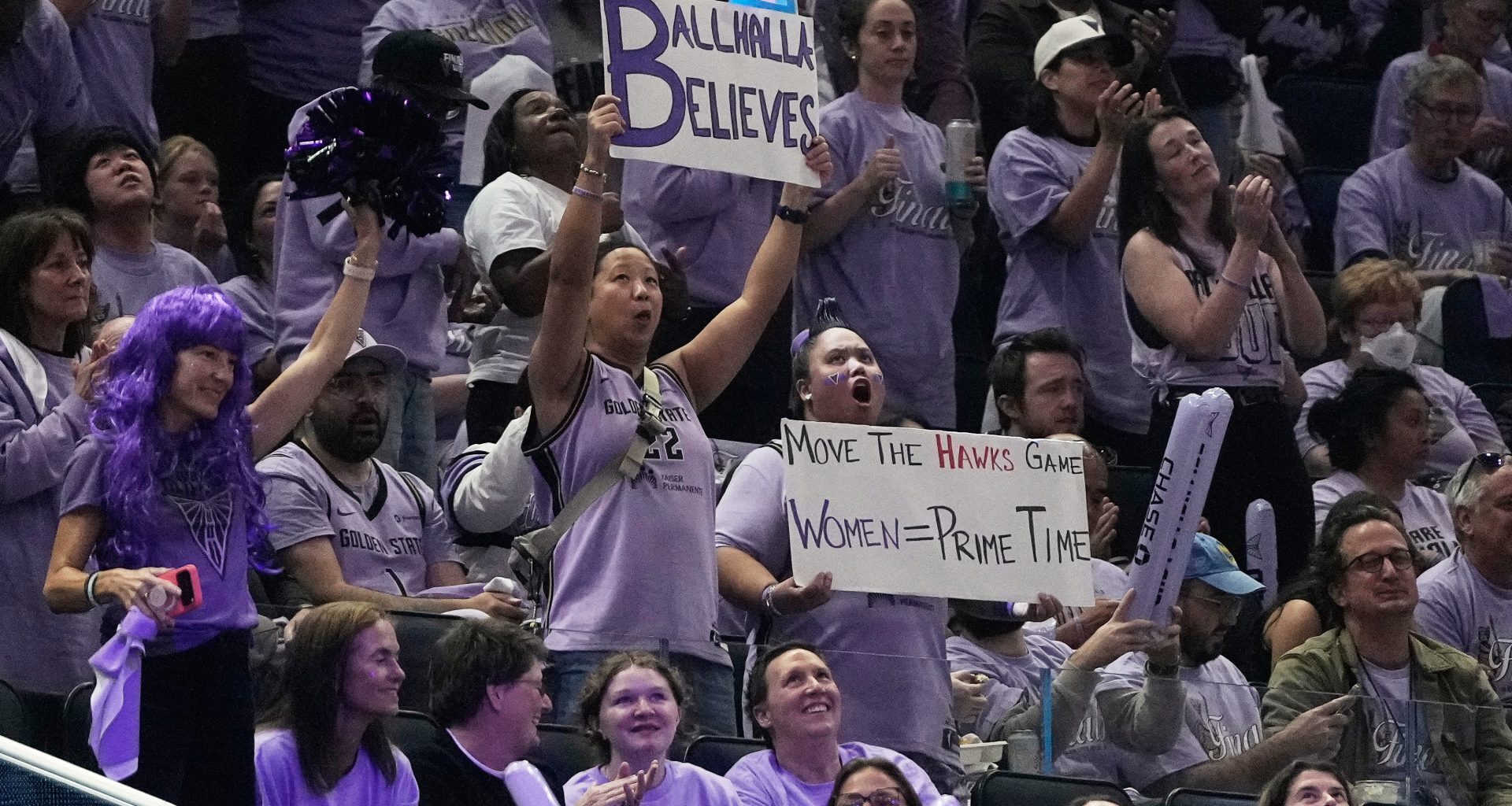
The WNBA is wrapping up its 30th season, and the league has grown beyond what anyone could have ever imagined when it was founded in 1996. According to the league’s website, over 90 million viewers tuned in across all national networks this season, and 3.8 million fans attended games across the country. Fans traveled to see Caitlin Clark, Angel Reese and Paige Bueckers, who have become household names in just a few years.
The fandom’s growth has correlated with an increase in headlines addressing the players’ personal lives: Who are the athletes dating? Who has beef with who? What are their political views?
Everyone’s watching the WNBA. But not everyone is watching basketball.
Destiny Dugboe, a DePaul graduate student and WNBA fan, called the league’s growth in visibility and endorsements “phenomenal,” but argued that people are focusing on the wrong things.
“Nobody’s looking at athletic performance anymore,” Dugboe said. “It’s kind of getting overlooked due to like personal drama happening in the players’ lives.”
Genesis Sanchez, a former Chicago Sky employee, was at the game on Aug. 23 when former NBA player Enes Kanter Freedom was ejected and subsequently banned from Wintrust Arena after a heated exchange with Sky guard Natasha Cloud. Kanter Freedom sat courtside wearing a shirt that read “WOMAN noun. Adult human female.” He claimed on X it was the shirt that got him kicked out.
“It wasn’t because of the shirt,” Sanchez said. “It was because he started being rude and saying something to one of the players. The player started defending herself, and then that’s when they kicked him off.”
Beyond this one event, tensions in the season rose higher after Indiana Fever guard Sophie Cunningham told ESPN she is against transgender athletes playing in women’s sports.
Cunningham is a veteran guard who has become very popular with right-wing figures, including former collegiate swimmer and political activist Riley Gaines and Vice President JD Vance. In an interview with Laura Ingraham on FOX News, Vance called her courageous and encouraged her to continue speaking her mind.
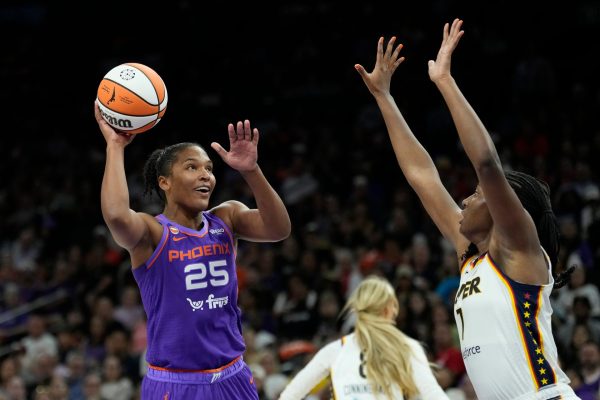 Phoenix Mercury forward Alyssa Thomas (25) shoots over Indiana Fever center Aliyah Boston (7) during the second half of a WNBA basketball game, Thursday, July 9, 2026, in Phoenix. (AP Photo/Ross D. Franklin)
Interruptions and debates frequently detracted from the game. According to ESPN, Phoenix Mercury forward Alyssa Thomas and her family were harassed and received multiple online threats after she committed a flagrant foul on Clark in a June game. Thomas was coming down from a play when her fist made contact with Clark’s throat.
11 Republican lawmakers sent a letter to WNBA commissioner Cathy Engelbert, calling for an investigation by the Department of Justice, Department of Labor or the Equal Employment Opportunity Commission. They claimed the “attacks” from Thomas, who is Black, against Clark, who is white, could be “racially motivated.”
Politicians defending certain white players creates a dangerous environment for Black women in the league. White players’ political allies and massive fanbases tend to target and attack Black women when they don’t agree with their actions.
Though Thomas committed a rough foul against Clark, lawmakers calling the incident “racially motivated” opened the floor for unnecessary harassment against Thomas and her family.
Current players and prospects could become discouraged from playing in the WNBA for fear of receiving threats and hate messages for just playing the game.
Fans looking to consume women’s basketball could also be turned off if games are being interrupted and their favorite players are being harassed.
Dugboe said the media plays a big part in pointing people’s attention to the wrong things.
“A lot of people love that tension stuff, so like media’s gonna spin things around,” Dugboe said. “Media is gonna keep on making these titles that are gonna clickbait.”
The reality is both parties, the media and the public, are at fault.
The WNBA is positioned as secondary to men’s leagues, including NBA, NFL and MLB, so major news outlets and the general public sometimes still only tune in when high-profile players are involved or unusual events happen.
Any story with Clark, Reese or Cunningham in the headline is bound to receive an absurd amount of clicks. Higher engagement leads to more stories about drama and controversy rather than basketball, and the cycle repeats.
Where male athletes are measured and appreciated for their performance and stats, female athletes are viewed as entertainment and valued based on opinions, relationships and looks.
WNBA players’ achievements, athletic performance and skills get more impressive each year. Despite the fact that the league’s audience is growing, the celebration of these women is not. These athletes don’t get nearly enough praise for their performance because outside noise is so loud.
Women’s basketball should be treated with the same respect as men’s basketball, and it shouldn’t take politics or drama to get people watching the game.
It’s on WNBA fans to keep their eyes on the ball and resist buying into the discourse, gossip and controversy that tries to distract from it.
Related Stories:
Support Student Journalism!
The DePaulia is DePaul University’s award-winning, editorially independent student newspaper. Since 1923, student journalists have produced high-quality, on-the-ground reporting that informs our campus and city.
We rely on reader support to keep doing what we do. Donations are tax deductible through DePaul’s giving page.