

18. November 2026
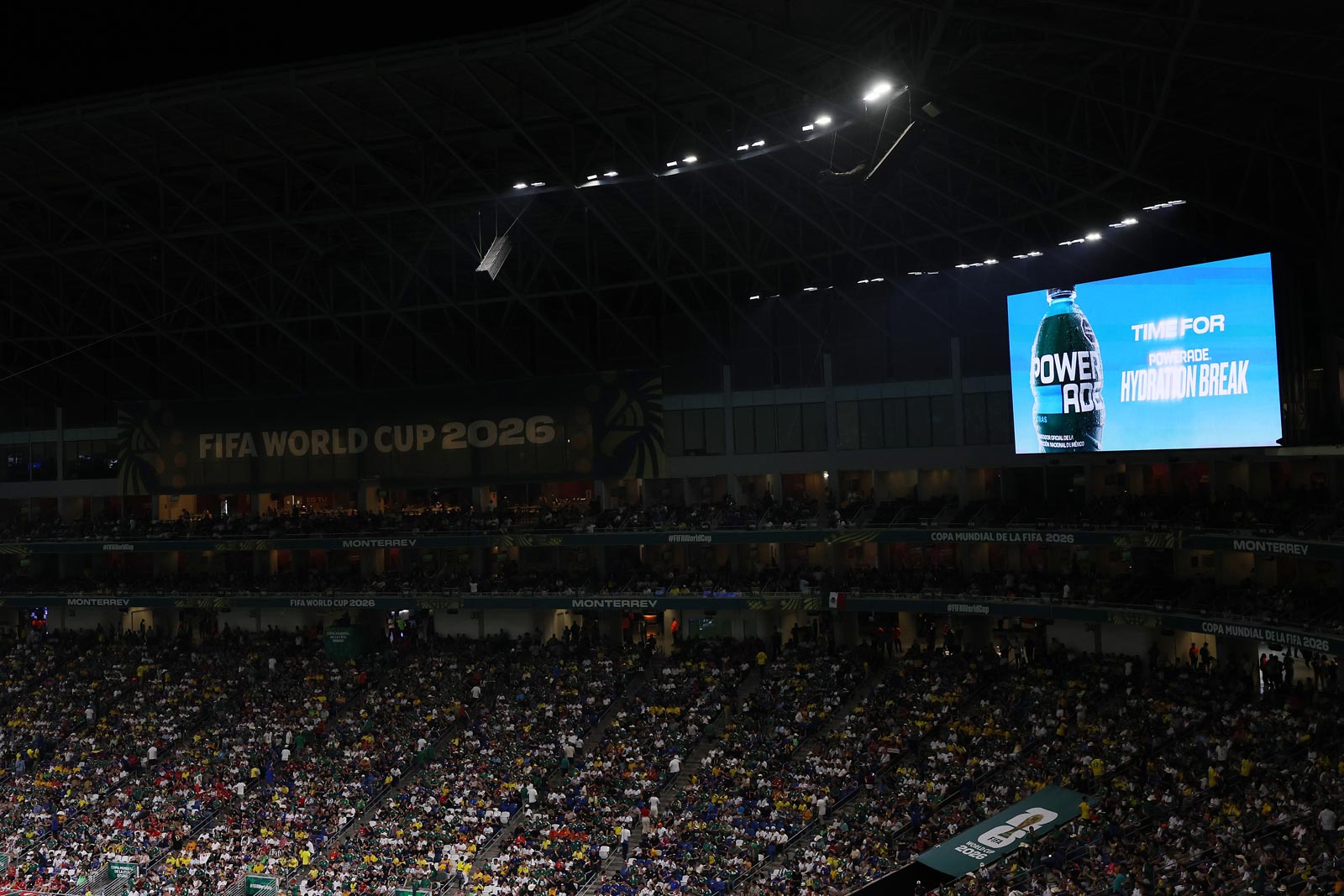
(foto: Getty Images)
The three-minute hydration breaks introduced by FIFA at the 2026 World Cup have proved to be an extremely lucrative advertising space. Documents for the sale of television rights for the 2030 World Cup reveal that the controversial breaks could become a permanent fixture, although FIFA has not yet made an official decision.
Follow Nogomania as a preferred source on Google
Add Nogomania to your favorite sources on Google News and
be among the first to receive the most important football news.
The 2026 World Cup introduced an innovation that significantly changed the rhythm of football matches. FIFA introduced three-minute hydration breaks at all 104 matches, one in the middle of each half. The official explanation was concern for players’ health, but the innovation had another consequence that was extremely attractive to broadcasters.
It opened up additional advertising space in the middle of football matches. The Guardian now reports that, in the tender documents for the sale of television rights for the 2030 World Cup, FIFA already mentions the possibility of airing advertisements during hydration breaks. This is a strong signal that such interruptions could remain part of World Cups in the future.
However, no final decision has yet been made. FIFA emphasizes that the documents include various options that are still under consideration.
Three-minute breaks, millions of dollars in advertising revenue
At the 2026 World Cup, the breaks were mandatory at all matches, including at stadiums with bearable temperatures. As many as 31 of the 104 matches were played at such venues. FIFA justified the uniform rule by the desire to ensure equal conditions for all national teams. But broadcasters quickly recognized the breaks as an exceptional business opportunity.
According to data cited by The Guardian, each match reportedly generated between two and nine million dollars in revenue from additional advertising during the breaks. American broadcaster Fox reportedly generated about 250 million dollars from this. Fox’s total advertising revenue during the tournament was estimated by the analytics firm Guideline at as much as 835 million dollars, while the broadcaster paid FIFA 485 million dollars for the rights.
FIFA could earn even more from TV rights thanks to the breaks
Although FIFA did not directly profit from the additional advertisements at the 2026 World Cup, that could change in the next sale of television rights. The potential for additional advertising increases the value of the television product. The rights for the American market for the 2030 World Cup are estimated to be worth between 1.5 and two billion dollars.
In the tender, streaming platforms are also expected to compete for the rights alongside traditional broadcasters.
The 2030 World Cup will be hosted mainly by Spain, Portugal and Morocco, with three matches to be played in South America.