
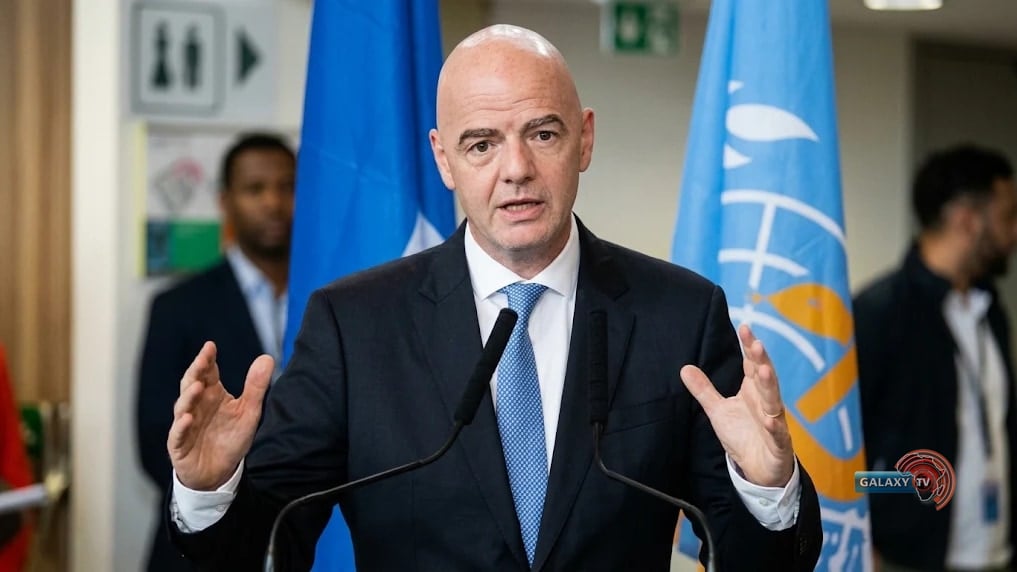
Nigeria must address major infrastructure gaps before it can host the senior men’s FIFA World Cup, with FIFA President Gianni Infantino identifying stadiums, airports, hotels and transport networks as key requirements.
Infantino gave the assessment during an interview with ARISE News in Abuja on Monday, November 23, when asked whether Nigeria was ready to stage the global football tournament.
Read alsoDelta has potential to shape global football — Infantino
He ruled out the possibility for now but said the country could become a host in the future.
Start tomorrow informed
Save your place for the morning brief. We’ll start emailing when delivery goes live.
Free. Confirm by email. Unsubscribe anytime.
“Today, no. But tomorrow, why not?” he said.
The FIFA president explained that hosting the competition required substantial investment in facilities and infrastructure capable of accommodating teams, officials, supporters and other visitors.
“The key for hosting a World Cup is obviously the infrastructure, the stadiums, the airports, transportation, and this is where the best practice is needed,” he said.
Despite his reservations, Infantino acknowledged Nigeria’s football culture, resources and passion for the game, expressing confidence in the country’s potential to develop the facilities needed to host major competitions.
He also referred to his recent visits to the national technical centre in Abuja and the remodelled Warri City Stadium, which he described positively.
Infantino visited Nigeria alongside FIFA Secretary-General Mattias Grafström, with the delegation inspecting football development projects and facilities.
Nigeria has never hosted the senior men’s World Cup, although it staged the 2009 FIFA U-17 World Cup. The Golden Eaglets finished second after losing 1-0 to Switzerland in the final in Abuja.
South Africa remains the only sub-Saharan African country to have hosted the senior men’s tournament. It made history in 2010 as the first African nation to stage the competition.
Morocco will become the next African host when it co-hosts the 2030 World Cup with Spain and Portugal. Uruguay, Argentina and Paraguay will also stage centenary matches as part of the tournament.
Infantino’s remarks suggest that Nigeria’s football pedigree alone would not be enough to secure hosting rights, with major improvements to sporting and wider national infrastructure required before the country could realistically pursue the ambition.