Media Availability (5/30): Warsofsky
Um, you know, I’d say as far as having patience was was a big thing and then going through and playing through adversity, uh, when something went wrong and I think that’s something that we got better as a terminal on that we were, you know, I would say a little bit more mentally tough towards the end of it. How how important was it for you guys to kind of get punched in the face early like by Switzerland, by Norway to kind of get set you guys on the right path? Yeah, I thought it was important. you know, looking back two years ago or three years ago when I went, you know, as an assistant coach, we kind of rolled through the prelim games and we’re seven and0, whatever it was. And um and then the real hockey starts and I think, you know, we play the Germans, uh late in the prelims, which was a tough, tight game going into the third period. We were up a goal. We stayed on the attack. You know, we go the next game, we play the checks. um real tough game with posternok and ecash and um some good NHL players and it was a checking you know a tight checking game and a hostile environment. Um so all those things uh kind of built us towards you know getting into Sweden and playing against Sweden in their home uh you know in their home building in their home country and a soldout crowd and um a hostile environment and I thought that was important that we’ve already done that. Um, you know, and it was we took the kind of the us versus the world mentality and and we ran with it. And um, you know, credit again to the group of really buying into how we needed to play, getting into the inside of the ice. You know, our game kind of transitioned from being more of a line rush perimeter team early in the in the prelim in the tournaments in the tournament to more of a inside grind it out, put pucks in the net, win races inside team. Uh, and ultimately that’s what really helped us win the the tournament. Was there a specific moment where you knew or the coaching staff knew that, hey, this team could could win it all? You know, I thought the Germany game and the check game before we got into the quarters um was a good, you know, was a good blueprint of how we needed to play. And we got away from more of a track meet team into, you know, more of a wear them down, put pucks to the net, more of a um bluecollar team that just worked. um and let our skill come out when it needed to and have patience in that. Um I would say that and then even Finland, you know, that’s a tough game. They’re very well structured. Um that was probably the best game I saw. We had the most patience. I didn’t love our start, but our game built as a as a you know, periods went on the second and third period and then um our skill kind of took over and we wore teams down. So, you know, those, you know, you look back at every game had some moments in it where you kind of you reflect back and, you know, teams that I’ve coached that have won and and moments and you’re like, man, that makes sense because it felt very similar. And um so I think that that was important that we went through some things throughout the tournament. A lot was obviously made of Mlin and and Sid. Um did uh did anybody take Will Smith under his wing in a similarish way or any anything like that that that you saw? Yeah, I thought Connor Garland did a really good job. Um, you know, Connor Garland is, you know, a hell of a player. Uh, competitive as can be for how, you know, big he is. He he sticks his nose right in there and he doesn’t shy away. And, um, I know he was important for Will as was Matty Baneers. um obviously being a Massachusetts kid and both of those guys uh they knew him a little bit but now I think their relationship is probably taken off here and um I know those guys took him kind of under his wing and helped him and um as the term went on and in some ups and downs and we maybe not in the score sheet but other ways we can impact the game and I think that’s that’s something that both those guys did a really good job of. And what’s one thing besides obviously the winning, but the one thing that you would take from this team that you hope that you can apply to to next year’s Sharks team? You know, I think the the way we um wore teams down um was is something that we want to build here and that’s something that I’ll probably take from is um being, you know, and it’s tough in the National Hockey League with the grind of it and the long a lot of games. So, it’s a little bit of a different it’s it is different and it’s a little unique this tournament, but um you know I think teams that wear teams down are usually the teams that win. And I just you know obviously being away you don’t see a ton of the playoffs. I’ve watched a little bit here since being back but um you know Florida wears teams down. Edmonton wears teams down. You know Dallas lost but they wore teams down. Carolina you know those those last teams at the end um they wear teams down. they just they just have patience in their game and they don’t force things. They don’t beat themselves and that’s something that um I thought we did a good job of. We didn’t beat ourselves. Um our our game continued to build throughout the tournament and that’s something that we’ll really stress here in training camp. And finally for me, just what did this moment mean to you as an American to see that or to hear the anthem and to put out the gold medal just all that? Uh yeah, goosebumps. uh when when you know it’s a little unique they play the anthem after whoever wins the game and we heard that anthem quite a bit uh and that’s something we talked about at the end of the gold medal game is we wanted to hear our anthem uh we wanted to hear it in Sweden uh when there was only about 40 Americans in the building and that was basically the families and wives and girlfriends and um you it’s something that uh gives you goosebumps when it’s happening and it gives you you know quite the honor to to be from this country uh you know to represent your country. It’s humbling and it’s an honor and um you know it’s a special special country. It’s a special place. I’m I’m so glad I’m an American. I’m you know and in the freedoms that we have and um you know I think it’s the greatest place in the world. Congratulations again. See you soon. Thanks guys. Hi coach. Um I had I wanted to congratulate you again. Um, a question similar to something that Shang just asked is what other than winning made the experience just unforgettable for you personally? I think um, you know, you’re over there for three and a half weeks, you know, or just about 3 weeks and you go you’re, you know, the first two and a half weeks it’s just the team, it’s the coaches, it’s the players, it’s the uh, support staff. Um, and then the families come over and the wives come over. And so the first part of the the the is really where you do a lot of building, a lot of relationship building, a lot of team building, get to know people that you may not have never met. Uh and the next thing you know and a week later, you know, you know what their kids’ names are, you know where they were grew up, you know, you know what their hobbies are. So you really bond because you’re with each other, you know, pretty much 247 for those two and a half weeks. um and you’re trying to at the same time build a identity to the hockey team and uh put the structure in place. So you’re kind of in a little bit of a rat race, but it’s just you and the team and um so I think that was was what makes it very unique. And then when you something when you get to represent your country um is very humbling and it’s not something that everyone can do and um you’re hon it’s an complete honor and I think that’s what makes it so um that that’s what you get the joy from you know and that’s what’s so special about the whole opportunity with that group I guess what um really created the chemistry with them a lot of poker games these guys were really into poker um you know, we’d go out to dinner as a coaching staff um you know, come back and whatever it was 10 11:00 at night and these guys were playing poker in the lobby um 16 18 of them and it was every night and and maybe that is what um helped our group maybe just the chemistry of of them together uh on a nightly basis. um you know a lot of they had a lot of dinners kind of just all of them you know you never really guys saw there was never really clicks it was always they were always together um and I thought that is what made it very unique and special and then they started in the in the games I remember our second period against Sweden I’ve never been part of a bench um where every guy was saying the right things uh every guy had energy every guy was saying uh talking about playing with winning habits and putting pucks steep and finishing checks and staying on the like every guy was on it. It was uh that was something that I’ll look back and um I mentioned to the group after the game of how special it was to kind of witness that, you know, and as a head coach, you know, you try to put an identity and a structure in place and and steer it and guide it a little bit, but you hope at some point the players take over. And I would say the players really took over that team. Um, and we as coaches just helped guiding it and kept it on the rails a little bit and when it got off kind of get back on. Um, and and I got to give a lot of credit to, you know, Clayton Culler and and Garland and Shay and Thompson and um, you know, the assistant captains who did a really good job of of really, you know, helping our younger players and helping our guys have an understanding how we needed to play. Um, to your knowledge, is there somebody who is the best at poker? Um, it’s a good question. I don’t know, but I know Will Smith was struggling at one point. You guys can bring that up to him. All right. Speaking of Will, uh, there were a lot of questions asked about, but I just guess like looking into the future, uh, what improvements has he sort of made that he’s gonna carry on to the next season here? Yeah, I think just a more complete game, you know, and and and playing with with more motor. Um he’s going to have a big summer here now that he’ll get quicker and stronger and things that we need we’ve asked him to do throughout the summer and get ready for training camp. But playing in those last in this tournament, especially those last two games of a heavy physical um fast-paced game where you have to be able to think in a quick in a quick second to make the right play. Um, and sometimes, you know, the Q play is not the best play. You know, sometimes the best play is put it back down below the goal line behind the net. Um, get back from the inside. Um, I think those are the things that he he’ll probably take most from this tournament. Uh, and again, like I said earlier, his two his last two games are the most complete games that I’ve seen him play and we got to bottle those up. All right. Thank you. Congratulations again. Thank you, Ryan. Hey, it’s Curtis. Yeah, congratulations on a pretty historic accomplishment. I guess 92 years. How do you kind of how do you kind of put that in perspective? It’s, you know, I mean, Herbert Hoover was the president the last time this happened. I mean, how do you how do you kind of put this into perspective what this means to USA hockey? Yeah. I mean, it’s it’s surreal and I don’t know if it’s fully hit us yet. Um, it was a quick turnaround. You win and you get back to the hotel 12:30 at night and next thing you know, the first bus is at 6:00 in the morning. So, um, it’s definitely surreal. It’s definitely, um, a long time coming. You know, I think it’s, again, we addressed it day one in in Germany of, um, 1933, it was almost embarrassing that USA hockey hadn’t won that tournament since then. Um, and, uh, I think that’s what kind of drove our group. We were, it was reminded uh, quite often in the in the dressing room um, of 1933, and it’s been a long time, and we wanted to make history. wanted to be the team uh to do it and it it really took a team effort. Um no one was bigger than the team. Uh it took guys falling into roles that they’re probably a little bit different roles than they play in the National Hockey League or maybe what they thought they were going to play. Um and that’s what it you know what winning teams do and and again our credit to the group of buying into that. How would you kind of describe this year for yourself personally? I mean, 12 months ago, I think you were still interviewing for the for the Sharks job and now here you are. Uh, you got a gold medal and you’re world champion. And how do you kind of how would you kind of describe maybe these last 12 months for yourself? Yeah, I would say there were uh some stressful stressful days all the way like you said 12 months ago to to today and um but again, you know, it’s um truly believe you know, kind of everything happens for a reason. Uh and uh you know, there’s been a lot has happened from getting the job to the long grind of an NHL season, the ups and downs of that. um the strides that we made, the strides that we need to continue to make and improve. Um obviously some tough losses in the third periods and uh some tough games. Um and then you get a world go to worlds and um the season ends and you get prepared and get ready to organize and get ready for that this past tournament and now here we go, you know, next thing you know it’s almost June 1st and uh the draft’s around the corner free agency and you’re kind of right back on it again. So, you really haven’t um caught your breath in a sense, but it’s also what drives you and what fuels you and what makes you uh love what you do and and you know, I wouldn’t want to be anywhere else. Um obviously being a coach of the San Jose Sharks is an honor. Uh and I’m humbled by it. To be in the National Hockey League. It’s uh it’s the best league in the world. Uh to have a you know, one of these jobs is is obviously very special and I don’t take a day for, you know, a second for granted. and just as well as, you know, coaching the United States uh hockey team. You know, it’s it was truly an honor to get that call and uh to do this was obviously special and something that, you know, we reflect back on for a long time. And um but again, like I said, it’s we’re almost into June and, you know, I get get working here and getting ready for free agency and and the change in the up, you know, additions and subtractions and getting ready for um you know, some summer projects and training camp. You know, before you know it, we’ll be be back here in September. How did how did this experience benefit you the most? Um maybe maybe I don’t know tactically but just dealing with people and getting a group of guys to to coales and and come together for a common cause. How how would you say this experience maybe benefited you the most? Yeah, I think um a a lot of ways, you know, I I learned from other coaches. I learned from other players. I um you know, I learned about um you know, adapting to a different ice surface. You know, it was a little bit bigger of a a sheet. Um you know, how important of the middle of the ice is is to defend and how important it is to get into the middle of the ice to score. and learn from, you know, I thought the Swiss and the Finnish team were extremely well structured. Um, you know, so um you you learn some things there. You you know, I’m a true believer that you just kind of just keep trying to get and prove yourself as a coach. I asked the same thing as the players and um it was a great experience and it was great to see um you know play guys play for one another and guys um get excited for a block shot and you know all those things that we’re trying to build here and the winning habits and um and the culture that you want uh an organization to have and and and for it to happen quickly is obviously very unique and that’s something that we’re trying to build here and again we made strides um but we want to you get to the get to the end and and host a Stanley Cup. Um we have to continue to make those strides and continue to have an understanding of of what it takes to get there. It’s hard. It’s a lot of work. It’s a fine line between winning and losing. Um and that’s something that uh you know, you go through these games and these moments and and the anxiety that you go through and the stress that you go through and the excitement and all the emotion um and how do you manage all those emotions? And that’s something that um you know I reflected back on and and hopefully learn from and get better at. But um it was definitely a great experience to do with a special group and a coaching staff. Um you know again like I said it was a total team effort. I’m guessing you heard from uh from Mike Sullivan and maybe Bill Garren. Um, just for your perspect coach, I mean, how how would what would it mean to you to maybe be part of the bench for for team USA at the Olympics next year? Yeah, it would be it would be quite the honor. Um, you know, this was special obviously, but the Olympics is something that um again would be would be very humbling and almost bucket list, but um we’ll worry about that when it comes if that call comes. If not, it’s um we just keep working and getting better as as a San Jose Sharks head coach, and that’s what I’ll continue to do. That’s uh my job. Um you know, so when when those when that time comes, I’ve never been the one to um sit there waiting for my phone. It’s just, you know, be where my feet are and and try to get better as a as a coach and and get this team uh continue to grow in San Jose. Um, you mentioned you you gave Will Smith sort of a list of things to sort of improve upon, you know, over the course of the summer. Can you say what maybe a couple of those things were just the things of um I assume just getting a little bit stronger, maybe a little bit faster? I mean, what were some of the things you maybe looked to Will to move on this summer? Yeah, that the number one thing is is getting, you know, stronger and and getting his body prepared for for an 82 game season. And I think that’s something that’s, you know, it’s not rocket science. He knows that. We know that as an organization. And he’ll put the work in to do that and get stronger and if he’s um and there’s some things in his games, you know, playing on the inside and, you know, you know, being more of a direct hockey player at times and letting his skill come out in times and finding that balance. Um, so, uh, the big thing is him getting stronger and and and finding, uh, getting his body prepared to play 82 games will be was was kind of was the biggest, um, you know, starter conversation piece that we’ve had for him to improve on. Did you get did you get a chance to talk to to Mac or text Mac, um, just about what he thought of his experience playing with guys like Sid and and Nate McKinnon and, you know, some of the veterans on that Canadian team? Did you get get a chance to maybe uh check in with him about that? Yeah, I actually tal I met with Mac in Stockholm. Um just we actually ran into each other in a coffee shop. He was with Will, which doesn’t surprise us. Um but yeah, we talked um quite a bit just about his experiences. Uh we texted a little bit after the gold medal and um you know, we’ll talk here again here shortly. So um I know he had a great experience. Um he he he I’m sure he learned a lot from Mack uh McKinnon and and and Sid and um and some of the players that they had there. There some Ryan O’Reilly. There’s some really good uh you know talent over there that guys have have won and have played in this league for a long time. So um you know I thought he did you know he had a great tournament in the games that I watched and I’m sure he learned a lot from those guys and he’ll hopefully take here to San Jose. But um you know again like I’ve said to a few people uh he lost a tough one there against Denmark and I know Will and I are going to make sure he feels it for a little bit. Right. Um how uh how much growth can a player have from year one to year two? Obviously Mack and Will are special young players. How much how much growth can a player have now that they’ve been through a year? They they’ve know they’ve they’ve gone around the league. How much growth can there be for those guys as they head into year two. How much are you looking forward to seeing what they’re going to cap what they’re going to do? Yeah, I think they know what to expect. I think they know what to expect from uh the coaching staff and the organization, what my expectations are. They know me. Um I think that’s very beneficial. They know um you know what an NHL training camp looks like. They know uh the grind of it. Uh they know how to prepare their bodies for it. Um, and they’ll also, I mean, it’s only going to be their second year, so there’s still going to be some ups and downs. There’s still going to be some moments that we’ll have to guide them through and teach them and and help them and, uh, they’ll have to grow grow through it and, uh, go through the growing pains of of maybe not scoring or or, um, you know, maybe not feeling their best in certain in certain moments. So, um, there’ll still be some ups and downs and we’ll have to continue to grow and and and develop some habits and, um, but again, I think it’s going to be important that they know what what kind of what the expectations are of the National Hockey League and the travel and the grind of it. So, um, you know, we’re excited for for those guys in year two. We’re excited for for Ekki in his next year. So, um, there’ll be certainly some growth. Guys will get stronger and get quicker and um, you know, we have a long summer to get their bodies prepared for it. Yeah, I was just going to ask about William Ecklan. How is he how is he doing right now? I know maybe the last time you you chatted with him or texted with him, but how’s he doing right now? And do you expect him to, you know, still be ready for the start of camp, I guess? Yeah, I met with uh I met with Ekki in Stockholm as well. Um you know, he was in good spirits. Um you know, I think he’s he’s ramping up his rehab, so um we’re not too worried about it. I think he’s going to be uh you know ready to go and um but he’s in he was he was in great spirits. Um I know he was disappointed that he couldn’t play. I think that that that stinks. Um uh but I met him and he was in again like I said great spirits and um I know he was getting ready to ramp up the rehab process. I don’t know if you had a chance to maybe watch the last couple days with the conference finals, but you know, you I think you maybe touched on it a little bit earlier, but can this can the Sharks sort of adopt a bit of a style? You It’s tough to replicate what Edmonton does obviously because they’ve got two of the best players in the world, but can you replicate a Florida type game, the way they the way they attack and the way they play and you know, maybe play even with a bit of an edge too, I guess. I mean, how much can the Sharks maybe uh learn from that and maybe try to adapt a similar style? Yeah, a lot. You know, a lot. We’ve we’ve talked a lot about it all year and it’s something that we’ll continue to talk about. You know, they play winning hockey. They play in your face. They come at you in waves. Um, look, it’s not like they’re doing things that we don’t know. Um, they’re not this huge creativity team. Um, you know, they’ve got great leadership. They’ve they put pucks to the net and they get the they win races to the inside. They play with a snarl uh and then the inside of the ice. They play with a snarl around their net. They play with a snarl around the opponent’s net. So, um it’s something that will again, you know, we dove into it last summer and with how some of these teams play. We’ll do it again this summer. Um but I I would say and I think I’ve seen a couple coachs say it now. They are the pinnacle of the league, right? They are um they are the you know the top of the top and they’re what you have to chase down to if you want to win a Stanley Cup. Uh and they know what their identity looks like and when you coach against them and you play against them, you see it and they just come at you and they come at you and they don’t stop. Um and that’s competitiveness. Um that’s leadership. that’s having an identity of how you want to play and obviously Paul Maurice does a really good job of getting that team prepared and um but I would say that the leadership group really drives that the culture that they’ve driven there from you know you add a Marawn um you know you add you know Seth Jones they’ve added some pieces that have bought right into the culture uh and that’s what I think everyone is really striving for. Um you happy maybe well not uh excited to see a couple of your former few of your former players here uh challenge for the cup or to get a chance here Jake and Tai Emerson and obviously Nico and VTEC too. I mean all those guys uh you know getting an opportunity here to to hoist the cup. Yeah, absolutely. You know and uh actually was texting Wall-E there for a little bit during the tournament and rooting for these guys cuz they deserve it. They put a lot into it from Stermy to Jake. Um, you know, obviously Dallas just loses with but with Granny and Cece and um, you know, so they’re great great human beings. Uh, they’re competitive people. It doesn’t shock me that you know the things that they’re doing in the in these playoff series with Granny and Cease and uh, to Wall-E, you know, to Stury and and and in between. So, it doesn’t surprise me whatsoever. And, um, looks like one of those guys is going to be hoisting the Stanley Cup, which is obviously very special. Um, you know, the Sharks just sent out a release just as we started here about Andrew Ponolski’s decision to to leave the organization. Obviously had one year left on his deal. Um, you get a chance to talk to to Andrew at all. Obviously, last last few weeks have been a bit of a whirlwind and um, you know, he was disappointed to get more of an opportunity this year with the Sharks despite, you know, some of the numbers he was putting up with the Barracuda. um surprised at all that maybe Andrew has has decided to to leave and have you had a chance to maybe talk with him at all? Yeah, I’ve talked to him quite a bit. Um obviously Andrew and I uh have got a long relationship dating back to our Charlotte days and and we’ve stayed in contact and um you know, we talked about this decision and um I get I get it. I get both sides of it. he’s got to do what’s best for his career and um you know and unfortunately we just couldn’t get him uh up here you know more more than more than we more than we wanted to. Um you know he got hurt there at the end and you know that was a thought we pro you know possibly to get him back up and then he gets hurt. So um there was some bad luck in between um you know so we wish him all the best but um you know this is he’s going to make a decision that’s best for him and his family and that’s what he did. All right. Thank you.
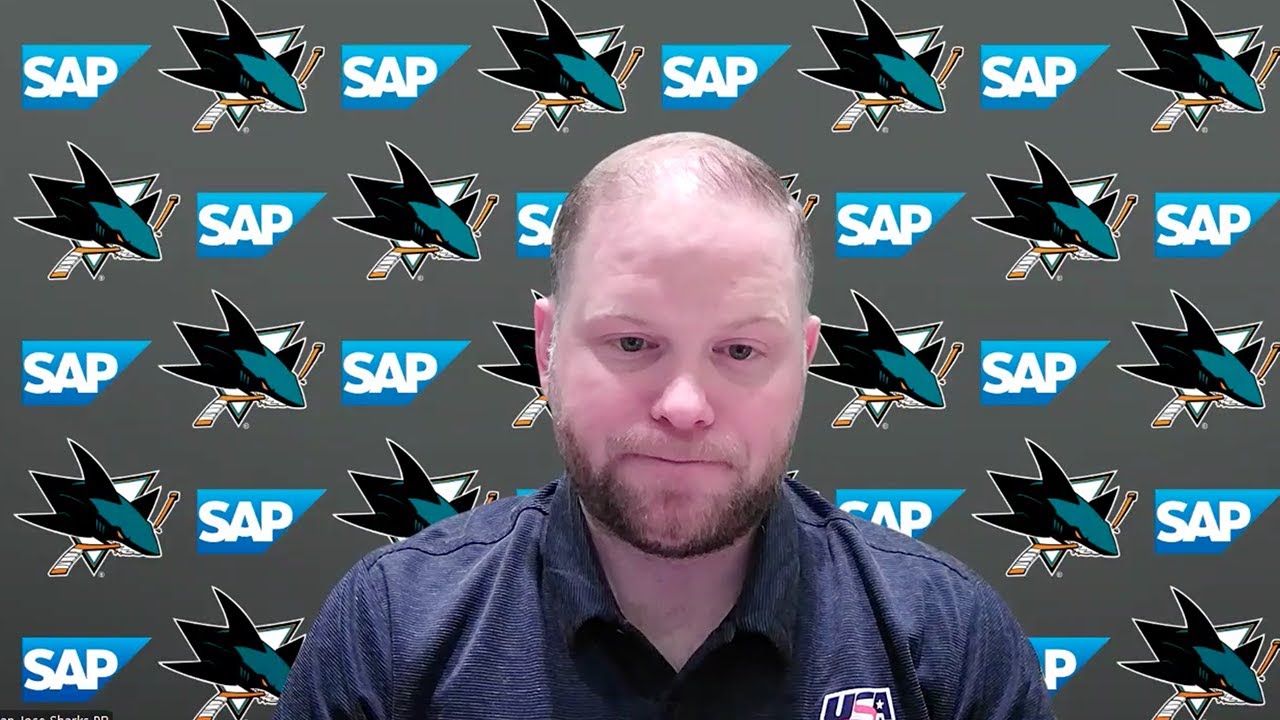
Sharks head coach Ryan Warsofsky meets with the media following his gold medal run at the IIHF Men’s World Championship with USA Hockey.

2 comments
Wolfy!!
Let’s go COACH!! Way to bring home gold