Tank Talk: Joe Thornton & Patrick Marleau Part One
about six months ago, your name and your number get retired to the rafters of this building. Now, that night was special and the anticipation was special. Yes. But now that you keep coming back here to seeing your name up there, does it does it sit different? Oh, I like it. Yeah, I like it a lot. I’m not going to lie. Uh right next to Patty’s. But, um yeah, I I bring the kids every once in a while to games and um it sure looks nice up there. And I think Patty, as your kids get older, they they were here that night. They understood that night what it meant, but maybe more as they get older, the realization of, wow, that’s my dad’s name up there. That’s our family name up there and his number. And obviously next to the big fella, too. Yeah, definitely. I got uh some older kids uh compared to Jumbo, but uh yeah, they’re all playing hockey. They’re all boys and uh um you know, when they when they come to the game, my little guy, he’ll gives me a little poke and points up at it, so he knows what’s going on. You both played for different teams near the ends of your careers, but now you’re here back living in the South Bay. Patty, why why come back? And I know there’s opportunity here and the Sharks are here. Was that part of it? Was there a certain reason why you came back? You didn’t have to. Yeah. No, it’s uh you know, it’s always been home. You I’ve played here for for so long and uh you get to know the community, you get to know the people, and um you know, we built a house here. My wife’s from the area and you know, kids friends are here. So, I mean, um, everything was here. So, it was a no-brainer for us to to come back and, um, you know, being able to help out with the sharks, too, is, uh, is an added bonus. And it’s, uh, it’s fun to be home now and, uh, chase the kids around. I know Jumbo goes back to the farm. I thought he was going to stay out on the farm. I didn’t know he was coming back out to California. That can is way too cold for me. No, I prefer it right here. Uh yeah, I played uh a couple years um away from the Sharks at the end, but I always kind of knew um that I was going to come back here and and have retirement here. I just I love the Bay Area. I love the Sharks. I love the weather, and it just it’s a good mix for me. You know, history repeats itself sometimes in weird ways. The Sharks have two young players that just had their rookie seasons, Mlin Celibbrini and Will Smith. Did you know those two players respectively lived at the Thornton house and the Marlo house this past season? Can I start it like this? I just got a couple questions. And now that they’re done, right? Have they moved out, by the way? Season’s over. They’re done. Okay. Did the conversation happen with you and your wives? Did Did the Sharks approach you with this idea? Was this your guys’s idea? Where did Where did this start? It’s a It’s a great idea. You guys fostered two young players. I think Mike Greer might have asked us, wasn’t it, Patty? Or I don’t know if they bypassed us and went right to the straight to the wives. I don’t know if they did that or not. That’s the most important part. I get that. I I’m living that life, too. Yeah, there definitely was a discussion, I think, with And I was just like, “Yeah, sure. Come on in.” I mean, you already obviously have your own children. Was this like adding another child to the house? Uh, I think it was, but I I think it was great for our family. I mean, Landon, our oldest, uh, he was gone, so it actually, right, same number of people, minus one, but, uh, no, we we loved having him there, and it was he’s a great kid, and Shark’s future is looking super good. So, yeah. Hey, having a billet family, if you’re not familiar what that is, you’re living at a host family of of the market you play in. That happens at a lot of lower levels of hockey, but at the NHL, Joe, like what what was the experience like of of having somebody on the Sharks, a team that you played for, living at your house and and was there some good advice shar? Yeah, I he just to, you know, to be around that young energy. It just uh it makes you feel young and um just, you know, we we would talk a little hockey, but it was just more, you know, laughing um get our mind off of sports. I think that’s important for young players just to kind of get your mind off of it. But um we just really had a super year. You just Mlin fit right into the family just like Will fit right into the Marlo. There’s two really really good young boys. Opening night I was sitting in the alumni box and your wife leans over and goes, “Watch watch Patty when Will’s out there. What what do you mean?” He’s like on the edge of his seat. He’s like It’s like Will’s already one of his sons. This was opening night. So, I mean, not that you weren’t watching the team anyway, but you were probably you probably felt invested in in Will Smith’s season this year. Yeah. Yeah, definitely. It uh like a dad almost. Yeah, it it got uh definitely got our family back more involved in it and everything. And then uh you know, those two are pretty inseparable. So, uh Mac was over quite a bit of the time and I know Will was over at at Joe’s house as well and um playing board games and things like that. So, uh it was it was just fun. I we um we had their family over for Thanksgiving. So, a true big family event. It was uh it was great. You know, I imagine in this room there’s a lot of people that are very successful in what they do in the business world. You guys never showed up to an office for your jobs. You showed up to a dressing room. It was very different. Clothing was optional, especially on this side of the the podium. Um getting giggles. I’m just curious, Joe. Um I’ll start with you on this. When you look back at what made both of you good, I guess there’s two parts of it, and it’s obviously some some natural ability that you were born with, but hard work was a part of it, too. What do you think is the breakdown of of what put you in a position to have as good a career you did? Were you born with something or was it all hard work or what’s the combo? You know, I just I just love the sport at such a young age. Um, and I’m sure I can speak for Patty, too. It just for boys in Canada, that’s what you want to be. you want to be a hockey player. And it had me at like four years old. So that was I was done after that. So I’m I’m going to say hard work was part of that. You ingrained yourself in Oh, yeah. every day at the rink and practicing when you didn’t need to. I never realized it was hard work. I was just enjoying. Yeah. It wasn’t, you know, it wasn’t work cuz I I loved playing hockey. If I wasn’t on the ice, I was playing road hockey. I just always had a a stick on my hand. His answer better be instinct because nobody skates like that. Nobody’s taught to skate like that. What do you think the breakdown of, you know, instinct versus hard work? Um, I think there’s, we’ve we’ve tal kind of talked about this before. I think there’s something that great players have and it’s their mental capacity to see the game, um, to see how players are going to develop. And that’s, you know, what Joe was so great at and I was the beneficiary of so many times in the slot. Yeah, but uh it was uh the more I get to look back at my career now, you just uh you realize how special guys like Jumbo were were when they played cuz I I see highlights now and we were at a face off and he’s like looking at me. He’s like, “Move, move a little bit that way.” He already knew what was going to happen. Okay. Yeah. And then 3 seconds later, pucks on my stick and we end up scoring. So, it’s just um there is a there is a God-given talent, but I have to echo the the other point Joe made was uh it was never work. It was always it was just playing and having fun. Even when I was in the wait room, it it might have seemed like work, but the goal was to play. So, it was it was I had to do this so I could play and be good. You’re both retired now for several seasons. I say retired, but I’m out at San Jose Barracuda practice and well, there’s Patrick Marlo and there’s Joe Thornton and you guys are still out there doing your thing. Uh, loosely retired. It’s not like you’re just on the beach every day. What’s the hardest part about disconnecting from a career, Joe, that has you like on train tracks the entire time? You know what your schedule’s going to be. You generally know what team you’re on and all of a sudden when you’re done playing hockey, you’re you’re still a train, but the tracks go away. What’s the hardest part about that? Um, it was it was a little bit tough for me, but I I played so long. I was like, “Oh, this is enough.” You know what I mean? So, it was like, “Okay, this is good.” And then I had a a I got to a good routine early. I um an old teammate, Devin Sedaguchi, who we played here with, he had like a gym. So, I I was hitting the gym every morning at like 8:30. So, I I kept like a routine. And, you know, I still have the routine. I mean, I go on the ice, you know, sometimes with the boys, but I kind of hammered in a routine early on and I’m I’ve stuck with it. So, it kind of keeps your your purpose going and your routine. Yeah. But, you know, I like to travel a little bit more now. I like to golf a little bit more. So, it’s You think I have a lot of lot of free time, but really I don’t. You don’t like uh somebody trying to throw a hip check at you and open ice, right? At least you don’t have to deal with that anymore. And your teeth are fixed once again, too. So, now we got to keep those. I was just telling Brody, I um I just got a new pair of teeth, so I’m hoping this is the last pair ever. Yeah. Yeah. See, I relate to most of you out there. This is stuff I can’t imagine in my personal life. If I got a scratch on my face at work, I would call in sick the next couple days. Patty, how about you? And disconnecting from a career that again for you was all hockey all the time. And it it still is. It’s a different thing. But what’s the hardest part about I don’t think enough people respect what happens when the career is over and how you go about what’s next. Uh the hardest part is learning how to be an adult, I guess. Yeah. Um and then trying to pick up the slack for my wife uh around the house cuz when I played, I had really no idea how much work she was putting in. Now I have a whole new appreciation for it. And uh but it it keeps me busy. Keeps my keeps me occupied. And um yeah, it’s it’s hard to find some free time. Actually, my buddies tell me like, “Oh, now you’re retired. You can come hang out and go golfing.” I’m like, then I never do. So, they’re like, “Uh, you’re the busiest retired guy I know.” So, want to talk a little bit about the the culture of hockey. And again, there are so many intricate things about it that make it, you know, the best sport in the world, at least in my opinion. One of the things though that I’m not sure about, Joe, is hockey players playing through injury and the secret nature of injuries. There was a season, we could say this now, you broke your finger, I think, and you did all the interviews that year, I think, with your hand behind your back. Yeah. Because you didn’t want anybody to see it swollen or know every injury is so secretive, but to that extent, there are so many players because it’s a it’s a pride thing that you want to play through anything that you can. What is that? Yeah, it’s it’s really really weird. Uh it’s I don’t know but it just what you do though. Yeah. Like you got a broken toe. There’s no question you’re going to play. You know, there’s broken fingers, you know, broken nose. It’s just no question you’re going to play. You just the brotherhood that you have in the locker room um amongst hockey players is you really don’t want to let the other guy down. So, you want to, you know, you’ll try to play through everything just to help, you know, your buddy out. And that’s how how the culture is. I felt bad Patty as a media person covering the team all those years. And sometimes you’d find out, hey, he’s got an ankle issue and he’s playing through it. And then sometimes there would be a criticism of, well, he doesn’t look the same out there. Well, yeah, because if you really knew what was going on, I always felt that that veil of secrecy was really hard on the player to have to shoulder that when they knew what they were going through, you know. Yeah. Actually, you put it that way, it it uh especially like during playoffs, that’s when you keep everything in their wraps. But um you can pretty much look out and at any game and I think the only time you’re 100% is first day of training camp. Like you know 10 guys on their team are hurt and you know 10 of your guys are hurting. It’s just Yeah, that’s how it is. Yeah. You’re always you’re always you know whether it’s a bruise or something that’s nagging pulled muscles. I mean you’re always working on something. You’re always trying to do recovery and and getting ready for that next game. Here’s another one. Uh show of hands. How many of us have had just a bad day at work, right? I mean, come on. That’s it’s everybody. But in our bad days, we got to fight somebody. Okay. So, there’s that, right, Brody? Is that what you’re saying? Actually, I wasn’t going to go there, but I I do. It happens sometimes. So, at least you could take it out on somebody. But here here’s another crazy part. You have a rough day at the office, Jumbo. And after practice or after the game, in comes Brazil and his microphone. And we got to hear about we we need we need you to talk about that. Now, I think most of you can understand what I’m getting at here. I’ve had a bad day. You know what I want to do? Get in the car and go home and just try and my family help them have have me readjust. It’s so crazy that that is part of the job. But it was part of the job for a hockey player. How did you handle those tough situations? Both captains. You both did that. You just do it. You just um you don’t want to talk right after games. you kind of want to enjoy the moment with the guys or um you know if it’s a bad game just kind of you know cheer each other up but it’s just something you have to do. Um and it only takes six minutes so do it and then go enjoy the win or you know get it over with ASAP. And I mean Patty you’re look out of out of the two gentlemen here obviously Jumbo’s a man of more words right that’s just the nature of it but Patty did that job for a long time especially being the captain and and how did you handle it in those situations? I was just kind of just it’s what you do. It’s part of the part of the job description. But uh to talk on your point a little bit too, I was thinking, you know, Will’s staying at my place, Max at his place, and then here they are. They’re we’re playing board games with them. They’re just having a good good old time and then same thing like they get scored on late in a game or they score an OT winner and they’re right there. They’re on the on the mic. They were just And but these kids are fresh out of high school almost and yet they’re, you know, they’re on this big stage.
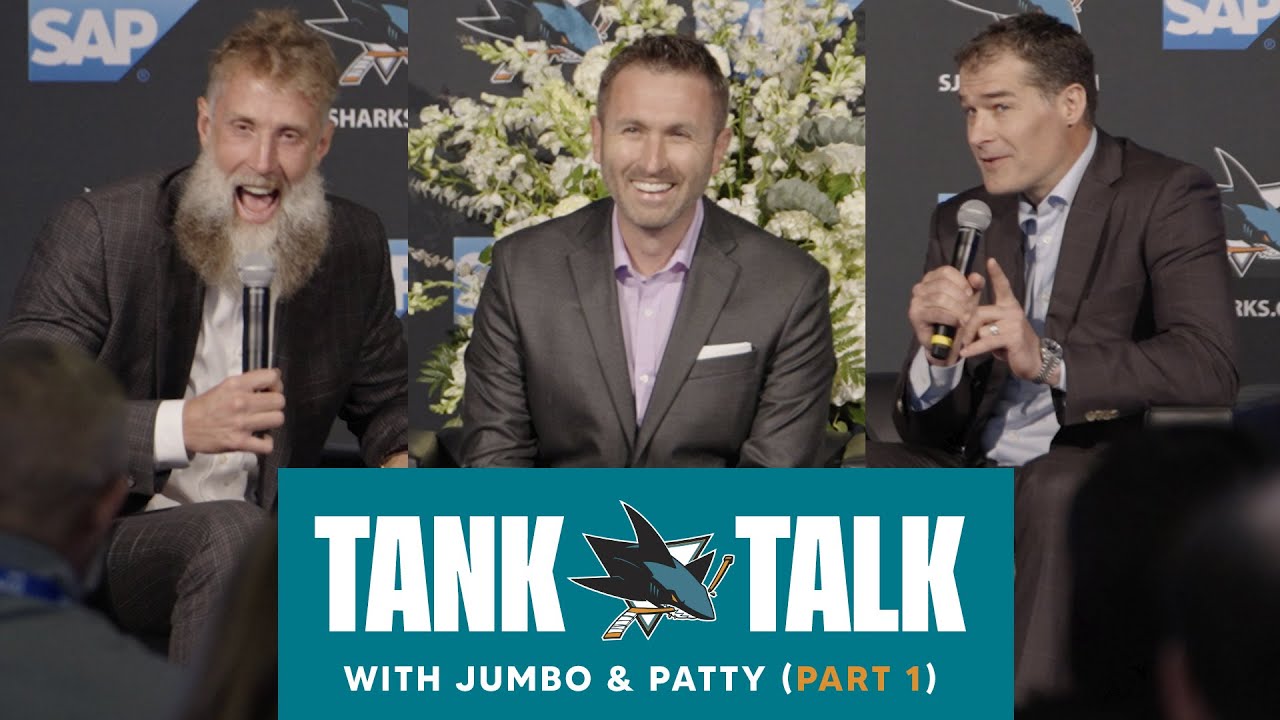
Sharks legends Marleau & Thornton join Brodie Brazil to talk returning to the Bay, billet life with Macklin & Will, and what it takes to make it in the NHL.

16 comments
The dynamic duo! Patty and Jumbo are the best!!!!
<3
These two right here were real hockey players
So cool! what is this formate/event about?
SHARKS LEGENDS🤩🥹
Brodie!!! With the boys!
What a fun conversation with Joe and Patty. It's interesting to hear them now as they are establishing new routines and settling into the next chapter of their lives. Those career questions after retirement are beginning to have some answers now as they have both had some time to catch their breath after working so hard for so long.
Joe, Patty…thank you both for bringing Maclin and Will into your homes last season. I think that was a wonderful thing that you did and it seems like it really helped to ground both young men. I am so glad that they will both have fond memories of living under your roofs and becoming a part of your families for a season. i think this is the sort of thing we are humans thrive on. Helping others out when we can feeds the soul.
Fun conversation guys. Looking forward to the rest of it. Cheers!
Peter St. John
Clovis, CA
My guys ❤❤❤
I LOVE Brodie's interviews! Always such a joy to watch him talk to the players! Great hearing from Joe and Pat!
The two best Shark players in history with Nabby a close third 🦈.
Love it ♥
TWO OF THE BIGGEST LOSERS IN HOCKEY. Couldn’t get it done when it mattered.
I like this format and longer interviews always bring out more in the players. Instant side line interviews between periods are the opposite and tell us very little. Good point about hockey players and their injuries, which are so concealed that many play with the result being chronic and unhealing injuries which eventually make pros look no good any more. NHL has improved its concealment on concussions but must do more to save players from early retirement due to chronic injuries. So few stars have 20 year careers like Jumbo and Marleau.
Thanks Brody, great discussion
Great interview Brodie! Love both Jumbo and Patty! Can’t wait for part 2
Thanks for bringing back Brody !!! Best in the bizz
One (1) & Two (2). Just missing the Cup: That would be nice. . .